 Add to Chrome
 Add to Firefox
 Add to Edge
InstrAct: Towards Action-Centric Understanding in Instructional Videos
Apr 09, 2026
Understanding instructional videos requires recognizing fine-grained actions and modeling their temporal relations, which remains challenging for current Video Foundation Models (VFMs). This difficulty stems from noisy web supervision and a pervasive "static bias", where models rely on objects rather than motion cues. To address this, we propose InstrAction, a pretraining framework for instructional videos' action-centric representations. We first introduce a data-driven strategy, which filters noisy captions and generates action-centric hard negatives to disentangle actions from objects during contrastive learning. At the visual feature level, an Action Perceiver extracts motion-relevant tokens from redundant video encodings. Beyond contrastive learning, we introduce two auxiliary objectives: Dynamic Time Warping alignment (DTW-Align) for modeling sequential temporal structure, and Masked Action Modeling (MAM) for strengthening cross-modal grounding. Finally, we introduce the InstrAct Bench to evaluate action-centric understanding, where our method consistently outperforms state-of-the-art VFMs on semantic reasoning, procedural logic, and fine-grained retrieval tasks.

Co-Learning: Code Learning for Multi-Agent Reinforcement Collaborative Framework with Conversational Natural Language Interfaces
Sep 02, 2024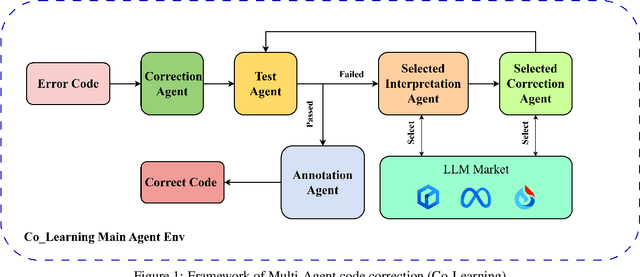

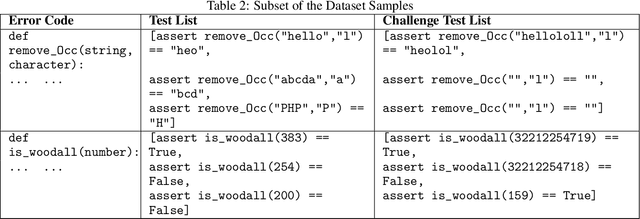
Online question-and-answer (Q\&A) systems based on the Large Language Model (LLM) have progressively diverged from recreational to professional use. This paper proposed a Multi-Agent framework with environmentally reinforcement learning (E-RL) for code correction called Code Learning (Co-Learning) community, assisting beginners to correct code errors independently. It evaluates the performance of multiple LLMs from an original dataset with 702 error codes, uses it as a reward or punishment criterion for E-RL; Analyzes input error codes by the current agent; selects the appropriate LLM-based agent to achieve optimal error correction accuracy and reduce correction time. Experiment results showed that 3\% improvement in Precision score and 15\% improvement in time cost as compared with no E-RL method respectively. Our source code is available at: https://github.com/yuqian2003/Co_Learning