 Add to Chrome
 Add to Firefox
 Add to Edge
Learning to Beat: Phenotype-Guided Latent Flow with Regional Motion Priors for Biventricular Motion Synthesis
Aug 20, 2026
Full-cycle biventricular geometry is essential for characterizing cardiac function. However, dense and temporally consistent 3D+t biventricular meshes are not routinely available, whereas end-diastolic (ED) anatomy can often be obtained reliably. We therefore investigate full-cycle biventricular motion synthesis from a single ED mesh. This task is challenging because cardiac deformation is spatially heterogeneous and phenotype dependent, while conventional global generative models often obscure localized motion patterns. In this study, we propose a region-specific and phenotype-adaptive framework that integrates motion-informed functional parcellation with conditional latent flow. A functional partition learned from reconstructed motion organizes the ventricular surface into regions with coherent dynamics and enables topology-aware regional feature exchange. A phenotype-conditioned rectified-flow model subsequently maps the ED anatomy to full-cycle motion latents through fine-grained conditioning and prototype-routed motion adapters. An optional control branch further incorporates available motion descriptors for controllable synthesis. Experiments on ACDC, M\&Ms, and M\&Ms-2 demonstrate consistent improvements in geometric accuracy and functional fidelity. Under ED-only synthesis, our method achieves biventricular ASSD, HD95, and vRMSE of \(1.49\pm0.34\)~mm, \(3.77\pm1.06\)~mm, and \(3.31\pm1.03\)~mm, respectively, outperforming all competing methods. Complementary functional and robustness evaluations further demonstrate that the synthesized sequences preserve physiologically plausible ventricular dynamics and generalize across cohorts and disease phenotypes. The code will be released publicly upon acceptance of the manuscript for publication.

A Framework Based on Generational and Environmental Response Strategies for Dynamic Multi-objective Optimization
Jul 06, 2022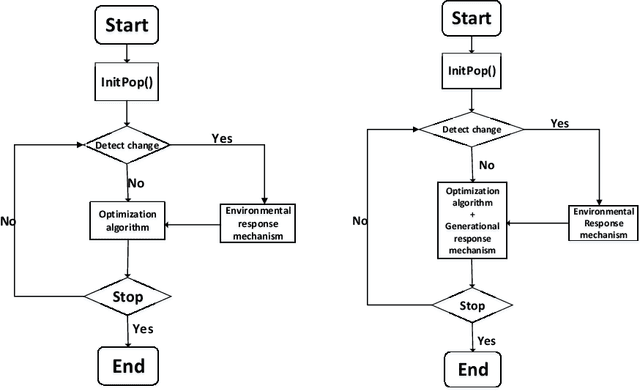
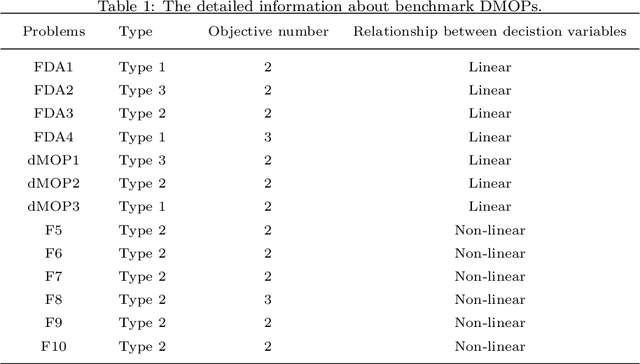
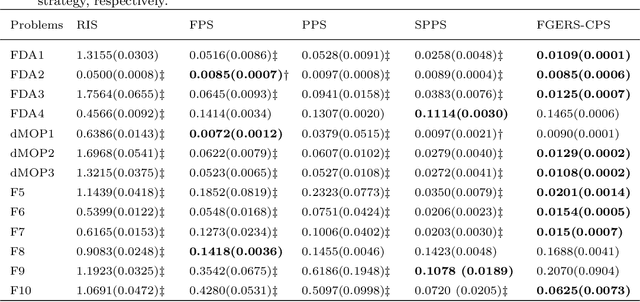
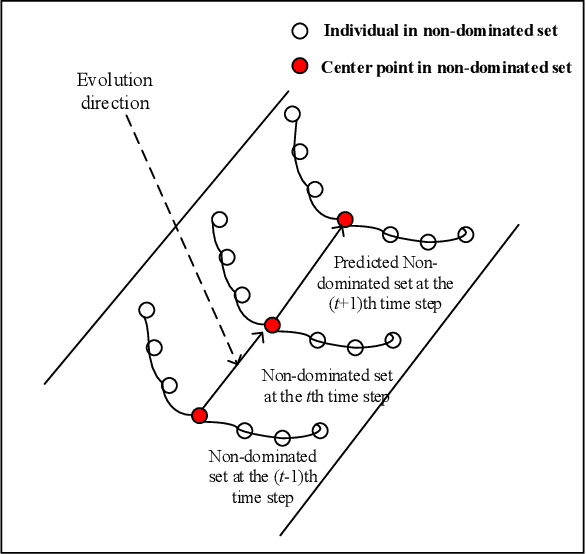
Due to the dynamics and uncertainty of the dynamic multi-objective optimization problems (DMOPs), it is difficult for algorithms to find a satisfactory solution set before the next environmental change, especially for some complex environments. One reason may be that the information in the environmental static stage can not be used well in the traditional framework. In this paper, a novel framework based on generational and environmental response strategies (FGERS) is proposed, in which response strategies are run both in the environmental change stage and the environmental static stage to obtain population evolution information of those both stages. Unlike in the traditional framework, response strategies are only run in the environmental change stage. For simplicity, the feed-forward center point strategy was chosen to be the response strategy in the novel dynamic framework (FGERS-CPS). FGERS-CPS is not only to predict change trend of the optimum solution set in the environmental change stage, but to predict the evolution trend of the population after several generations in the environmental static stage. Together with the feed-forward center point strategy, a simple memory strategy and adaptive diversity maintenance strategy were used to form the complete FGERS-CPS. On 13 DMOPs with various characteristics, FGERS-CPS was compared with four classical response strategies in the traditional framework. Experimental results show that FGERS-CPS is effective for DMOPs.