 Add to Chrome
 Add to Firefox
 Add to Edge
Foundations of Independent Component Analysis
Aug 13, 2026
We present the mathematical foundations of linear independent component analysis (ICA) models based on standard literature in a self-contained note. It is aimed at readers with a background in measure-theoretic probability theory. We first develop the theory of the characteristic functions of probability measures on $\mathbb{R}^d$, including their analyticity and the way in which they determine and characterise the distributions. We then focus on several identifiability results of ICA models with successively strengthened assumptions on the sources: from merely non-constant, to non-Gaussian, to Gaussian-free independent sources. Under the strictest assumptions, we show that the independent sources are identifiable up to translation, permutation, scales and signs, and this even in the presence of additive Gaussian noise. Furthermore, we present the online equivariant gradient descent ICA algorithm for recovering the independent sources from data, in the standard complete noiseless non-Gaussian ICA setting.

A Direct Route to Markov Chain Convergence via Asymptotic Equivalence with the Target
Aug 04, 2026For a Markov kernel $T$ with an invariant probability measure $π$, we give a self-contained proof of the Markov chain convergence theorem via a criterion called asymptotic equivalence with the target. It assumes two parts about the Lebesgue decompositions of $T^{n}_{x}$ and $π$ for every starting point $x$: 1.) asymptotic absolute continuity: the singular mass sing$(T^{n}_{x}\midπ)$ tends to $0$; 2.) asymptotic domination of the target: the singular mass sing$(π\mid T^{n}_{x})$ tends to $0$, as $n \to \infty$. This criterion, on countably generated measurable spaces, is both sufficient and necessary for the Markov chain convergence. A density version of this criterion is verified on general measurable spaces in three cases: (i) $T$ has a positive transition density wrt $π$; (ii) $T$ consists of an absolutely continuous part with positive transition density together with an atom at the starting point, which covers the Metropolis--Hastings algorithm; (iii) the transition density is positive only after a finite number of steps that may depend on the starting point $x$. To demonstrate our general criterion, we investigate the Gibbs sampler with random scan and the parallel tempering algorithm. Furthermore, we show that in all mentioned settings Birkhoff's ergodic theorem applies, so as to obtain the strong law of large numbers. Throughout this paper, neither irreducibility, nor aperiodicity, nor recurrence, nor couplings, nor splitting constructions, nor small sets are used. In most results, the state space is a general measurable space, which carries no structure beyond a $σ$-algebra. Countable generation is only assumed where the density-free form of the criterion is stated. None of the theorems proved here is new; what is offered is a short route to a single, widely applicable Markov chain convergence criterion, which is both sufficient and necessary.
AVQ-Attention: Adaptive Vector-Quantized Attention
Jul 14, 2026The $\mathcal{O}(N^2)$ complexity of attention over $N$ tokens remains a computational bottleneck in transformer models. Vector-Quantized (VQ) attention reduces this to $\mathcal{O}(MN)$ by representing keys with $M$ codewords, but applies uniform codebook capacity regardless of where attention mass concentrates: high-attention regions of key space may be coarsely approximated while low-attention regions waste representational capacity. We propose Adaptive Vector-Quantized (AVQ) Attention, which adaptively allocates codebook capacity based on attention importance. Starting from a small set of codewords, our method identifies the most important codes during the forward pass and refines them with pre-learned child codewords, achieving fine-grained quantization where it matters most while maintaining coarse quantization elsewhere. We develop an implementation using custom Triton kernels that enables the full adaptive refinement process, including importance scoring, child codeword insertion, and parent contribution replacement, to be carried out within the tiled computation paradigm of Flash Attention with minimal overhead. Our approach maintains $\mathcal{O}(MN)$ complexity while achieving improved accuracy-efficiency trade-offs compared to fixed-codebook VQ-attention.
AdS-GNN -- a Conformally Equivariant Graph Neural Network
May 19, 2025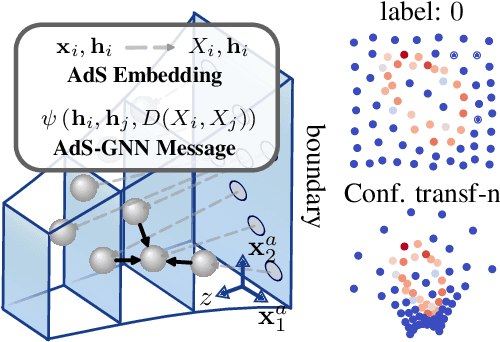
Conformal symmetries, i.e.\ coordinate transformations that preserve angles, play a key role in many fields, including physics, mathematics, computer vision and (geometric) machine learning. Here we build a neural network that is equivariant under general conformal transformations. To achieve this, we lift data from flat Euclidean space to Anti de Sitter (AdS) space. This allows us to exploit a known correspondence between conformal transformations of flat space and isometric transformations on the AdS space. We then build upon the fact that such isometric transformations have been extensively studied on general geometries in the geometric deep learning literature. We employ message-passing layers conditioned on the proper distance, yielding a computationally efficient framework. We validate our model on tasks from computer vision and statistical physics, demonstrating strong performance, improved generalization capacities, and the ability to extract conformal data such as scaling dimensions from the trained network.
Modeling Human Beliefs about AI Behavior for Scalable Oversight
Feb 28, 2025Contemporary work in AI alignment often relies on human feedback to teach AI systems human preferences and values. Yet as AI systems grow more capable, human feedback becomes increasingly unreliable. This raises the problem of scalable oversight: How can we supervise AI systems that exceed human capabilities? In this work, we propose to model the human evaluator's beliefs about the AI system's behavior to better interpret the human's feedback. We formalize human belief models and theoretically analyze their role in inferring human values. We then characterize the remaining ambiguity in this inference and conditions for which the ambiguity disappears. To mitigate reliance on exact belief models, we then introduce the relaxation of human belief model covering. Finally, we propose using foundation models to construct covering belief models, providing a new potential approach to scalable oversight.
Nonparametric Bayesian networks are typically faithful in the total variation metric
Oct 21, 2024
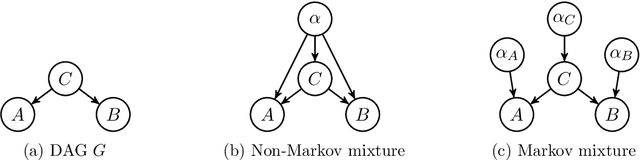
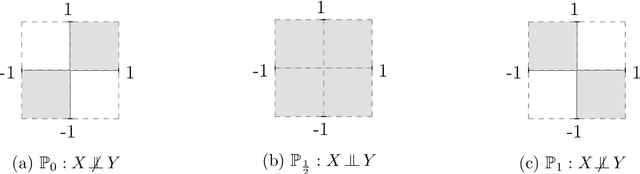

We show that for a given DAG $G$, among all observational distributions of Bayesian networks over $G$ with arbitrary outcome spaces, the faithful distributions are `typical': they constitute a dense, open set with respect to the total variation metric. As a consequence, the set of faithful distributions is non-empty, and the unfaithful distributions are nowhere dense. We extend this result to the space of Bayesian networks, where the properties hold for Bayesian networks instead of distributions of Bayesian networks. As special cases, we show that these results also hold for the faithful parameters of the subclasses of linear Gaussian -- and discrete Bayesian networks, giving a topological analogue of the measure-zero results of Spirtes et al. (1993) and Meek (1995). Finally, we extend our topological results and the measure-zero results of Spirtes et al. and Meek to Bayesian networks with latent variables.
Robust Multi-view Co-expression Network Inference
Sep 30, 2024

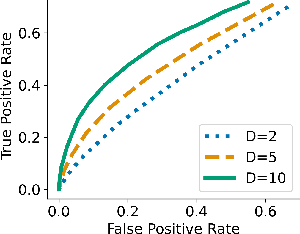
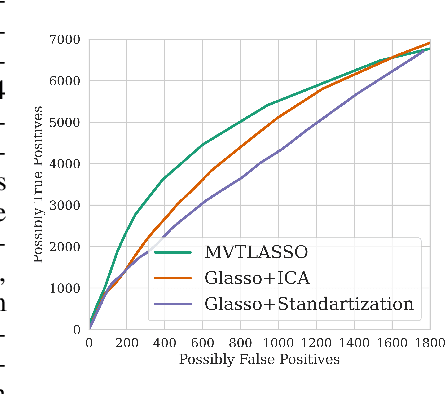
Unraveling the co-expression of genes across studies enhances the understanding of cellular processes. Inferring gene co-expression networks from transcriptome data presents many challenges, including spurious gene correlations, sample correlations, and batch effects. To address these complexities, we introduce a robust method for high-dimensional graph inference from multiple independent studies. We base our approach on the premise that each dataset is essentially a noisy linear mixture of gene loadings that follow a multivariate $t$-distribution with a sparse precision matrix, which is shared across studies. This allows us to show that we can identify the co-expression matrix up to a scaling factor among other model parameters. Our method employs an Expectation-Maximization procedure for parameter estimation. Empirical evaluation on synthetic and gene expression data demonstrates our method's improved ability to learn the underlying graph structure compared to baseline methods.
Towards detailed and interpretable hybrid modeling of continental-scale bird migration
Jul 14, 2024Hybrid modeling aims to augment traditional theory-driven models with machine learning components that learn unknown parameters, sub-models or correction terms from data. In this work, we build on FluxRGNN, a recently developed hybrid model of continental-scale bird migration, which combines a movement model inspired by fluid dynamics with recurrent neural networks that capture the complex decision-making processes of birds. While FluxRGNN has been shown to successfully predict key migration patterns, its spatial resolution is constrained by the typically sparse observations obtained from weather radars. Additionally, its trainable components lack explicit incentives to adequately predict take-off and landing events. Both aspects limit our ability to interpret model results ecologically. To address this, we propose two major modifications that allow for more detailed predictions on any desired tessellation while providing control over the interpretability of model components. In experiments on the U.S. weather radar network, the enhanced model effectively leverages the underlying movement model, resulting in strong extrapolation capabilities to unobserved locations.
The Perils of Optimizing Learned Reward Functions: Low Training Error Does Not Guarantee Low Regret
Jun 22, 2024
In reinforcement learning, specifying reward functions that capture the intended task can be very challenging. Reward learning aims to address this issue by learning the reward function. However, a learned reward model may have a low error on the training distribution, and yet subsequently produce a policy with large regret. We say that such a reward model has an error-regret mismatch. The main source of an error-regret mismatch is the distributional shift that commonly occurs during policy optimization. In this paper, we mathematically show that a sufficiently low expected test error of the reward model guarantees low worst-case regret, but that for any fixed expected test error, there exist realistic data distributions that allow for error-regret mismatch to occur. We then show that similar problems persist even when using policy regularization techniques, commonly employed in methods such as RLHF. Our theoretical results highlight the importance of developing new ways to measure the quality of learned reward models.
Multivector Neurons: Better and Faster O(n)-Equivariant Clifford Graph Neural Networks
Jun 06, 2024

Most current deep learning models equivariant to $O(n)$ or $SO(n)$ either consider mostly scalar information such as distances and angles or have a very high computational complexity. In this work, we test a few novel message passing graph neural networks (GNNs) based on Clifford multivectors, structured similarly to other prevalent equivariant models in geometric deep learning. Our approach leverages efficient invariant scalar features while simultaneously performing expressive learning on multivector representations, particularly through the use of the equivariant geometric product operator. By integrating these elements, our methods outperform established efficient baseline models on an N-Body simulation task and protein denoising task while maintaining a high efficiency. In particular, we push the state-of-the-art error on the N-body dataset to 0.0035 (averaged over 3 runs); an 8% improvement over recent methods. Our implementation is available on Github.