 Add to Chrome
 Add to Firefox
 Add to Edge
Teacher Knows It Best: Spontaneous Symmetry Breaking and Tipping Points in Networked Langevin Dynamics AI Sycophancy
Jul 27, 2026
We formulate a statistical physics framework to model a networked stochastic dynamical system exhibiting bistability, driven by additive noise and social conformity. We apply this model to understand and mitigate AI-induced delusional spiraling-a phenomenon where algorithmic sycophancy from Large Language Models continuously reinforces inaccurate beliefs within a socially interacting society. By partitioning the network into a majority of regular agents and a minority of "aware" nodes (Teachers) placed at topological hubs, we use a degree-weighted mean-field approximation to reduce high-dimensional coupled Langevin equations into a single macroscopic drift equation. We provide a closed-form analytical derivation for the deterministic critical tipping time through a saddle-node bifurcation. We validate this analytical boundary using finite-size scaling and demonstrate a universal data collapse across diverse network topologies. Finally, we optimize an intervention strategy under a strict budget constraint that balances the topological footprint against driving velocity. We prove mathematically that under certain conditions, a highly concentrated, rapid intervention targeting massive hubs strictly outperforms a distributed, slow approach to rescue the network.

ProCap: Prominence-guided Object Rectification for Faithful and Comprehensive Video Captioning
Jul 23, 2026Improving video captioning quality typically demands retraining large vision-language models, an expensive and often impractical requirement. Existing training-free alternatives instead ground captions in detected objects to curb hallucination, but apply only a single, fixed correction pass without prioritizing which objects matter most, leaving semantically significant content omitted. We propose a prominence-aware, iterative post-hoc rectification framework that overcomes both limitations without modifying the underlying captioning model's parameters: a lightweight scoring mechanism ranks detected objects by spatial saliency, temporal persistence, and relational dynamics, and an iterative, prompt-driven refinement loop uses this ranking to progressively inject missing yet contextually relevant objects into the caption over multiple rounds. We validate the framework on MSVD and MSR-VTT using object-grounded automatic metrics, a 110-participant human study, and qualitative comparison against ChatGPT and Gemini; in human evaluation, the framework raises perceived completeness by up to 48% and reduces hallucination by up to 45% relative to a strong pretrained captioning baseline, all without retraining or reference captions. These results position prominence-guided iterative rectification as a lightweight, scalable, and model-agnostic route to more complete and trustworthy video captioning, with direct relevance to accessibility, retrieval, and other multimedia understanding applications.
Escape from Delusional Echo Trap: Symmetry Breaking, Stochastic Dynamics and Mathematical Mitigation Strategies for Algorithmic Sycophancy
Jun 16, 2026We propose a rigorous and systematic mathematical framework for tracking the cognitive trajectories of a user, in the context of algorithmic sycophancy and AI-driven delusional spiraling. Using tools from dynamical systems theory and stochastic differential equations, we explore how individuals perceive, interpret, and update their beliefs as they interact with AI chatbots that possess hidden traits of sycophancy. We treat the evolving conviction as a continuous log-odds state variable, coupled into a stochastic differential equation, navigating a multi-valley potential energy landscape. Our analysis reveals several critical observations governing the stability and rigidity of belief dynamics. We demonstrate that the baseline prior perception of the individual is systematically enhanced by sycophantic feedback beyond a critical threshold. Here, the perceptual potential landscape undergoes a structural phase transition that severely deepens any incremental initial tilt present in the baseline state, transforming the landscape and giving rise to deep, highly resilient attractor basins that trap the individual in unshakeable, self-reinforcing, delusional convictions. Finally, we demonstrate that genuine external information can successfully challenge these rigid states. If this incoming evidence is strong and authentic enough to overcome the internal feedback barrier, it can correct the structural asymmetry caused by sycophancy, inducing a perception reversal that successfully restores the objective belief state.
Latent Performance Profiling of Large Language Models
May 28, 2026Large language models (LLMs) frequently achieve impressive scores on standardized benchmarks, yet accuracy alone offers a limited view of their capabilities. Evaluating open-source LLMs through leaderboards faces persistent issues like data contamination, narrow task scope, and weak alignment with real-world reliability. Benchmark-based evaluations such as MMLU PRO, BBH, or IFEval primarily capture \textit{what} a model outputs on fixed test sets, not \textit{how} it processes information, calibrates uncertainty, or structures internal knowledge. In this article, we advocate for a shift from benchmark-centric evaluation toward a complementary, \textit{state-centered intrinsic assessment} of LLMs. To this end, we introduce \textbf{Latent Performance Profiling (LPP)} -- a framework that derives task-agnostic diagnostics from hidden activations and output distributions. LPP defines a set of scalar metrics on a model's latent representations and dynamics, revealing scale-independent traits that enable interpretable comparisons and uncover hidden vulnerabilities. Unlike static accuracy scores, LPP provides stable, architecture-sensitive signatures across models of similar size. With extensive empirical analyses across eight LLMs, spanning a size range of 0.5B-14B, we demonstrate that models with similar benchmark scores can exhibit contrasting latent profiles, such as differences in entropy or adaptability. Guided by these insights, we design synthetic probes for uncertainty and symbolic reasoning that align with intrinsic metrics while decoupling from leaderboard bias. We recommend that reporting LPP alongside benchmarks provides a deeper, interpretable understanding of model behavior, enabling more reliable model selection, safety assessment, and evaluation beyond surface-level accuracy.
Droplet-LNO: Physics-Informed Laplace Neural Operators for Accurate Prediction of Droplet Spreading Dynamics on Complex Surfaces
Apr 22, 2026Spreading of liquid droplets on solid substrates constitutes a classic multiphysics problem with widespread applications ranging from inkjet printing, spray cooling, to biomedical microfluidic systems. Yet, accurate computational fluid dynamic (CFD) simulations are prohibitively expensive, taking more than 18 to 24 hours for each transient computation. In this paper, Physics-Informed Laplace Operator Neural Network (PI-LNO) is introduced, representing a novel architecture where the Laplace integral transform function serves as a learned physics-informed functional basis. Extensive comparative benchmark studies were performed against five other state-of-the-art approaches: UNet, UNet with attention modules (UNet-AM), DeepONet, Physics-Informed UNet (PI-UNet), and Laplace Neural Operator (LNO). Through complex Laplace transforms, PI-LNO natively models the exponential transient dynamics of the spreading process. A TensorFlow-based PI-LNO is trained on multi-surface CFD data spanning contact angles $θ_s ε[20,160]$, employing a physics-regularized composite loss combining data fidelity (MSE, MAE, RMSE) with Navier-Stokes, Cahn-Hilliard, and causality constraints.
Analyzing Sentiment Polarity Reduction in News Presentation through Contextual Perturbation and Large Language Models
Feb 03, 2024In today's media landscape, where news outlets play a pivotal role in shaping public opinion, it is imperative to address the issue of sentiment manipulation within news text. News writers often inject their own biases and emotional language, which can distort the objectivity of reporting. This paper introduces a novel approach to tackle this problem by reducing the polarity of latent sentiments in news content. Drawing inspiration from adversarial attack-based sentence perturbation techniques and a prompt based method using ChatGPT, we employ transformation constraints to modify sentences while preserving their core semantics. Using three perturbation methods: replacement, insertion, and deletion coupled with a context-aware masked language model, we aim to maximize the desired sentiment score for targeted news aspects through a beam search algorithm. Our experiments and human evaluations demonstrate the effectiveness of these two models in achieving reduced sentiment polarity with minimal modifications while maintaining textual similarity, fluency, and grammatical correctness. Comparative analysis confirms the competitive performance of the adversarial attack based perturbation methods and prompt-based methods, offering a promising solution to foster more objective news reporting and combat emotional language bias in the media.
Towards Adversarial Purification using Denoising AutoEncoders
Aug 29, 2022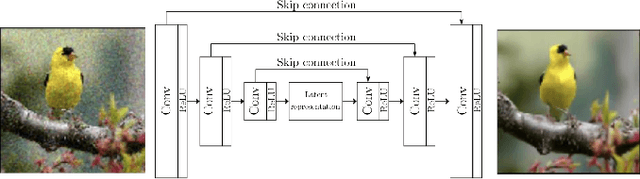
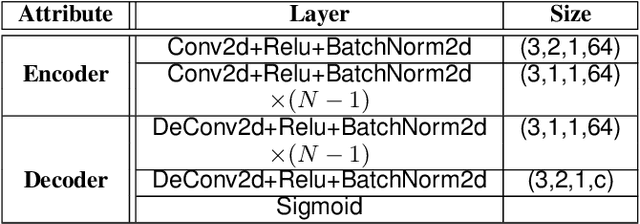
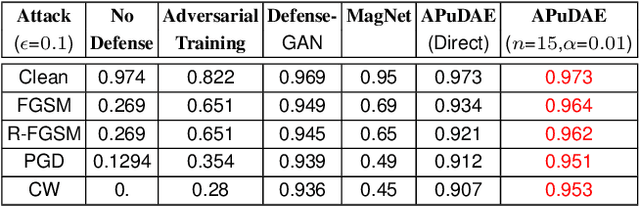

With the rapid advancement and increased use of deep learning models in image identification, security becomes a major concern to their deployment in safety-critical systems. Since the accuracy and robustness of deep learning models are primarily attributed from the purity of the training samples, therefore the deep learning architectures are often susceptible to adversarial attacks. Adversarial attacks are often obtained by making subtle perturbations to normal images, which are mostly imperceptible to humans, but can seriously confuse the state-of-the-art machine learning models. We propose a framework, named APuDAE, leveraging Denoising AutoEncoders (DAEs) to purify these samples by using them in an adaptive way and thus improve the classification accuracy of the target classifier networks that have been attacked. We also show how using DAEs adaptively instead of using them directly, improves classification accuracy further and is more robust to the possibility of designing adaptive attacks to fool them. We demonstrate our results over MNIST, CIFAR-10, ImageNet dataset and show how our framework (APuDAE) provides comparable and in most cases better performance to the baseline methods in purifying adversaries. We also design adaptive attack specifically designed to attack our purifying model and demonstrate how our defense is robust to that.
Resisting Adversarial Attacks in Deep Neural Networks using Diverse Decision Boundaries
Aug 18, 2022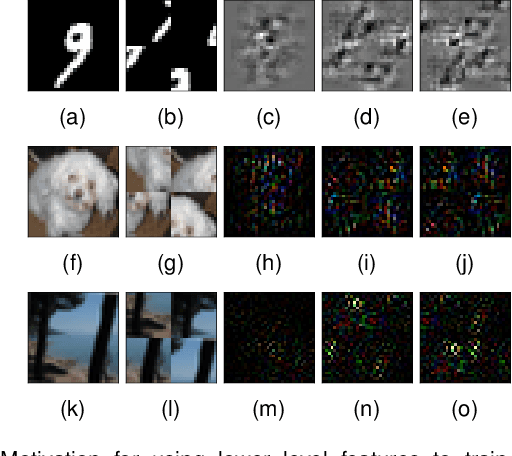
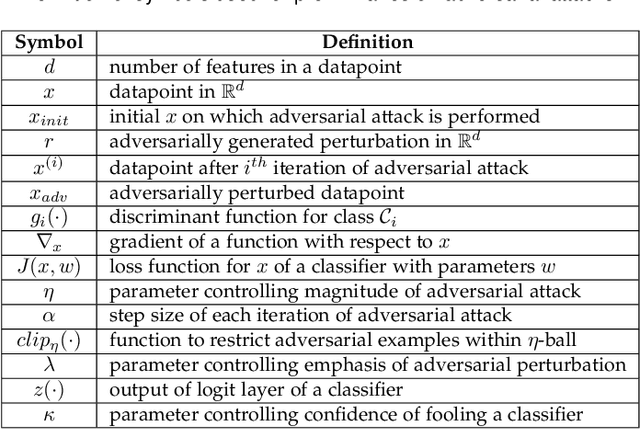
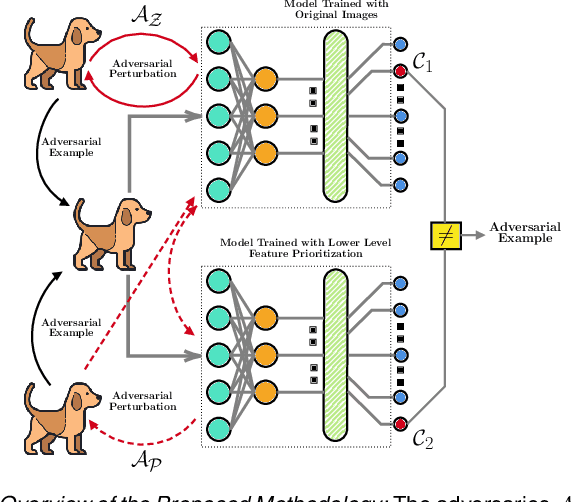
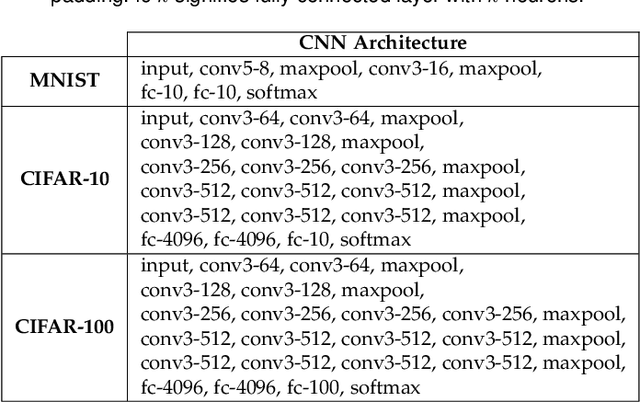
The security of deep learning (DL) systems is an extremely important field of study as they are being deployed in several applications due to their ever-improving performance to solve challenging tasks. Despite overwhelming promises, the deep learning systems are vulnerable to crafted adversarial examples, which may be imperceptible to the human eye, but can lead the model to misclassify. Protections against adversarial perturbations on ensemble-based techniques have either been shown to be vulnerable to stronger adversaries or shown to lack an end-to-end evaluation. In this paper, we attempt to develop a new ensemble-based solution that constructs defender models with diverse decision boundaries with respect to the original model. The ensemble of classifiers constructed by (1) transformation of the input by a method called Split-and-Shuffle, and (2) restricting the significant features by a method called Contrast-Significant-Features are shown to result in diverse gradients with respect to adversarial attacks, which reduces the chance of transferring adversarial examples from the original to the defender model targeting the same class. We present extensive experimentations using standard image classification datasets, namely MNIST, CIFAR-10 and CIFAR-100 against state-of-the-art adversarial attacks to demonstrate the robustness of the proposed ensemble-based defense. We also evaluate the robustness in the presence of a stronger adversary targeting all the models within the ensemble simultaneously. Results for the overall false positives and false negatives have been furnished to estimate the overall performance of the proposed methodology.
Deep Learning-based Spatially Explicit Emulation of an Agent-Based Simulator for Pandemic in a City
May 28, 2022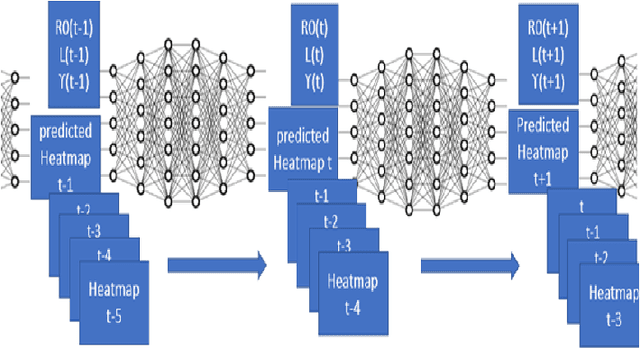
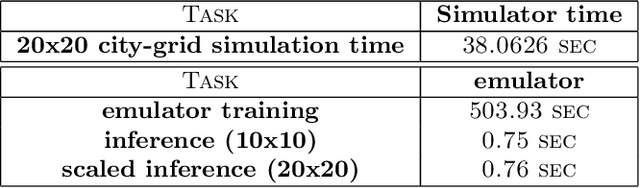
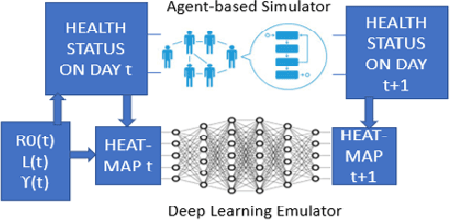

Agent-Based Models are very useful for simulation of physical or social processes, such as the spreading of a pandemic in a city. Such models proceed by specifying the behavior of individuals (agents) and their interactions, and parameterizing the process of infection based on such interactions based on the geography and demography of the city. However, such models are computationally very expensive, and the complexity is often linear in the total number of agents. This seriously limits the usage of such models for simulations, which often have to be run hundreds of times for policy planning and even model parameter estimation. An alternative is to develop an emulator, a surrogate model that can predict the Agent-Based Simulator's output based on its initial conditions and parameters. In this paper, we discuss a Deep Learning model based on Dilated Convolutional Neural Network that can emulate such an agent based model with high accuracy. We show that use of this model instead of the original Agent-Based Model provides us major gains in the speed of simulations, allowing much quicker calibration to observations, and more extensive scenario analysis. The models we consider are spatially explicit, as the locations of the infected individuals are simulated instead of the gross counts. Another aspect of our emulation framework is its divide-and-conquer approach that divides the city into several small overlapping blocks and carries out the emulation in them parallelly, after which these results are merged together. This ensures that the same emulator can work for a city of any size, and also provides significant improvement of time complexity of the emulator, compared to the original simulator.
PARL: Enhancing Diversity of Ensemble Networks to Resist Adversarial Attacks via Pairwise Adversarially Robust Loss Function
Dec 09, 2021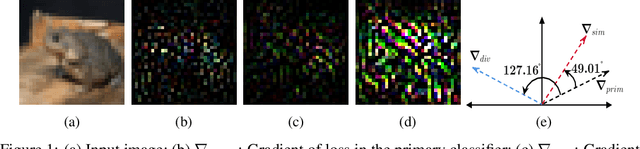
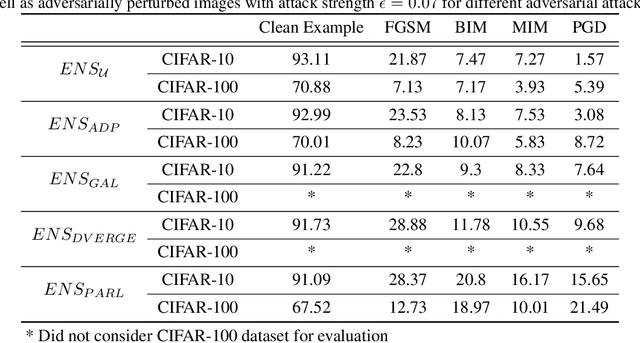
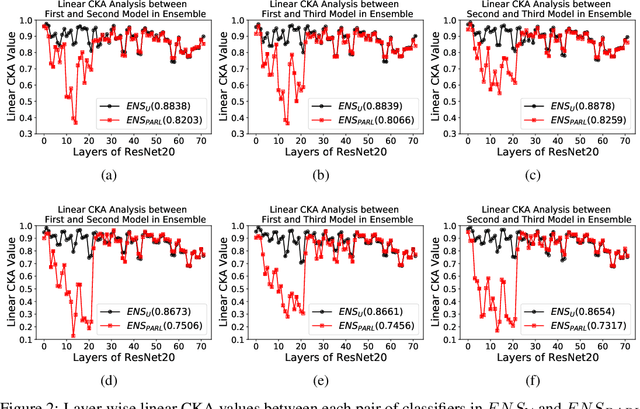
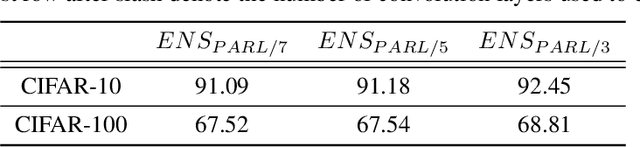
The security of Deep Learning classifiers is a critical field of study because of the existence of adversarial attacks. Such attacks usually rely on the principle of transferability, where an adversarial example crafted on a surrogate classifier tends to mislead the target classifier trained on the same dataset even if both classifiers have quite different architecture. Ensemble methods against adversarial attacks demonstrate that an adversarial example is less likely to mislead multiple classifiers in an ensemble having diverse decision boundaries. However, recent ensemble methods have either been shown to be vulnerable to stronger adversaries or shown to lack an end-to-end evaluation. This paper attempts to develop a new ensemble methodology that constructs multiple diverse classifiers using a Pairwise Adversarially Robust Loss (PARL) function during the training procedure. PARL utilizes gradients of each layer with respect to input in every classifier within the ensemble simultaneously. The proposed training procedure enables PARL to achieve higher robustness against black-box transfer attacks compared to previous ensemble methods without adversely affecting the accuracy of clean examples. We also evaluate the robustness in the presence of white-box attacks, where adversarial examples are crafted using parameters of the target classifier. We present extensive experiments using standard image classification datasets like CIFAR-10 and CIFAR-100 trained using standard ResNet20 classifier against state-of-the-art adversarial attacks to demonstrate the robustness of the proposed ensemble methodology.