 Add to Chrome
 Add to Firefox
 Add to Edge
CalcSeg: Confidence-aware 3D Latent Context Curriculum Learning For Myocardial Scar Segmentation From Single-Stack LGE-CMRs
Aug 20, 2026
Myocardial scar segmentation from single-stack late gadolinium-enhanced cardiac magnetic resonance (LGE-CMR) imaging has been a longstanding and clinically important challenge, particularly in the presence of low tissue contrast, diffuse, and small scar regions. These challenges are further intensified by the limited availability of 3D spatial context. This paper presents CalcSeg, a Confidence-aware latent context curriculum learning framework that leverages fused 3D feature representations from single-stack 2D LGE-CMR images for robust scar segmentation. Specifically, we introduce a dynamic semi-supervised curriculum learning strategy that progressively expands training from easier to more challenging scar cases using a learned confidence-aware scoring function. Such a function integrates errors in the predicted scar maps with quantified epistemic uncertainty and scar burden estimation to automatically assess sample difficulty without requiring manual labels. To compensate for the limited spatial context in single-stack acquisitions, we then develop a latent slice-wise self-attention to capture inter-slice dependencies and infer 3D spatial representations from sparse 2D inputs. We evaluate CalcSeg on multi-center clinical LGE-CMR datasets and benchmark against existing scar segmentation networks. Experimental results show that CalcSeg consistently outperforms all competing methods, particularly with substantial improvements on clinically challenging cases. Our code is released on Github.

Generative Modeling of Neurodegenerative Brain Anatomy with 4D Longitudinal Diffusion Model
Apr 24, 2026Understanding and predicting the progression of neurodegenerative diseases remains a major challenge in medical AI, with significant implications for early diagnosis, disease monitoring, and treatment planning. However, most available longitudinal neuroimaging datasets are temporally sparse with a few follow-up scans per subject. This scarcity of temporal data limits our ability to model and accurately capture the continuous anatomical changes related to disease progression in individual subjects. To address this problem, we propose a novel 4D (3DxT) diffusion-based generative framework that effectively models and synthesizes longitudinal brain anatomy over time, conditioned on available clinical variables such as health status, age, sex, and other relevant factors. Moreover, while most current approaches focus on manipulating image intensity or texture, our method explicitly learns the data distribution of topology-preserving spatiotemporal deformations to effectively capture the geometric changes of brain structures over time. This design enables the realistic generation of future anatomical states and the reconstruction of anatomically consistent disease trajectories, providing a more faithful representation of longitudinal brain changes. We validate our model through both synthetic sequence generation and downstream longitudinal disease classification, as well as brain segmentation. Experiments on two large-scale longitudinal neuroimage datasets demonstrate that our method outperforms state-of-the-art baselines in generating anatomically accurate, temporally consistent, and clinically meaningful brain trajectories. Our code is available on Github.
Curriculum-Guided Myocardial Scar Segmentation for Ischemic and Non-ischemic Cardiomyopathy
Mar 30, 2026Identification and quantification of myocardial scar is important for diagnosis and prognosis of cardiovascular diseases. However, reliable scar segmentation from Late Gadolinium Enhancement Cardiac Magnetic Resonance (LGE-CMR) images remains a challenge due to variations in contrast enhancement across patients, suboptimal imaging conditions such as post contrast washout, and inconsistencies in ground truth annotations on diffuse scars caused by inter observer variability. In this work, we propose a curriculum learning-based framework designed to improve segmentation performance under these challenging conditions. The method introduces a progressive training strategy that guides the model from high-confidence, clearly defined scar regions to low confidence or visually ambiguous samples with limited scar burden. By structuring the learning process in this manner, the network develops robustness to uncertain labels and subtle scar appearances that are often underrepresented in conventional training pipelines. Experimental results show that the proposed approach enhances segmentation accuracy and consistency, particularly for cases with minimal or diffuse scar, outperforming standard training baselines. This strategy provides a principled way to leverage imperfect data for improved myocardial scar quantification in clinical applications. Our code is publicly available on GitHub.
TPIE: Topology-Preserved Image Editing With Text Instructions
Nov 22, 2024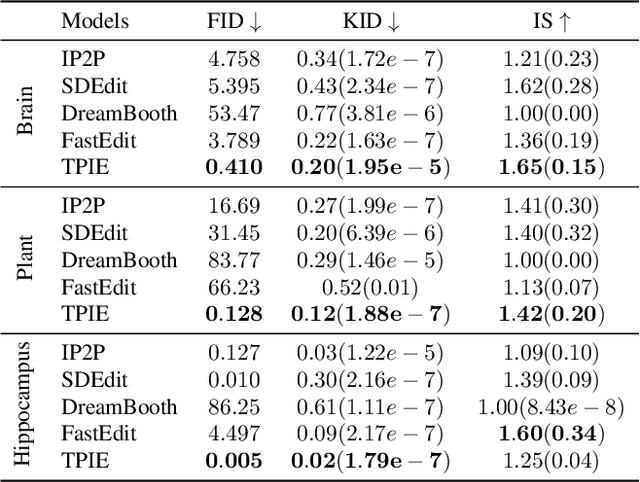
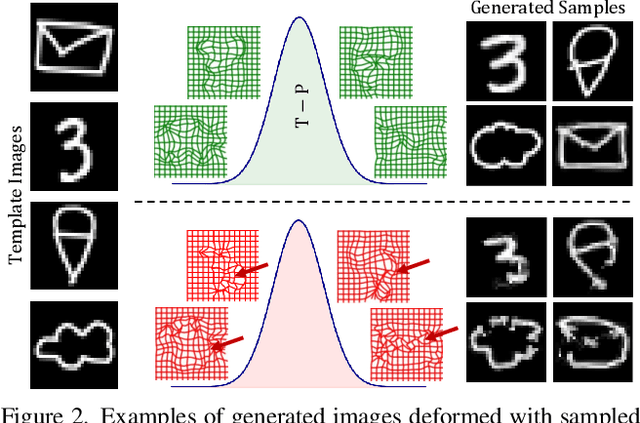
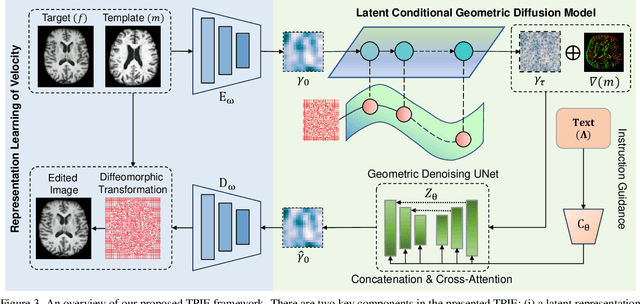
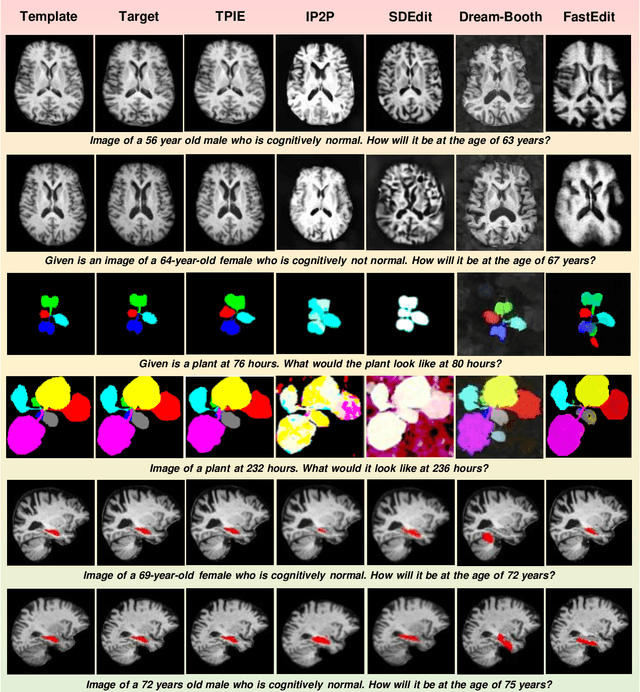
Preserving topological structures is important in real-world applications, particularly in sensitive domains such as healthcare and medicine, where the correctness of human anatomy is critical. However, most existing image editing models focus on manipulating intensity and texture features, often overlooking object geometry within images. To address this issue, this paper introduces a novel method, Topology-Preserved Image Editing with text instructions (TPIE), that for the first time ensures the topology and geometry remaining intact in edited images through text-guided generative diffusion models. More specifically, our method treats newly generated samples as deformable variations of a given input template, allowing for controllable and structure-preserving edits. Our proposed TPIE framework consists of two key modules: (i) an autoencoder-based registration network that learns latent representations of object transformations, parameterized by velocity fields, from pairwise training images; and (ii) a novel latent conditional geometric diffusion (LCDG) model efficiently capturing the data distribution of learned transformation features conditioned on custom-defined text instructions. We validate TPIE on a diverse set of 2D and 3D images and compare them with state-of-the-art image editing approaches. Experimental results show that our method outperforms other baselines in generating more realistic images with well-preserved topology. Our code will be made publicly available on Github.
LaMoD: Latent Motion Diffusion Model For Myocardial Strain Generation
Jul 02, 2024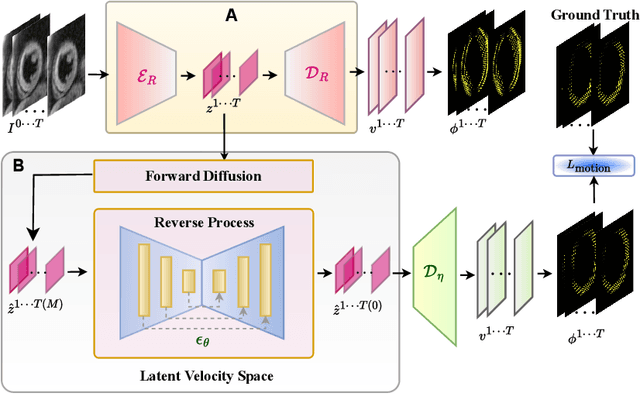
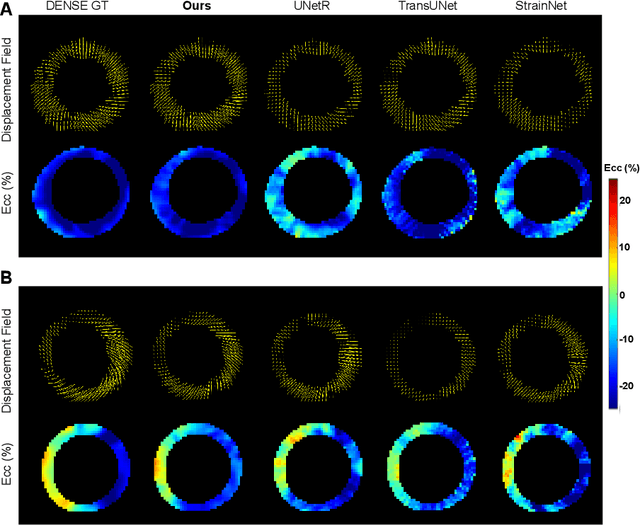
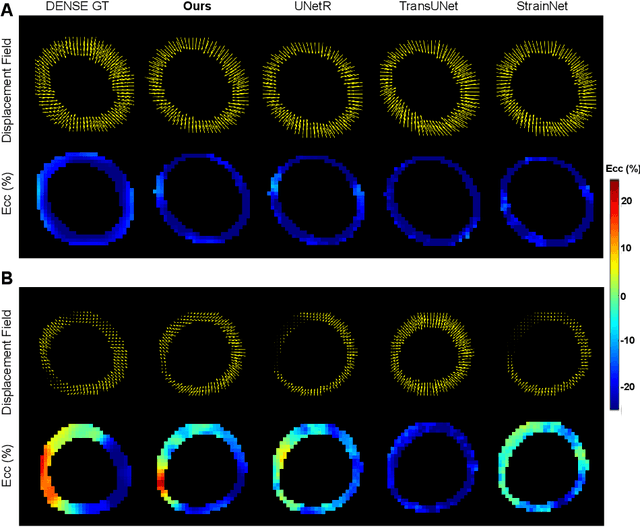
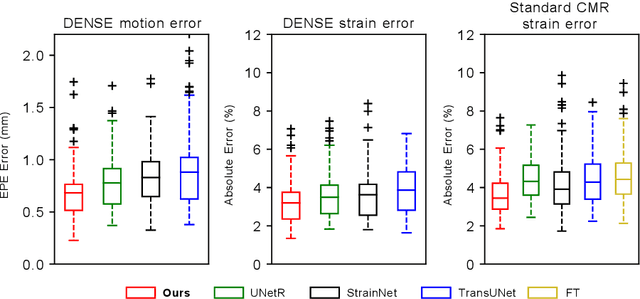
Motion and deformation analysis of cardiac magnetic resonance (CMR) imaging videos is crucial for assessing myocardial strain of patients with abnormal heart functions. Recent advances in deep learning-based image registration algorithms have shown promising results in predicting motion fields from routinely acquired CMR sequences. However, their accuracy often diminishes in regions with subtle appearance change, with errors propagating over time. Advanced imaging techniques, such as displacement encoding with stimulated echoes (DENSE) CMR, offer highly accurate and reproducible motion data but require additional image acquisition, which poses challenges in busy clinical flows. In this paper, we introduce a novel Latent Motion Diffusion model (LaMoD) to predict highly accurate DENSE motions from standard CMR videos. More specifically, our method first employs an encoder from a pre-trained registration network that learns latent motion features (also considered as deformation-based shape features) from image sequences. Supervised by the ground-truth motion provided by DENSE, LaMoD then leverages a probabilistic latent diffusion model to reconstruct accurate motion from these extracted features. Experimental results demonstrate that our proposed method, LaMoD, significantly improves the accuracy of motion analysis in standard CMR images; hence improving myocardial strain analysis in clinical settings for cardiac patients. Our code will be publicly available on upon acceptance.
An end-to-end deep learning pipeline to derive blood input with partial volume corrections for automated parametric brain PET mapping
Feb 05, 2024Dynamic 2-[18F] fluoro-2-deoxy-D-glucose positron emission tomography (dFDG-PET) for human brain imaging has considerable clinical potential, yet its utilization remains limited. A key challenge in the quantitative analysis of dFDG-PET is characterizing a patient-specific blood input function, traditionally reliant on invasive arterial blood sampling. This research introduces a novel approach employing non-invasive deep learning model-based computations from the internal carotid arteries (ICA) with partial volume (PV) corrections, thereby eliminating the need for invasive arterial sampling. We present an end-to-end pipeline incorporating a 3D U-Net based ICA-net for ICA segmentation, alongside a Recurrent Neural Network (RNN) based MCIF-net for the derivation of a model-corrected blood input function (MCIF) with PV corrections. The developed 3D U-Net and RNN was trained and validated using a 5-fold cross-validation approach on 50 human brain FDG PET datasets. The ICA-net achieved an average Dice score of 82.18% and an Intersection over Union of 68.54% across all tested scans. Furthermore, the MCIF-net exhibited a minimal root mean squared error of 0.0052. The application of this pipeline to ground truth data for dFDG-PET brain scans resulted in the precise localization of seizure onset regions, which contributed to a successful clinical outcome, with the patient achieving a seizure-free state after treatment. These results underscore the efficacy of the ICA-net and MCIF-net deep learning pipeline in learning the ICA structure's distribution and automating MCIF computation with PV corrections. This advancement marks a significant leap in non-invasive neuroimaging.
SADIR: Shape-Aware Diffusion Models for 3D Image Reconstruction
Sep 06, 2023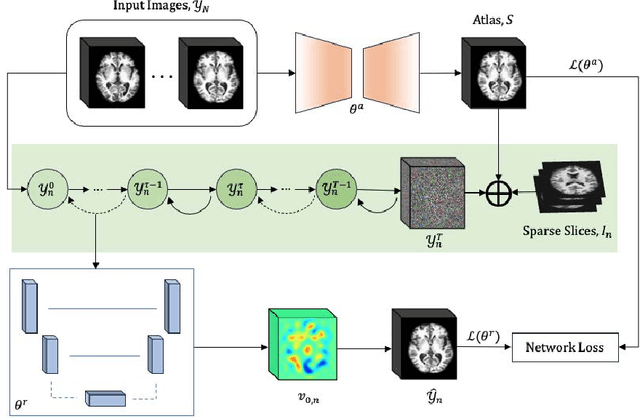
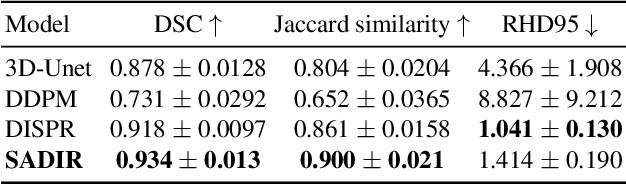
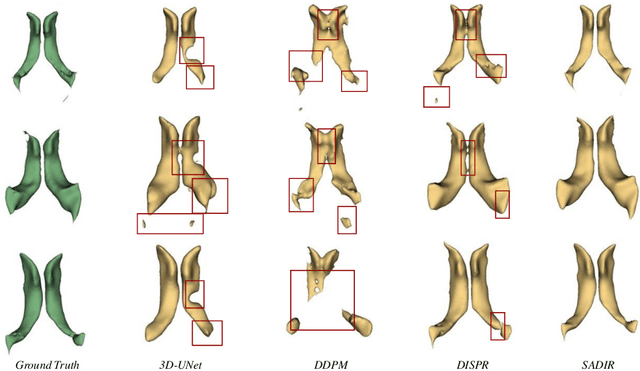
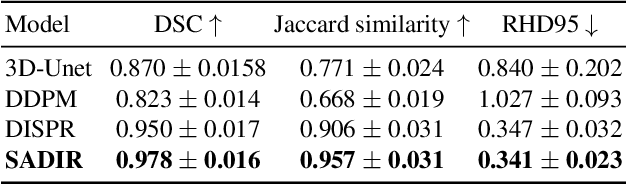
3D image reconstruction from a limited number of 2D images has been a long-standing challenge in computer vision and image analysis. While deep learning-based approaches have achieved impressive performance in this area, existing deep networks often fail to effectively utilize the shape structures of objects presented in images. As a result, the topology of reconstructed objects may not be well preserved, leading to the presence of artifacts such as discontinuities, holes, or mismatched connections between different parts. In this paper, we propose a shape-aware network based on diffusion models for 3D image reconstruction, named SADIR, to address these issues. In contrast to previous methods that primarily rely on spatial correlations of image intensities for 3D reconstruction, our model leverages shape priors learned from the training data to guide the reconstruction process. To achieve this, we develop a joint learning network that simultaneously learns a mean shape under deformation models. Each reconstructed image is then considered as a deformed variant of the mean shape. We validate our model, SADIR, on both brain and cardiac magnetic resonance images (MRIs). Experimental results show that our method outperforms the baselines with lower reconstruction error and better preservation of the shape structure of objects within the images.
Multimodal Deep Learning to Differentiate Tumor Recurrence from Treatment Effect in Human Glioblastoma
Feb 27, 2023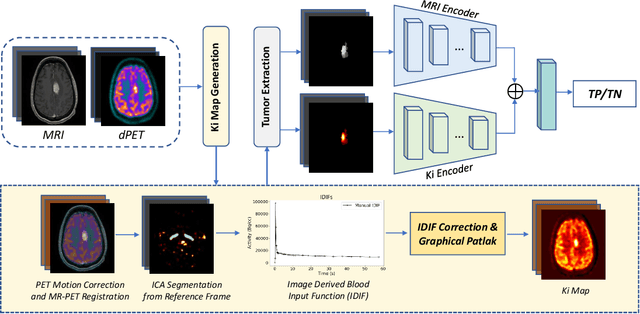
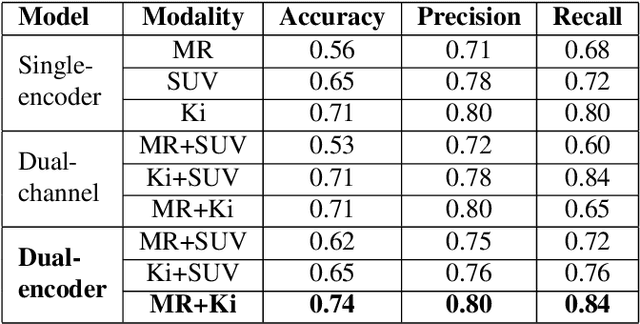
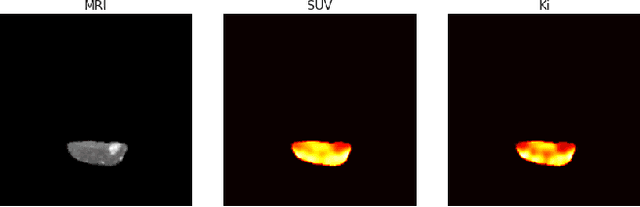
Differentiating tumor progression (TP) from treatment-related necrosis (TN) is critical for clinical management decisions in glioblastoma (GBM). Dynamic FDG PET (dPET), an advance from traditional static FDG PET, may prove advantageous in clinical staging. dPET includes novel methods of a model-corrected blood input function that accounts for partial volume averaging to compute parametric maps that reveal kinetic information. In a preliminary study, a convolution neural network (CNN) was trained to predict classification accuracy between TP and TN for $35$ brain tumors from $26$ subjects in the PET-MR image space. 3D parametric PET Ki (from dPET), traditional static PET standardized uptake values (SUV), and also the brain tumor MR voxels formed the input for the CNN. The average test accuracy across all leave-one-out cross-validation iterations adjusting for class weights was $0.56$ using only the MR, $0.65$ using only the SUV, and $0.71$ using only the Ki voxels. Combining SUV and MR voxels increased the test accuracy to $0.62$. On the other hand, MR and Ki voxels increased the test accuracy to $0.74$. Thus, dPET features alone or with MR features in deep learning models would enhance prediction accuracy in differentiating TP vs TN in GBM.