 Add to Chrome
 Add to Firefox
 Add to Edge
CTBench: Evaluating Troubleshooting Capabilities of AI Agents in Realistic Telecom Network Operations
Aug 12, 2026
Agents are increasingly considered for automating network operations and maintenance, where engineers must diagnose network faults, optimize configurations to enhance services, and reduce operational costs while acting under strict constraints. However, existing evaluations fail to accurately model real network characteristics or assess agents under partially observable telecom environments with diverse vendors, devices, protocols, and interfaces. In this paper, we introduce CTBench, a public benchmark for assessing whether an agent behaves like a competent telecom troubleshooting engineer. CTBench focuses on root cause analysis and path restoration. Each task is constructed by experts and annotated with rich task metadata, including golden evidence steps. CTBench uses expert-grounded metrics that evaluate both final answers and the diagnostic evidence. Experiments with representative harness-model combinations show that state-of-the-art agents perform very well at identifying endpoints in path-restoration tasks but, more generally, underperform in root cause analysis. In particular, agents struggle with interface state, link-layer, service-management, and other operational faults. Most importantly, even when agents produce plausible or correct final answers, they often fail to provide the evidence-grounded diagnoses required in operational practice. Our results further show that path restoration is generally more resource expensive, yet larger resource usage does not necessarily translate into better diagnosis.

Physics-Aware Conditional SetGAN for Spatially Consistent Multi-User TR 38.901 Channel Generation
Jul 13, 2026TR 38.901-based channel models such as Sionna are reliable, but generating many multi-user channel realizations remains expensive. This paper asks a practical question: can a trained generative model produce multi-user TR 38.901 channels faster than Sionna without losing the spatial correlations imposed by user geometry? To answer this question, we propose a physics-aware, geometry-conditioned SetGAN trained on Sionna reference data. The method separates large-scale received power from normalized small-scale fading, compresses the latter with principal component analysis, and learns the conditional channel distribution in a latent space while preserving geometry-dependent correlations. On the UMa/NLoS benchmark, the model keeps the received-power distributions close to the reference, with about 0.41 dB Wasserstein distance, and reproduces spatial-consistency profiles with mean deviations below 0.03 on median curves versus distance. In addition, it reduces elapsed generation time by a factor of 3.45 and CPU-total cost by a factor of 6.15 relative to Sionna under matched user positions in the fixed-position CPU-vs-CPU benchmark. These results show that a trained generative model can substantially accelerate TR 38.901 channel generation without breaking the spatial consistency needed to evaluate multi-user systems.
HPO: Hysteretic Policy Optimization for Stable and Efficient Training under Sparse-Reward Regime
May 28, 2026We investigate a narrow but common failure mode of GRPO-style reinforcement learning in the context of sparse verifiable rewards: early updates contain more responses with negative advantages than those with positive advantages, while response-level length normalization ties the magnitude of the update to the length of the output. We propose Hysteretic Policy Optimization (HPO), a minimal modification of GRPO that reduces the weight of negative-advantage updates and replaces per-response length normalization with mean-length normalization. We further introduce Adaptive HPO (A-HPO), which sets the hysteretic weight based on batch-level advantage-sign statistics, thereby removing the need for tuning a fixed hysteretic weight. In our TeleLogs and Countdown experiments, A-HPO improves the reward per update compared to GRPO, with the largest gains in early sparse reward regimes. On TeleLogs, A-HPO achieves a final reward of 0.84, outperforming SAPO by 5%, GSPO by 11%, and GRPO by 15%, while maintaining a comparable response-length. On Countdown, A-HPO achieves the largest gains in initial and most difficult configurations across 1.5B-7B models. Ablation studies on the hysteretic weight show that the gains of A-HPO come from better balancing the contributions of positive and negative advantages compared to positive-only or fully symmetric updates.
KVCompose: Efficient Structured KV Cache Compression with Composite Tokens
Sep 05, 2025Large language models (LLMs) rely on key-value (KV) caches for efficient autoregressive decoding; however, cache size grows linearly with context length and model depth, becoming a major bottleneck in long-context inference. Prior KV cache compression methods either enforce rigid heuristics, disrupt tensor layouts with per-attention-head variability, or require specialized compute kernels. We propose a simple, yet effective, KV cache compression framework based on attention-guided, layer-adaptive composite tokens. Our method aggregates attention scores to estimate token importance, selects head-specific tokens independently, and aligns them into composite tokens that respect the uniform cache structure required by existing inference engines. A global allocation mechanism further adapts retention budgets across layers, assigning more capacity to layers with informative tokens. This approach achieves significant memory reduction while preserving accuracy, consistently outperforming prior structured and semi-structured methods. Crucially, our approach remains fully compatible with standard inference pipelines, offering a practical and scalable solution for efficient long-context LLM deployment.
Reasoning Language Models for Root Cause Analysis in 5G Wireless Networks
Jul 29, 2025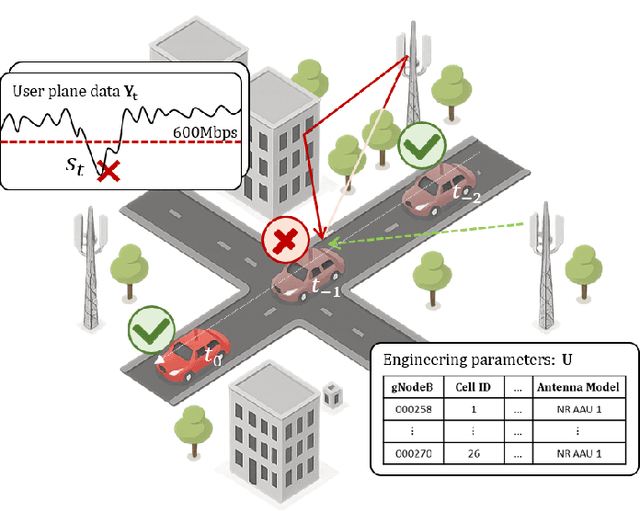
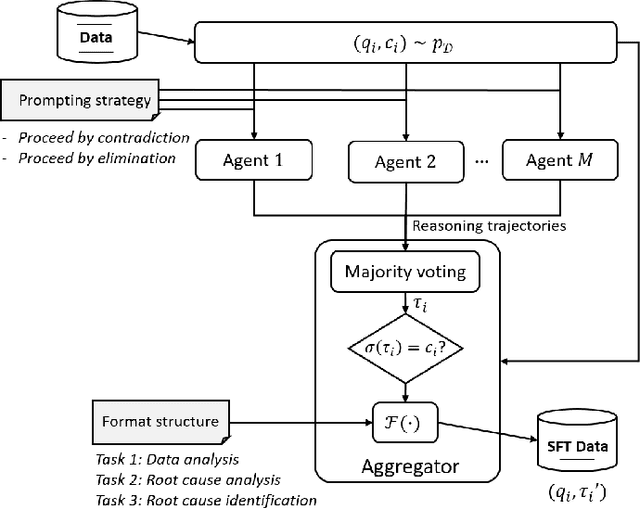
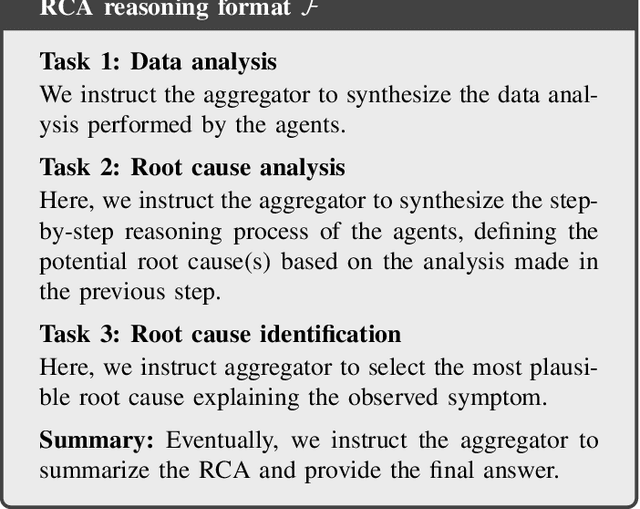
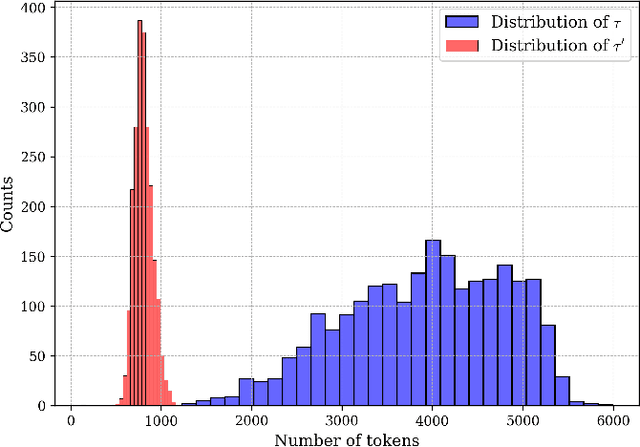
Root Cause Analysis (RCA) in mobile networks remains a challenging task due to the need for interpretability, domain expertise, and causal reasoning. In this work, we propose a lightweight framework that leverages Large Language Models (LLMs) for RCA. To do so, we introduce TeleLogs, a curated dataset of annotated troubleshooting problems designed to benchmark RCA capabilities. Our evaluation reveals that existing open-source reasoning LLMs struggle with these problems, underscoring the need for domain-specific adaptation. To address this issue, we propose a two-stage training methodology that combines supervised fine-tuning with reinforcement learning to improve the accuracy and reasoning quality of LLMs. The proposed approach fine-tunes a series of RCA models to integrate domain knowledge and generate structured, multi-step diagnostic explanations, improving both interpretability and effectiveness. Extensive experiments across multiple LLM sizes show significant performance gains over state-of-the-art reasoning and non-reasoning models, including strong generalization to randomized test variants. These results demonstrate the promise of domain-adapted, reasoning-enhanced LLMs for practical and explainable RCA in network operation and management.
TeleMath: A Benchmark for Large Language Models in Telecom Mathematical Problem Solving
Jun 12, 2025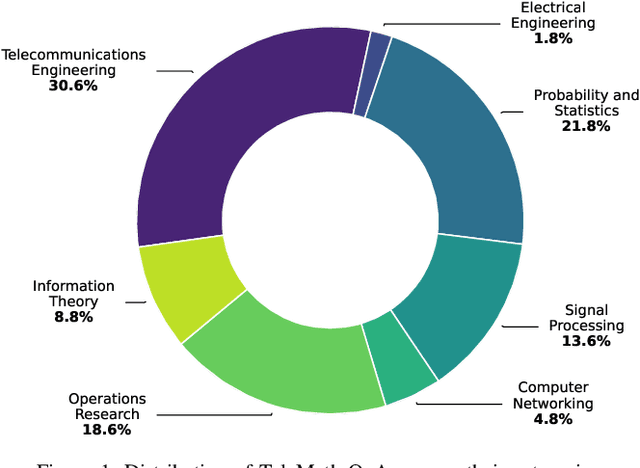

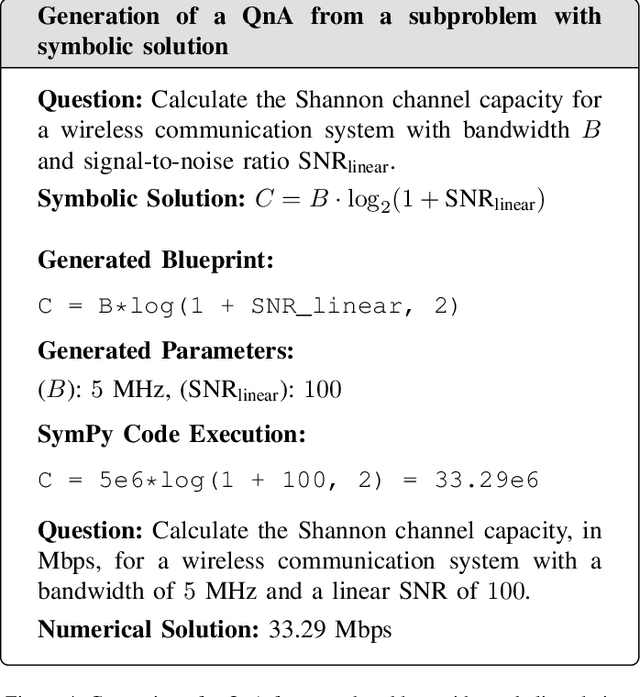
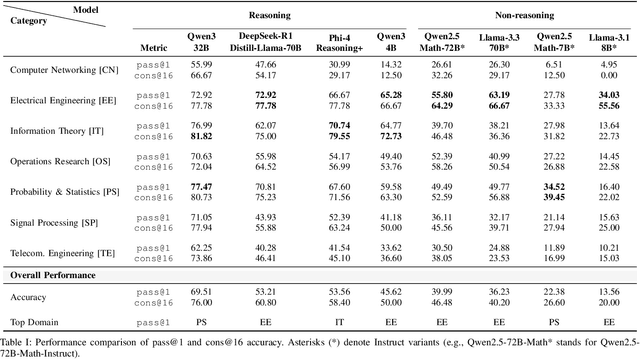
The increasing adoption of artificial intelligence in telecommunications has raised interest in the capability of Large Language Models (LLMs) to address domain-specific, mathematically intensive tasks. Although recent advancements have improved the performance of LLMs in general mathematical reasoning, their effectiveness within specialized domains, such as signal processing, network optimization, and performance analysis, remains largely unexplored. To address this gap, we introduce TeleMath, the first benchmark dataset specifically designed to evaluate LLM performance in solving mathematical problems with numerical solutions in the telecommunications domain. Comprising 500 question-answer (QnA) pairs, TeleMath covers a wide spectrum of topics in the telecommunications field. This paper outlines the proposed QnAs generation pipeline, starting from a selected seed of problems crafted by Subject Matter Experts. The evaluation of a wide range of open-source LLMs reveals that best performance on TeleMath is achieved by recent models explicitly designed for mathematical or logical reasoning. In contrast, general-purpose models, even those with a large number of parameters, often struggle with these challenges. We have released the dataset and the evaluation code to ease result reproducibility and support future research.
Telco-oRAG: Optimizing Retrieval-augmented Generation for Telecom Queries via Hybrid Retrieval and Neural Routing
May 17, 2025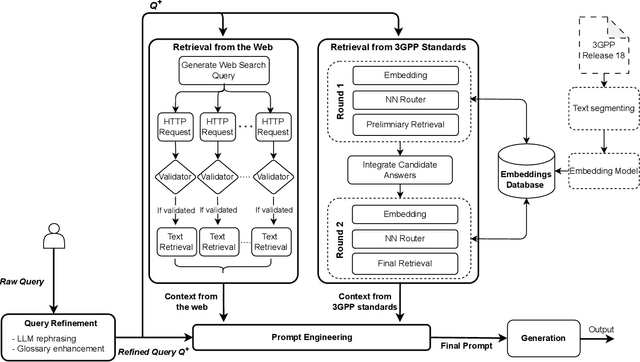
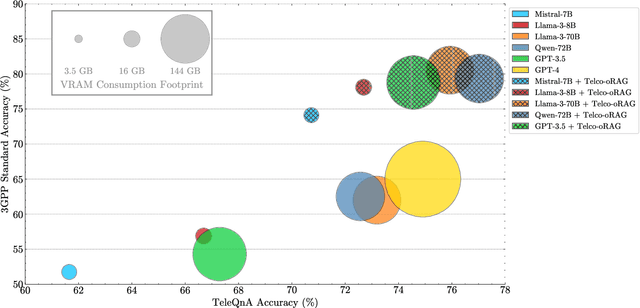

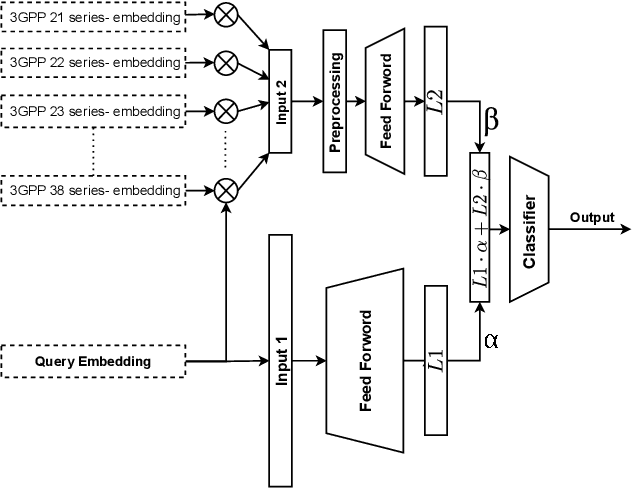
Artificial intelligence will be one of the key pillars of the next generation of mobile networks (6G), as it is expected to provide novel added-value services and improve network performance. In this context, large language models have the potential to revolutionize the telecom landscape through intent comprehension, intelligent knowledge retrieval, coding proficiency, and cross-domain orchestration capabilities. This paper presents Telco-oRAG, an open-source Retrieval-Augmented Generation (RAG) framework optimized for answering technical questions in the telecommunications domain, with a particular focus on 3GPP standards. Telco-oRAG introduces a hybrid retrieval strategy that combines 3GPP domain-specific retrieval with web search, supported by glossary-enhanced query refinement and a neural router for memory-efficient retrieval. Our results show that Telco-oRAG improves the accuracy in answering 3GPP-related questions by up to 17.6% and achieves a 10.6% improvement in lexicon queries compared to baselines. Furthermore, Telco-oRAG reduces memory usage by 45% through targeted retrieval of relevant 3GPP series compared to baseline RAG, and enables open-source LLMs to reach GPT-4-level accuracy on telecom benchmarks.
Goal-Oriented Time-Series Forecasting: Foundation Framework Design
Apr 24, 2025Traditional time-series forecasting often focuses only on minimizing prediction errors, ignoring the specific requirements of real-world applications that employ them. This paper presents a new training methodology, which allows a forecasting model to dynamically adjust its focus based on the importance of forecast ranges specified by the end application. Unlike previous methods that fix these ranges beforehand, our training approach breaks down predictions over the entire signal range into smaller segments, which are then dynamically weighted and combined to produce accurate forecasts. We tested our method on standard datasets, including a new dataset from wireless communication, and found that not only it improves prediction accuracy but also improves the performance of end application employing the forecasting model. This research provides a basis for creating forecasting systems that better connect prediction and decision-making in various practical applications.
Capacity and Power Consumption of Multi-Layer 6G Networks Using the Upper Mid-Band
Nov 14, 2024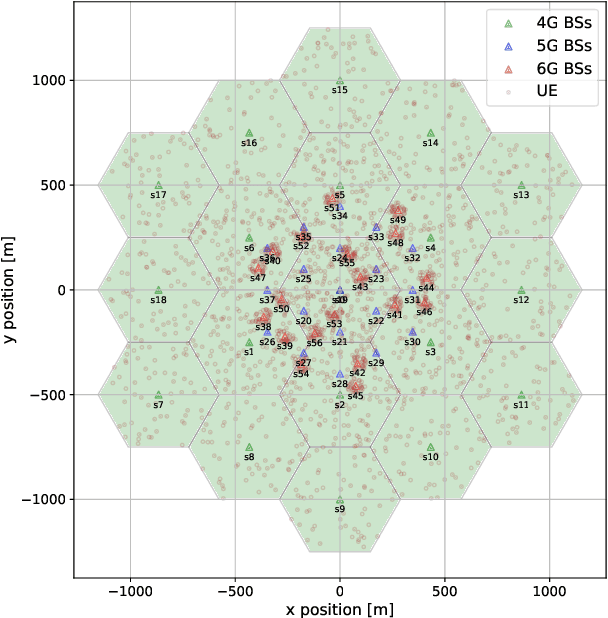
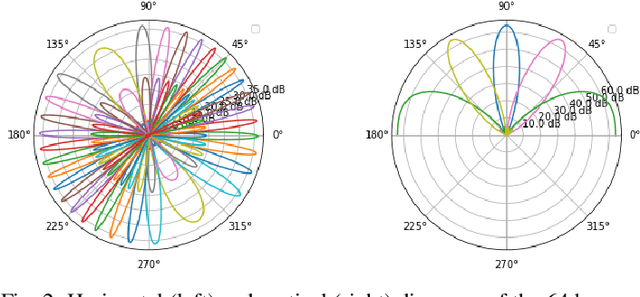
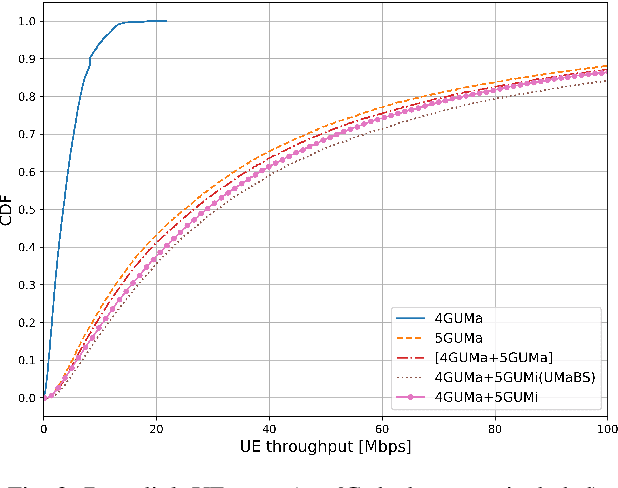
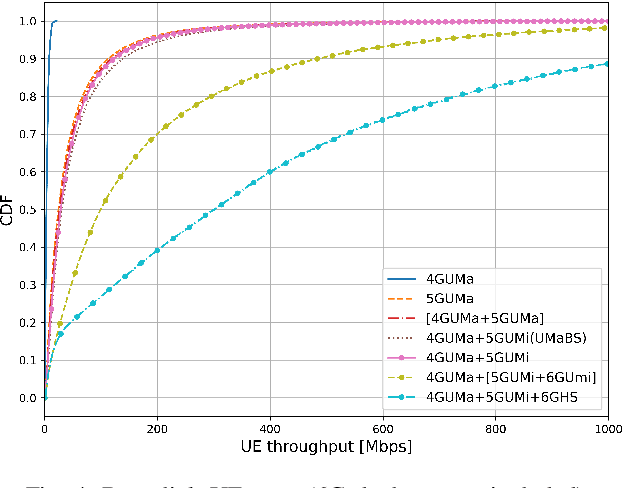
This paper presents a new system model to evaluate the capacity and power consumption of multi-layer 6G networks utilising the upper mid-band (FR3). The model captures heterogeneous 4G, 5G, and 6G deployments, analyzing their performance under different deployment strategies. Our results show that strategic 6G deployments, non-co-located with existing 5G sites, significantly enhance throughput, with median and peak user rates of 300 Mbps and exceeding 1 Gbps, respectively. We also emphasize the importance of priority-based cell reselection and beam configuration to fully leverage 6G capabilities. While 6G implementation increases power consumption by 33%, non-colocated deployments strike a balance between performance and power consumption.
Hermes: A Large Language Model Framework on the Journey to Autonomous Networks
Nov 10, 2024

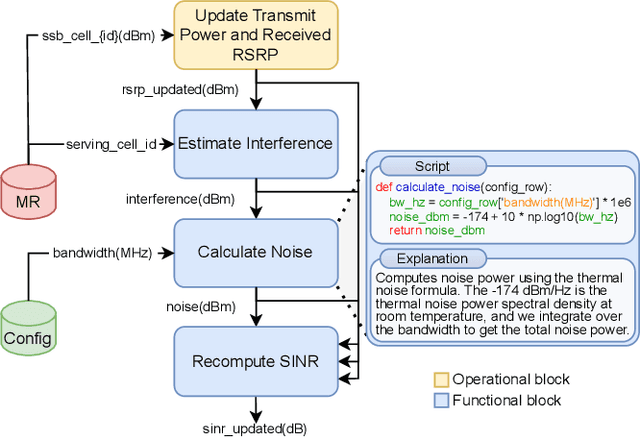

The drive toward automating cellular network operations has grown with the increasing complexity of these systems. Despite advancements, full autonomy currently remains out of reach due to reliance on human intervention for modeling network behaviors and defining policies to meet target requirements. Network Digital Twins (NDTs) have shown promise in enhancing network intelligence, but the successful implementation of this technology is constrained by use case-specific architectures, limiting its role in advancing network autonomy. A more capable network intelligence, or "telecommunications brain", is needed to enable seamless, autonomous management of cellular network. Large Language Models (LLMs) have emerged as potential enablers for this vision but face challenges in network modeling, especially in reasoning and handling diverse data types. To address these gaps, we introduce Hermes, a chain of LLM agents that uses "blueprints" for constructing NDT instances through structured and explainable logical steps. Hermes allows automatic, reliable, and accurate network modeling of diverse use cases and configurations, thus marking progress toward fully autonomous network operations.