 Add to Chrome
 Add to Firefox
 Add to Edge
Site-Specific MIMO Channel Generation via Diffusion and Flow Matching: Fidelity, Efficiency, and Downstream Utility
Jun 18, 2026
This paper explores the use of generative models to synthesize high-quality, site-specific multiple-input multiple-output (MIMO) channel data, addressing the high cost of the extensive measurement campaigns required to acquire real-world data for AI-native wireless networks. Two location-conditioned generative paradigms are compared: a conditional denoising diffusion implicit model (cDDIM), and a conditional flow matching model (cFMM). Both these models generate MIMO channel matrices conditioned on user coordinates, to preserve the spatial structure of the deployment site. The approaches are evaluated across three dimensions: statistical fidelity (including beam consistency and effective rank), generation efficiency, and utility in downstream tasks such as channel-state information compression and beam alignment. Results across diverse propagation scenarios (28 GHz and 3.5 GHz, both line-of-sight and non-line-of-sight) demonstrate that both models accurately capture site-specific characteristics, even when trained on scarce ground-truth data. Notably, cFMM achieves a quality comparable to cDDIM with roughly an order of magnitude less inference time. Augmenting scarce site-specific datasets with these synthetic channels yields hefty performance gains in downstream physical layer tasks compared to using scarce data alone or stochastic channels.

Quantum Computing for Large-scale Network Optimization: Opportunities and Challenges
Sep 09, 2025The complexity of large-scale 6G-and-beyond networks demands innovative approaches for multi-objective optimization over vast search spaces, a task often intractable. Quantum computing (QC) emerges as a promising technology for efficient large-scale optimization. We present our vision of leveraging QC to tackle key classes of problems in future mobile networks. By analyzing and identifying common features, particularly their graph-centric representation, we propose a unified strategy involving QC algorithms. Specifically, we outline a methodology for optimization using quantum annealing as well as quantum reinforcement learning. Additionally, we discuss the main challenges that QC algorithms and hardware must overcome to effectively optimize future networks.
A Multi-Task Foundation Model for Wireless Channel Representation Using Contrastive and Masked Autoencoder Learning
May 14, 2025Current applications of self-supervised learning to wireless channel representation often borrow paradigms developed for text and image processing, without fully addressing the unique characteristics and constraints of wireless communications. Aiming to fill this gap, we first propose WiMAE (Wireless Masked Autoencoder), a transformer-based encoder-decoder foundation model pretrained on a realistic open-source multi-antenna wireless channel dataset. Building upon this foundation, we develop ContraWiMAE, which enhances WiMAE by incorporating a contrastive learning objective alongside the reconstruction task in a unified multi-task framework. By warm-starting from pretrained WiMAE weights and generating positive pairs via noise injection, the contrastive component enables the model to capture both structural and discriminative features, enhancing representation quality beyond what reconstruction alone can achieve. Through extensive evaluation on unseen scenarios, we demonstrate the effectiveness of both approaches across multiple downstream tasks, with ContraWiMAE showing further improvements in linear separability and adaptability in diverse wireless environments. Comparative evaluations against a state-of-the-art wireless channel foundation model confirm the superior performance and data efficiency of our models, highlighting their potential as powerful baselines for future research in self-supervised wireless channel representation learning.
Performance Analysis of IEEE 802.11bn Non-Primary Channel Access
Apr 22, 2025
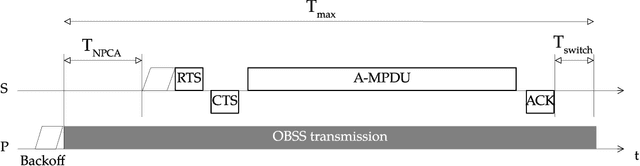
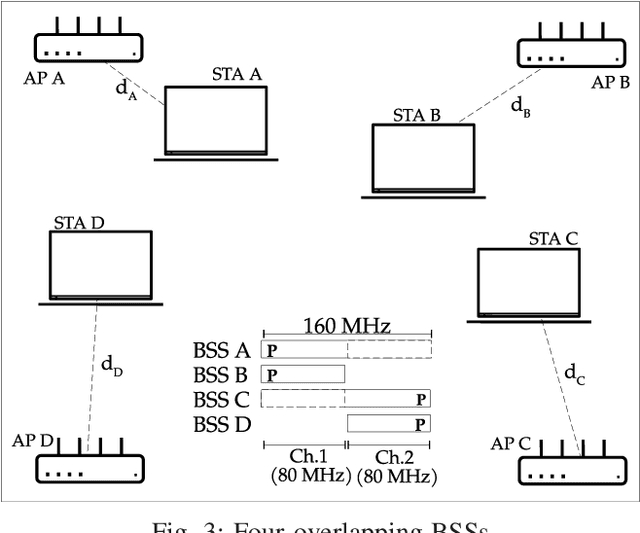
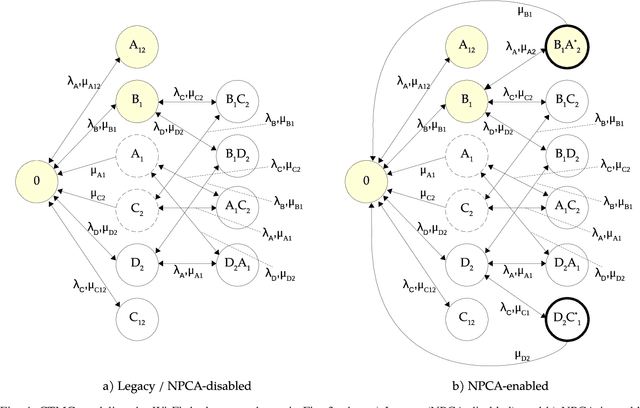
This paper presents a performance analysis of the Non-Primary Channel Access (NPCA) mechanism, a new feature introduced in IEEE 802.11bn to enhance spectrum utilization in Wi-Fi networks. NPCA enables devices to contend for and transmit on the secondary channel when the primary channel is occupied by transmissions from an Overlapping Basic Service Set (OBSS). We develop a Continuous-Time Markov Chain (CTMC) model that captures the interactions among OBSSs in dense WLAN environments when NPCA is enabled, incorporating new NPCA-specific states and transitions. In addition to the analytical insights offered by the model, we conduct numerical evaluations and simulations to quantify NPCA's impact on throughput and channel access delay across various scenarios. Our results show that NPCA can significantly improve throughput and reduce access delays in favorable conditions for BSSs that support the mechanism. Moreover, NPCA helps mitigate the OBSS performance anomaly, where low-rate OBSS transmissions degrade network performance for all nearby devices. However, we also observe trade-offs: NPCA may increase contention on secondary channels, potentially reducing transmission opportunities for BSSs operating there.
Cellular Network Design for UAV Corridors via Data-driven High-dimensional Bayesian Optimization
Apr 07, 2025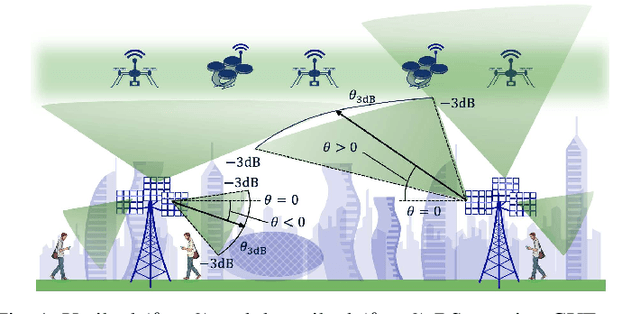
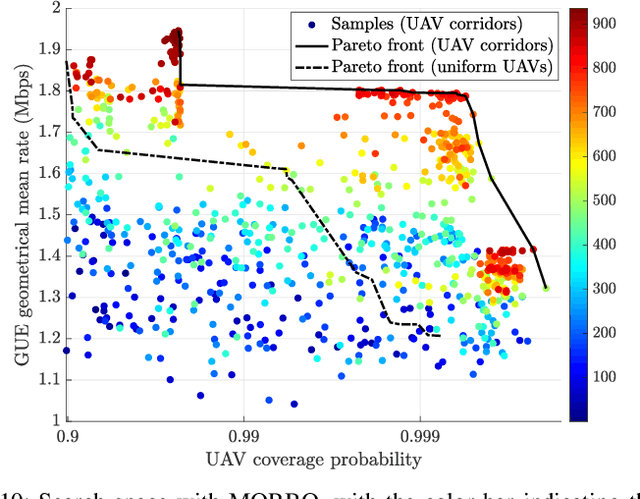
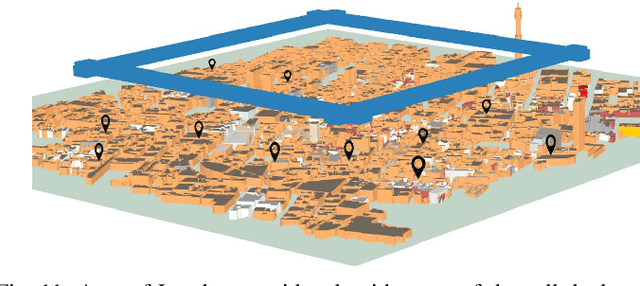
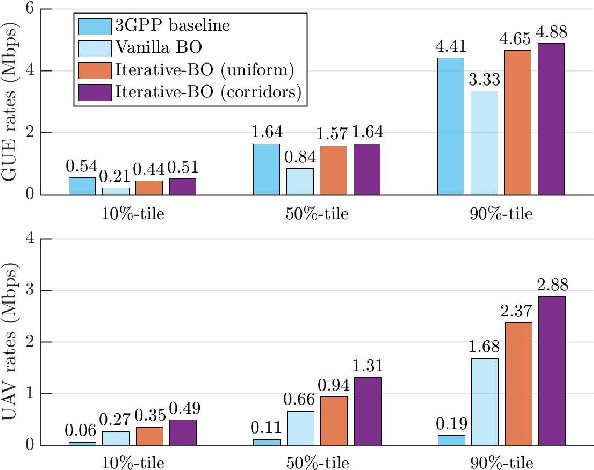
We address the challenge of designing cellular networks for uncrewed aerial vehicles (UAVs) corridors through a novel data-driven approach. We assess multiple state-of-the-art high-dimensional Bayesian optimization (HD-BO) techniques to jointly optimize the cell antenna tilts and half-power beamwidth (HPBW). We find that some of these approaches achieve over 20dB gains in median SINR along UAV corridors, with negligible degradation to ground user performance. Furthermore, we explore the HD-BO's capabilities in terms of model generalization via transfer learning, where data from a previously observed scenario source is leveraged to predict the optimal solution for a new scenario target. We provide examples of scenarios where such transfer learning is successful and others where it fails. Moreover, we demonstrate that HD-BO enables multi-objective optimization, identifying optimal design trade-offs between data rates on the ground versus UAV coverage reliability. We observe that aiming to provide UAV coverage across the entire sky can lower the rates for ground users compared to setups specifically optimized for UAV corridors. Finally, we validate our approach through a case study in a real-world cellular network, where HD-BO identifies optimal and non-obvious antenna configurations that result in more than double the rates along 3D UAV corridors with negligible ground performance loss.
Optimizing UAV Aerial Base Station Flights Using DRL-based Proximal Policy Optimization
Apr 04, 2025Unmanned aerial vehicle (UAV)-based base stations offer a promising solution in emergencies where the rapid deployment of cutting-edge networks is crucial for maximizing life-saving potential. Optimizing the strategic positioning of these UAVs is essential for enhancing communication efficiency. This paper introduces an automated reinforcement learning approach that enables UAVs to dynamically interact with their environment and determine optimal configurations. By leveraging the radio signal sensing capabilities of communication networks, our method provides a more realistic perspective, utilizing state-of-the-art algorithm -- proximal policy optimization -- to learn and generalize positioning strategies across diverse user equipment (UE) movement patterns. We evaluate our approach across various UE mobility scenarios, including static, random, linear, circular, and mixed hotspot movements. The numerical results demonstrate the algorithm's adaptability and effectiveness in maintaining comprehensive coverage across all movement patterns.
Large-Scale AI in Telecom: Charting the Roadmap for Innovation, Scalability, and Enhanced Digital Experiences
Mar 06, 2025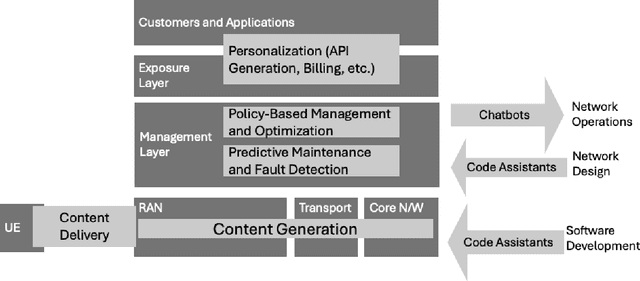
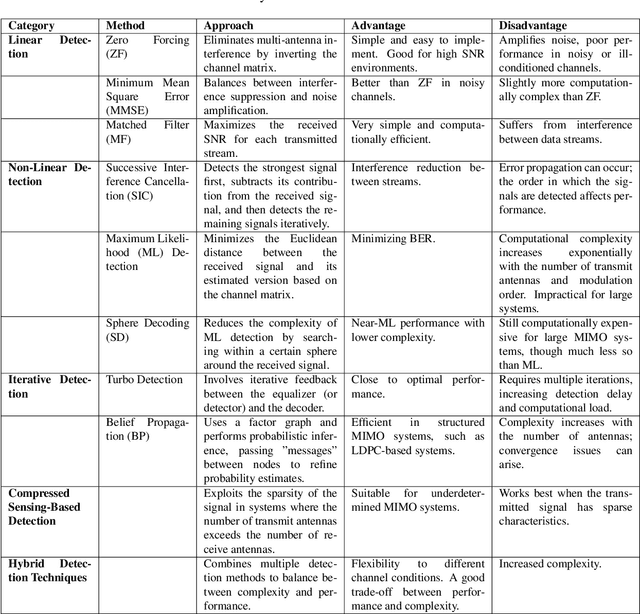
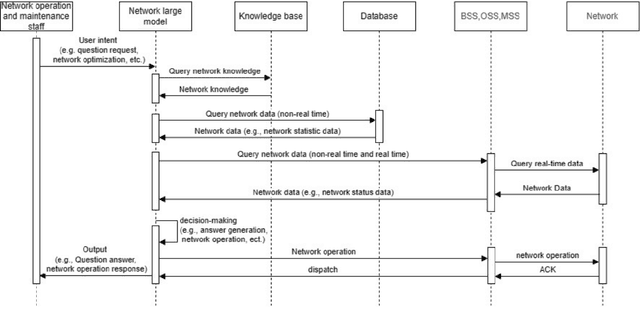
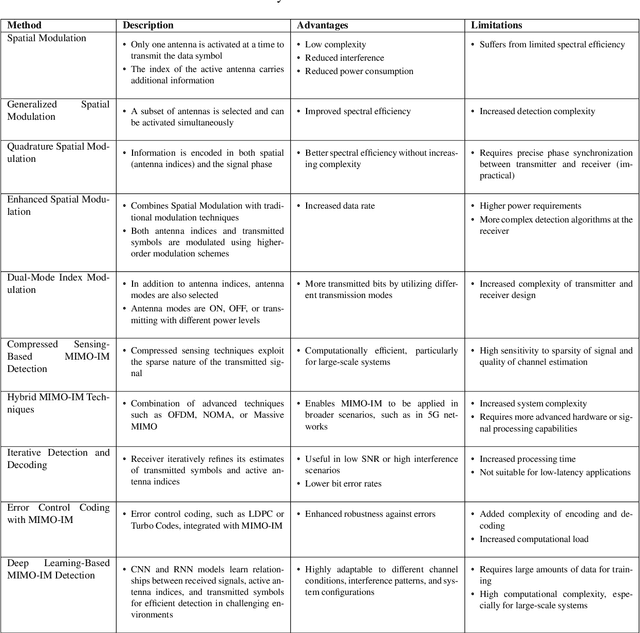
This white paper discusses the role of large-scale AI in the telecommunications industry, with a specific focus on the potential of generative AI to revolutionize network functions and user experiences, especially in the context of 6G systems. It highlights the development and deployment of Large Telecom Models (LTMs), which are tailored AI models designed to address the complex challenges faced by modern telecom networks. The paper covers a wide range of topics, from the architecture and deployment strategies of LTMs to their applications in network management, resource allocation, and optimization. It also explores the regulatory, ethical, and standardization considerations for LTMs, offering insights into their future integration into telecom infrastructure. The goal is to provide a comprehensive roadmap for the adoption of LTMs to enhance scalability, performance, and user-centric innovation in telecom networks.
Mathematical Cell Deployment Optimization for Capacity and Coverage of Ground and UAV Users
Feb 02, 2025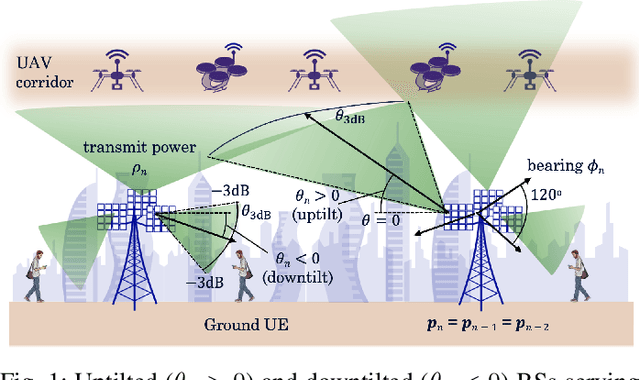
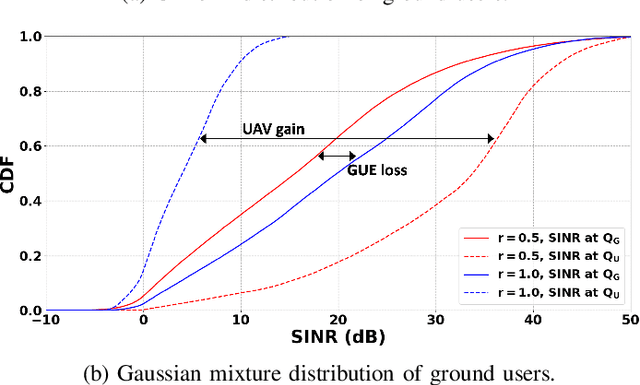
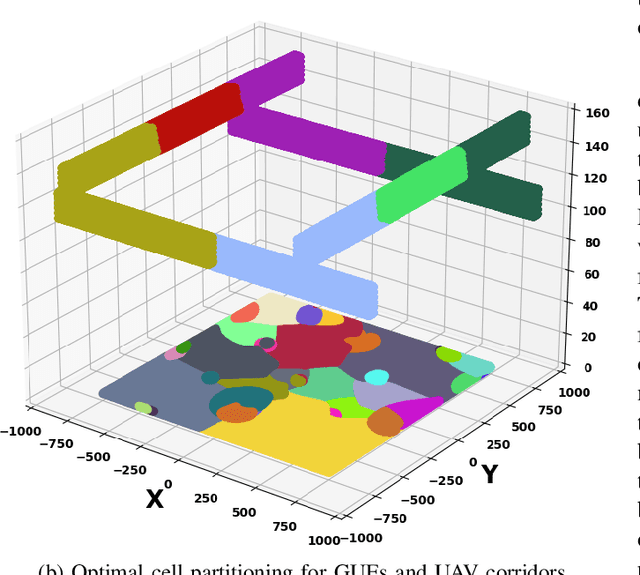
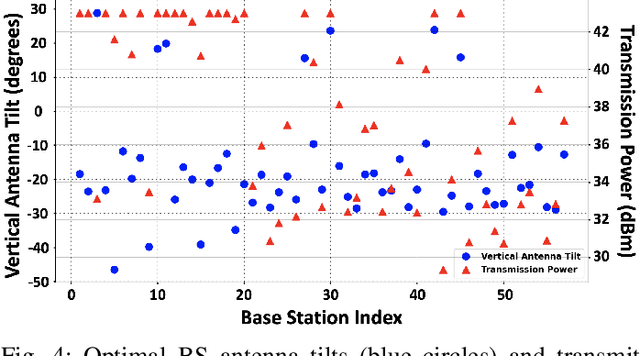
We present a general mathematical framework for optimizing cell deployment and antenna configuration in wireless networks, inspired by quantization theory. Unlike traditional methods, our framework supports networks with deterministically located nodes, enabling modeling and optimization under controlled deployment scenarios. We demonstrate our framework through two applications: joint fine-tuning of antenna parameters across base stations (BSs) to optimize network coverage, capacity, and load balancing, and the strategic deployment of new BSs, including the optimization of their locations and antenna settings. These optimizations are conducted for a heterogeneous 3D user population, comprising ground users (GUEs) and uncrewed aerial vehicles (UAVs) along aerial corridors. Our case studies highlight the framework's versatility in optimizing performance metrics such as the coverage-capacity trade-off and capacity per region. Our results confirm that optimizing the placement and orientation of additional BSs consistently outperforms approaches focused solely on antenna adjustments, regardless of GUE distribution. Furthermore, joint optimization for both GUEs and UAVs significantly enhances UAV service without severely affecting GUE performance.
Capacity and Power Consumption of Multi-Layer 6G Networks Using the Upper Mid-Band
Nov 14, 2024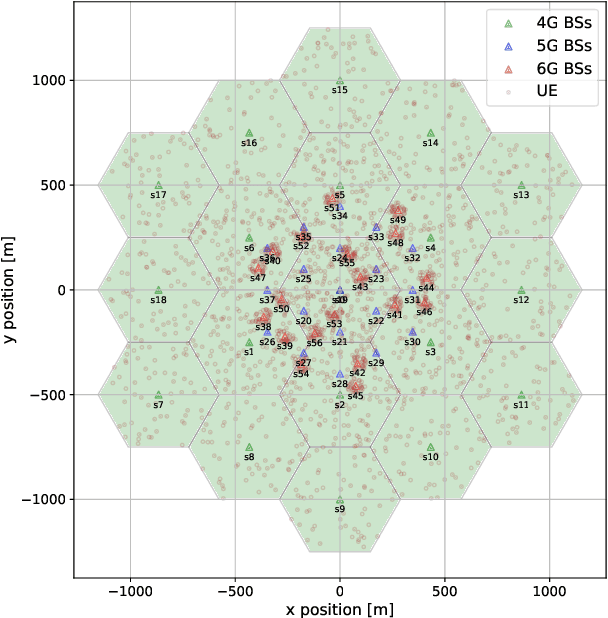
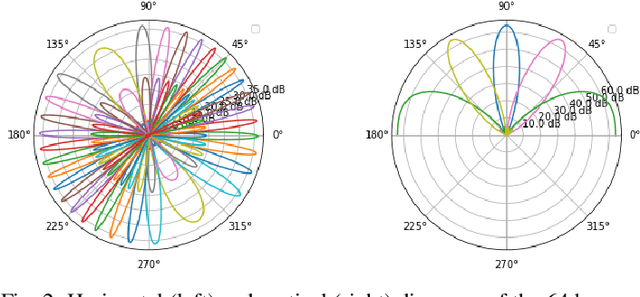
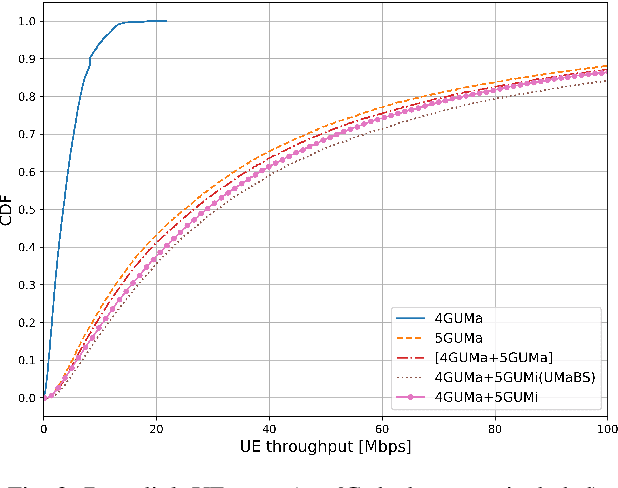
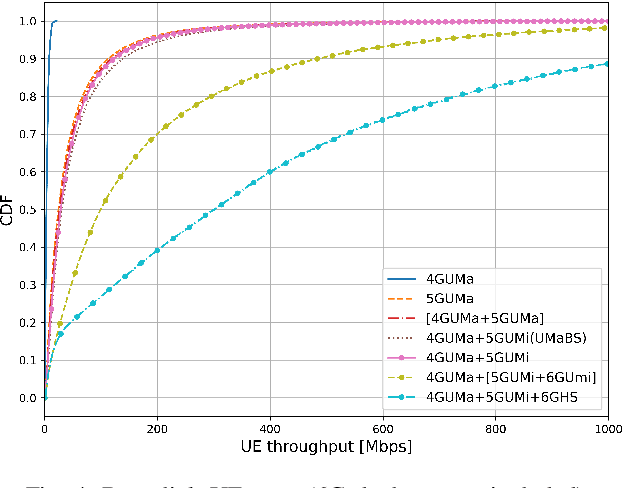
This paper presents a new system model to evaluate the capacity and power consumption of multi-layer 6G networks utilising the upper mid-band (FR3). The model captures heterogeneous 4G, 5G, and 6G deployments, analyzing their performance under different deployment strategies. Our results show that strategic 6G deployments, non-co-located with existing 5G sites, significantly enhance throughput, with median and peak user rates of 300 Mbps and exceeding 1 Gbps, respectively. We also emphasize the importance of priority-based cell reselection and beam configuration to fully leverage 6G capabilities. While 6G implementation increases power consumption by 33%, non-colocated deployments strike a balance between performance and power consumption.
Physically Consistent RIS: From Reradiation Mode Optimization to Practical Realization
Sep 26, 2024We propose a practical framework for designing a physically consistent reconfigurable intelligent surface (RIS) to overcome the inefficiency of the conventional phase gradient approach. For a section of Cape Town and across three different coverage enhancement scenarios, we optimize the amplitude of the RIS reradiation modes using Sionna ray tracing and a gradient-based learning technique. We then determine the required RIS surface/sheet impedance given the desired amplitudes for the reradiation modes, design the corresponding unitcells, and validate the performance through full-wave numerical simulations using CST Microwave Studio. We further validate our approach by fabricating a RIS using the parallel plate waveguide technique and conducting experimental measurements that align with our theoretical predictions.