 Add to Chrome
 Add to Firefox
 Add to Edge
SatEdit: Mask-Conditioned Image Editing via VLM-Guided Segment Annotation
Jul 31, 2026
Satellite image editing requires spatially precise object-level control, but supervised editing datasets for overhead imagery are costly to build because object masks, semantic labels, and paired edits are rarely available at scale. We introduce SatEdit, a mask-conditioned satellite image editing framework that constructs training supervision from unlabeled imagery. SatEdit proposes object masks with a seg- mentation foundation model, assigns semantic la- bels to sampled segments with a Vision-Language Model, and applies lightweight human verification before generating paired addition and removal exam- ples through mask-guided inpainting. We fine-tune a high-resolution image editing backbone with LoRA on a SODA-A-derived dataset containing 1,014 im- ages and 852 verified object annotations across 91 classes. In controlled comparisons with open- source and proprietary image editing models, SatE- dit achieves the highest aggregate masked-region se- mantic alignment, with a CLIP score of 0.6322 and CLIP delta of 0.0726, while preserving the surround- ing scene qualitatively. These results suggest that VLM-assisted segment annotation is a practical route to data-efficient, spatially controllable satellite image editing.

SplatStream: Fine Granular Scalable Gaussian Splatting for Adaptive 3D Scene Streaming
Jul 29, 2026Dynamic 3D Gaussian Splatting (GS) enables high quality real-time rendering for immersive media, but its large representation size and frame-wise redundancy create significant challenges for adaptive streaming. This paper presents SplatStream, a fine granular scalable Gaussian splatting framework for dynamic 3D scene delivery. The proposed method decompose the GS scenes into quality and resolution layers, and introduces inter-layer predictive coding to achieve scalability. For temporal direction, B-frames are introduced to have temporal quality scalability. A lightweight cross-layer transformer based predictor is utilized for both cross layer and temporal predictions. In addition, a volume-opacity based importance measure is used for fine-grained Gaussian packetization, allowing visually important primitives to be transmitted earlier for progressive refinement. Finally, the scalable GS bitstream is mapped to an MPEG-DASH compatible sub-representation structure, enabling fine granular adaptive, low-latency delivery of dynamic Gaussian splatting content under bandwidth-varying conditions.
Quantum Reservoir Computing: Recent Advances and Future Directions
Jul 20, 2026Quantum reservoir computing (QRC) uses the dynamics of a fixed or weakly tuned quantum system to transform temporal and sequential inputs into measured features, while training is typically confined to a classical readout. This separation reduces reliance on repeated quantum parameter updates and avoids the barren plateaus associated with variational circuit training. Its computational power is often attributed to the exponentially large Hilbert space of the quantum system. However, the memory, nonlinearity, and expressivity that determine what a reservoir can actually compute depend jointly on the input encoding, quantum evolution, observables, measurement, and readout, not on Hilbert space dimension alone. On hardware, these capabilities are further constrained by finite sampling, hardware noise, measurement backaction, and the cost of estimating observables, so a large state space alone does not guarantee useful computation. In this survey, we develop a common system model that connects these components and use it to organize QRC foundations, computational properties, reservoir architectures, operating protocols, and physical implementations. We examine spin, photonic, superconducting, bosonic, neutral atom, and other analog platforms, together with applications, software and high performance computing support, benchmarking, and reproducibility. The analysis distinguishes hardware demonstrations from simulations and identifies the assumptions and resources that govern comparisons across implementations. Current results do not establish a broad quantum advantage over well matched classical reservoirs. We therefore specify the resource accounting, benchmark standards, and theoretical criteria needed to evaluate claims of quantum advantage.
IceWatch: Forecasting Glacial Lake Outburst Floods (GLOFs) using Multimodal Deep Learning
Jan 18, 2026Glacial Lake Outburst Floods (GLOFs) pose a serious threat in high mountain regions. They are hazardous to communities, infrastructure, and ecosystems further downstream. The classical methods of GLOF detection and prediction have so far mainly relied on hydrological modeling, threshold-based lake monitoring, and manual satellite image analysis. These approaches suffer from several drawbacks: slow updates, reliance on manual labor, and losses in accuracy when clouds interfere and/or lack on-site data. To tackle these challenges, we present IceWatch: a novel deep learning framework for GLOF prediction that incorporates both spatial and temporal perspectives. The vision component, RiskFlow, of IceWatch deals with Sentinel-2 multispectral satellite imagery using a CNN-based classifier and predicts GLOF events based on the spatial patterns of snow, ice, and meltwater. Its tabular counterpart confirms this prediction by considering physical dynamics. TerraFlow models glacier velocity from NASA ITS_LIVE time series while TempFlow forecasts near-surface temperature from MODIS LST records; both are trained on long-term observational archives and integrated via harmonized preprocessing and synchronization to enable multimodal, physics-informed GLOF prediction. Both together provide cross-validation, which will improve the reliability and interpretability of GLOF detection. This system ensures strong predictive performance, rapid data processing for real-time use, and robustness to noise and missing information. IceWatch paves the way for automatic, scalable GLOF warning systems. It also holds potential for integration with diverse sensor inputs and global glacier monitoring activities.
J-SGFT: Joint Spatial and Graph Fourier Domain Learning for Point Cloud Attribute Deblocking
Nov 07, 2025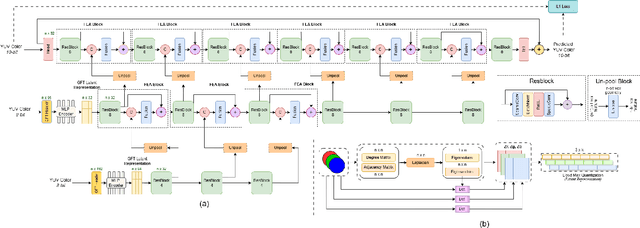
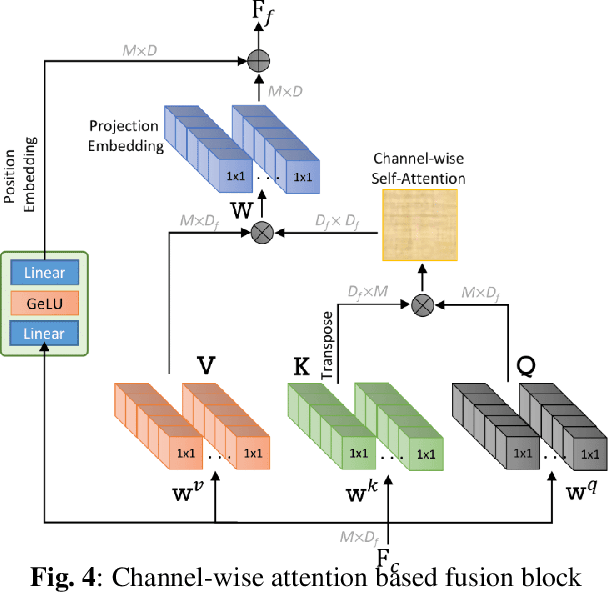
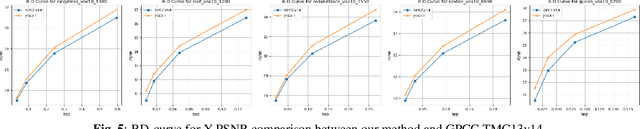
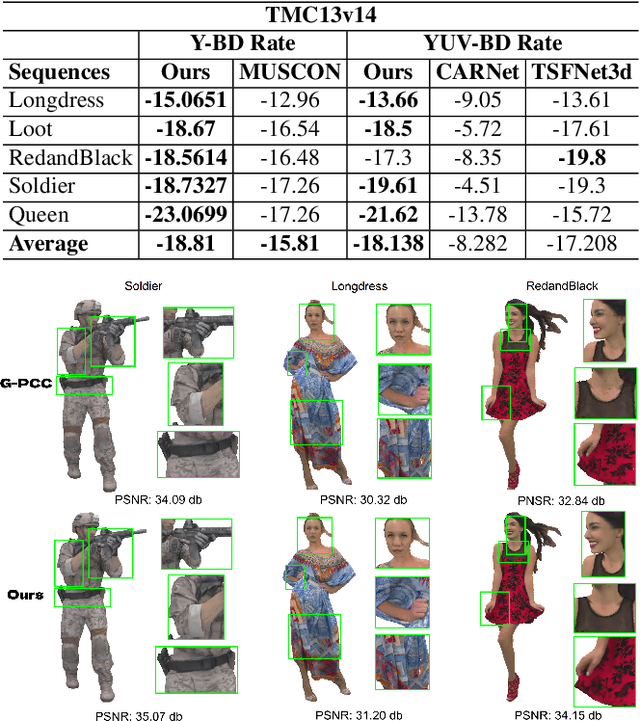
Point clouds (PC) are essential for AR/VR and autonomous driving but challenge compression schemes with their size, irregular sampling, and sparsity. MPEG's Geometry-based Point Cloud Compression (GPCC) methods successfully reduce bitrate; however, they introduce significant blocky artifacts in the reconstructed point cloud. We introduce a novel multi-scale postprocessing framework that fuses graph-Fourier latent attribute representations with sparse convolutions and channel-wise attention to efficiently deblock reconstructed point clouds. Against the GPCC TMC13v14 baseline, our approach achieves BD-rate reduction of 18.81\% in the Y channel and 18.14\% in the joint YUV on the 8iVFBv2 dataset, delivering markedly improved visual fidelity with minimal overhead.
Enhanced Angle-Range Cluster Parameter Estimation in Full-Duplex ISAC Systems
Oct 14, 2025This work studies an integrated sensing and communication (ISAC) framework for targets that are spread both in the angle and range domains. We model each target using a cluster of rays parameterized by a specific density function, and propose a truncated Multiple Signal Classification (MUSIC) spread (TMS) algorithm to accurately estimate the parameters of the density function. Unlike the conventional MUSIC spread (CMS), TMS restricts the signal subspace rank based on the eigen decomposition of the received-signal autocorrelation. We also propose a discrete Fourier transform (DFT) based algorithm for estimating the distance and range spread of each target. Leveraging these estimates, we then develop a dynamic transmit beamforming algorithm that successfully illuminates multiple targets while also serving multiple downlink (DL) users. Simulation results demonstrate the superiority of our proposed algorithms over baseline schemes in both low and high signal-to-noise ratio (SNR) regimes as well as under a wide angular spread regime.
Multi-Target Two-way Integrated Sensing and Communications with Full Duplex MIMO Radios
Dec 16, 2023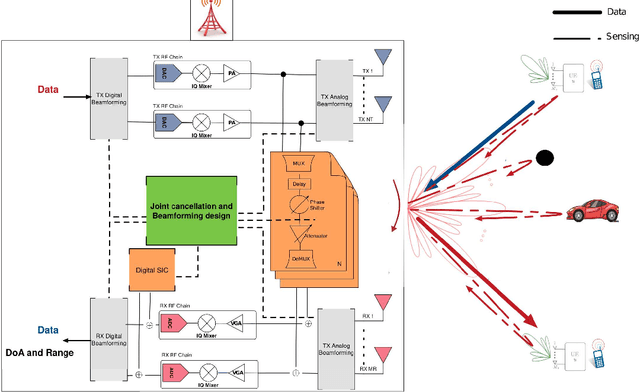
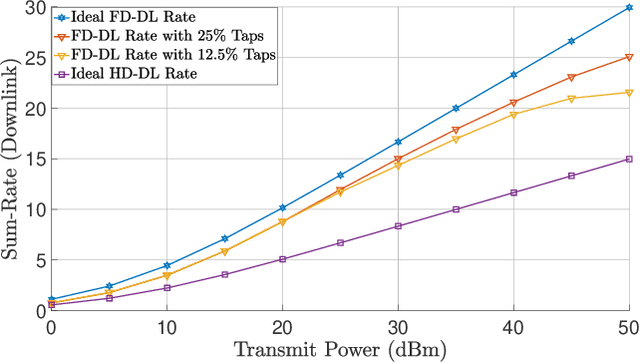
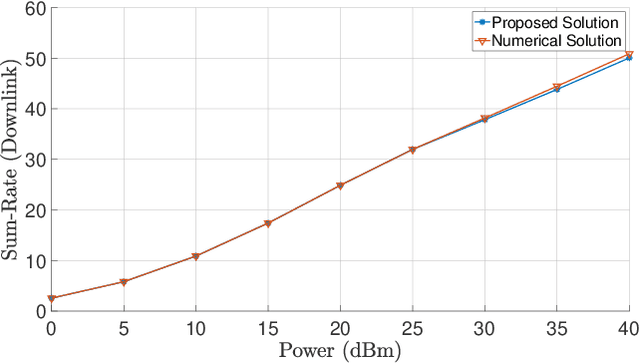
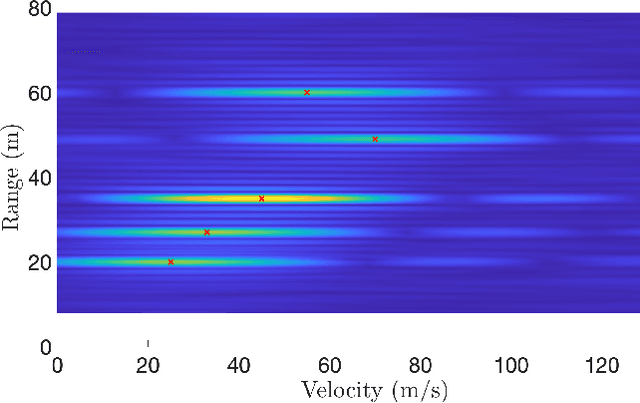
In this paper, we propose a multiple input multiple output (MIMO) Full-Duplex Integrated Sensing and Communication System consisting of multiple targets, a single downlink, and a single uplink user. We employed signal-to-interference plus noise ratio (SINR) as the performance metric for radar, downlink, and uplink communication. We use a communication-centric approach in which communication waveform is used for both communication and sensing of the environment. We develop a sensing algorithm capable of estimating the direction of arrival (DoA), range, and velocity of each target. We also propose a joint optimization framework for designing A/D transmit and receive beamformers to improve radar, downlink, and uplink SINRs while minimizing self-interference (SI) leakage. We also propose a null space projection (NSP) based approach to improve the uplink rate. Our simulation results, considering orthogonal frequency division multiplexing (OFDM) waveform, show accurate radar parameter estimation with improved downlink and uplink rate.
STAR-RIS-Assisted Hybrid NOMA mmWave Communication: Optimization and Performance Analysis
May 13, 2022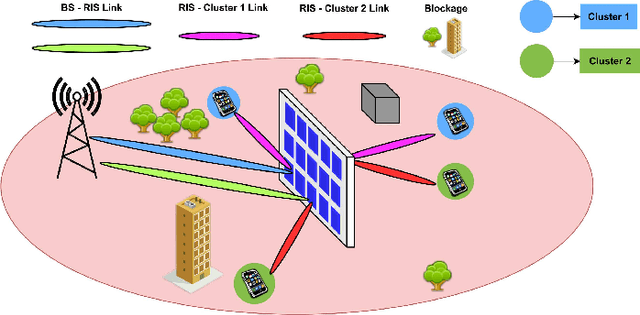
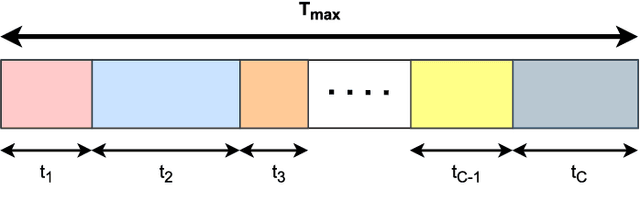
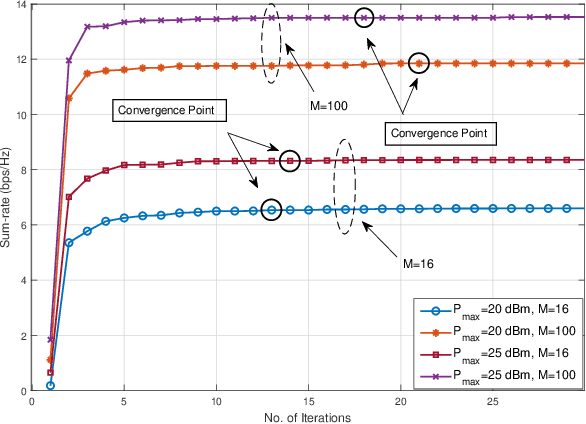
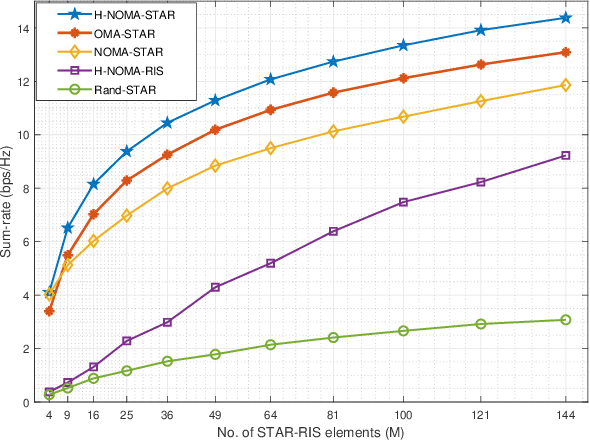
Simultaneously reflecting and transmitting reconfigurable intelligent surfaces (STAR-RIS) has recently emerged as prominent technology that exploits the transmissive property of RIS to mitigate the half-space coverage limitation of conventional RIS operating on millimeter-wave (mmWave). In this paper, we study a downlink STAR-RIS-based multi-user multiple-input single-output (MU-MISO) mmWave hybrid non-orthogonal multiple access (H-NOMA) wireless network, where a sum-rate maximization problem has been formulated. The design of active and passive beamforming vectors, time and power allocation for H-NOMA is a highly coupled non-convex problem. To handle the problem, we propose an optimization framework based on alternating optimization (AO) that iteratively solves active and passive beamforming sub-problems. Channel correlations and channel strength-based techniques have been proposed for a specific case of two-user optimal clustering and decoding order assignment, respectively, for which analytical solutions to joint power and time allocation for H-NOMA have also been derived. Simulation results show that: 1) the proposed framework leveraging H-NOMA outperforms conventional OMA and NOMA to maximize the achievable sum-rate; 2) using the proposed framework, the supported number of clusters for the given design constraints can be increased considerably; 3) through STAR-RIS, the number of elements can be significantly reduced as compared to conventional RIS to ensure a similar quality-of-service (QoS).