 Add to Chrome
 Add to Firefox
 Add to Edge
ACA-GS: Adaptive-Capacity Anchored Gaussian Splatting for Compact Dynamic Radiance Fields
Aug 05, 2026
Recent advances in 4D Gaussian Splatting (4DGS) enable high-fidelity, real-time spatiotemporal rendering, but expose a fundamental trade-off between motion expressiveness and storage efficiency. While anchor-based designs achieve compactness through anchor-level parameter sharing, their rigid uniform parametrization enforces fixed Neural Gaussian counts and feature budgets per anchor. Consequently, insufficient fidelity is addressed by excessive anchor density, rather than lightweight, targeted increases in Neural Gaussian count or feature capacity, resulting in memory waste. To overcome this rigidity, we introduce an adaptive-capacity anchor-based framework that dynamically allocates the representational capacity based on local spatiotemporal demands. Adaptive Anchor Cardinality varies the number of Neural Gaussians per anchor, concentrating primitives in regions of high geometric or motion complexity while suppressing redundancy. In parallel, Adaptive Anchor Feature Masking modulates anchor-level feature channels, assigning rich features to complex regions and lightweight representations to simpler ones. Experiments on MPEG, Panoptic Sports, and N3DV datasets demonstrate substantial storage reduction without degrading visual quality. Notably, on challenging MPEG sequences with complex motion, our method achieves up to 1.5x higher compression than state-of-the-art anchor-based methods while preserving comparable quality.

Neural Operator-Based Surrogate Model for CFD:Helical Coil Steam Generator in Small Modular Reactor
May 28, 2026Real-time thermal-hydraulic simulation is essential for digital twin (DT) technology that supports the safe and efficient operation of small modular reactors (SMRs). Computational fluid dynamics (CFD) provides high-fidelity flow analysis, but its computational cost prevents direct use in DT applications. AI-based surrogate modeling has been actively investigated to address this limitation, yet neural operator--based surrogates for CFD-level transient analysis of SMR-specific geometries have not been reported. This study presents an integrated framework that combines a reduced-order model (ROM) with neural operators, applied to the helical coil steam generator (HCSG) of the System-integrated Modular Advanced Reactor (SMART). Two ROM strategies tailored to each CFD data type were compared, an MLP-based autoencoder (AE) for unstructured mesh data and a convolutional autoencoder (CAE) for structured mesh data, and each was coupled with the deep operator network (DeepONet) to construct the latent DeepONet (L-DeepONet). The Fourier neural operator (FNO) was additionally adopted for comparison. A multi-scale technique was incorporated into both frameworks to mitigate spectral bias and improve the prediction of Kármán vortex streets developing inside the HCSG. The multi-scale L-DeepONet captured the instantaneous periodic vortex dynamics in both velocity and pressure fields, while the FNO and its multi-scale variant predicted the time-averaged mean flow and provided reliable pressure drop estimates. These complementary characteristics provide a practical model-selection guideline that links each architecture to specific DT objectives based on CFD data type and the required level of flow resolution.
Node Assigned physics-informed neural networks for thermal-hydraulic system simulation: CVH/FL module
Apr 23, 2025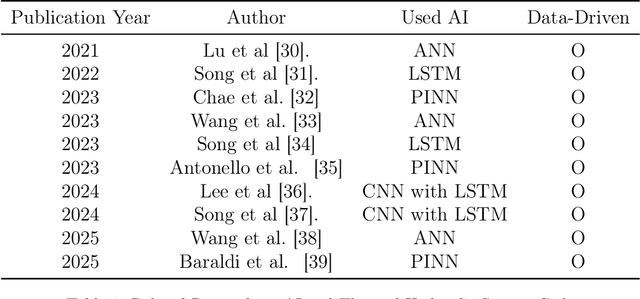
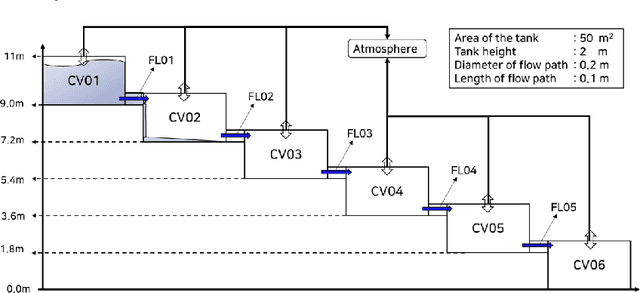
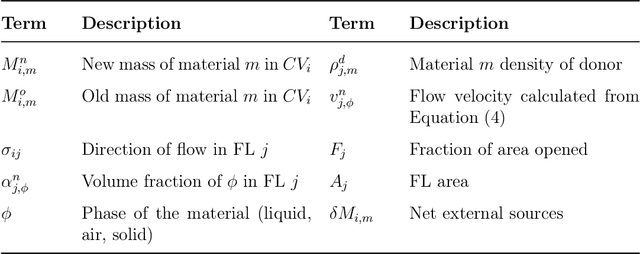

Severe accidents (SAs) in nuclear power plants have been analyzed using thermal-hydraulic (TH) system codes such as MELCOR and MAAP. These codes efficiently simulate the progression of SAs, while they still have inherent limitations due to their inconsistent finite difference schemes. The use of empirical schemes incorporating both implicit and explicit formulations inherently induces unidirectional coupling in multi-physics analyses. The objective of this study is to develop a novel numerical method for TH system codes using physics-informed neural network (PINN). They have shown strength in solving multi-physics due to the innate feature of neural networks-automatic differentiation. We propose a node-assigned PINN (NA-PINN) that is suitable for the control volume approach-based system codes. NA-PINN addresses the issue of spatial governing equation variation by assigning an individual network to each nodalization of the system code, such that spatial information is excluded from both the input and output domains, and each subnetwork learns to approximate a purely temporal solution. In this phase, we evaluated the accuracy of the PINN methods for the hydrodynamic module. In the 6 water tank simulation, PINN and NA-PINN showed maximum absolute errors of 1.678 and 0.007, respectively. It should be noted that only NA-PINN demonstrated acceptable accuracy. To the best of the authors' knowledge, this is the first study to successfully implement a system code using PINN. Our future work involves extending NA-PINN to a multi-physics solver and developing it in a surrogate manner.