 Add to Chrome
 Add to Firefox
 Add to Edge
Enhancing Creativity in 3D Generative Design via a TRIZ-Inspired Text-to-CAD Framework
Jun 19, 2026
Recent advances in large language models (LLMs) have demonstrated significant potential in supporting engineering design tasks, including computer-aided design (CAD) automation. However, most existing LLM-based 3D CAD generation approaches primarily focus on geometric precision and instruction-following performance, often overlooking the fundamental aspect of creative design exploration. This study presents a TRIZ-inspired text-to-CAD framework that leverages LLMs to generate high-quality, editable CAD models while systematically exploring creative design alternatives. The framework integrates the Theory of Inventive Problem Solving (TRIZ)-embedding deep human insights from extensive patent records-into LLM prompting strategies, enabling autonomous generation of innovative CAD variants that address technical contradictions. Through a comprehensive three-stage pipeline of design generation, enhancement, and optimization, the framework produces structurally diverse CAD models from well-crafted prompts. The present study implements and evaluates the first two stages, while positioning the design optimization stage as future work. A product design case study (chair) demonstrates that the TRIZ-inspired text-to-CAD framework generates multiple creative design alternatives by systematically applying TRIZ inventive principles such as segmentation, anti-weight, dynamics, and composite materials, achieving 4.0-14.7% mass reduction across all enhanced designs while maintaining structural integrity. The key findings suggest that integrating systematic innovation methodologies with LLM-based 3D CAD generation bridges the gap between precision-focused synthesis and creativity-focused exploration, advancing toward autonomous design systems where AI makes design decisions independently, supporting human decision-making in human-AI collaborative design for engineering applications.

DeepJEB++: Foundation Model-Driven Large-Scale 3D Engineering Dataset via 2D Latent Space Augmentation
Jun 11, 2026Data-driven engineering design is constrained by the lack of large-scale 3D datasets that pair geometry with physics-based performance labels. In particular, existing 3D data augmentation techniques have limitations in preserving subtle and diverse geometric variations, and it remains difficult to automate the subsequent simulation-labeling process, where boundary conditions vary depending on the generated geometry. We present DeepJEB++, a foundation-model-driven data-augmentation framework that expands a small seed set of jet engine brackets into a large, simulation-labeled 3D dataset under constrained resources. Our key idea is to augment in the data-rich 2D latent space, then transfer to 3D. In Stage 1, we fine-tune a pretrained 2D latent diffusion model on multi-view renders and synthesize novel views by latent interpolation, retaining manufacturable designs through a vision-language-model (VLM) quality filter. In Stage 2, the validated images are lifted to 3D meshes by a domain-adapted generative foundation model. In Stage 3, an automated pipeline recognizes the load and bolt interfaces on each mesh and assigns finite-element labels -- mass, stress, and displacement -- without manual intervention. We assess augmentation quality along three intrinsic axes: manufacturability, label fidelity against the SimJEB ground truth, and distributional consistency. Starting from fewer than 400 seed designs, DeepJEB++ yields 15,360 simulation-labeled 3D brackets -- a 40x expansion -- using a single GPU per stage. The dataset will be made publicly available to support reproducible engineering-AI research.
A Multi-Agent System for IPMSM Design Optimization via an FEA-AI Hybrid Approach
Jun 08, 2026Interior permanent magnet synchronous motor (IPMSM) design requires balancing conflicting objectives and multi-physics constraints, while modern optimization workflows face three bottlenecks: manual problem setup, high finite element analysis (FEA) cost, and unreliable surrogate-based search in sparse or out-of-distribution regions. To address these limitations, we propose an end-to-end automated IPMSM design optimization framework that integrates retrieval-augmented generation (RAG) for structured problem definition with an uncertainty-aware FEA-AI hybrid optimization pipeline. A Design agent, connected to a motor textbook through RAG, provides domain-knowledge-based options and engineering tips, and compiles an optimization card and a design-of-experiments plan for AI-model training. A Training agent automates electromagnetic FEA, records geometry-validation and solver-failure logs, analyzes failed geometries using ANOVA-based data analysis and LLM reasoning, and invokes a Design Sampling agent to redefine the design space and generate additional samples. An Optimization agent performs GA-based search with uncertainty-driven switching: low-uncertainty candidates are evaluated by AI-surrogate inference, whereas high-uncertainty and reliability-critical Pareto-front or top-K candidates are corrected by high-fidelity FEA and reused for iterative retraining. The framework converts manual, experience-dependent configuration into a reproducible workflow that balances computational cost and prediction reliability. Experimental results under a matched high-fidelity FEA budget show that the proposed hybrid approach achieves better objective performance while maintaining low and further reducible predictive uncertainty, outperforming FEA-only search, which is limited by early budget exhaustion, and AI-only search, which converges to a low-confidence optimum.
Node Assigned physics-informed neural networks for thermal-hydraulic system simulation: CVH/FL module
Apr 23, 2025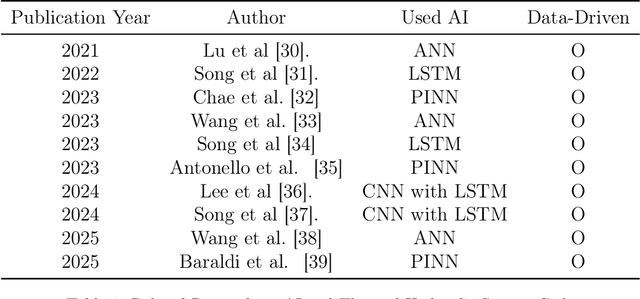
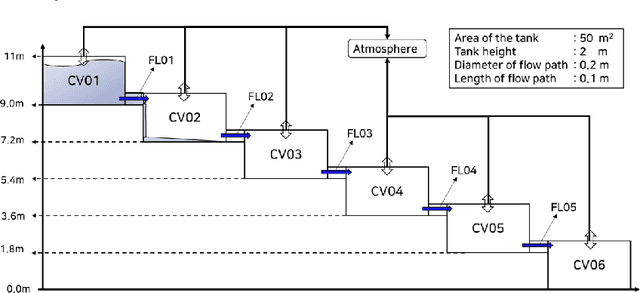
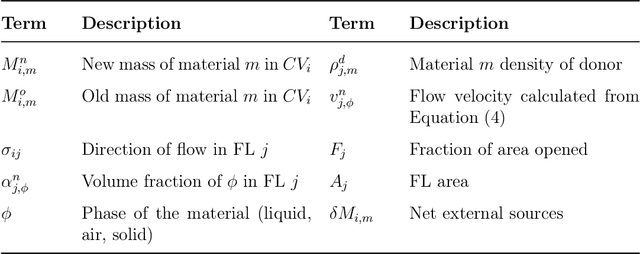

Severe accidents (SAs) in nuclear power plants have been analyzed using thermal-hydraulic (TH) system codes such as MELCOR and MAAP. These codes efficiently simulate the progression of SAs, while they still have inherent limitations due to their inconsistent finite difference schemes. The use of empirical schemes incorporating both implicit and explicit formulations inherently induces unidirectional coupling in multi-physics analyses. The objective of this study is to develop a novel numerical method for TH system codes using physics-informed neural network (PINN). They have shown strength in solving multi-physics due to the innate feature of neural networks-automatic differentiation. We propose a node-assigned PINN (NA-PINN) that is suitable for the control volume approach-based system codes. NA-PINN addresses the issue of spatial governing equation variation by assigning an individual network to each nodalization of the system code, such that spatial information is excluded from both the input and output domains, and each subnetwork learns to approximate a purely temporal solution. In this phase, we evaluated the accuracy of the PINN methods for the hydrodynamic module. In the 6 water tank simulation, PINN and NA-PINN showed maximum absolute errors of 1.678 and 0.007, respectively. It should be noted that only NA-PINN demonstrated acceptable accuracy. To the best of the authors' knowledge, this is the first study to successfully implement a system code using PINN. Our future work involves extending NA-PINN to a multi-physics solver and developing it in a surrogate manner.
Towards Robust Spatio-Temporal Auto-Regressive Prediction: Adams-Bashforth Time Integration with Adaptive Multi-Step Rollout
Dec 07, 2024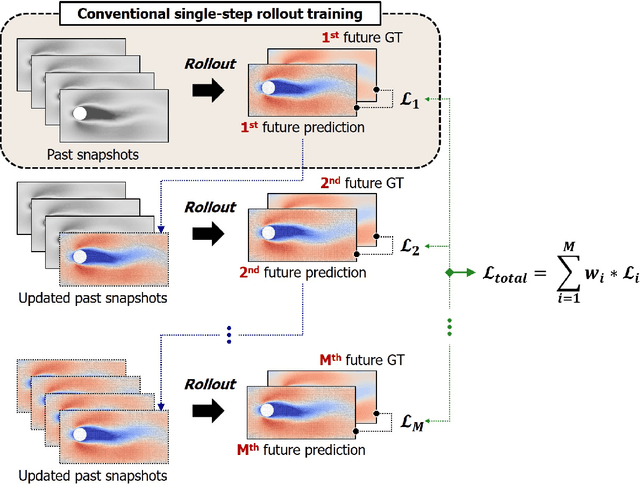

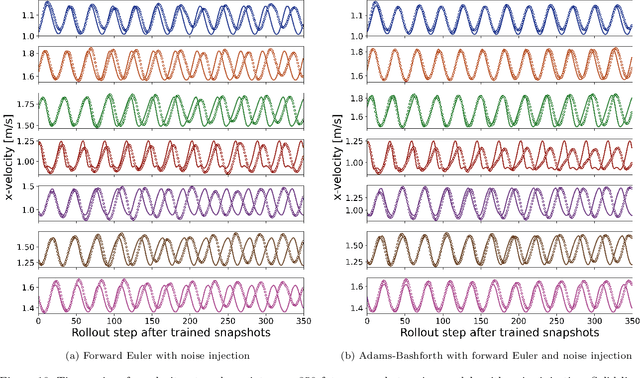
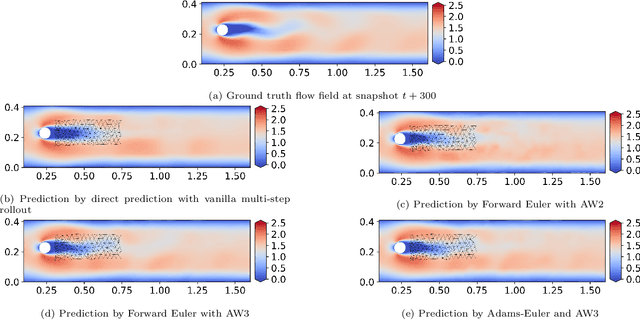
This study addresses the critical challenge of error accumulation in spatio-temporal auto-regressive predictions within scientific machine learning models by introducing innovative temporal integration schemes and adaptive multi-step rollout strategies. We present a comprehensive analysis of time integration methods, highlighting the adaptation of the two-step Adams-Bashforth scheme to enhance long-term prediction robustness in auto-regressive models. Additionally, we improve temporal prediction accuracy through a multi-step rollout strategy that incorporates multiple future time steps during training, supported by three newly proposed approaches that dynamically adjust the importance of each future step. By integrating the Adams-Bashforth scheme with adaptive multi-step strategies, our graph neural network-based auto-regressive model accurately predicts 350 future time steps, even under practical constraints such as limited training data and minimal model capacity -- achieving an error of only 1.6% compared to the vanilla auto-regressive approach. Moreover, our framework demonstrates an 83% improvement in rollout performance over the standard noise injection method, a standard technique for enhancing long-term rollout performance. Its effectiveness is further validated in more challenging scenarios with truncated meshes, showcasing its adaptability and robustness in practical applications. This work introduces a versatile framework for robust long-term spatio-temporal auto-regressive predictions, effectively mitigating error accumulation across various model types and engineering discipline.
AI-powered Digital Twin of the Ocean: Reliable Uncertainty Quantification for Real-time Wave Height Prediction with Deep Ensemble
Dec 07, 2024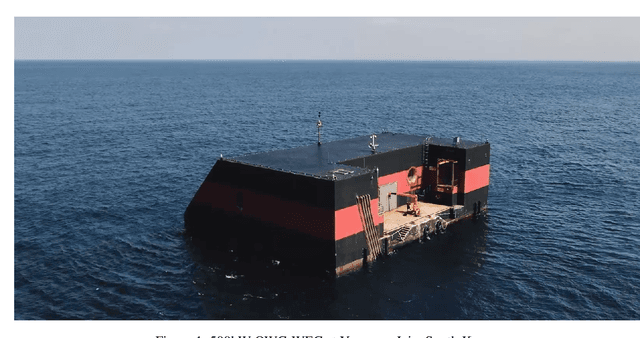

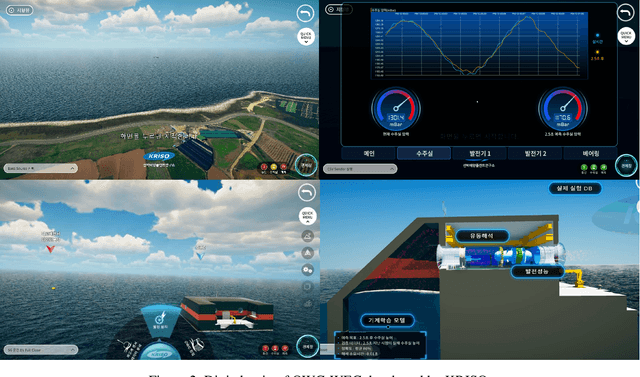
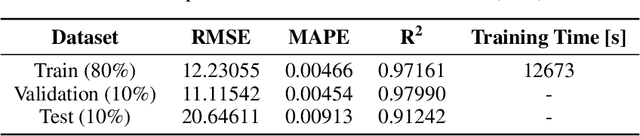
Environmental pollution and the depletion of fossil fuels have prompted the need for eco-friendly power generation methods based on renewable energy. However, renewable energy sources often face challenges in providing stable power due to low energy density and non-stationary. Wave energy converters (WECs), in particular, need reliable real-time wave height prediction to address these issues caused by irregular wave patterns, which can lead to the inefficient and unstable operation of WECs. In this study, we propose an AI-powered reliable real-time wave height prediction model, aiming both high predictive accuracy and reliable uncertainty quantification (UQ). The proposed architecture LSTM-DE, integrates long short-term memory (LSTM) networks for temporal prediction with deep ensemble (DE) for robust UQ, achieving accuracy and reliability in wave height prediction. To further enhance the reliability of the predictive models, uncertainty calibration is applied, which has proven to significantly improve the quality of the quantified uncertainty. Based on the real operational data obtained from an oscillating water column-wave energy converter (OWC-WEC) system in Jeju, South Korea, we demonstrate that the proposed LSTM-DE model architecture achieves notable predictive accuracy (R2 > 0.9) while increasing the uncertainty quality by over 50% through simple calibration technique. Furthermore, a comprehensive parametric study is conducted to explore the effects of key model hyperparameters, offering valuable guidelines for diverse operational scenarios, characterized by differences in wavelength, amplitude, and period. The findings show that the proposed method provides robust and reliable real-time wave height predictions, facilitating digital twin of the ocean.
Enhancing Graph U-Nets for Mesh-Agnostic Spatio-Temporal Flow Prediction
Jun 06, 2024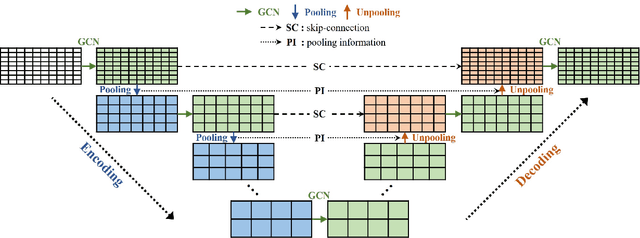

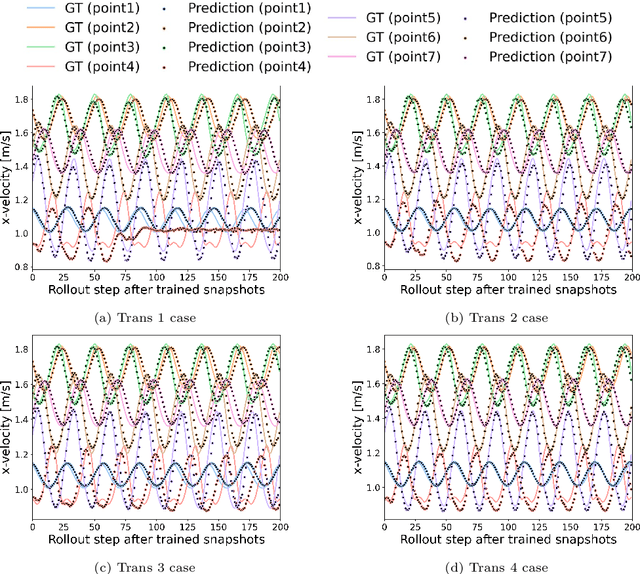
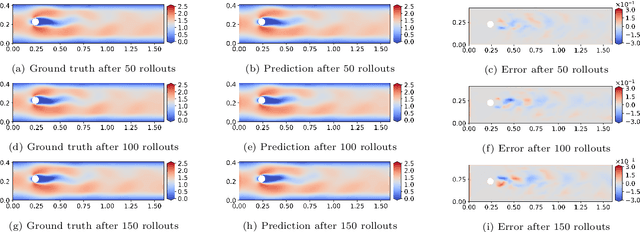
This study aims to overcome the conventional deep-learning approaches based on convolutional neural networks, whose applicability to complex geometries and unstructured meshes is limited due to their inherent mesh dependency. We propose novel approaches to improve mesh-agnostic spatio-temporal prediction of transient flow fields using graph U-Nets, enabling accurate prediction on diverse mesh configurations. Key enhancements to the graph U-Net architecture, including the Gaussian mixture model convolutional operator and noise injection approaches, provide increased flexibility in modeling node dynamics: the former reduces prediction error by 95\% compared to conventional convolutional operators, while the latter improves long-term prediction robustness, resulting in an error reduction of 86\%. We also investigate transductive and inductive-learning perspectives of graph U-Nets with proposed improvements. In the transductive setting, they effectively predict quantities for unseen nodes within the trained graph. In the inductive setting, they successfully perform in mesh scenarios with different vortex-shedding periods, showing 98\% improvement in predicting the future flow fields compared to a model trained without the inductive settings. It is found that graph U-Nets without pooling operations, i.e. without reducing and restoring the node dimensionality of the graph data, perform better in inductive settings due to their ability to learn from the detailed structure of each graph. Meanwhile, we also discover that the choice of normalization technique significantly impacts graph U-Net performance.
Towards Reliable Uncertainty Quantification via Deep Ensembles in Multi-output Regression Task
Apr 14, 2023Deep ensemble is a simple and straightforward approach for approximating Bayesian inference and has been successfully applied to many classification tasks. This study aims to comprehensively investigate this approach in the multi-output regression task to predict the aerodynamic performance of a missile configuration. By scrutinizing the effect of the number of neural networks used in the ensemble, an obvious trend toward underconfidence in estimated uncertainty is observed. In this context, we propose the deep ensemble framework that applies the post-hoc calibration method, and its improved uncertainty quantification performance is demonstrated. It is compared with Gaussian process regression, the most prevalent model for uncertainty quantification in engineering, and is proven to have superior performance in terms of regression accuracy, reliability of estimated uncertainty, and training efficiency. Finally, the impact of the suggested framework on the results of Bayesian optimization is examined, showing that whether or not the deep ensemble is calibrated can result in completely different exploration characteristics. This framework can be seamlessly applied and extended to any regression task, as no special assumptions have been made for the specific problem used in this study.
Physics-aware Reduced-order Modeling of Transonic Flow via $β$-Variational Autoencoder
May 02, 2022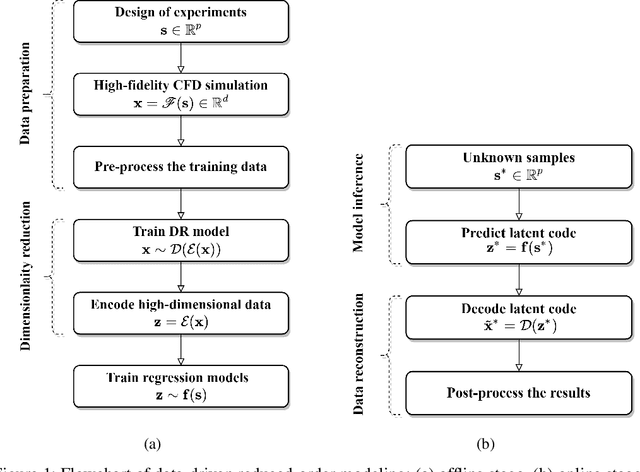


Autoencoder-based reduced-order modeling has recently attracted significant attention, owing to the ability to capture underlying nonlinear features. However, its uninterpretable latent variables (LVs) severely undermine the applicability to various physical problems. This study proposes physics-aware reduced-order modeling using a $\beta$-variational autoencoder to address this issue. The presented approach can quantify the rank and independence of LVs, which is validated both quantitatively and qualitatively using various techniques. Accordingly, LVs containing interpretable physical features were successfully identified. It was also verified that these "physics-aware" LVs correspond to the physical parameters that are the generating factors of the dataset, i.e., the Mach number and angle of attack in this study. Moreover, the effects of these physics-aware LVs on the accuracy of reduced-order modeling were investigated, which verified the potential of this method to alleviate the computational cost of the offline stage by excluding physics-unaware LVs.
Inverse design optimization framework via a two-step deep learning approach: application to a wind turbine airfoil
Aug 19, 2021

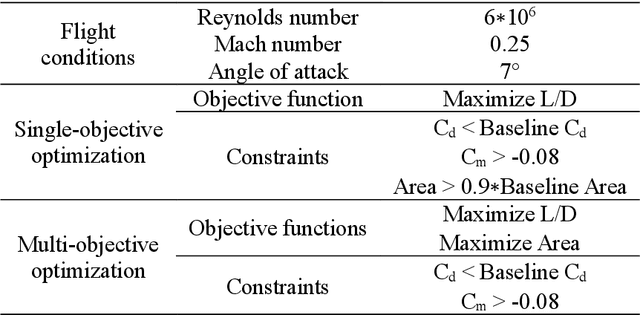

Though inverse approach is computationally efficient in aerodynamic design as the desired target performance distribution is specified, it has some significant limitations that prevent full efficiency from being achieved. First, the iterative procedure should be repeated whenever the specified target distribution changes. Target distribution optimization can be performed to clarify the ambiguity in specifying this distribution, but several additional problems arise in this process such as loss of the representation capacity due to parameterization of the distribution, excessive constraints for a realistic distribution, inaccuracy of quantities of interest due to theoretical/empirical predictions, and the impossibility of explicitly imposing geometric constraints. To deal with these issues, a novel inverse design optimization framework with a two-step deep learning approach is proposed. A variational autoencoder and multi-layer perceptron are used to generate a realistic target distribution and predict the quantities of interest and shape parameters from the generated distribution, respectively. Then, target distribution optimization is performed as the inverse design optimization. The proposed framework applies active learning and transfer learning techniques to improve accuracy and efficiency. Finally, the framework is validated through aerodynamic shape optimizations of the airfoil of a wind turbine blade, where inverse design is actively being applied. The results of the optimizations show that this framework is sufficiently accurate, efficient, and flexible to be applied to other inverse design engineering applications.