 Add to Chrome
 Add to Firefox
 Add to Edge
DACB-Net: Dual Attention Guided Compact Bilinear Convolution Neural Network for Skin Disease Classification
Jul 03, 2024
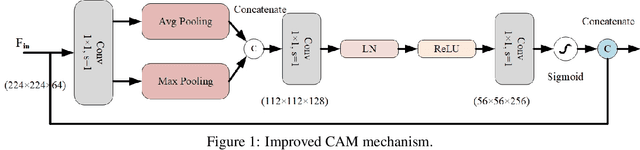

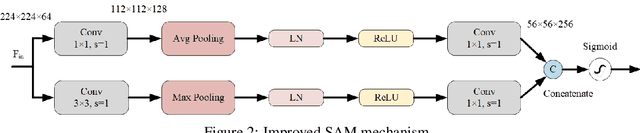
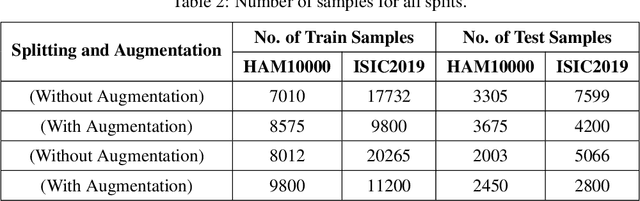
This paper introduces the three-branch Dual Attention-Guided Compact Bilinear CNN (DACB-Net) by focusing on learning from disease-specific regions to enhance accuracy and alignment. A global branch compensates for lost discriminative features, generating Attention Heat Maps (AHM) for relevant cropped regions. Finally, the last pooling layers of global and local branches are concatenated for fine-tuning, which offers a comprehensive solution to the challenges posed by skin disease diagnosis. Although current CNNs employ Stochastic Gradient Descent (SGD) for discriminative feature learning, using distinct pairs of local image patches to compute gradients and incorporating a modulation factor in the loss for focusing on complex data during training. However, this approach can lead to dataset imbalance, weight adjustments, and vulnerability to overfitting. The proposed solution combines two supervision branches and a novel loss function to address these issues, enhancing performance and interpretability. The framework integrates data augmentation, transfer learning, and fine-tuning to tackle data imbalance to improve classification performance, and reduce computational costs. Simulations on the HAM10000 and ISIC2019 datasets demonstrate the effectiveness of this approach, showcasing a 2.59% increase in accuracy compared to the state-of-the-art.

Multimodal Physiological Signals Representation Learning via Multiscale Contrasting for Depression Recognition
Jun 26, 2024
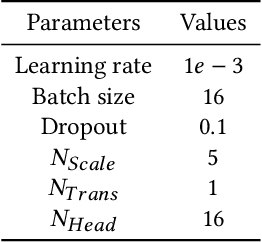

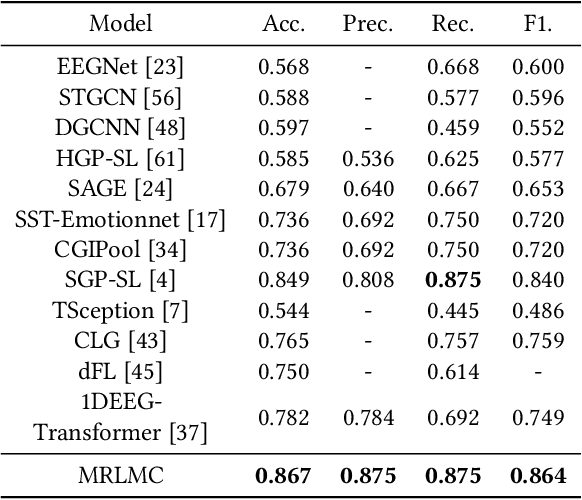
Depression recognition based on physiological signals such as functional near-infrared spectroscopy (fNIRS) and electroencephalogram (EEG) has made considerable progress. However, most existing studies ignore the complementarity and semantic consistency of multimodal physiological signals under the same stimulation task in complex spatio-temporal patterns. In this paper, we introduce a multimodal physiological signals representation learning framework using Siamese architecture via multiscale contrasting for depression recognition (MRLMC). First, fNIRS and EEG are transformed into different but correlated data based on a time-domain data augmentation strategy. Then, we design a spatio-temporal contrasting module to learn the representation of fNIRS and EEG through weight-sharing multiscale spatio-temporal convolution. Furthermore, to enhance the learning of semantic representation associated with stimulation tasks, a semantic consistency contrast module is proposed, aiming to maximize the semantic similarity of fNIRS and EEG. Extensive experiments on publicly available and self-collected multimodal physiological signals datasets indicate that MRLMC outperforms the state-of-the-art models. Moreover, our proposed framework is capable of transferring to multimodal time series downstream tasks.
PointDreamer: Zero-shot 3D Textured Mesh Reconstruction from Colored Point Cloud by 2D Inpainting
Jun 22, 2024Reconstructing textured meshes from colored point clouds is an important but challenging task in 3D graphics and vision. Most existing methods predict colors as implicit functions in 3D or UV space, suffering from blurry textures or the lack of generalization capability. Addressing this, we propose PointDreamer, a novel framework for textured mesh reconstruction from colored point cloud. It produces meshes with enhanced fidelity and clarity by 2D image inpainting, taking advantage of the mature techniques and massive data of 2D vision. Specifically, we first project the input point cloud into 2D space to generate sparse multi-view images, and then inpaint empty pixels utilizing a pre-trained 2D diffusion model. Next, we design a novel Non-Border-First strategy to unproject the colors of the inpainted dense images back to 3D space, thus obtaining the final textured mesh. In this way, our PointDreamer works in a zero-shot manner, requiring no extra training. Extensive qualitative and quantitative experiments on various synthetic and real-scanned datasets show the SoTA performance of PointDreamer, by significantly outperforming baseline methods with 30\% improvement in LPIPS score (from 0.118 to 0.068). Code at: https://github.com/YuQiao0303/PointDreamer.
Graph External Attention Enhanced Transformer
Jun 03, 2024The Transformer architecture has recently gained considerable attention in the field of graph representation learning, as it naturally overcomes several limitations of Graph Neural Networks (GNNs) with customized attention mechanisms or positional and structural encodings. Despite making some progress, existing works tend to overlook external information of graphs, specifically the correlation between graphs. Intuitively, graphs with similar structures should have similar representations. Therefore, we propose Graph External Attention (GEA) -- a novel attention mechanism that leverages multiple external node/edge key-value units to capture inter-graph correlations implicitly. On this basis, we design an effective architecture called Graph External Attention Enhanced Transformer (GEAET), which integrates local structure and global interaction information for more comprehensive graph representations. Extensive experiments on benchmark datasets demonstrate that GEAET achieves state-of-the-art empirical performance. The source code is available for reproducibility at: https://github.com/icm1018/GEAET.
Enhancing Interaction Modeling with Agent Selection and Physical Methods for Trajectory Prediction
May 21, 2024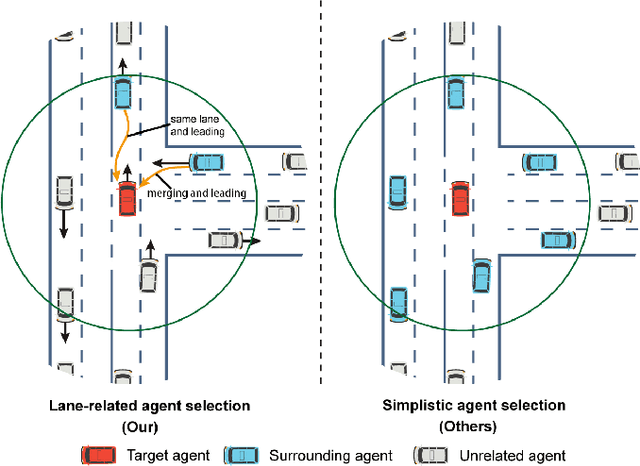
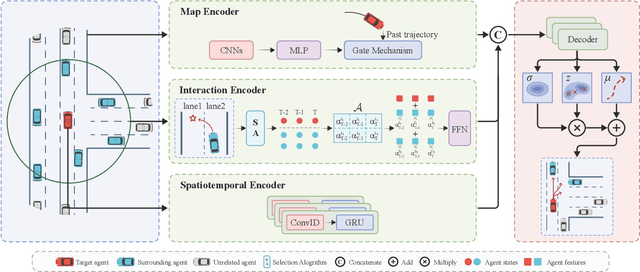
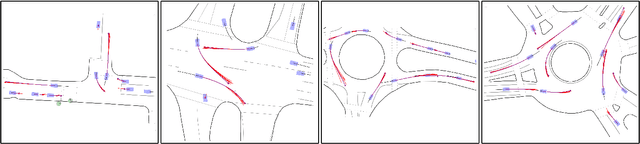
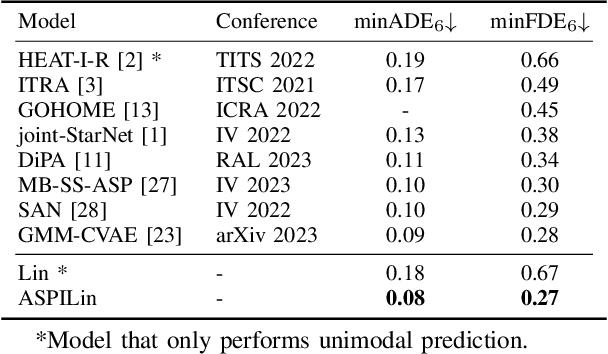
In this study, we address the limitations inherent in most existing vehicle trajectory prediction methodologies that indiscriminately incorporate all agents within a predetermined proximity when accounting for inter-agent interactions. These approaches commonly employ attention-based architecture or graph neural networks for encoding interactions, which introduces three challenges: (i) The indiscriminate selection of all nearby agents substantially escalates the computational demands of the model, particularly in those interaction-rich scenarios. (ii) Moreover, the simplistic feature extraction of current time agents falls short of adequately capturing the nuanced dynamics of interactions. (iii) Compounded by the inherently low interpretability of attention mechanism and graph neural networks, there is a propensity for the model to allocate unreliable correlation coefficients to certain agents, adversely impacting the accuracy of trajectory predictions. To mitigate these issues, we introduce ASPILin, a novel approach that enhances the selection of interacting agents by considering their current and future lanes, extending this consideration across all historical frames. Utilizing the states of the agents, we estimate the nearest future distance between agents and the time needed to reach this distance. Then, combine these with their current distances to derive a physical correlation coefficient to encode interactions. Experiments conducted on popular trajectory prediction datasets demonstrate that our method is efficient and straightforward, outperforming other state-of-the-art methods.
MiniGPT-3D: Efficiently Aligning 3D Point Clouds with Large Language Models using 2D Priors
May 02, 2024

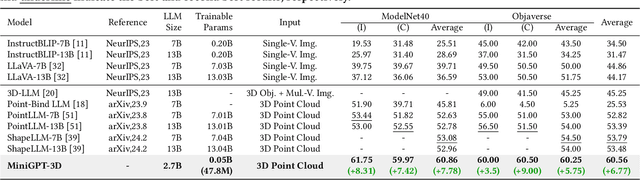
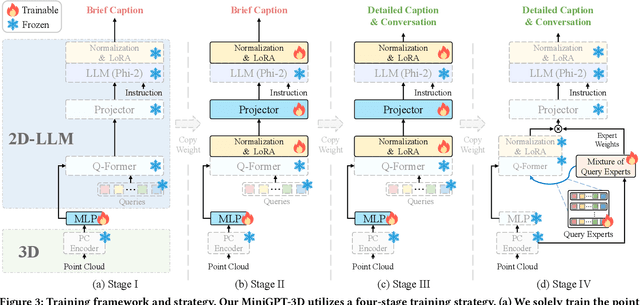
Large 2D vision-language models (2D-LLMs) have gained significant attention by bridging Large Language Models (LLMs) with images using a simple projector. Inspired by their success, large 3D point cloud-language models (3D-LLMs) also integrate point clouds into LLMs. However, directly aligning point clouds with LLM requires expensive training costs, typically in hundreds of GPU-hours on A100, which hinders the development of 3D-LLMs. In this paper, we introduce MiniGPT-3D, an efficient and powerful 3D-LLM that achieves multiple SOTA results while training for only 27 hours on one RTX 3090. Specifically, we propose to align 3D point clouds with LLMs using 2D priors from 2D-LLMs, which can leverage the similarity between 2D and 3D visual information. We introduce a novel four-stage training strategy for modality alignment in a cascaded way, and a mixture of query experts module to adaptively aggregate features with high efficiency. Moreover, we utilize parameter-efficient fine-tuning methods LoRA and Norm fine-tuning, resulting in only 47.8M learnable parameters, which is up to 260x fewer than existing methods. Extensive experiments show that MiniGPT-3D achieves SOTA on 3D object classification and captioning tasks, with significantly cheaper training costs. Notably, MiniGPT-3D gains an 8.12 increase on GPT-4 evaluation score for the challenging object captioning task compared to ShapeLLM-13B, while the latter costs 160 total GPU-hours on 8 A800. We are the first to explore the efficient 3D-LLM, offering new insights to the community. Code and weights are available at https://github.com/TangYuan96/MiniGPT-3D.
Efficient Multi-Task Reinforcement Learning via Task-Specific Action Correction
Apr 09, 2024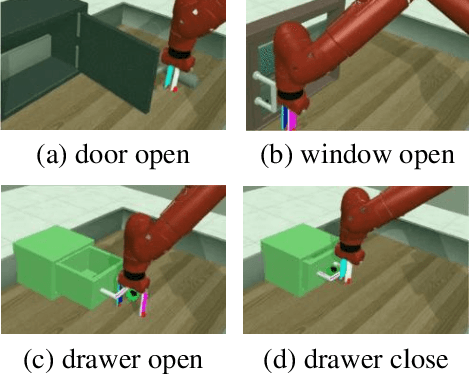
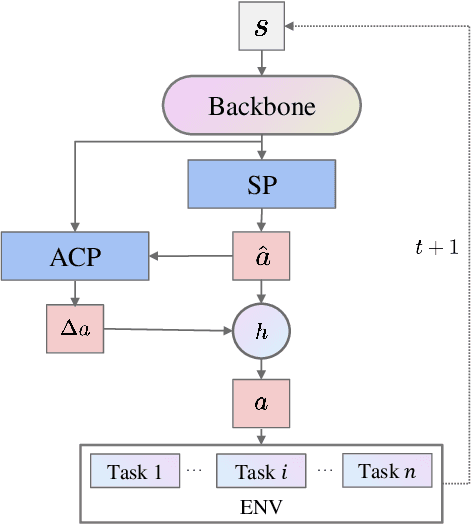
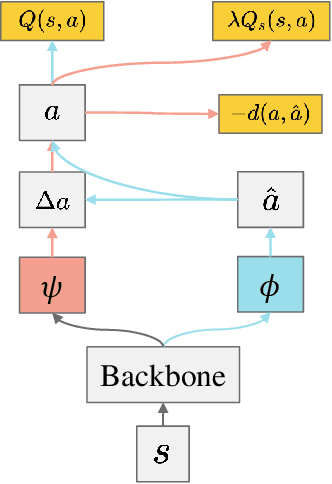
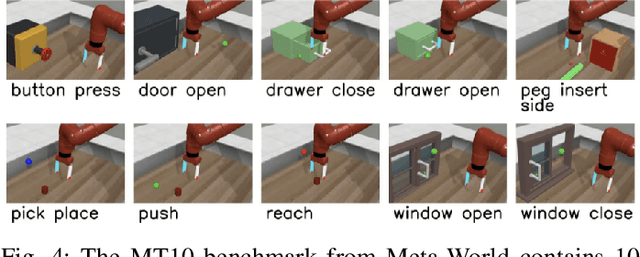
Multi-task reinforcement learning (MTRL) demonstrate potential for enhancing the generalization of a robot, enabling it to perform multiple tasks concurrently. However, the performance of MTRL may still be susceptible to conflicts between tasks and negative interference. To facilitate efficient MTRL, we propose Task-Specific Action Correction (TSAC), a general and complementary approach designed for simultaneous learning of multiple tasks. TSAC decomposes policy learning into two separate policies: a shared policy (SP) and an action correction policy (ACP). To alleviate conflicts resulting from excessive focus on specific tasks' details in SP, ACP incorporates goal-oriented sparse rewards, enabling an agent to adopt a long-term perspective and achieve generalization across tasks. Additional rewards transform the original problem into a multi-objective MTRL problem. Furthermore, to convert the multi-objective MTRL into a single-objective formulation, TSAC assigns a virtual expected budget to the sparse rewards and employs Lagrangian method to transform a constrained single-objective optimization into an unconstrained one. Experimental evaluations conducted on Meta-World's MT10 and MT50 benchmarks demonstrate that TSAC outperforms existing state-of-the-art methods, achieving significant improvements in both sample efficiency and effective action execution.
PDF: A Probability-Driven Framework for Open World 3D Point Cloud Semantic Segmentation
Apr 01, 2024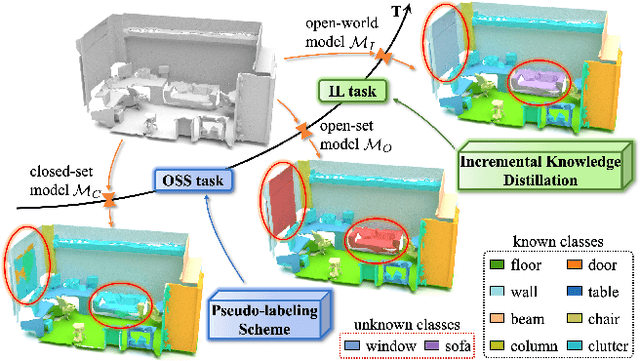


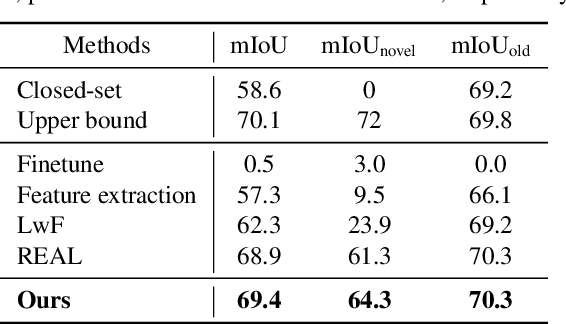
Existing point cloud semantic segmentation networks cannot identify unknown classes and update their knowledge, due to a closed-set and static perspective of the real world, which would induce the intelligent agent to make bad decisions. To address this problem, we propose a Probability-Driven Framework (PDF) for open world semantic segmentation that includes (i) a lightweight U-decoder branch to identify unknown classes by estimating the uncertainties, (ii) a flexible pseudo-labeling scheme to supply geometry features along with probability distribution features of unknown classes by generating pseudo labels, and (iii) an incremental knowledge distillation strategy to incorporate novel classes into the existing knowledge base gradually. Our framework enables the model to behave like human beings, which could recognize unknown objects and incrementally learn them with the corresponding knowledge. Experimental results on the S3DIS and ScanNetv2 datasets demonstrate that the proposed PDF outperforms other methods by a large margin in both important tasks of open world semantic segmentation.
Prioritized League Reinforcement Learning for Large-Scale Heterogeneous Multiagent Systems
Mar 26, 2024Large-scale heterogeneous multiagent systems feature various realistic factors in the real world, such as agents with diverse abilities and overall system cost. In comparison to homogeneous systems, heterogeneous systems offer significant practical advantages. Nonetheless, they also present challenges for multiagent reinforcement learning, including addressing the non-stationary problem and managing an imbalanced number of agents with different types. We propose a Prioritized Heterogeneous League Reinforcement Learning (PHLRL) method to address large-scale heterogeneous cooperation problems. PHLRL maintains a record of various policies that agents have explored during their training and establishes a heterogeneous league consisting of diverse policies to aid in future policy optimization. Furthermore, we design a prioritized policy gradient approach to compensate for the gap caused by differences in the number of different types of agents. Next, we use Unreal Engine to design a large-scale heterogeneous cooperation benchmark named Large-Scale Multiagent Operation (LSMO), which is a complex two-team competition scenario that requires collaboration from both ground and airborne agents. We use experiments to show that PHLRL outperforms state-of-the-art methods, including QTRAN and QPLEX in LSMO.
Feature-Action Design Patterns for Storytelling Visualizations with Time Series Data
Feb 05, 2024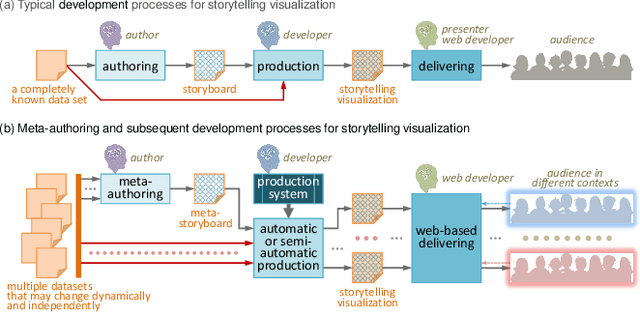

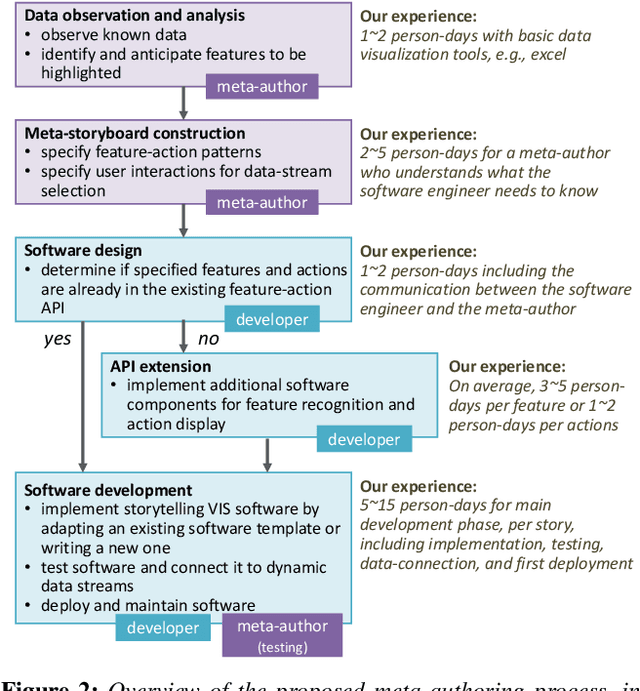
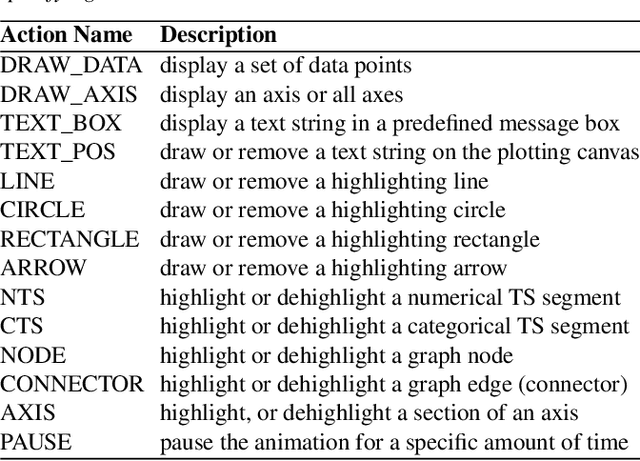
We present a method to create storytelling visualization with time series data. Many personal decisions nowadays rely on access to dynamic data regularly, as we have seen during the COVID-19 pandemic. It is thus desirable to construct storytelling visualization for dynamic data that is selected by an individual for a specific context. Because of the need to tell data-dependent stories, predefined storyboards based on known data cannot accommodate dynamic data easily nor scale up to many different individuals and contexts. Motivated initially by the need to communicate time series data during the COVID-19 pandemic, we developed a novel computer-assisted method for meta-authoring of stories, which enables the design of storyboards that include feature-action patterns in anticipation of potential features that may appear in dynamically arrived or selected data. In addition to meta-storyboards involving COVID-19 data, we also present storyboards for telling stories about progress in a machine learning workflow. Our approach is complementary to traditional methods for authoring storytelling visualization, and provides an efficient means to construct data-dependent storyboards for different data-streams of similar contexts.