 Add to Chrome
 Add to Firefox
 Add to Edge
AdaGrad does not adapt to Hölder-smoothness for composite objectives
Jun 29, 2026
We exhibit a simple deterministic one-dimensional convex composite optimization problem for which AdaGrad scheme does not achieve the classical convergence rate $\mathcal{O}(n^{-(1+ν)/2})$ associated with Hölder-smooth objectives. The example highlights a basic mismatch between classical AdaGrad accumulation and composite optimality. A main insight is that the gradient of the smooth term may not vanish at the optimum, causing AdaGrad to keep reducing its stepsize excessively and converge more slowly. We also discuss why alternative accumulation mechanisms based on gradient mappings or on successive gradient differences, avoid this pathology.

Reward-free Pretraining for Reinforcement Learning via Occupancy Coverage Maximization
Jun 19, 2026Sparse rewards pose a central challenge in reinforcement learning, since agents receive no informative signal until they reach their goal. Intrinsic-reward methods address this issue by optimizing non-stationary objectives such as novelty, prediction error, or skill diversity, thereby injecting a supervision signal into the problem. While effective, these methods often require that the extrinsic (sparse) reward can be evaluated -- either online or during offline relabeling of the stored transitions. This limitation is particularly vexing for multi-task, meta-, and continual reinforcement learning, where agents' interactions with the environment are usually reward-free. In this work, we present a method to pre-train transferable exploration policies that rapidly adapt to sparse rewards at downstream task time. Our objective maximizes state-space covering for the occupancy measure, and can be framed in terms of entropy maximization. Its algorithmic implementation, ROVER, leverages recent advances on the operatorial formulation of RL to estimate occupancy with a learned resolvent world model, bypassing common hurdles associated with density and entropy estimation. ROVER further introduces a virtual "sink" state for unexplored regions, balancing coverage of known states with expansion into unseen ones and preventing cyclic expansion-collapse behavior during learning. In tabular and pixel-based sparse navigation tasks, ROVER produces more uniform aggregate coverage and stronger initializations for downstream tasks than standard reward-free baselines.
Morphologically Equivariant Flow Matching for Bimanual Mobile Manipulation
May 12, 2026Mobile manipulation requires coordinated control of high-dimensional, bimanual robots. Imitation learning methods have been broadly used to solve these robotic tasks, yet typically ignore the bilateral morphological symmetry inherent in such systems. We argue that morphological symmetry is an underexplored but crucial inductive bias for learning in bimanual mobile manipulation: knowing how to solve a task in one configuration directly determines how to solve its mirrored counterpart. In this paper, we formalize this symmetry prior and show that it constrains optimal bimanual policies to be ambidextrous and equivariant under reflections across the robot's sagittal plane. We introduce a $\mathbb{C}_2$-equivariant flow matching policy that enforces reflective symmetry either via a regularized training loss or an equivariant velocity network. Across planar and 6-DoF mobile manipulation tasks, symmetry-informed policies consistently improve sample efficiency and achieve zero-shot generalization to mirrored configurations absent from the training distribution. We further validate this zero-shot generalization capability on a real-world manipulation task with a TIAGo++ robot. Together, our findings establish morphological symmetry as an effective, generalizable, and scalable inductive bias for ambidextrous generative policy learning.
AdaGrad-Diff: A New Version of the Adaptive Gradient Algorithm
Feb 13, 2026Vanilla gradient methods are often highly sensitive to the choice of stepsize, which typically requires manual tuning. Adaptive methods alleviate this issue and have therefore become widely used. Among them, AdaGrad has been particularly influential. In this paper, we propose an AdaGrad-style adaptive method in which the adaptation is driven by the cumulative squared norms of successive gradient differences rather than gradient norms themselves. The key idea is that when gradients vary little across iterations, the stepsize is not unnecessarily reduced, while significant gradient fluctuations, reflecting curvature or instability, lead to automatic stepsize damping. Numerical experiments demonstrate that the proposed method is more robust than AdaGrad in several practically relevant settings.
Toeplitz Based Spectral Methods for Data-driven Dynamical Systems
Feb 10, 2026We introduce a Toeplitz-based framework for data-driven spectral estimation of linear evolution operators in dynamical systems. Focusing on transfer and Koopman operators from equilibrium trajectories without access to the underlying equations of motion, our method applies Toeplitz filters to the infinitesimal generator to extract eigenvalues, eigenfunctions, and spectral measures. Structural prior knowledge, such as self-adjointness or skew-symmetry, can be incorporated by design. The approach is statistically consistent and computationally efficient, leveraging both primal and dual algorithms commonly used in statistical learning. Numerical experiments on deterministic and chaotic systems demonstrate that the framework can recover spectral properties beyond the reach of standard data-driven methods.
SpectraFormer: an Attention-Based Raman Unmixing Tool for Accessing the Graphene Buffer-Layer Signature on SiC
Jan 07, 2026Raman spectroscopy is a key tool for graphene characterization, yet its application to graphene grown on silicon carbide (SiC) is strongly limited by the intense and variable second-order Raman response of the substrate. This limitation is critical for buffer layer graphene, a semiconducting interfacial phase, whose vibrational signatures are overlapped with the SiC background and challenging to be reliably accessed using conventional reference-based subtraction, due to strong spatial and experimental variability of the substrate signal. Here we present SpectraFormer, a transformer-based deep learning model that reconstructs the SiC Raman substrate contribution directly from post-growth partially masked spectroscopic data without relying on explicit reference measurements. By learning global correlations across the entire Raman shift range, the model captures the statistical structure of the SiC background and enables accurate reconstruction of its contribution in mixed spectra. Subtraction of the reconstructed substrate signal reveals weak vibrational features associated with ZLG that are inaccessible through conventional analysis methods. The extracted spectra are validated by ab initio vibrational calculations, allowing assignment of the resolved features to specific modes and confirming their physical consistency. By leveraging a state-of-the-art attention-based deep learning architecture, this approach establishes a robust, reference-free framework for Raman analysis of graphene on SiC and provides a foundation, compatible with real-time data acquisition, to its integration into automated, closed-loop AI-assisted growth optimization.
kooplearn: A Scikit-Learn Compatible Library of Algorithms for Evolution Operator Learning
Dec 24, 2025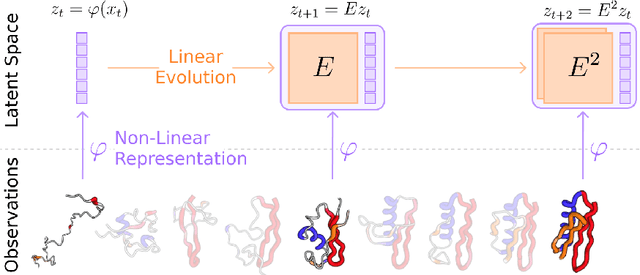
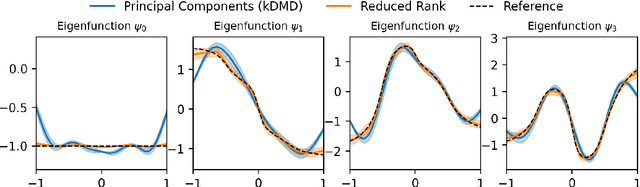
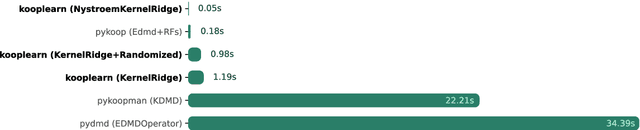
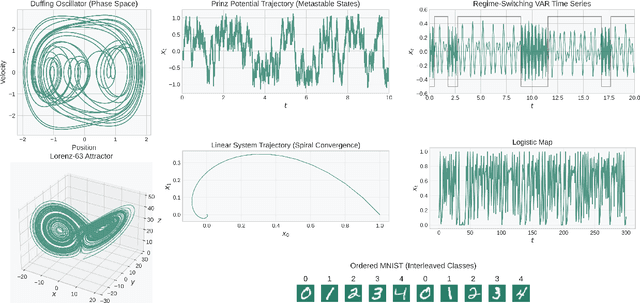
kooplearn is a machine-learning library that implements linear, kernel, and deep-learning estimators of dynamical operators and their spectral decompositions. kooplearn can model both discrete-time evolution operators (Koopman/Transfer) and continuous-time infinitesimal generators. By learning these operators, users can analyze dynamical systems via spectral methods, derive data-driven reduced-order models, and forecast future states and observables. kooplearn's interface is compliant with the scikit-learn API, facilitating its integration into existing machine learning and data science workflows. Additionally, kooplearn includes curated benchmark datasets to support experimentation, reproducibility, and the fair comparison of learning algorithms. The software is available at https://github.com/Machine-Learning-Dynamical-Systems/kooplearn.
Toward Scalable and Valid Conditional Independence Testing with Spectral Representations
Dec 22, 2025Conditional independence (CI) is central to causal inference, feature selection, and graphical modeling, yet it is untestable in many settings without additional assumptions. Existing CI tests often rely on restrictive structural conditions, limiting their validity on real-world data. Kernel methods using the partial covariance operator offer a more principled approach but suffer from limited adaptivity, slow convergence, and poor scalability. In this work, we explore whether representation learning can help address these limitations. Specifically, we focus on representations derived from the singular value decomposition of the partial covariance operator and use them to construct a simple test statistic, reminiscent of the Hilbert-Schmidt Independence Criterion (HSIC). We also introduce a practical bi-level contrastive algorithm to learn these representations. Our theory links representation learning error to test performance and establishes asymptotic validity and power guarantees. Preliminary experiments suggest that this approach offers a practical and statistically grounded path toward scalable CI testing, bridging kernel-based theory with modern representation learning.
An Empirical Bernstein Inequality for Dependent Data in Hilbert Spaces and Applications
Jul 10, 2025Learning from non-independent and non-identically distributed data poses a persistent challenge in statistical learning. In this study, we introduce data-dependent Bernstein inequalities tailored for vector-valued processes in Hilbert space. Our inequalities apply to both stationary and non-stationary processes and exploit the potential rapid decay of correlations between temporally separated variables to improve estimation. We demonstrate the utility of these bounds by applying them to covariance operator estimation in the Hilbert-Schmidt norm and to operator learning in dynamical systems, achieving novel risk bounds. Finally, we perform numerical experiments to illustrate the practical implications of these bounds in both contexts.
Self-Supervised Evolution Operator Learning for High-Dimensional Dynamical Systems
May 24, 2025
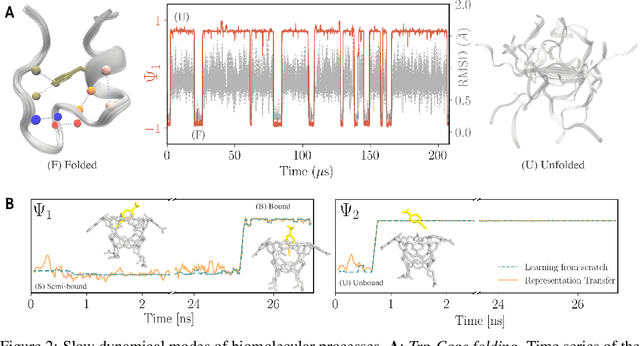
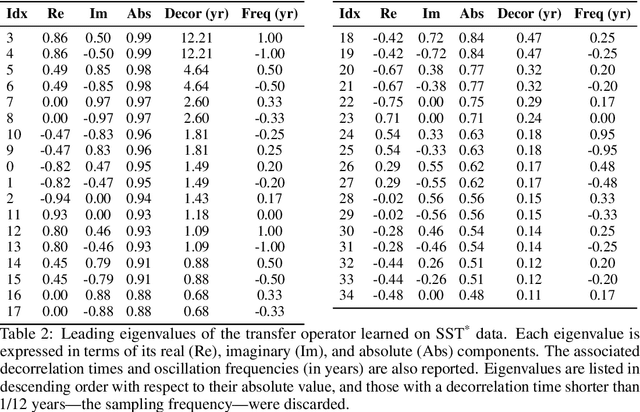
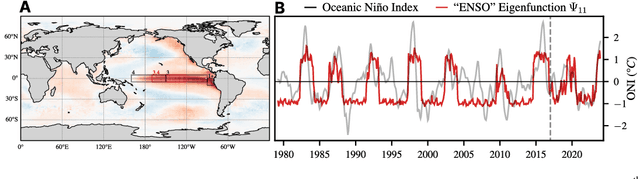
We introduce an encoder-only approach to learn the evolution operators of large-scale non-linear dynamical systems, such as those describing complex natural phenomena. Evolution operators are particularly well-suited for analyzing systems that exhibit complex spatio-temporal patterns and have become a key analytical tool across various scientific communities. As terabyte-scale weather datasets and simulation tools capable of running millions of molecular dynamics steps per day are becoming commodities, our approach provides an effective tool to make sense of them from a data-driven perspective. The core of it lies in a remarkable connection between self-supervised representation learning methods and the recently established learning theory of evolution operators. To show the usefulness of the proposed method, we test it across multiple scientific domains: explaining the folding dynamics of small proteins, the binding process of drug-like molecules in host sites, and autonomously finding patterns in climate data. Code and data to reproduce the experiments are made available open source.