 Add to Chrome
 Add to Firefox
 Add to Edge
Scalable AI-assisted Workflow Management for Detector Design Optimization Using Distributed Computing
Mar 31, 2026
The Production and Distributed Analysis (PanDA) system, originally developed for the ATLAS experiment at the CERN Large Hadron Collider (LHC), has evolved into a robust platform for orchestrating large-scale workflows across distributed computing resources. Coupled with its intelligent Distributed Dispatch and Scheduling (iDDS) component, PanDA supports AI/ML-driven workflows through a scalable and flexible workflow engine. We present an AI-assisted framework for detector design optimization that integrates multi-objective Bayesian optimization with the PanDA--iDDS workflow engine to coordinate iterative simulations across heterogeneous resources. The framework addresses the challenge of exploring high-dimensional parameter spaces inherent in modern detector design. We demonstrate the framework using benchmark problems and realistic studies of the ePIC and dRICH detectors for the Electron-Ion Collider (EIC). Results show improved automation, scalability, and efficiency in multi-objective optimization. This work establishes a flexible and extensible paradigm for AI-driven detector design and other computationally intensive scientific applications.

Artificial Intelligence and Machine Learning in Nuclear Physics
Dec 04, 2021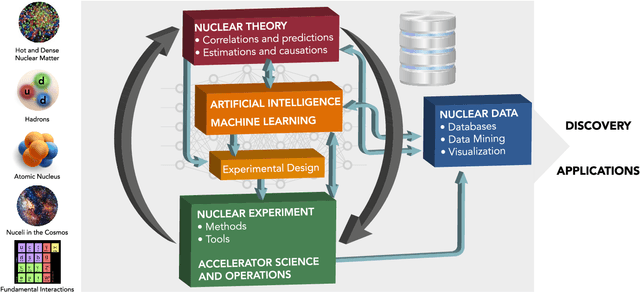
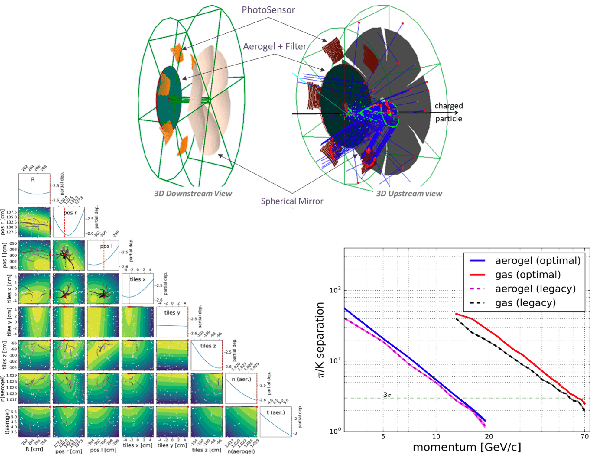
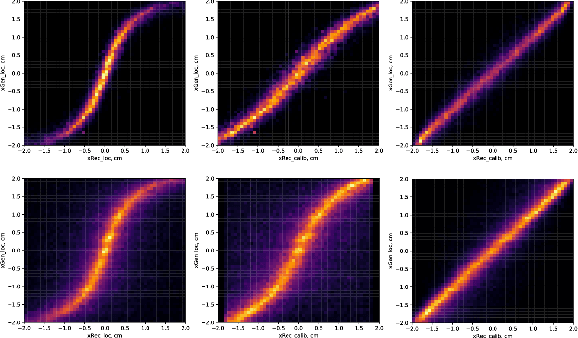
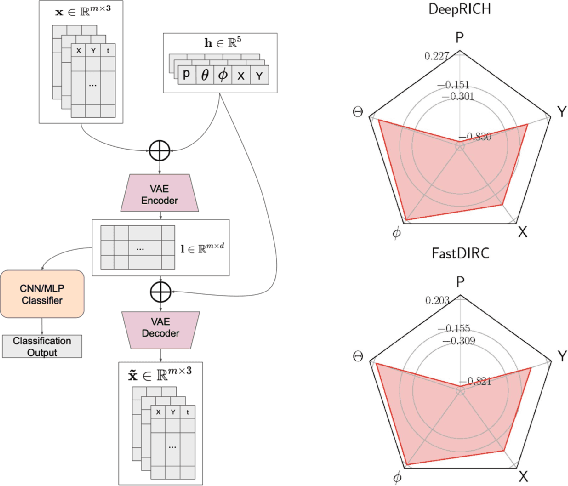
Advances in artificial intelligence/machine learning methods provide tools that have broad applicability in scientific research. These techniques are being applied across the diversity of nuclear physics research topics, leading to advances that will facilitate scientific discoveries and societal applications. This Review gives a snapshot of nuclear physics research which has been transformed by artificial intelligence and machine learning techniques.
Applications and Techniques for Fast Machine Learning in Science
Oct 25, 2021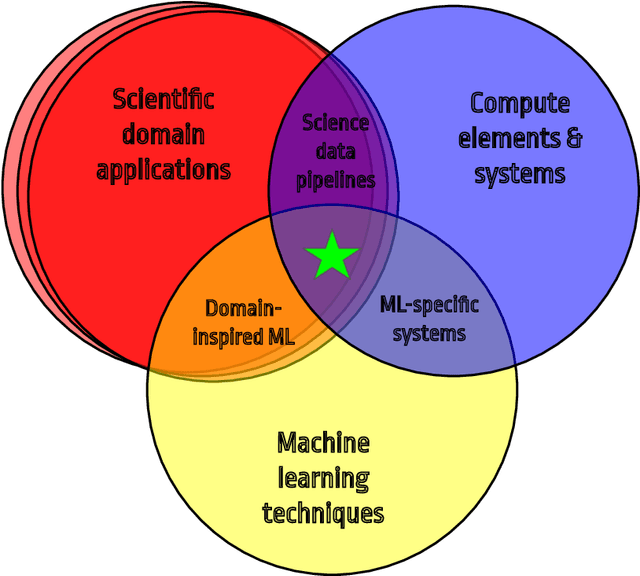
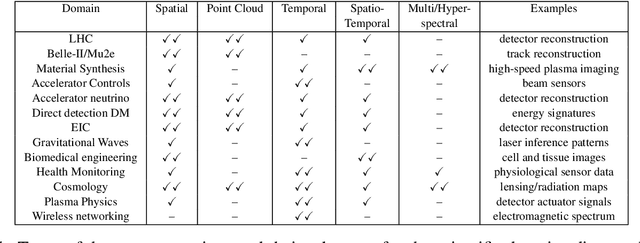
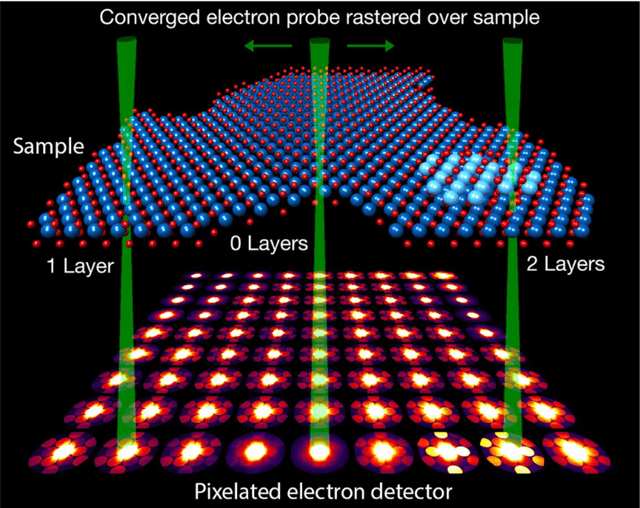
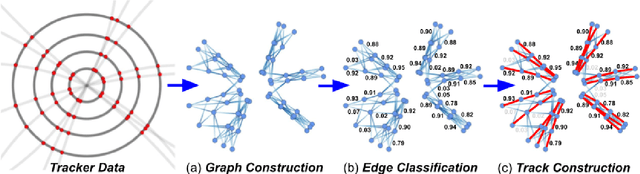
In this community review report, we discuss applications and techniques for fast machine learning (ML) in science -- the concept of integrating power ML methods into the real-time experimental data processing loop to accelerate scientific discovery. The material for the report builds on two workshops held by the Fast ML for Science community and covers three main areas: applications for fast ML across a number of scientific domains; techniques for training and implementing performant and resource-efficient ML algorithms; and computing architectures, platforms, and technologies for deploying these algorithms. We also present overlapping challenges across the multiple scientific domains where common solutions can be found. This community report is intended to give plenty of examples and inspiration for scientific discovery through integrated and accelerated ML solutions. This is followed by a high-level overview and organization of technical advances, including an abundance of pointers to source material, which can enable these breakthroughs.