 Add to Chrome
 Add to Firefox
 Add to Edge
Scalable AI-assisted Workflow Management for Detector Design Optimization Using Distributed Computing
Mar 31, 2026
The Production and Distributed Analysis (PanDA) system, originally developed for the ATLAS experiment at the CERN Large Hadron Collider (LHC), has evolved into a robust platform for orchestrating large-scale workflows across distributed computing resources. Coupled with its intelligent Distributed Dispatch and Scheduling (iDDS) component, PanDA supports AI/ML-driven workflows through a scalable and flexible workflow engine. We present an AI-assisted framework for detector design optimization that integrates multi-objective Bayesian optimization with the PanDA--iDDS workflow engine to coordinate iterative simulations across heterogeneous resources. The framework addresses the challenge of exploring high-dimensional parameter spaces inherent in modern detector design. We demonstrate the framework using benchmark problems and realistic studies of the ePIC and dRICH detectors for the Electron-Ion Collider (EIC). Results show improved automation, scalability, and efficiency in multi-objective optimization. This work establishes a flexible and extensible paradigm for AI-driven detector design and other computationally intensive scientific applications.

Fuzzy Integral = Contextual Linear Order Statistic
Jul 06, 2020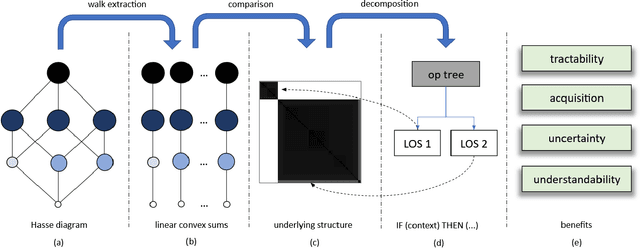
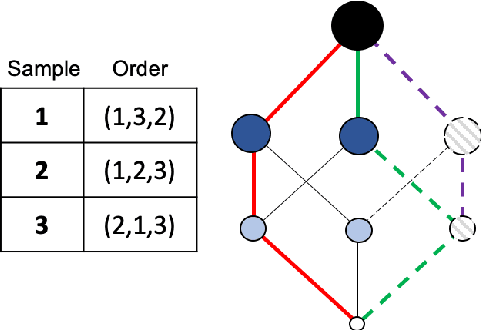
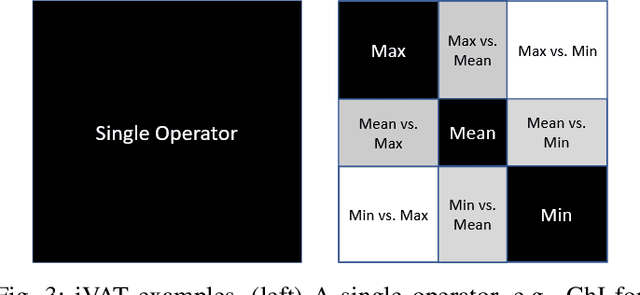
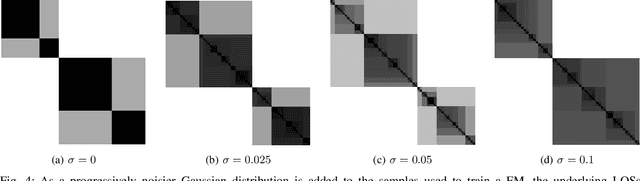
The fuzzy integral is a powerful parametric nonlin-ear function with utility in a wide range of applications, from information fusion to classification, regression, decision making,interpolation, metrics, morphology, and beyond. While the fuzzy integral is in general a nonlinear operator, herein we show that it can be represented by a set of contextual linear order statistics(LOS). These operators can be obtained via sampling the fuzzy measure and clustering is used to produce a partitioning of the underlying space of linear convex sums. Benefits of our approach include scalability, improved integral/measure acquisition, generalizability, and explainable/interpretable models. Our methods are both demonstrated on controlled synthetic experiments, and also analyzed and validated with real-world benchmark data sets.
Convolutional Neural Networks for Aircraft Noise Monitoring
Jun 12, 2018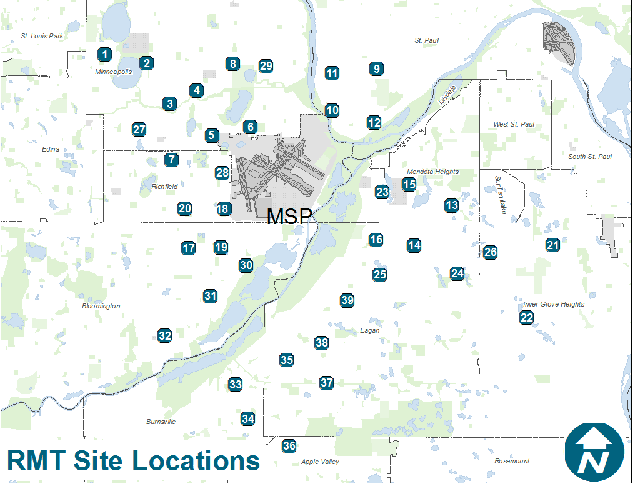
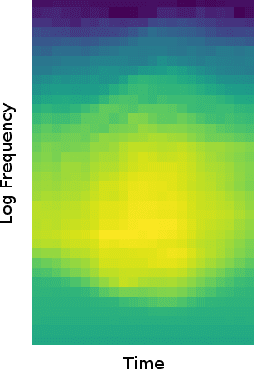
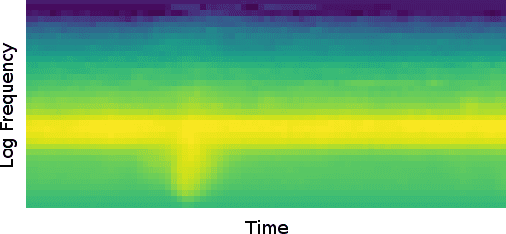
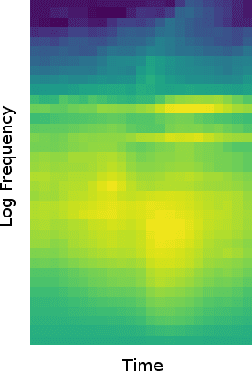
Air travel is one of the fastest growing modes of transportation, however, the effects of aircraft noise on populations surrounding airports is hindering its growth. In an effort to study and ultimately mitigate the impact that this noise has, many airports continuously monitor the aircraft noise in their surrounding communities. Noise monitoring and analysis is complicated by the fact that aircraft are not the only source of noise. In this work, we show that a Convolutional Neural Network is well-suited for the task of identifying noise events which are not caused by aircraft. Our system achieves an accuracy of 0.970 when trained on 900 manually labeled noise events. Our training data and a TensorFlow implementation of our model are available at https://github.com/neheller/aircraftnoise.