 Add to Chrome
 Add to Firefox
 Add to Edge
OmniMech: All-in-one Multimodal Mechanical Benchmark for 3D Reconstruction
Aug 06, 2026
Recent vision-language models (VLMs) can generate executable CAD programs from images, but existing methods mainly target coarse, general-purpose 3D objects and rarely address the fine-grained geometry and millimeter-level tolerances required in industrial mechanical design. We introduce OmniMech, the first million-scale benchmark for evaluating VLMs on executable CAD generation from industrial manufacturing data. OmniMech contains more than 251,000 fully dimensioned and toleranced 2D orthographic drawings, paired with native CAD models, multi-view renderings, mesh, STEP and B-rep representations, and rich semantic annotations. The benchmark includes four tasks: (1) parametric CAD program synthesis from engineering drawings; (2) diagram-to-3D reasoning for geometrically and structurally consistent reconstruction; (3) annotation-grounded reasoning over dimensions, symbols, feature callouts, and manufacturing constraints; and (4) tool-augmented agentic reasoning using visualization, measurement, CAD execution, and verification tools. Experiments show that current VLMs and CAD-specialized models still struggle with executable program synthesis, fine-grained 3D reconstruction, and reliable enforcement of dimensions and tolerances. We will release the benchmark data, evaluation code, and tool interfaces to support future research.

OmniRouting: A Semantic-Coupled Multimodal Benchmark for Constraint-Aware Spatial Reasoning in PCB Routing
Aug 05, 2026Recent large language models (LLMs) have demonstrated remarkable progress in constraint-aware navigation, maze reasoning, and graph reasoning. However, their ability to reason about complex routing problems under strict geometric, topological, and electrical constraints remains largely unexplored, despite routing being one of the most challenging and critical stages of electronic design automation (EDA). To bridge this gap, we introduce OmniRouting, the first large-scale benchmark designed to evaluate LLMs on printed-circuit-board (PCB) routing reasoning under real-world industrial design-rule, manufacturability, and connectivity constraints. OmniRouting contains 1,681 industrial-grade schematic-coupled PCB designs, including board geometries, routable component placements by human engineers, footprints, pad locations, netlists, stackup information, and routing constraints. The benchmark comprises four tasks: (1) geometric routing reasoning, generating physically valid copper traces, vias, and layer assignments to connect circuit nets within constrained board regions; (2) design-rule-aware routing reasoning, producing routable layouts that satisfy clearance, trace-width, via, obstacle-avoidance, and board-boundary constraints; (3) electrical functionality reasoning, preserving schematic-specified connectivity while reasoning over net names and functional roles to produce electrically correct routing; and (4) tool-augmented agentic routing, leveraging external tools for tasks (1)-(3). Our results reveal substantial limitations of current LMMs in PCB routing, including weak path-planning capabilities, poor adherence to design-rule constraints, and inconsistent preservation of electrical functionality. We will open-source all benchmark data, evaluation code, and tool interfaces to facilitate future research.
OmniLayout: A Schematic-Coupled Multimodal Benchmark for Constraint-Aware Geometric Reasoning in PCB Layout
Jul 03, 2026Recent large language models (LLMs) have demonstrated remarkable progress in 3D spatial reasoning, spatial grounding, and fine-grained geometric understanding. However, their ability to reason about densely packed object placement under strict spatial and functional constraints remains largely unexplored, despite being a fundamental challenge in practical electronic design automation (EDA) workflows. To bridge this gap, we introduce OmniLayout, the first benchmark designed to evaluate LLMs on printed-circuit-board (PCB) layout placement reasoning under real-world geometric, routing, and connectivity constraints. OmniLayout contains 1,681 industrial-grade schematic-coupled PCB layouts and includes four tasks: (1) geometric reasoning for IC physical placement, with 77.24K placement instances constrained within PCB board boundaries; (2) routability-aware placement reasoning, generating physically valid component placements; (3) electrical functionality, preserving schematic-specified connectivity and electronic functional correctness; and (4) tool-augmented agentic reasoning for invoking external tools to accomplish tasks (1)-(3). Our results reveal substantial limitations of current LLMs in PCB layout placement, including weak geometric reasoning, poor routability optimization, and inconsistent preservation of electrical functionality.
OmniSch: A Multimodal PCB Schematic Benchmark For Structured Diagram Visual Reasoning
Mar 31, 2026Recent large multimodal models (LMMs) have made rapid progress in visual grounding, document understanding, and diagram reasoning tasks. However, their ability to convert Printed Circuit Board (PCB) schematic diagrams into machine-readable spatially weighted netlist graphs, jointly capturing component attributes, connectivity, and geometry, remains largely underexplored, despite such graph representations are the backbone of practical electronic design automation (EDA) workflows. To bridge this gap, we introduce OmniSch, the first comprehensive benchmark designed to assess LMMs on schematic understanding and spatial netlist graph construction. OmniSch contains 1,854 real-world schematic diagrams and includes four tasks: (1) visual grounding for schematic entities, with 109.9K grounded instances aligning 423.4K diagram semantic labels to their visual regions; (2) diagram-to-graph reasoning, understanding topological relationship among diagram elements; (3) geometric reasoning, constructing layout-dependent weights for each connection; and (4) tool-augmented agentic reasoning for visual search, invoking external tools to accomplish (1)-(3). Our results reveal substantial gaps of current LMMs in interpreting schematic engineering artifacts, including unreliable fine-grained grounding, brittle layout-to-graph parsing, inconsistent global connectivity reasoning and inefficient visual exploration.
mmWave-Whisper: Phone Call Eavesdropping and Transcription Using Millimeter-Wave Radar
Oct 22, 2024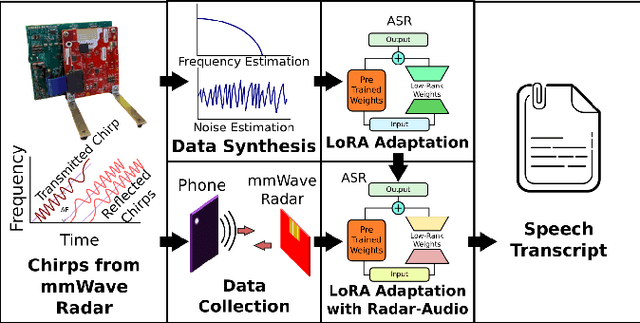
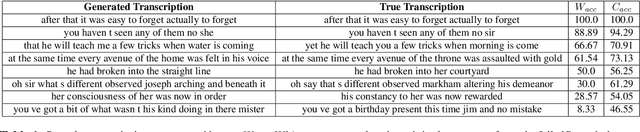
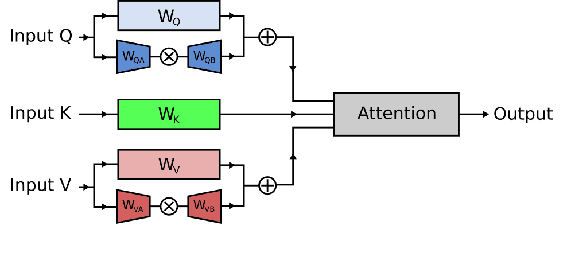
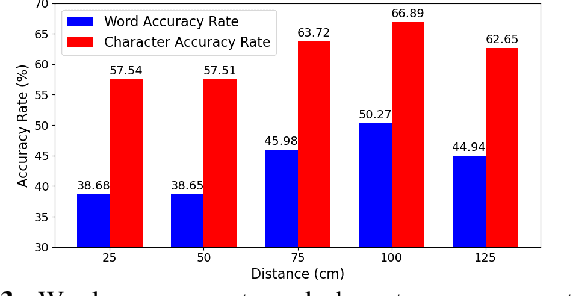
This paper introduces mmWave-Whisper, a system that demonstrates the feasibility of full-corpus automated speech recognition (ASR) on phone calls eavesdropped remotely using off-the-shelf frequency modulated continuous wave (FMCW) millimeter-wave radars. Operating in the 77-81 GHz range, mmWave-Whisper captures earpiece vibrations from smartphones, converts them into audio, and processes the audio to produce speech transcriptions automatically. Unlike previous work that focused on loudspeakers or limited vocabulary, this is the first work to perform such a speech recognition by handling large vocabulary and full sentences on earpiece vibrations from smartphones. This approach expands the potential of radar-audio eavesdropping. mmWave-Whisper addresses challenges such as the lack of large scale training datasets, low SNR, and limited frequency information in radar data through a systematic pipeline designed to leverage synthetic training data, domain adaptation, and inference by incorporating OpenAI's Whisper automatic speech recognition model. The system achieves a word accuracy rate of 44.74% and a character accuracy rate of 62.52% over a range of 25 cm to 125 cm. The paper highlights emerging misuse modalities of AI as the technology evolves rapidly.
Temporal-Distributed Backdoor Attack Against Video Based Action Recognition
Sep 01, 2023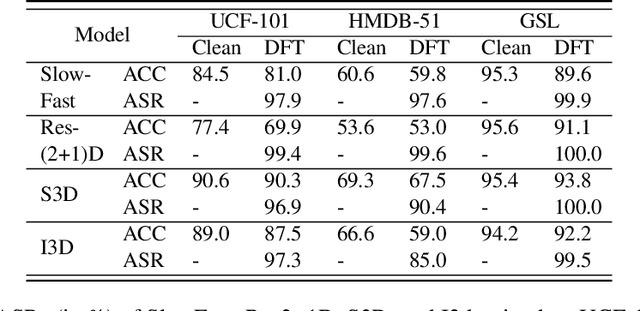

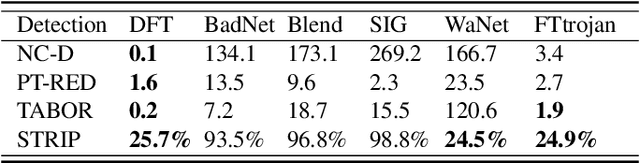
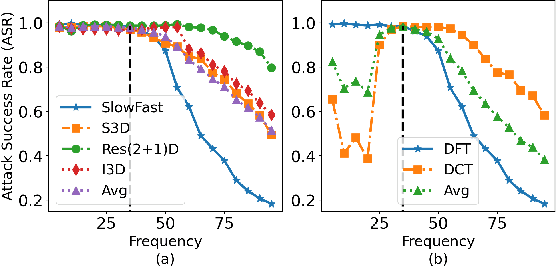
Deep neural networks (DNNs) have achieved tremendous success in various applications including video action recognition, yet remain vulnerable to backdoor attacks (Trojans). The backdoor-compromised model will mis-classify to the target class chosen by the attacker when a test instance (from a non-target class) is embedded with a specific trigger, while maintaining high accuracy on attack-free instances. Although there are extensive studies on backdoor attacks against image data, the susceptibility of video-based systems under backdoor attacks remains largely unexplored. Current studies are direct extensions of approaches proposed for image data, e.g., the triggers are independently embedded within the frames, which tend to be detectable by existing defenses. In this paper, we introduce a simple yet effective backdoor attack against video data. Our proposed attack, adding perturbations in a transformed domain, plants an imperceptible, temporally distributed trigger across the video frames, and is shown to be resilient to existing defensive strategies. The effectiveness of the proposed attack is demonstrated by extensive experiments with various well-known models on two video recognition benchmarks, UCF101 and HMDB51, and a sign language recognition benchmark, Greek Sign Language (GSL) dataset. We delve into the impact of several influential factors on our proposed attack and identify an intriguing effect termed "collateral damage" through extensive studies.