 Add to Chrome
 Add to Firefox
 Add to Edge
Deep learning-based pavement performance modeling using multiple distress indicators and road work history
May 03, 2026
The deterioration of pavement is a complex and dynamic process determined by different factors including material, environment, design, and some other unobserved variables. Accurate predictions of pavement condition can help maximize the use of available resources for pavement management agencies through better coordinated preservation and maintenance activities. This paper uses deep neural networks such as the convolutional neural network (CNN) and the long short-term memory (LSTM) to model the pavement deterioration process. In this paper, pavement condition data and maintenance and rehabilitation history collected by the Texas Department of Transportation over the past 18 years were used. Twenty-one flexible pavement condition indicators, including cracking, rutting, raveling, and roughness, collected from more than 100,000 pavement sections were included in the proposed models. Promising preliminary results were obtained. Case study results show that the proposed CNN model outperforms standard machine learning models in predicting pavement condition values.

Estimating the Impact of COVID-19 on Travel Demand in Houston Area Using Deep Learning and Satellite Imagery
Mar 29, 2026Considering recent advances in remote sensing satellite systems and computer vision algorithms, many satellite sensing platforms and sensors have been used to monitor the condition and usage of transportation infrastructure systems. The level of details that can be detected increases significantly with the increase of ground sample distance (GSD), which is around 15 cm - 30 cm for high-resolution satellite images. In this study, we analyzed data acquired from high-resolution satellite imagery to provide insights, predictive signals, and trend for travel demand estimation. More specifically, we estimate the impact of COVID-19 in the metropolitan area of Houston using satellite imagery from Google Earth Engine datasets. We developed a car-counting model through Detectron2 and Faster R-CNN to monitor the presence of cars within different locations (i.e., university, shopping mall, community plaza, restaurant, supermarket) before and during the COVID-19. The results show that the number of cars detected at these selected locations reduced on average 30% in 2020 compared with the previous year 2019. The results also show that satellite imagery provides rich information for travel demand and economic activity estimation. Together with advanced computer vision and deep learning algorithms, it can generate reliable and accurate information for transportation agency decision makers.
Large Language Model-Driven Code Compliance Checking in Building Information Modeling
Jun 25, 2025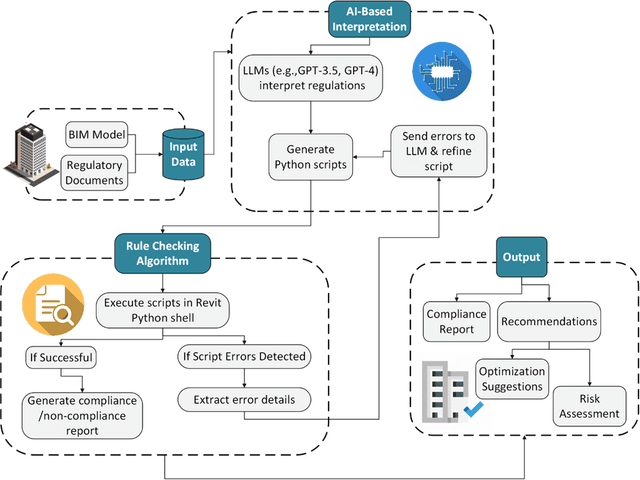
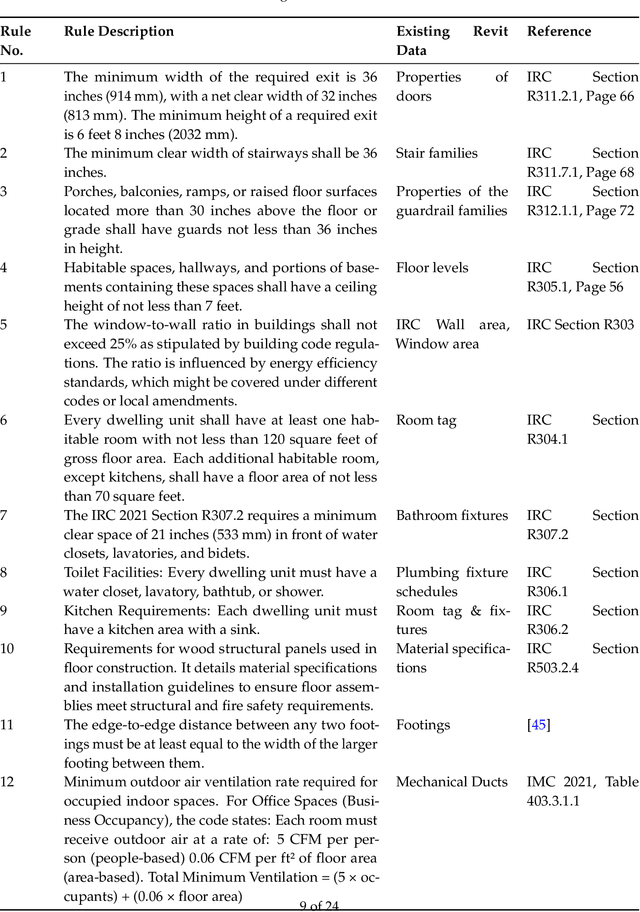
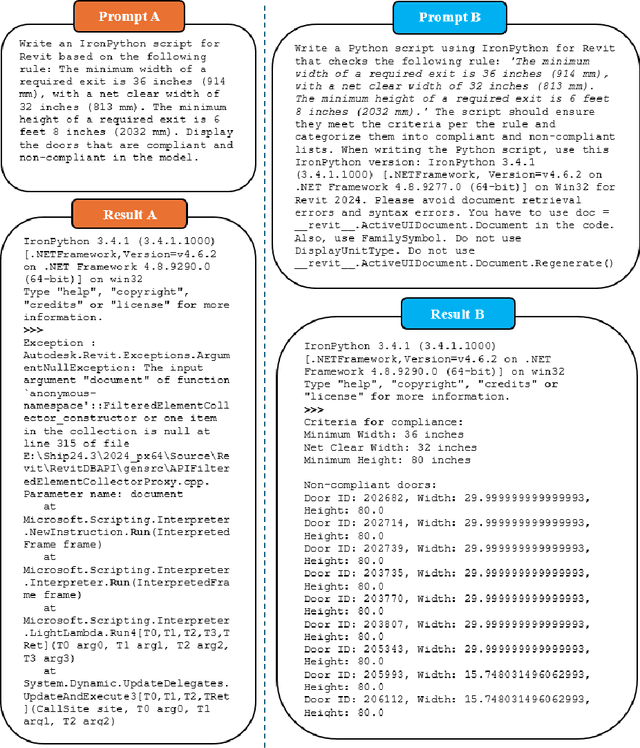
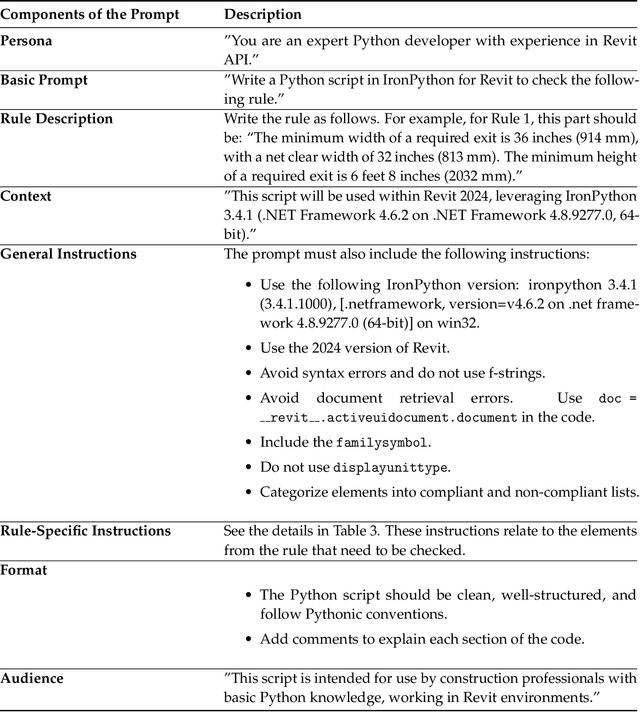
This research addresses the time-consuming and error-prone nature of manual code compliance checking in Building Information Modeling (BIM) by introducing a Large Language Model (LLM)-driven approach to semi-automate this critical process. The developed system integrates LLMs such as GPT, Claude, Gemini, and Llama, with Revit software to interpret building codes, generate Python scripts, and perform semi-automated compliance checks within the BIM environment. Case studies on a single-family residential project and an office building project demonstrated the system's ability to reduce the time and effort required for compliance checks while improving accuracy. It streamlined the identification of violations, such as non-compliant room dimensions, material usage, and object placements, by automatically assessing relationships and generating actionable reports. Compared to manual methods, the system eliminated repetitive tasks, simplified complex regulations, and ensured reliable adherence to standards. By offering a comprehensive, adaptable, and cost-effective solution, this proposed approach offers a promising advancement in BIM-based compliance checking, with potential applications across diverse regulatory documents in construction projects.
Seed-ASR: Understanding Diverse Speech and Contexts with LLM-based Speech Recognition
Jul 05, 2024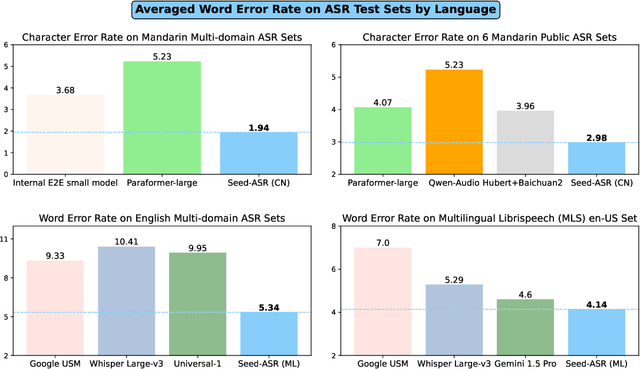
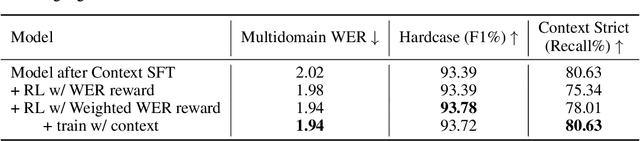
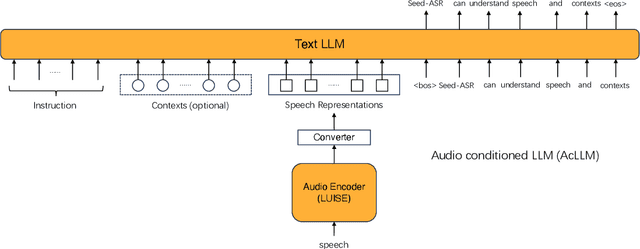

Modern automatic speech recognition (ASR) model is required to accurately transcribe diverse speech signals (from different domains, languages, accents, etc) given the specific contextual information in various application scenarios. Classic end-to-end models fused with extra language models perform well, but mainly in data matching scenarios and are gradually approaching a bottleneck. In this work, we introduce Seed-ASR, a large language model (LLM) based speech recognition model. Seed-ASR is developed based on the framework of audio conditioned LLM (AcLLM), leveraging the capabilities of LLMs by inputting continuous speech representations together with contextual information into the LLM. Through stage-wise large-scale training and the elicitation of context-aware capabilities in LLM, Seed-ASR demonstrates significant improvement over end-to-end models on comprehensive evaluation sets, including multiple domains, accents/dialects and languages. Additionally, Seed-ASR can be further deployed to support specific needs in various scenarios without requiring extra language models. Compared to recently released large ASR models, Seed-ASR achieves 10%-40% reduction in word (or character, for Chinese) error rates on Chinese and English public test sets, further demonstrating its powerful performance.
Seed-TTS: A Family of High-Quality Versatile Speech Generation Models
Jun 04, 2024


We introduce Seed-TTS, a family of large-scale autoregressive text-to-speech (TTS) models capable of generating speech that is virtually indistinguishable from human speech. Seed-TTS serves as a foundation model for speech generation and excels in speech in-context learning, achieving performance in speaker similarity and naturalness that matches ground truth human speech in both objective and subjective evaluations. With fine-tuning, we achieve even higher subjective scores across these metrics. Seed-TTS offers superior controllability over various speech attributes such as emotion and is capable of generating highly expressive and diverse speech for speakers in the wild. Furthermore, we propose a self-distillation method for speech factorization, as well as a reinforcement learning approach to enhance model robustness, speaker similarity, and controllability. We additionally present a non-autoregressive (NAR) variant of the Seed-TTS model, named $\text{Seed-TTS}_\text{DiT}$, which utilizes a fully diffusion-based architecture. Unlike previous NAR-based TTS systems, $\text{Seed-TTS}_\text{DiT}$ does not depend on pre-estimated phoneme durations and performs speech generation through end-to-end processing. We demonstrate that this variant achieves comparable performance to the language model-based variant and showcase its effectiveness in speech editing. We encourage readers to listen to demos at \url{https://bytedancespeech.github.io/seedtts_tech_report}.