 Add to Chrome
 Add to Firefox
 Add to Edge
GenoBERT: A Language Model for Accurate Genotype Imputation
Mar 31, 2026
Genotype imputation enables dense variant coverage for genome-wide association and risk-prediction studies, yet conventional reference-panel methods remain limited by ancestry bias and reduced rare-variant accuracy. We present Genotype Bidirectional Encoder Representations from Transformers (GenoBERT), a transformer-based, reference-free framework that tokenizes phased genotypes and uses a self-attention mechanism to capture both short- and long-range linkage disequilibrium (LD) dependencies. Benchmarking on two independent datasets including the Louisiana Osteoporosis Study (LOS) and the 1000 Genomes Project (1KGP) across ancestry groups and multiple genotype missingness levels (5-50%) shows that GenoBERT achieves the highest overall accuracy compared to four baseline methods (Beagle5.4, SCDA, BiU-Net, and STICI). At practical sparsity levels (up to 25% missing), GenoBERT attains high overall imputation accuracy ($r^2 approx 0.98$) across datasets, and maintains robust performance ($r^2 > 0.90$) even at 50% missingness. Experimental results across different ancestries confirm consistent gains across datasets, with resilience to small sample sizes and weak LD. A 128-SNP (single-nucleotide polymorphism) context window (approximately 100 Kb) is validated through LD-decay analyses as sufficient to capture local correlation structures. By eliminating reference-panel dependence while preserving high accuracy, GenoBERT provides a scalable and robust solution for genotype imputation and a foundation for downstream genomic modeling.

Multi-View Variational Autoencoder for Missing Value Imputation in Untargeted Metabolomics
Oct 12, 2023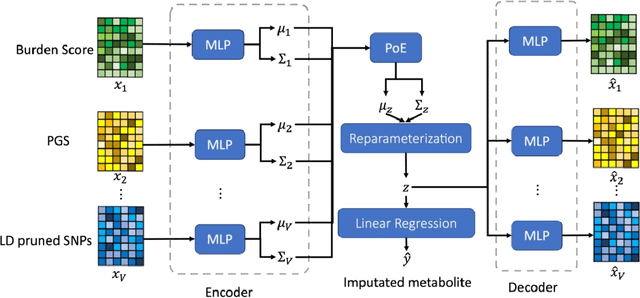
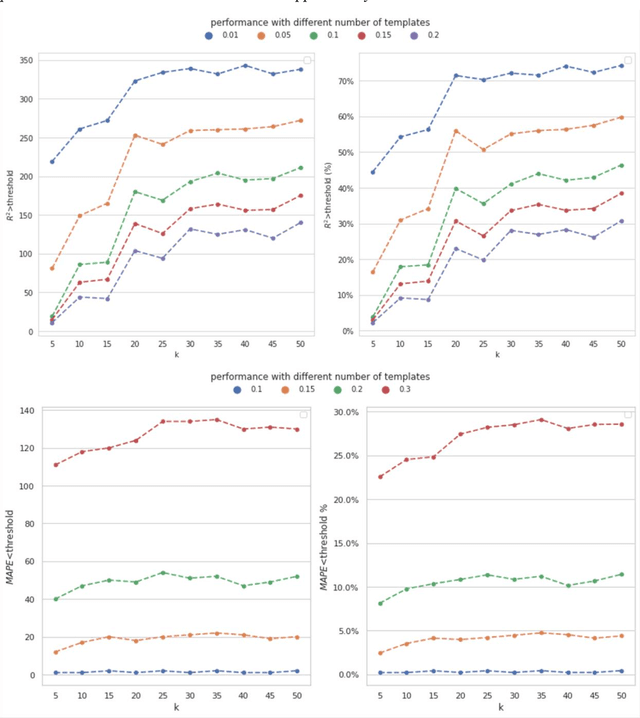
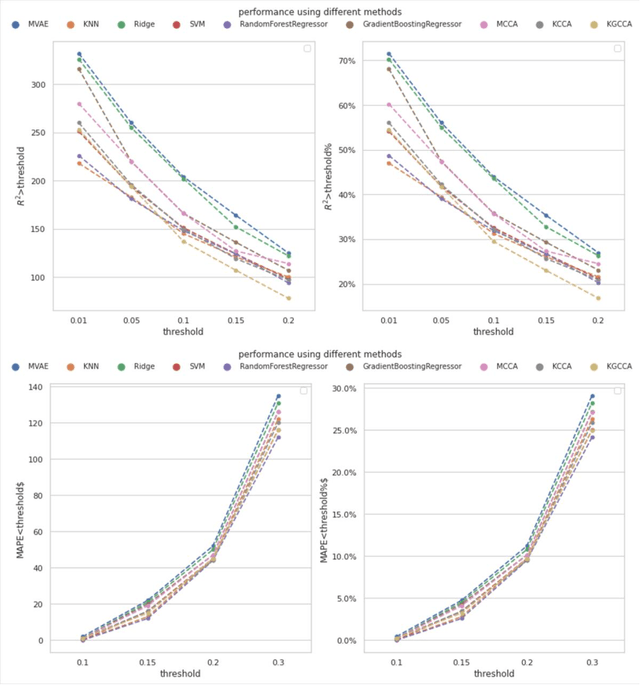
Background: Missing data is a common challenge in mass spectrometry-based metabolomics, which can lead to biased and incomplete analyses. The integration of whole-genome sequencing (WGS) data with metabolomics data has emerged as a promising approach to enhance the accuracy of data imputation in metabolomics studies. Method: In this study, we propose a novel method that leverages the information from WGS data and reference metabolites to impute unknown metabolites. Our approach utilizes a multi-view variational autoencoder to jointly model the burden score, polygenetic risk score (PGS), and linkage disequilibrium (LD) pruned single nucleotide polymorphisms (SNPs) for feature extraction and missing metabolomics data imputation. By learning the latent representations of both omics data, our method can effectively impute missing metabolomics values based on genomic information. Results: We evaluate the performance of our method on empirical metabolomics datasets with missing values and demonstrate its superiority compared to conventional imputation techniques. Using 35 template metabolites derived burden scores, PGS and LD-pruned SNPs, the proposed methods achieved r2-scores > 0.01 for 71.55% of metabolites. Conclusion: The integration of WGS data in metabolomics imputation not only improves data completeness but also enhances downstream analyses, paving the way for more comprehensive and accurate investigations of metabolic pathways and disease associations. Our findings offer valuable insights into the potential benefits of utilizing WGS data for metabolomics data imputation and underscore the importance of leveraging multi-modal data integration in precision medicine research.