 Add to Chrome
 Add to Firefox
 Add to Edge
Benchmarking Object Detectors with COCO: A New Path Forward
Mar 27, 2024
The Common Objects in Context (COCO) dataset has been instrumental in benchmarking object detectors over the past decade. Like every dataset, COCO contains subtle errors and imperfections stemming from its annotation procedure. With the advent of high-performing models, we ask whether these errors of COCO are hindering its utility in reliably benchmarking further progress. In search for an answer, we inspect thousands of masks from COCO (2017 version) and uncover different types of errors such as imprecise mask boundaries, non-exhaustively annotated instances, and mislabeled masks. Due to the prevalence of COCO, we choose to correct these errors to maintain continuity with prior research. We develop COCO-ReM (Refined Masks), a cleaner set of annotations with visibly better mask quality than COCO-2017. We evaluate fifty object detectors and find that models that predict visually sharper masks score higher on COCO-ReM, affirming that they were being incorrectly penalized due to errors in COCO-2017. Moreover, our models trained using COCO-ReM converge faster and score higher than their larger variants trained using COCO-2017, highlighting the importance of data quality in improving object detectors. With these findings, we advocate using COCO-ReM for future object detection research. Our dataset is available at https://cocorem.xyz

FAR: Flexible, Accurate and Robust 6DoF Relative Camera Pose Estimation
Mar 05, 2024Estimating relative camera poses between images has been a central problem in computer vision. Methods that find correspondences and solve for the fundamental matrix offer high precision in most cases. Conversely, methods predicting pose directly using neural networks are more robust to limited overlap and can infer absolute translation scale, but at the expense of reduced precision. We show how to combine the best of both methods; our approach yields results that are both precise and robust, while also accurately inferring translation scales. At the heart of our model lies a Transformer that (1) learns to balance between solved and learned pose estimations, and (2) provides a prior to guide a solver. A comprehensive analysis supports our design choices and demonstrates that our method adapts flexibly to various feature extractors and correspondence estimators, showing state-of-the-art performance in 6DoF pose estimation on Matterport3D, InteriorNet, StreetLearn, and Map-free Relocalization.
NIFTY: Neural Object Interaction Fields for Guided Human Motion Synthesis
Jul 14, 2023


We address the problem of generating realistic 3D motions of humans interacting with objects in a scene. Our key idea is to create a neural interaction field attached to a specific object, which outputs the distance to the valid interaction manifold given a human pose as input. This interaction field guides the sampling of an object-conditioned human motion diffusion model, so as to encourage plausible contacts and affordance semantics. To support interactions with scarcely available data, we propose an automated synthetic data pipeline. For this, we seed a pre-trained motion model, which has priors for the basics of human movement, with interaction-specific anchor poses extracted from limited motion capture data. Using our guided diffusion model trained on generated synthetic data, we synthesize realistic motions for sitting and lifting with several objects, outperforming alternative approaches in terms of motion quality and successful action completion. We call our framework NIFTY: Neural Interaction Fields for Trajectory sYnthesis.
Scalable 3D Captioning with Pretrained Models
Jun 16, 2023We introduce Cap3D, an automatic approach for generating descriptive text for 3D objects. This approach utilizes pretrained models from image captioning, image-text alignment, and LLM to consolidate captions from multiple views of a 3D asset, completely side-stepping the time-consuming and costly process of manual annotation. We apply Cap3D to the recently introduced large-scale 3D dataset, Objaverse, resulting in 660k 3D-text pairs. Our evaluation, conducted using 41k human annotations from the same dataset, demonstrates that Cap3D surpasses human-authored descriptions in terms of quality, cost, and speed. Through effective prompt engineering, Cap3D rivals human performance in generating geometric descriptions on 17k collected annotations from the ABO dataset. Finally, we finetune Text-to-3D models on Cap3D and human captions, and show Cap3D outperforms; and benchmark the SOTA including Point-E, Shape-E, and DreamFusion.
Learning to Predict Scene-Level Implicit 3D from Posed RGBD Data
Jun 14, 2023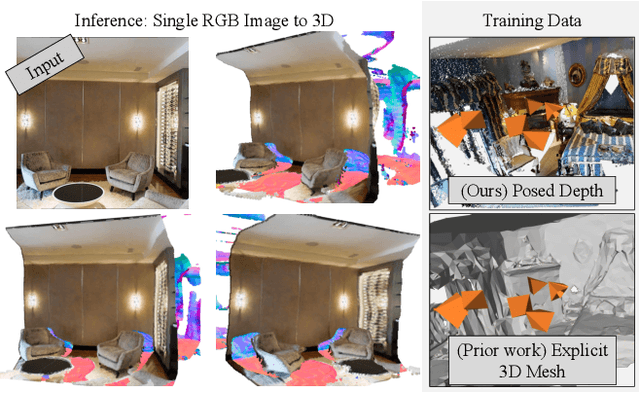
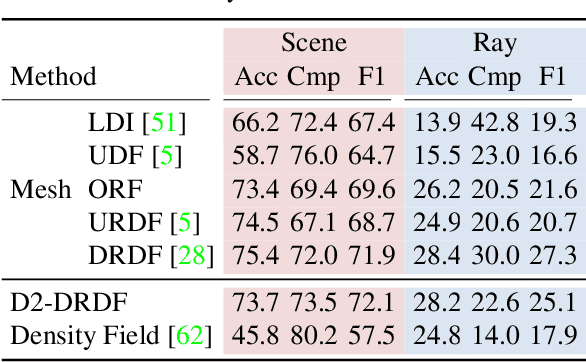
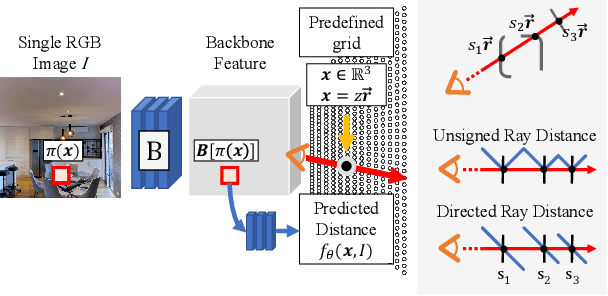
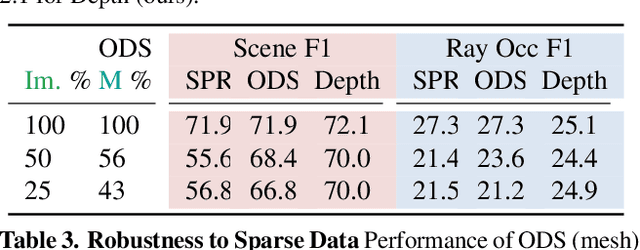
We introduce a method that can learn to predict scene-level implicit functions for 3D reconstruction from posed RGBD data. At test time, our system maps a previously unseen RGB image to a 3D reconstruction of a scene via implicit functions. While implicit functions for 3D reconstruction have often been tied to meshes, we show that we can train one using only a set of posed RGBD images. This setting may help 3D reconstruction unlock the sea of accelerometer+RGBD data that is coming with new phones. Our system, D2-DRDF, can match and sometimes outperform current methods that use mesh supervision and shows better robustness to sparse data.
Hyperbolic Image-Text Representations
Apr 18, 2023Visual and linguistic concepts naturally organize themselves in a hierarchy, where a textual concept ``dog'' entails all images that contain dogs. Despite being intuitive, current large-scale vision and language models such as CLIP do not explicitly capture such hierarchy. We propose MERU, a contrastive model that yields hyperbolic representations of images and text. Hyperbolic spaces have suitable geometric properties to embed tree-like data, so MERU can better capture the underlying hierarchy in image-text data. Our results show that MERU learns a highly interpretable representation space while being competitive with CLIP's performance on multi-modal tasks like image classification and image-text retrieval.
Text2Room: Extracting Textured 3D Meshes from 2D Text-to-Image Models
Mar 21, 2023We present Text2Room, a method for generating room-scale textured 3D meshes from a given text prompt as input. To this end, we leverage pre-trained 2D text-to-image models to synthesize a sequence of images from different poses. In order to lift these outputs into a consistent 3D scene representation, we combine monocular depth estimation with a text-conditioned inpainting model. The core idea of our approach is a tailored viewpoint selection such that the content of each image can be fused into a seamless, textured 3D mesh. More specifically, we propose a continuous alignment strategy that iteratively fuses scene frames with the existing geometry to create a seamless mesh. Unlike existing works that focus on generating single objects or zoom-out trajectories from text, our method generates complete 3D scenes with multiple objects and explicit 3D geometry. We evaluate our approach using qualitative and quantitative metrics, demonstrating it as the first method to generate room-scale 3D geometry with compelling textures from only text as input.
Learning Visual Representations via Language-Guided Sampling
Feb 23, 2023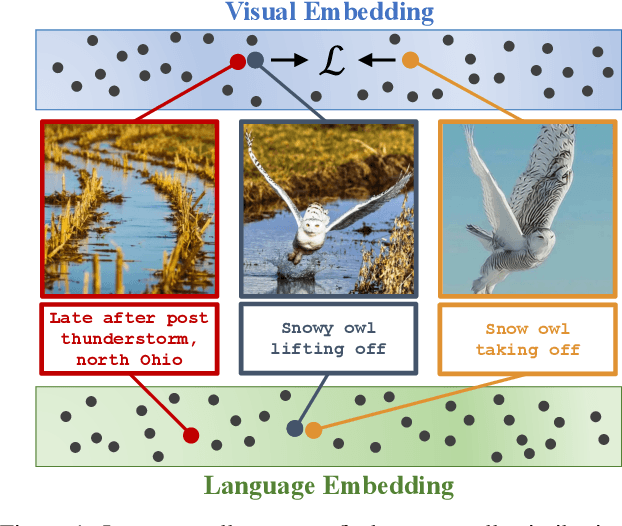
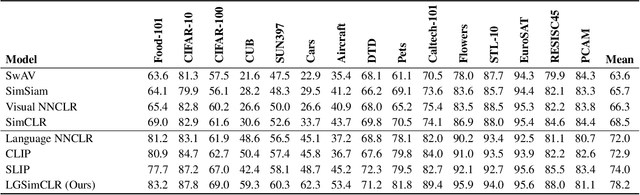
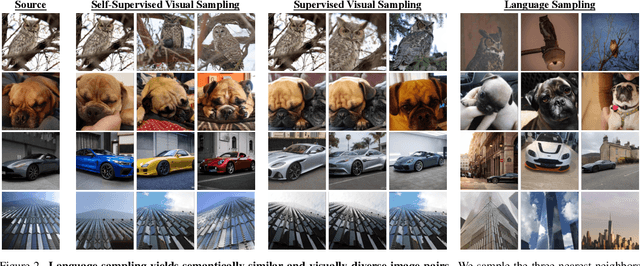
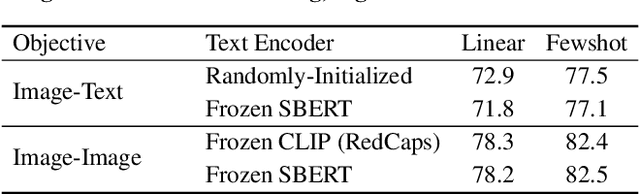
Although an object may appear in numerous contexts, we often describe it in a limited number of ways. This happens because language abstracts away visual variation to represent and communicate concepts. Building on this intuition, we propose an alternative approach to visual learning: using language similarity to sample semantically similar image pairs for contrastive learning. Our approach deviates from image-based contrastive learning by using language to sample pairs instead of hand-crafted augmentations or learned clusters. Our approach also deviates from image-text contrastive learning by relying on pre-trained language models to guide the learning rather than minimize a cross-modal similarity. Through a series of experiments, we show that language-guided learning can learn better features than both image-image and image-text representation learning approaches.
Text-To-4D Dynamic Scene Generation
Jan 26, 2023
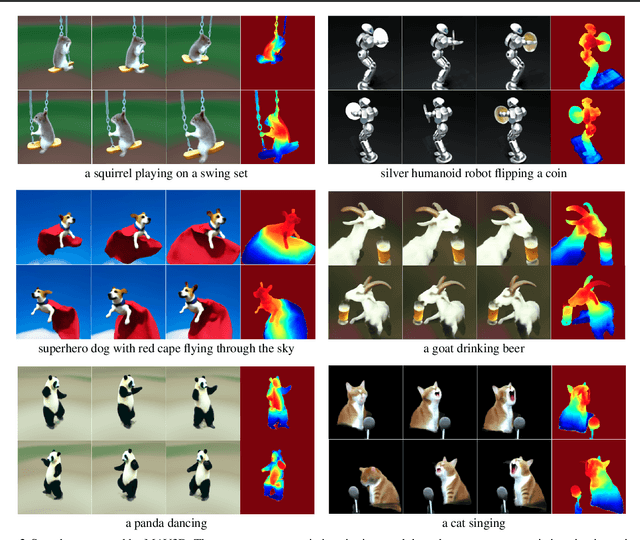

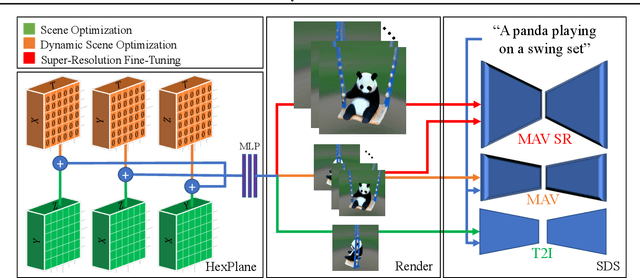
We present MAV3D (Make-A-Video3D), a method for generating three-dimensional dynamic scenes from text descriptions. Our approach uses a 4D dynamic Neural Radiance Field (NeRF), which is optimized for scene appearance, density, and motion consistency by querying a Text-to-Video (T2V) diffusion-based model. The dynamic video output generated from the provided text can be viewed from any camera location and angle, and can be composited into any 3D environment. MAV3D does not require any 3D or 4D data and the T2V model is trained only on Text-Image pairs and unlabeled videos. We demonstrate the effectiveness of our approach using comprehensive quantitative and qualitative experiments and show an improvement over previously established internal baselines. To the best of our knowledge, our method is the first to generate 3D dynamic scenes given a text description.
HexPlane: A Fast Representation for Dynamic Scenes
Jan 23, 2023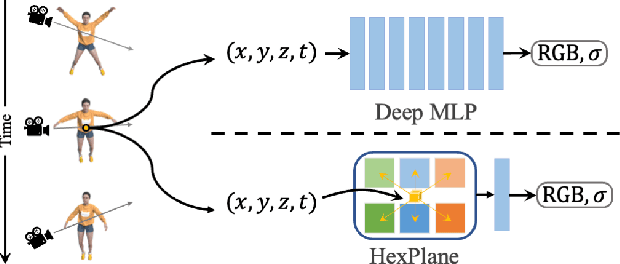
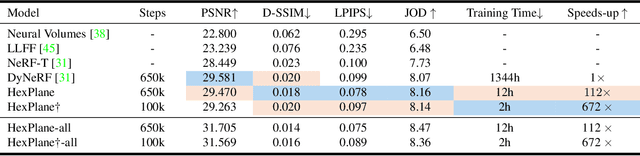
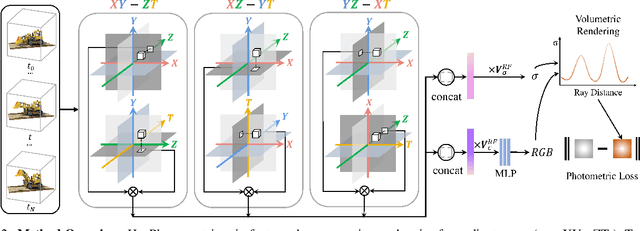
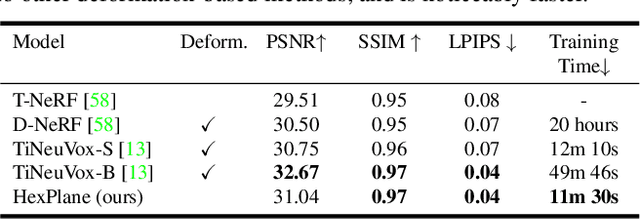
Modeling and re-rendering dynamic 3D scenes is a challenging task in 3D vision. Prior approaches build on NeRF and rely on implicit representations. This is slow since it requires many MLP evaluations, constraining real-world applications. We show that dynamic 3D scenes can be explicitly represented by six planes of learned features, leading to an elegant solution we call HexPlane. A HexPlane computes features for points in spacetime by fusing vectors extracted from each plane, which is highly efficient. Pairing a HexPlane with a tiny MLP to regress output colors and training via volume rendering gives impressive results for novel view synthesis on dynamic scenes, matching the image quality of prior work but reducing training time by more than $100\times$. Extensive ablations confirm our HexPlane design and show that it is robust to different feature fusion mechanisms, coordinate systems, and decoding mechanisms. HexPlanes are a simple and effective solution for representing 4D volumes, and we hope they can broadly contribute to modeling spacetime for dynamic 3D scenes.