 Add to Chrome
 Add to Firefox
 Add to Edge
Multi-Domain Riemannian Graph Gluing for Building Graph Foundation Models
Feb 28, 2026
Multi-domain graph pre-training integrates knowledge from diverse domains to enhance performance in the target domains, which is crucial for building graph foundation models. Despite initial success, existing solutions often fall short of answering a fundamental question: how is knowledge integrated or transferred across domains? This theoretical limitation motivates us to rethink the consistency and transferability between model pre-training and domain adaptation. In this paper, we propose a fresh Riemannian geometry perspective, whose core idea is to merge any graph dataset into a unified, smooth Riemannian manifold, enabling a systematic understanding of knowledge integration and transfer. To achieve this, our key contribution is the theoretical establishment of neural manifold gluing, which first characterizes local geometry using an adaptive orthogonal frame and then "glues" the local pieces together into a coherent whole. Building on this theory, we present the GraphGlue framework, which supports batched pre-training with EMA prototyping and provides a transferability measure based on geometric consistence. Extensive experiments demonstrate its superior performance across diverse graph domains. Moreover, we empirically validated GraphGlue's geometric scaling law, showing that larger quantities of datasets improve model transferability by producing a smoother manifold. Codes are available at https://github.com/RiemannGraph/GraphGlue.

Learning to Explore: Policy-Guided Outlier Synthesis for Graph Out-of-Distribution Detection
Feb 28, 2026Detecting out-of-distribution (OOD) graphs is crucial for ensuring the safety and reliability of Graph Neural Networks. In unsupervised graph-level OOD detection, models are typically trained using only in-distribution (ID) data, resulting in incomplete feature space characterization and weak decision boundaries. Although synthesizing outliers offers a promising solution, existing approaches rely on fixed, non-adaptive sampling heuristics (e.g., distance- or density-based), limiting their ability to explore informative OOD regions. We propose a Policy-Guided Outlier Synthesis (PGOS) framework that replaces static heuristics with a learned exploration strategy. Specifically, PGOS trains a reinforcement learning agent to navigate low-density regions in a structured latent space and sample representations that most effectively refine the OOD decision boundary. These representations are then decoded into high-quality pseudo-OOD graphs to improve detector robustness. Extensive experiments demonstrate that PGOS achieves state-of-the-art performance on multiple graph OOD and anomaly detection benchmarks.
MoSE: Unveiling Structural Patterns in Graphs via Mixture of Subgraph Experts
Sep 11, 2025While graph neural networks (GNNs) have achieved great success in learning from graph-structured data, their reliance on local, pairwise message passing restricts their ability to capture complex, high-order subgraph patterns. leading to insufficient structural expressiveness. Recent efforts have attempted to enhance structural expressiveness by integrating random walk kernels into GNNs. However, these methods are inherently designed for graph-level tasks, which limits their applicability to other downstream tasks such as node classification. Moreover, their fixed kernel configurations hinder the model's flexibility in capturing diverse subgraph structures. To address these limitations, this paper proposes a novel Mixture of Subgraph Experts (MoSE) framework for flexible and expressive subgraph-based representation learning across diverse graph tasks. Specifically, MoSE extracts informative subgraphs via anonymous walks and dynamically routes them to specialized experts based on structural semantics, enabling the model to capture diverse subgraph patterns with improved flexibility and interpretability. We further provide a theoretical analysis of MoSE's expressivity within the Subgraph Weisfeiler-Lehman (SWL) Test, proving that it is more powerful than SWL. Extensive experiments, together with visualizations of learned subgraph experts, demonstrate that MoSE not only outperforms competitive baselines but also provides interpretable insights into structural patterns learned by the model.
Better Language Model-Based Judging Reward Modeling through Scaling Comprehension Boundaries
Aug 25, 2025The emergence of LM-based judging reward modeling, represented by generative reward models, has successfully made reinforcement learning from AI feedback (RLAIF) efficient and scalable. To further advance this paradigm, we propose a core insight: this form of reward modeling shares fundamental formal consistency with natural language inference (NLI), a core task in natural language understanding. This reframed perspective points to a key path for building superior reward models: scaling the model's comprehension boundaries. Pursuing this path, exploratory experiments on NLI tasks demonstrate that the slot prediction masked language models (MLMs) incorporating contextual explanations achieve significantly better performance compared to mainstream autoregressive models. Based on this key finding, we propose ESFP-RM, a two-stage LM-based judging reward model that utilizes an explanation based slot framework for prediction to fully leverage the advantages of MLMs. Extensive experiments demonstrate that in both reinforcement learning from human feedback (RLHF) and out-of-distribution (OOD) scenarios, the ESFP-RM framework delivers more stable and generalizable reward signals compared to generative reward models.
CLEAR: Cluster-based Prompt Learning on Heterogeneous Graphs
Feb 13, 2025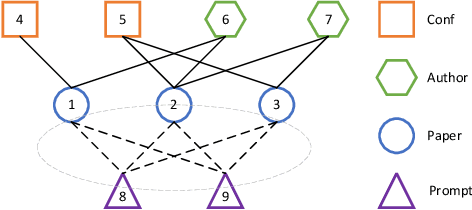
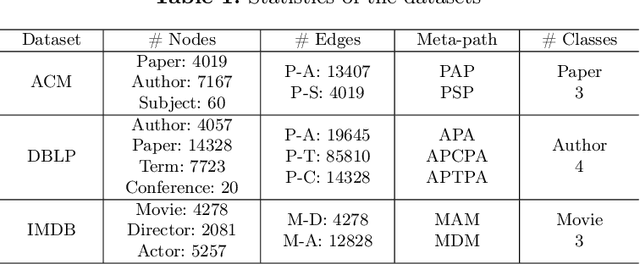
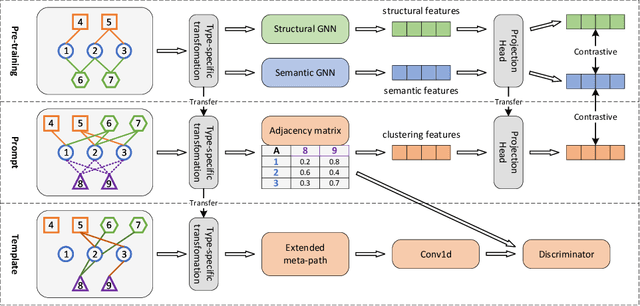
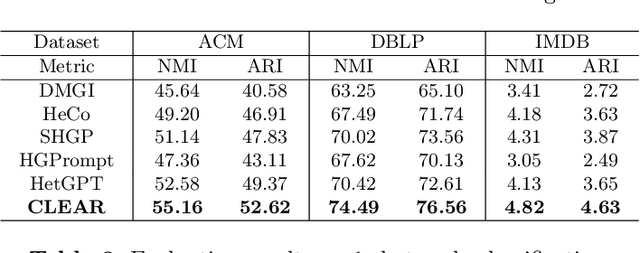
Prompt learning has attracted increasing attention in the graph domain as a means to bridge the gap between pretext and downstream tasks. Existing studies on heterogeneous graph prompting typically use feature prompts to modify node features for specific downstream tasks, which do not concern the structure of heterogeneous graphs. Such a design also overlooks information from the meta-paths, which are core to learning the high-order semantics of the heterogeneous graphs. To address these issues, we propose CLEAR, a Cluster-based prompt LEARNING model on heterogeneous graphs. We present cluster prompts that reformulate downstream tasks as heterogeneous graph reconstruction. In this way, we align the pretext and downstream tasks to share the same training objective. Additionally, our cluster prompts are also injected into the meta-paths such that the prompt learning process incorporates high-order semantic information entailed by the meta-paths. Extensive experiments on downstream tasks confirm the superiority of CLEAR. It consistently outperforms state-of-the-art models, achieving up to 5% improvement on the F1 metric for node classification.
DeepRicci: Self-supervised Graph Structure-Feature Co-Refinement for Alleviating Over-squashing
Jan 23, 2024Graph Neural Networks (GNNs) have shown great power for learning and mining on graphs, and Graph Structure Learning (GSL) plays an important role in boosting GNNs with a refined graph. In the literature, most GSL solutions either primarily focus on structure refinement with task-specific supervision (i.e., node classification), or overlook the inherent weakness of GNNs themselves (e.g., over-squashing), resulting in suboptimal performance despite sophisticated designs. In light of these limitations, we propose to study self-supervised graph structure-feature co-refinement for effectively alleviating the issue of over-squashing in typical GNNs. In this paper, we take a fundamentally different perspective of the Ricci curvature in Riemannian geometry, in which we encounter the challenges of modeling, utilizing and computing Ricci curvature. To tackle these challenges, we present a self-supervised Riemannian model, DeepRicci. Specifically, we introduce a latent Riemannian space of heterogeneous curvatures to model various Ricci curvatures, and propose a gyrovector feature mapping to utilize Ricci curvature for typical GNNs. Thereafter, we refine node features by geometric contrastive learning among different geometric views, and simultaneously refine graph structure by backward Ricci flow based on a novel formulation of differentiable Ricci curvature. Finally, extensive experiments on public datasets show the superiority of DeepRicci, and the connection between backward Ricci flow and over-squashing. Codes of our work are given in https://github.com/RiemanGraph/.
Contrastive Sequential Interaction Network Learning on Co-Evolving Riemannian Spaces
Jan 02, 2024The sequential interaction network usually find itself in a variety of applications, e.g., recommender system. Herein, inferring future interaction is of fundamental importance, and previous efforts are mainly focused on the dynamics in the classic zero-curvature Euclidean space. Despite the promising results achieved by previous methods, a range of significant issues still largely remains open: On the bipartite nature, is it appropriate to place user and item nodes in one identical space regardless of their inherent difference? On the network dynamics, instead of a fixed curvature space, will the representation spaces evolve when new interactions arrive continuously? On the learning paradigm, can we get rid of the label information costly to acquire? To address the aforementioned issues, we propose a novel Contrastive model for Sequential Interaction Network learning on Co-Evolving RiEmannian spaces, CSINCERE. To the best of our knowledge, we are the first to introduce a couple of co-evolving representation spaces, rather than a single or static space, and propose a co-contrastive learning for the sequential interaction network. In CSINCERE, we formulate a Cross-Space Aggregation for message-passing across representation spaces of different Riemannian geometries, and design a Neural Curvature Estimator based on Ricci curvatures for modeling the space evolvement over time. Thereafter, we present a Reweighed Co-Contrast between the temporal views of the sequential network, so that the couple of Riemannian spaces interact with each other for the interaction prediction without labels. Empirical results on 5 public datasets show the superiority of CSINCERE over the state-of-the-art methods.
SINCERE: Sequential Interaction Networks representation learning on Co-Evolving RiEmannian manifolds
May 06, 2023Sequential interaction networks (SIN) have been commonly adopted in many applications such as recommendation systems, search engines and social networks to describe the mutual influence between users and items/products. Efforts on representing SIN are mainly focused on capturing the dynamics of networks in Euclidean space, and recently plenty of work has extended to hyperbolic geometry for implicit hierarchical learning. Previous approaches which learn the embedding trajectories of users and items achieve promising results. However, there are still a range of fundamental issues remaining open. For example, is it appropriate to place user and item nodes in one identical space regardless of their inherent discrepancy? Instead of residing in a single fixed curvature space, how will the representation spaces evolve when new interaction occurs? To explore these issues for sequential interaction networks, we propose SINCERE, a novel method representing Sequential Interaction Networks on Co-Evolving RiEmannian manifolds. SIN- CERE not only takes the user and item embedding trajectories in respective spaces into account, but also emphasizes on the space evolvement that how curvature changes over time. Specifically, we introduce a fresh cross-geometry aggregation which allows us to propagate information across different Riemannian manifolds without breaking conformal invariance, and a curvature estimator which is delicately designed to predict global curvatures effectively according to current local Ricci curvatures. Extensive experiments on several real-world datasets demonstrate the promising performance of SINCERE over the state-of-the-art sequential interaction prediction methods.
Contrastive Graph Clustering in Curvature Spaces
May 05, 2023Graph clustering is a longstanding research topic, and has achieved remarkable success with the deep learning methods in recent years. Nevertheless, we observe that several important issues largely remain open. On the one hand, graph clustering from the geometric perspective is appealing but has rarely been touched before, as it lacks a promising space for geometric clustering. On the other hand, contrastive learning boosts the deep graph clustering but usually struggles in either graph augmentation or hard sample mining. To bridge this gap, we rethink the problem of graph clustering from geometric perspective and, to the best of our knowledge, make the first attempt to introduce a heterogeneous curvature space to graph clustering problem. Correspondingly, we present a novel end-to-end contrastive graph clustering model named CONGREGATE, addressing geometric graph clustering with Ricci curvatures. To support geometric clustering, we construct a theoretically grounded Heterogeneous Curvature Space where deep representations are generated via the product of the proposed fully Riemannian graph convolutional nets. Thereafter, we train the graph clusters by an augmentation-free reweighted contrastive approach where we pay more attention to both hard negatives and hard positives in our curvature space. Empirical results on real-world graphs show that our model outperforms the state-of-the-art competitors.
Self-Supervised Continual Graph Learning in Adaptive Riemannian Spaces
Nov 30, 2022Continual graph learning routinely finds its role in a variety of real-world applications where the graph data with different tasks come sequentially. Despite the success of prior works, it still faces great challenges. On the one hand, existing methods work with the zero-curvature Euclidean space, and largely ignore the fact that curvature varies over the coming graph sequence. On the other hand, continual learners in the literature rely on abundant labels, but labeling graph in practice is particularly hard especially for the continuously emerging graphs on-the-fly. To address the aforementioned challenges, we propose to explore a challenging yet practical problem, the self-supervised continual graph learning in adaptive Riemannian spaces. In this paper, we propose a novel self-supervised Riemannian Graph Continual Learner (RieGrace). In RieGrace, we first design an Adaptive Riemannian GCN (AdaRGCN), a unified GCN coupled with a neural curvature adapter, so that Riemannian space is shaped by the learnt curvature adaptive to each graph. Then, we present a Label-free Lorentz Distillation approach, in which we create teacher-student AdaRGCN for the graph sequence. The student successively performs intra-distillation from itself and inter-distillation from the teacher so as to consolidate knowledge without catastrophic forgetting. In particular, we propose a theoretically grounded Generalized Lorentz Projection for the contrastive distillation in Riemannian space. Extensive experiments on the benchmark datasets show the superiority of RieGrace, and additionally, we investigate on how curvature changes over the graph sequence.