 Add to Chrome
 Add to Firefox
 Add to Edge
AI-Generated Slides: Are They Good? Can Students Tell?
May 13, 2026
As generative AI (GenAI) tools become easily accessible, there is promise in using such tools to support instructors. To that end, this paper examines using GenAI to help generate slides from instructor authored course notes, emphasizing instructor and student perceptions. We examine an end-to-end education tool (NotebookLM), two general-purpose LLMs (Claude, M365 Copilot), and two coding assistants (Cursor, Claude Code). We first analyze whether GenAI generated slides are ``good'' via narrative assessment by educators. We choose the best slides to use (with some modification) in a real course setting, and compare the student perception of human vs. AI generated slides. We find that coding assistant tools produce slides that were most accurate, complete, and pedagogically sound. Additionally, students rate GenAI slides to be of similar quality as instructor-created slides, and cannot reliably identify which slides are AI-generated. Additionally, we find a negative correlation between a high quality rating and a high ``AI-generated'' rating, suggesting students associate poor quality with the source of the slides being AI. These findings highlight promising opportunities for integrating GenAI into instructional design workflows and call for further research on how educators can best harness such tools responsibly and effectively.

Retrieval-Augmented Tutoring for Algorithm Tracing and Problem-Solving in AI Education
May 13, 2026Students learning algorithms often need support as they interpret traces, debug reasoning errors, and apply procedures across unfamiliar problem instances. In this paper, we present KITE (Knowledge-Informed Tutoring Engine), a Retrieval-Augmented Generation (RAG)-based intelligent tutoring system designed to serve as a classroom teaching assistant for algorithmic reasoning and problem-solving tasks. KITE uses an intent-aware Socratic response strategy to tailor support to different student needs, responding with targeted hints, guiding questions, and progressive scaffolding intended to strengthen students' algorithmic problem-solving ability. To keep responses aligned with course content, KITE uses a multimodal RAG pipeline that retrieves relevant information from course materials. We evaluate KITE using three forms of assessment: RAGAs-based metrics for response grounding and quality, expert evaluation of pedagogical quality, and a simulated student pipeline in which a weaker language model interacts with KITE across two-turn dialogues and produces revised answers after receiving feedback. Results indicate that KITE produces contextually grounded and pedagogically appropriate responses. Further, using simulated students, KITE's feedback helped the student models produce more accurate follow-up responses on procedural and tracing questions, suggesting that its scaffolding can support algorithmic problem-solving. This work contributes a tutoring architecture and an evaluation approach for assessing retrieval-grounded explanations and scaffolded problem-solving feedback.
The Missing Evaluation Axis: What 10,000 Student Submissions Reveal About AI Tutor Effectiveness
May 07, 2026Current Artificial Intelligence (AI)-based tutoring systems (AI tutors) are primarily evaluated based on the pedagogical quality of their feedback messages. While important, pedagogy alone is insufficient because it ignores a critical question: what do students actually do with the feedback they receive? We argue that AI tutor evaluation should be extended with a behavioral dimension grounded in student interaction data, which complements pedagogical assessment. We propose an evaluation framework and apply it to 10,235 code submissions with corresponding AI tutor feedback from an introductory undergraduate programming course to measure whether students act on tutor feedback and whether those actions are applied correctly. Using this framework to compare two deployed AI tutors across different semesters in a large-scale introductory computer science course reveals substantial differences in student engagement patterns that are not captured by pedagogy-only evaluation. Moreover, these engagement-based behavioral signals are more strongly associated with student perception of helpful feedback than pedagogical quality alone, providing a more complete and actionable picture of AI tutor performance.
RLearner-LLM: Balancing Logical Grounding and Fluency in Large Language Models via Hybrid Direct Preference Optimization
May 06, 2026Direct Preference Optimization (DPO), the efficient alternative to PPO-based RLHF, falls short on knowledge-intensive generation: standard preference signals from human annotators or LLM judges exhibit a systematic verbosity bias that rewards fluency over logical correctness. This blindspot leaves a logical alignment gap -- SFT models reach NLI entailment of only 0.05-0.22 despite producing fluent text. We propose RLearner-LLM with Hybrid-DPO: an automated preference pipeline that fuses a DeBERTa-v3 NLI signal with a verifier LLM score, removing human annotation while overcoming the "alignment tax" of single-signal optimization. Evaluated across five academic domains (Biology, Medicine, Law) with three base architectures (LLaMA-2-13B, Qwen3-8B, Gemma 4 E4B-it), RLearner-LLM yields up to 6x NLI improvement over SFT, with NLI gains in 11 of 15 cells and consistent answer-coverage gains. On Gemma 4 E4B-it (4.5B effective params), Hybrid-DPO lifts NLI in four of five domains (+11.9% to +2.4x) with faster inference across all five, scaling down to compact base models without losing the alignment-tax mitigation. Our Qwen3-8B RLearner-LLM wins 95% of pairwise comparisons against its own SFT baseline; GPT-4o-mini in turn wins 95% against our concise output -- alongside the 69% win the same judge gives a verbose SFT over our DPO model, this replicates verbosity bias on a frontier comparator and motivates logic-aware metrics (NLI, ACR) over LLM-as-a-judge for knowledge-intensive generation.
Personalized Worked Example Generation from Student Code Submissions using Pattern-based Knowledge Components
Apr 27, 2026Adaptive programming practice often relies on fixed libraries of worked examples and practice problems, which require substantial authoring effort and may not correspond well to the logical errors and partial solutions students produce while writing code. As a result, students may receive learning content that does not directly address the concepts they are working to understand, while instructors must either invest additional effort in expanding content libraries or accept a coarse level of personalization. We present an approach for knowledge-component (KC) guided educational content generation using pattern-based KCs extracted from student code. Given a problem statement and student submissions, our pipeline extracts recurring structural KC patterns from students' code through AST-based analysis and uses them to condition a generative model. In this study, we apply this approach to worked example generation, and compare baseline and KC-conditioned outputs through expert evaluation. Results suggest that KC-conditioned generation improves topical focus and relevance to learners' underlying logical errors, providing evidence that KC-based steering of generative models can support personalized learning at scale.
Teaching Language Models How to Code Like Learners: Conversational Serialization for Student Simulation
Apr 12, 2026Artificial models that simulate how learners act and respond within educational systems are a promising tool for evaluating tutoring strategies and feedback mechanisms at scale. However, many existing approaches in programming education rely on prompting large, proprietary language models, raising concerns around privacy, cost, and dependence. In this work, we propose a method for training open-weight artificial programming learners using authentic student process data. Our approach serializes temporal log traces into a conversational format, representing each student's problem-solving process as a dialogue between the learner and their automated assessment system. Student code submissions and environment feedback, such as test outcomes, grades, and error traces, form alternating conversational turns, enabling models to learn from the iterative debugging process. We additionally introduce a training pipeline combining supervised fine-tuning with preference optimization to align models with authentic student debugging behavior. We evaluate our framework by training Qwen models at 4B and 8B scales on a large-scale dataset of real student submissions to Python programming assignments. Our results show that incorporating environment feedback strengthens the models' ability to replicate student debugging behavior, improving over both prior code-only approaches and prompted large language models baselines in functional alignment and code similarity. We release our code to support reproducibility.
Can We Improve Educational Diagram Generation with In-Context Examples? Not if a Hallucination Spoils the Bunch
Jan 28, 2026Generative artificial intelligence (AI) has found a widespread use in computing education; at the same time, quality of generated materials raises concerns among educators and students. This study addresses this issue by introducing a novel method for diagram code generation with in-context examples based on the Rhetorical Structure Theory (RST), which aims to improve diagram generation by aligning models' output with user expectations. Our approach is evaluated by computer science educators, who assessed 150 diagrams generated with large language models (LLMs) for logical organization, connectivity, layout aesthetic, and AI hallucination. The assessment dataset is additionally investigated for its utility in automated diagram evaluation. The preliminary results suggest that our method decreases the rate of factual hallucination and improves diagram faithfulness to provided context; however, due to LLMs' stochasticity, the quality of the generated diagrams varies. Additionally, we present an in-depth analysis and discussion on the connection between AI hallucination and the quality of generated diagrams, which reveals that text contexts of higher complexity lead to higher rates of hallucination and LLMs often fail to detect mistakes in their output.
From Prompts to Propositions: A Logic-Based Lens on Student-LLM Interactions
Apr 25, 2025Background and Context. The increasing integration of large language models (LLMs) in computing education presents an emerging challenge in understanding how students use LLMs and craft prompts to solve computational tasks. Prior research has used both qualitative and quantitative methods to analyze prompting behavior, but these approaches lack scalability or fail to effectively capture the semantic evolution of prompts. Objective. In this paper, we investigate whether students prompts can be systematically analyzed using propositional logic constraints. We examine whether this approach can identify patterns in prompt evolution, detect struggling students, and provide insights into effective and ineffective strategies. Method. We introduce Prompt2Constraints, a novel method that translates students prompts into logical constraints. The constraints are able to represent the intent of the prompts in succinct and quantifiable ways. We used this approach to analyze a dataset of 1,872 prompts from 203 students solving introductory programming tasks. Findings. We find that while successful and unsuccessful attempts tend to use a similar number of constraints overall, when students fail, they often modify their prompts more significantly, shifting problem-solving strategies midway. We also identify points where specific interventions could be most helpful to students for refining their prompts. Implications. This work offers a new and scalable way to detect students who struggle in solving natural language programming tasks. This work could be extended to investigate more complex tasks and integrated into programming tools to provide real-time support.
The Role of Generative AI in Software Student CollaborAItion
Jan 23, 2025Collaboration is a crucial part of computing education. The increase in AI capabilities over the last couple of years is bound to profoundly affect all aspects of systems and software engineering, including collaboration. In this position paper, we consider a scenario where AI agents would be able to take on any role in collaborative processes in computing education. We outline these roles, the activities and group dynamics that software development currently include, and discuss if and in what way AI could facilitate these roles and activities. The goal of our work is to envision and critically examine potential futures. We present scenarios suggesting how AI can be integrated into existing collaborations. These are contrasted by design fictions that help demonstrate the new possibilities and challenges for computing education in the AI era.
Beyond the Hype: A Comprehensive Review of Current Trends in Generative AI Research, Teaching Practices, and Tools
Dec 19, 2024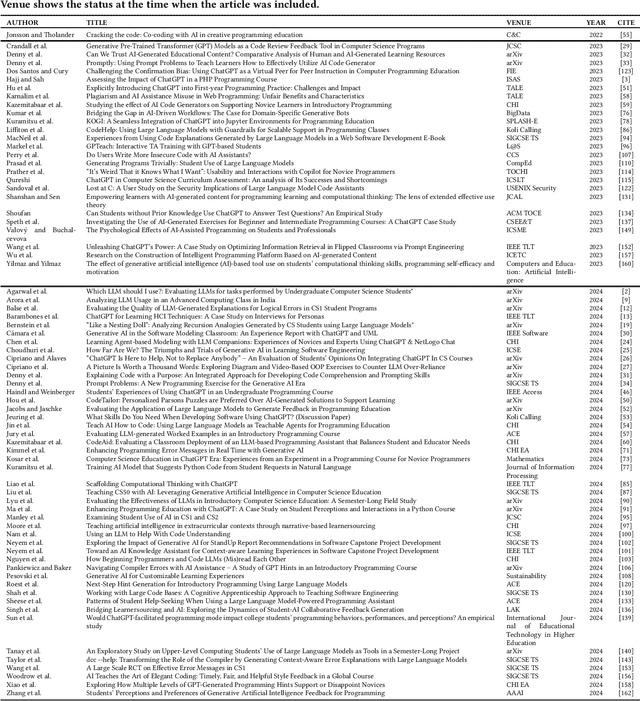

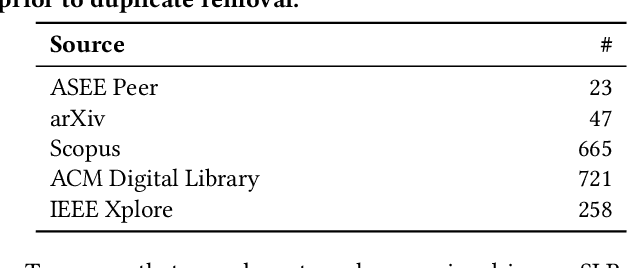
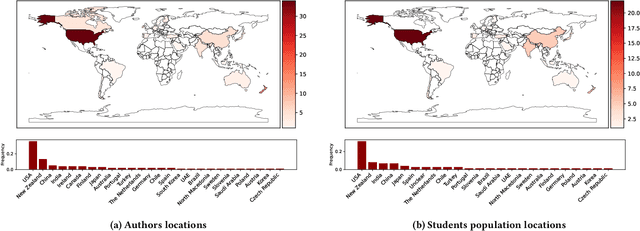
Generative AI (GenAI) is advancing rapidly, and the literature in computing education is expanding almost as quickly. Initial responses to GenAI tools were mixed between panic and utopian optimism. Many were fast to point out the opportunities and challenges of GenAI. Researchers reported that these new tools are capable of solving most introductory programming tasks and are causing disruptions throughout the curriculum. These tools can write and explain code, enhance error messages, create resources for instructors, and even provide feedback and help for students like a traditional teaching assistant. In 2024, new research started to emerge on the effects of GenAI usage in the computing classroom. These new data involve the use of GenAI to support classroom instruction at scale and to teach students how to code with GenAI. In support of the former, a new class of tools is emerging that can provide personalized feedback to students on their programming assignments or teach both programming and prompting skills at the same time. With the literature expanding so rapidly, this report aims to summarize and explain what is happening on the ground in computing classrooms. We provide a systematic literature review; a survey of educators and industry professionals; and interviews with educators using GenAI in their courses, educators studying GenAI, and researchers who create GenAI tools to support computing education. The triangulation of these methods and data sources expands the understanding of GenAI usage and perceptions at this critical moment for our community.