 Add to Chrome
 Add to Firefox
 Add to Edge
Theory of Mind for Multi-Agent Collaboration via Large Language Models
Oct 22, 2023

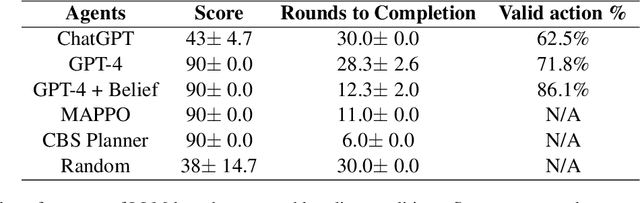

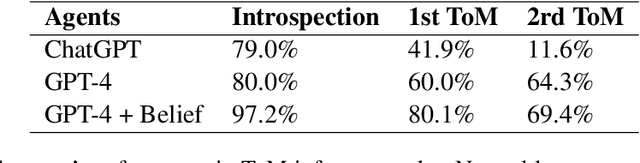
While Large Language Models (LLMs) have demonstrated impressive accomplishments in both reasoning and planning, their abilities in multi-agent collaborations remains largely unexplored. This study evaluates LLM-based agents in a multi-agent cooperative text game with Theory of Mind (ToM) inference tasks, comparing their performance with Multi-Agent Reinforcement Learning (MARL) and planning-based baselines. We observed evidence of emergent collaborative behaviors and high-order Theory of Mind capabilities among LLM-based agents. Our results reveal limitations in LLM-based agents' planning optimization due to systematic failures in managing long-horizon contexts and hallucination about the task state. We explore the use of explicit belief state representations to mitigate these issues, finding that it enhances task performance and the accuracy of ToM inferences for LLM-based agents.

Explaining Agent Behavior with Large Language Models
Sep 19, 2023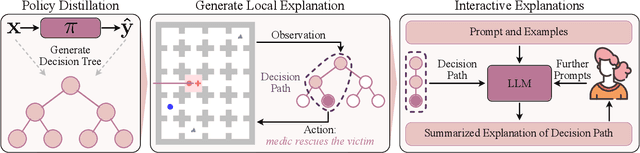
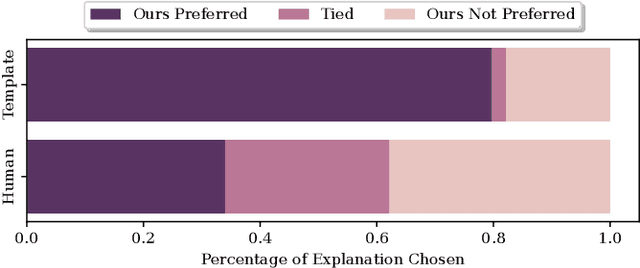
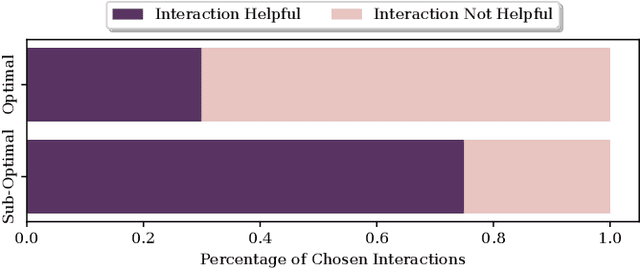
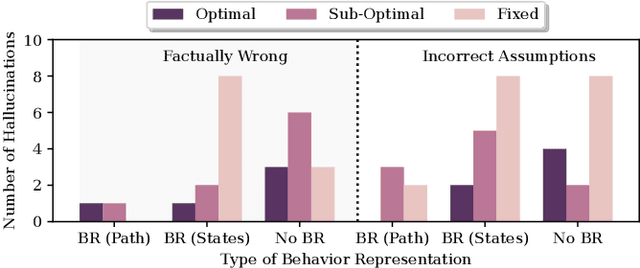
Intelligent agents such as robots are increasingly deployed in real-world, safety-critical settings. It is vital that these agents are able to explain the reasoning behind their decisions to human counterparts, however, their behavior is often produced by uninterpretable models such as deep neural networks. We propose an approach to generate natural language explanations for an agent's behavior based only on observations of states and actions, agnostic to the underlying model representation. We show how a compact representation of the agent's behavior can be learned and used to produce plausible explanations with minimal hallucination while affording user interaction with a pre-trained large language model. Through user studies and empirical experiments, we show that our approach generates explanations as helpful as those generated by a human domain expert while enabling beneficial interactions such as clarification and counterfactual queries.
Knowledge-Guided Short-Context Action Anticipation in Human-Centric Videos
Sep 12, 2023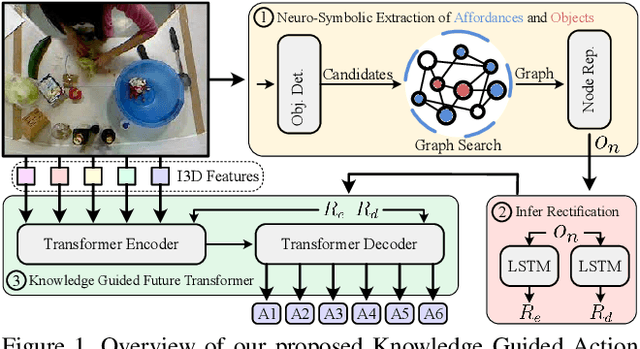
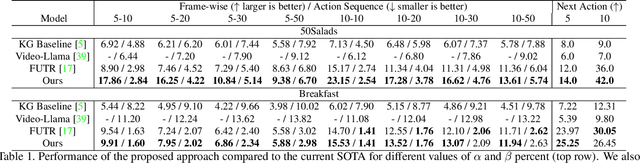

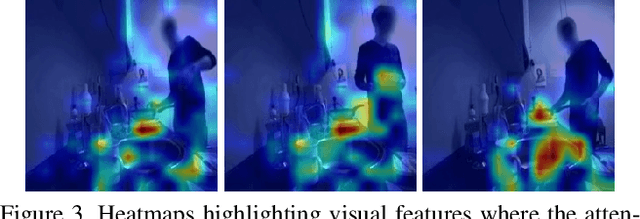
This work focuses on anticipating long-term human actions, particularly using short video segments, which can speed up editing workflows through improved suggestions while fostering creativity by suggesting narratives. To this end, we imbue a transformer network with a symbolic knowledge graph for action anticipation in video segments by boosting certain aspects of the transformer's attention mechanism at run-time. Demonstrated on two benchmark datasets, Breakfast and 50Salads, our approach outperforms current state-of-the-art methods for long-term action anticipation using short video context by up to 9%.
Enhancing State Estimation in Robots: A Data-Driven Approach with Differentiable Ensemble Kalman Filters
Aug 19, 2023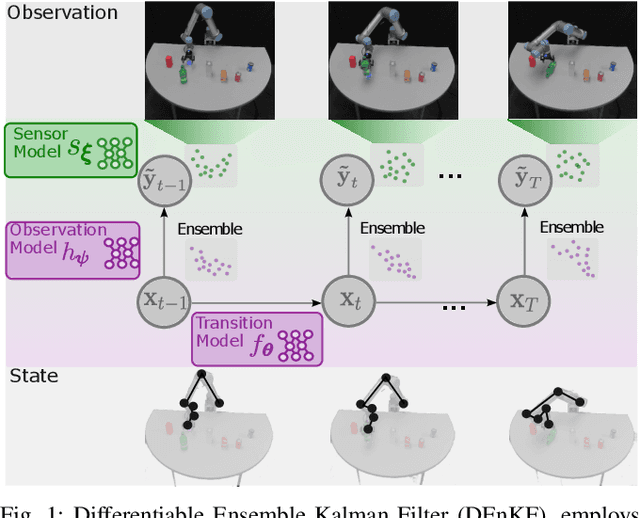
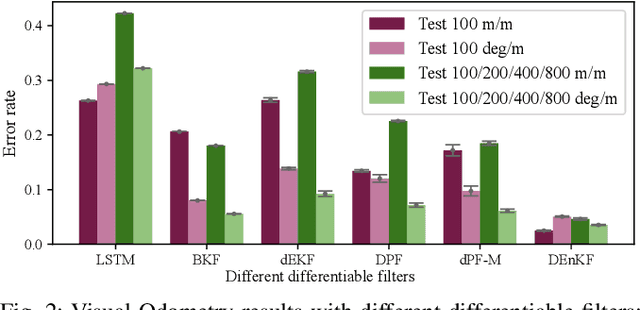
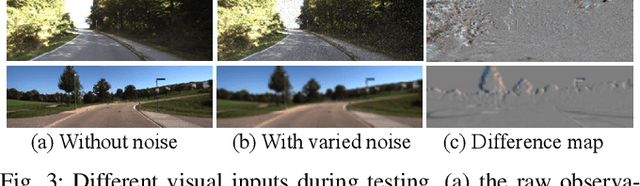
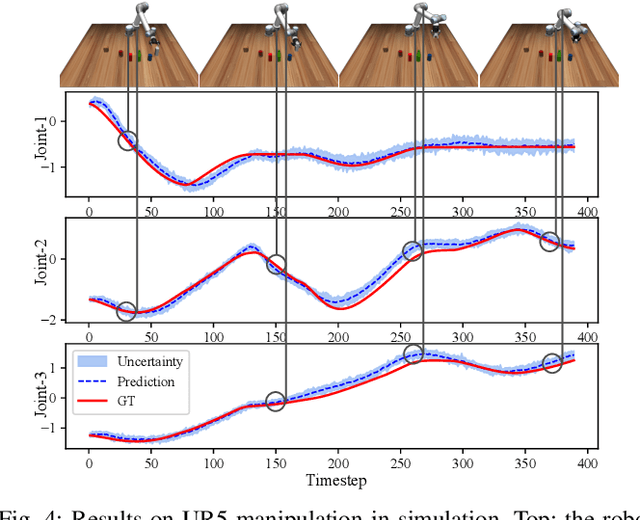
This paper introduces a novel state estimation framework for robots using differentiable ensemble Kalman filters (DEnKF). DEnKF is a reformulation of the traditional ensemble Kalman filter that employs stochastic neural networks to model the process noise implicitly. Our work is an extension of previous research on differentiable filters, which has provided a strong foundation for our modular and end-to-end differentiable framework. This framework enables each component of the system to function independently, leading to improved flexibility and versatility in implementation. Through a series of experiments, we demonstrate the flexibility of this model across a diverse set of real-world tracking tasks, including visual odometry and robot manipulation. Moreover, we show that our model effectively handles noisy observations, is robust in the absence of observations, and outperforms state-of-the-art differentiable filters in terms of error metrics. Specifically, we observe a significant improvement of at least 59% in translational error when using DEnKF with noisy observations. Our results underscore the potential of DEnKF in advancing state estimation for robotics. Code for DEnKF is available at https://github.com/ir-lab/DEnKF
Theory of Mind as Intrinsic Motivation for Multi-Agent Reinforcement Learning
Jul 18, 2023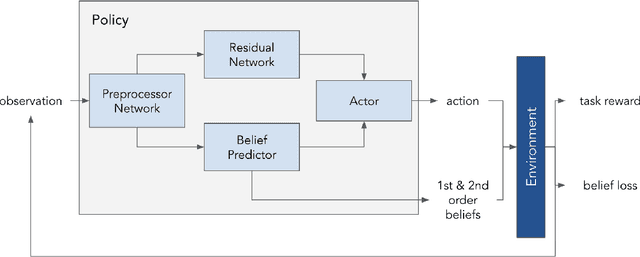

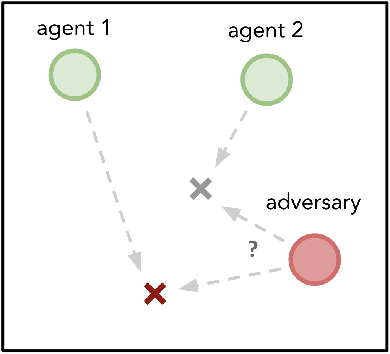
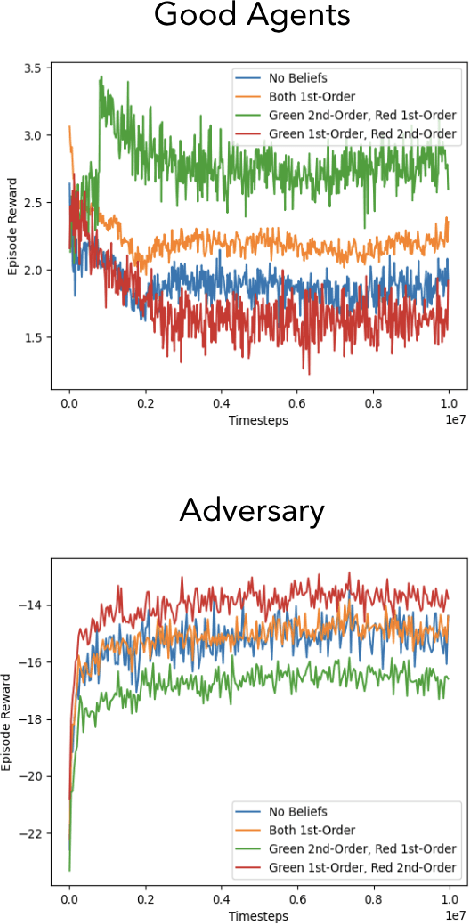
The ability to model the mental states of others is crucial to human social intelligence, and can offer similar benefits to artificial agents with respect to the social dynamics induced in multi-agent settings. We present a method of grounding semantically meaningful, human-interpretable beliefs within policies modeled by deep networks. We then consider the task of 2nd-order belief prediction. We propose that ability of each agent to predict the beliefs of the other agents can be used as an intrinsic reward signal for multi-agent reinforcement learning. Finally, we present preliminary empirical results in a mixed cooperative-competitive environment.
Introspective Action Advising for Interpretable Transfer Learning
Jun 21, 2023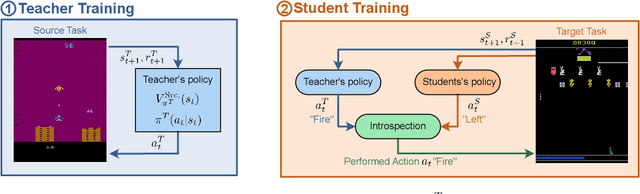

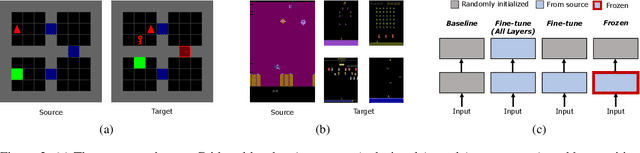
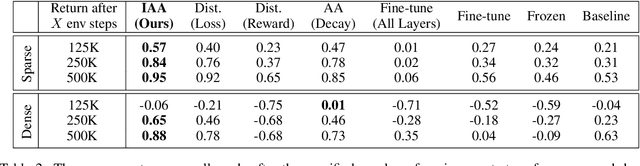
Transfer learning can be applied in deep reinforcement learning to accelerate the training of a policy in a target task by transferring knowledge from a policy learned in a related source task. This is commonly achieved by copying pretrained weights from the source policy to the target policy prior to training, under the constraint that they use the same model architecture. However, not only does this require a robust representation learned over a wide distribution of states -- often failing to transfer between specialist models trained over single tasks -- but it is largely uninterpretable and provides little indication of what knowledge is transferred. In this work, we propose an alternative approach to transfer learning between tasks based on action advising, in which a teacher trained in a source task actively guides a student's exploration in a target task. Through introspection, the teacher is capable of identifying when advice is beneficial to the student and should be given, and when it is not. Our approach allows knowledge transfer between policies agnostic of the underlying representations, and we empirically show that this leads to improved convergence rates in Gridworld and Atari environments while providing insight into what knowledge is transferred.
Sample-Efficient Learning of Novel Visual Concepts
Jun 15, 2023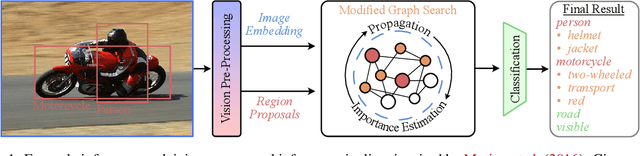
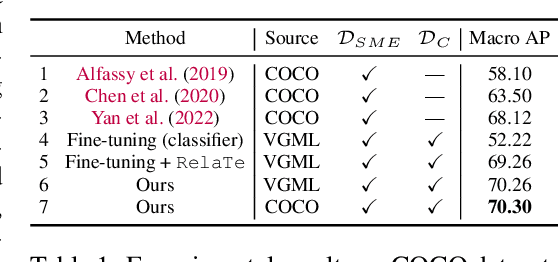
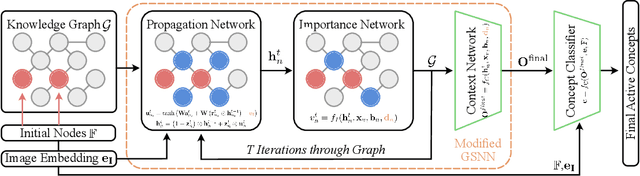
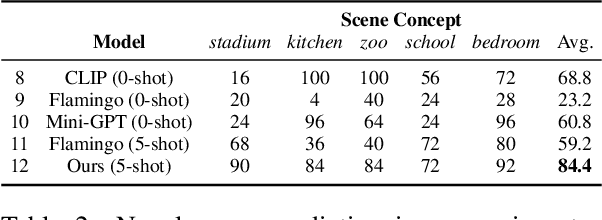
Despite the advances made in visual object recognition, state-of-the-art deep learning models struggle to effectively recognize novel objects in a few-shot setting where only a limited number of examples are provided. Unlike humans who excel at such tasks, these models often fail to leverage known relationships between entities in order to draw conclusions about such objects. In this work, we show that incorporating a symbolic knowledge graph into a state-of-the-art recognition model enables a new approach for effective few-shot classification. In our proposed neuro-symbolic architecture and training methodology, the knowledge graph is augmented with additional relationships extracted from a small set of examples, improving its ability to recognize novel objects by considering the presence of interconnected entities. Unlike existing few-shot classifiers, we show that this enables our model to incorporate not only objects but also abstract concepts and affordances. The existence of the knowledge graph also makes this approach amenable to interpretability through analysis of the relationships contained within it. We empirically show that our approach outperforms current state-of-the-art few-shot multi-label classification methods on the COCO dataset and evaluate the addition of abstract concepts and affordances on the Visual Genome dataset.
Characterizing Out-of-Distribution Error via Optimal Transport
May 25, 2023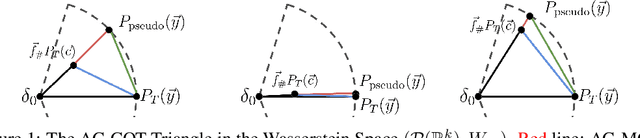
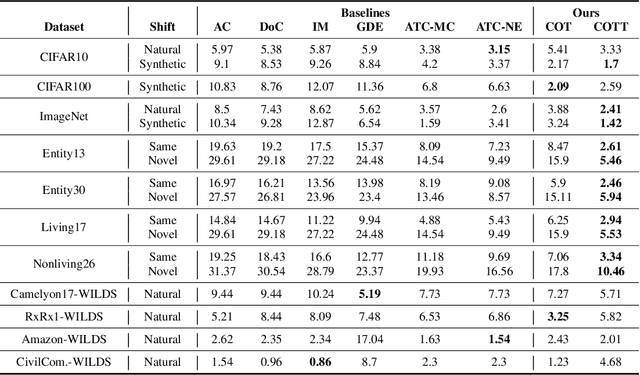
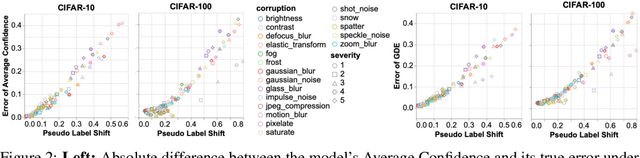
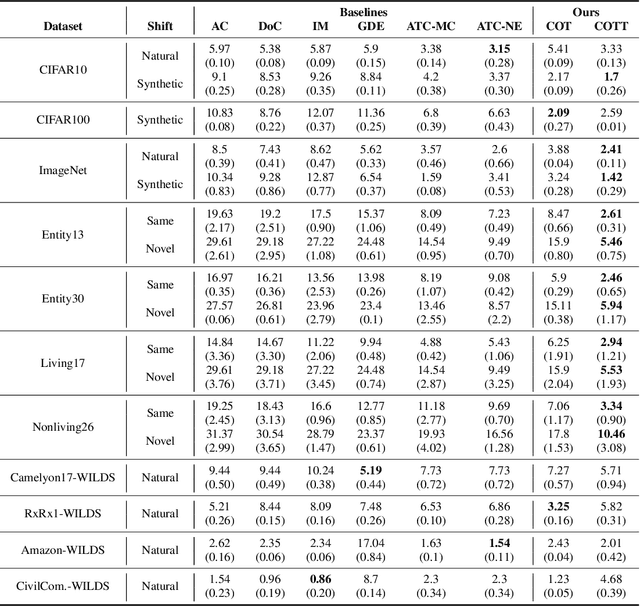
Out-of-distribution (OOD) data poses serious challenges in deployed machine learning models, so methods of predicting a model's performance on OOD data without labels are important for machine learning safety. While a number of methods have been proposed by prior work, they often underestimate the actual error, sometimes by a large margin, which greatly impacts their applicability to real tasks. In this work, we identify pseudo-label shift, or the difference between the predicted and true OOD label distributions, as a key indicator to this underestimation. Based on this observation, we introduce a novel method for estimating model performance by leveraging optimal transport theory, Confidence Optimal Transport (COT), and show that it provably provides more robust error estimates in the presence of pseudo-label shift. Additionally, we introduce an empirically-motivated variant of COT, Confidence Optimal Transport with Thresholding (COTT), which applies thresholding to the individual transport costs and further improves the accuracy of COT's error estimates. We evaluate COT and COTT on a variety of standard benchmarks that induce various types of distribution shift -- synthetic, novel subpopulation, and natural -- and show that our approaches significantly outperform existing state-of-the-art methods with an up to 3x lower prediction error.
Concept Learning for Interpretable Multi-Agent Reinforcement Learning
Feb 23, 2023

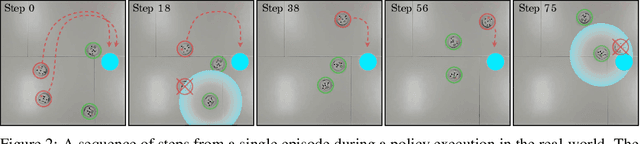
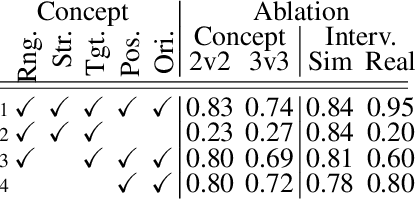
Multi-agent robotic systems are increasingly operating in real-world environments in close proximity to humans, yet are largely controlled by policy models with inscrutable deep neural network representations. We introduce a method for incorporating interpretable concepts from a domain expert into models trained through multi-agent reinforcement learning, by requiring the model to first predict such concepts then utilize them for decision making. This allows an expert to both reason about the resulting concept policy models in terms of these high-level concepts at run-time, as well as intervene and correct mispredictions to improve performance. We show that this yields improved interpretability and training stability, with benefits to policy performance and sample efficiency in a simulated and real-world cooperative-competitive multi-agent game.
Predicting Out-of-Distribution Error with Confidence Optimal Transport
Feb 10, 2023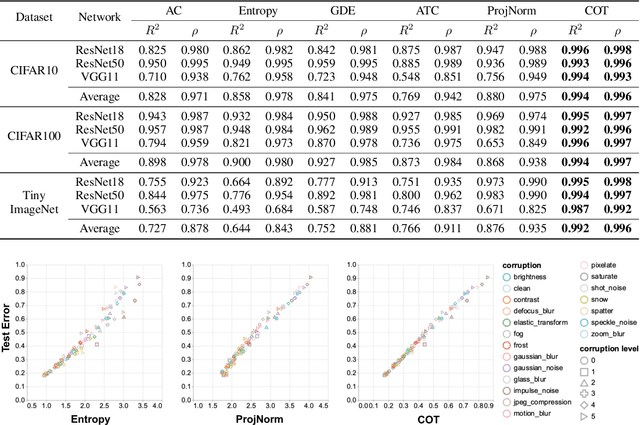
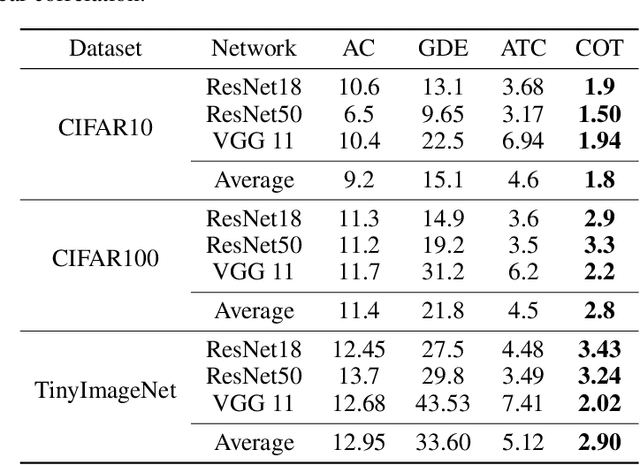
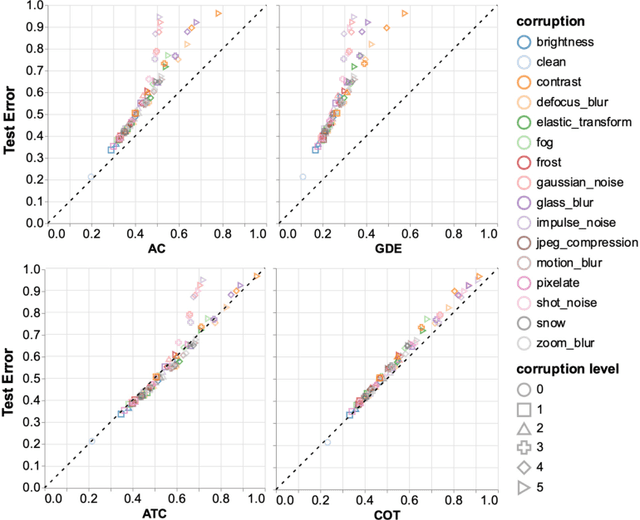
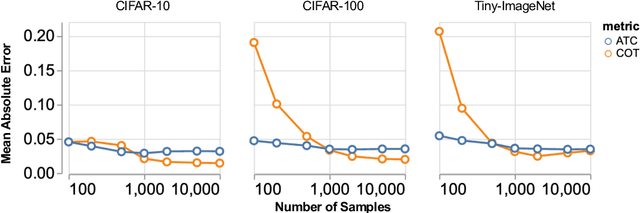
Out-of-distribution (OOD) data poses serious challenges in deployed machine learning models as even subtle changes could incur significant performance drops. Being able to estimate a model's performance on test data is important in practice as it indicates when to trust to model's decisions. We present a simple yet effective method to predict a model's performance on an unknown distribution without any addition annotation. Our approach is rooted in the Optimal Transport theory, viewing test samples' output softmax scores from deep neural networks as empirical samples from an unknown distribution. We show that our method, Confidence Optimal Transport (COT), provides robust estimates of a model's performance on a target domain. Despite its simplicity, our method achieves state-of-the-art results on three benchmark datasets and outperforms existing methods by a large margin.