 Add to Chrome
 Add to Firefox
 Add to Edge
FactorPortrait: Controllable Portrait Animation via Disentangled Expression, Pose, and Viewpoint
Dec 12, 2025
We introduce FactorPortrait, a video diffusion method for controllable portrait animation that enables lifelike synthesis from disentangled control signals of facial expressions, head movement, and camera viewpoints. Given a single portrait image, a driving video, and camera trajectories, our method animates the portrait by transferring facial expressions and head movements from the driving video while simultaneously enabling novel view synthesis from arbitrary viewpoints. We utilize a pre-trained image encoder to extract facial expression latents from the driving video as control signals for animation generation. Such latents implicitly capture nuanced facial expression dynamics with identity and pose information disentangled, and they are efficiently injected into the video diffusion transformer through our proposed expression controller. For camera and head pose control, we employ Plücker ray maps and normal maps rendered from 3D body mesh tracking. To train our model, we curate a large-scale synthetic dataset containing diverse combinations of camera viewpoints, head poses, and facial expression dynamics. Extensive experiments demonstrate that our method outperforms existing approaches in realism, expressiveness, control accuracy, and view consistency.

GenCA: A Text-conditioned Generative Model for Realistic and Drivable Codec Avatars
Aug 24, 2024

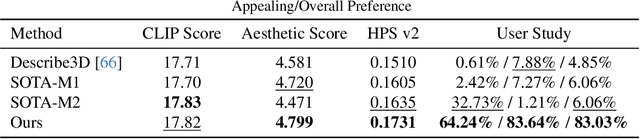

Photo-realistic and controllable 3D avatars are crucial for various applications such as virtual and mixed reality (VR/MR), telepresence, gaming, and film production. Traditional methods for avatar creation often involve time-consuming scanning and reconstruction processes for each avatar, which limits their scalability. Furthermore, these methods do not offer the flexibility to sample new identities or modify existing ones. On the other hand, by learning a strong prior from data, generative models provide a promising alternative to traditional reconstruction methods, easing the time constraints for both data capture and processing. Additionally, generative methods enable downstream applications beyond reconstruction, such as editing and stylization. Nonetheless, the research on generative 3D avatars is still in its infancy, and therefore current methods still have limitations such as creating static avatars, lacking photo-realism, having incomplete facial details, or having limited drivability. To address this, we propose a text-conditioned generative model that can generate photo-realistic facial avatars of diverse identities, with more complete details like hair, eyes and mouth interior, and which can be driven through a powerful non-parametric latent expression space. Specifically, we integrate the generative and editing capabilities of latent diffusion models with a strong prior model for avatar expression driving. Our model can generate and control high-fidelity avatars, even those out-of-distribution. We also highlight its potential for downstream applications, including avatar editing and single-shot avatar reconstruction.
Deep Heterogeneous Autoencoders for Collaborative Filtering
Dec 17, 2018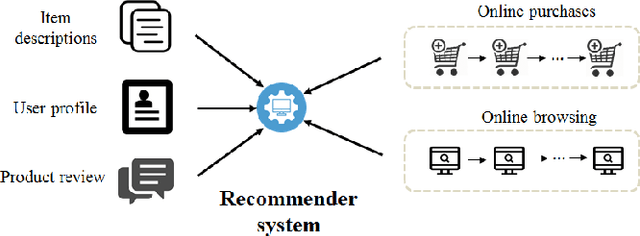
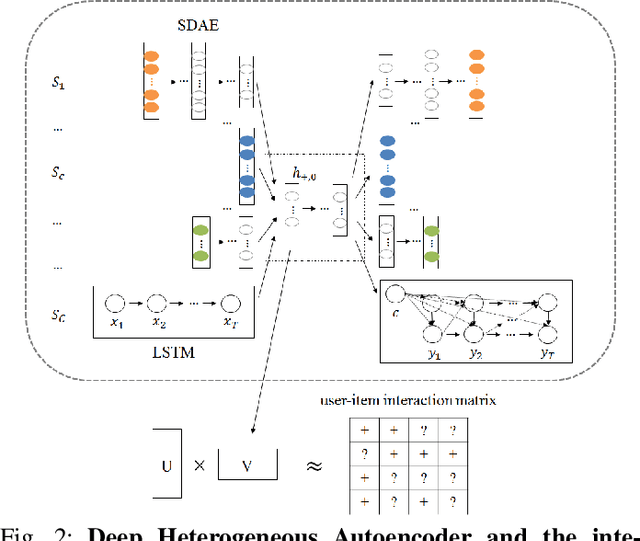
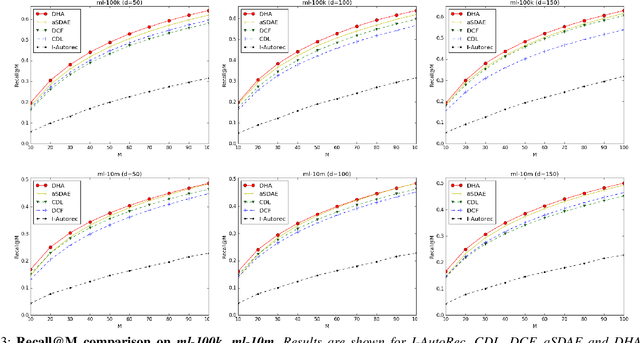
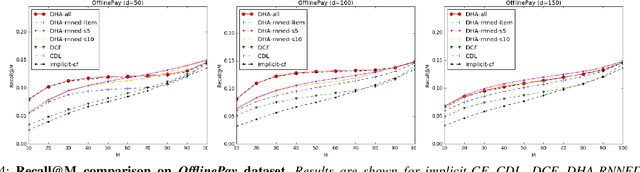
This paper leverages heterogeneous auxiliary information to address the data sparsity problem of recommender systems. We propose a model that learns a shared feature space from heterogeneous data, such as item descriptions, product tags and online purchase history, to obtain better predictions. Our model consists of autoencoders, not only for numerical and categorical data, but also for sequential data, which enables capturing user tastes, item characteristics and the recent dynamics of user preference. We learn the autoencoder architecture for each data source independently in order to better model their statistical properties. Our evaluation on two MovieLens datasets and an e-commerce dataset shows that mean average precision and recall improve over state-of-the-art methods.
Pano2CAD: Room Layout From A Single Panorama Image
Sep 30, 2016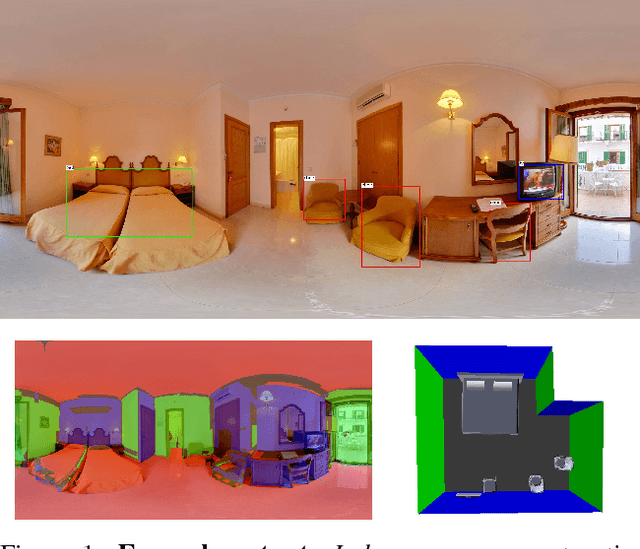
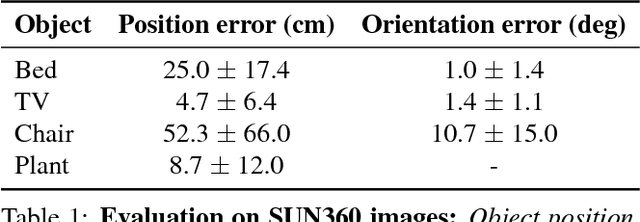
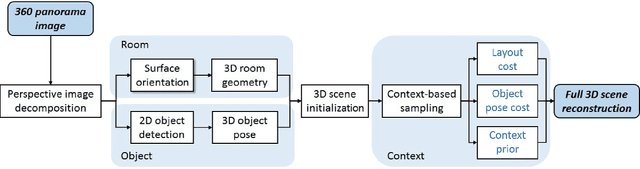

This paper presents a method of estimating the geometry of a room and the 3D pose of objects from a single 360-degree panorama image. Assuming Manhattan World geometry, we formulate the task as a Bayesian inference problem in which we estimate positions and orientations of walls and objects. The method combines surface normal estimation, 2D object detection and 3D object pose estimation. Quantitative results are presented on a dataset of synthetically generated 3D rooms containing objects, as well as on a subset of hand-labeled images from the public SUN360 dataset.