 Add to Chrome
 Add to Firefox
 Add to Edge
SPRINT: A Unified Toolkit for Evaluating and Demystifying Zero-shot Neural Sparse Retrieval
Jul 19, 2023
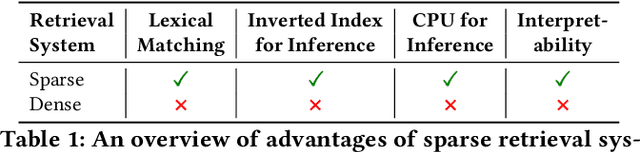
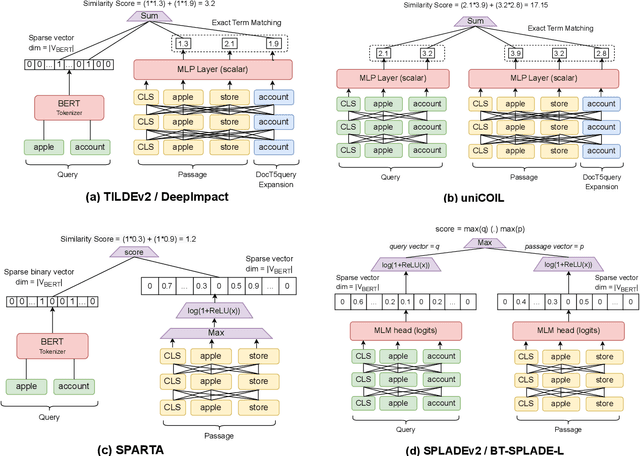
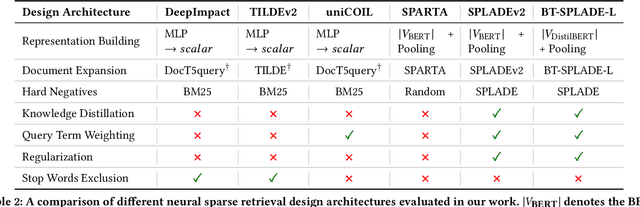
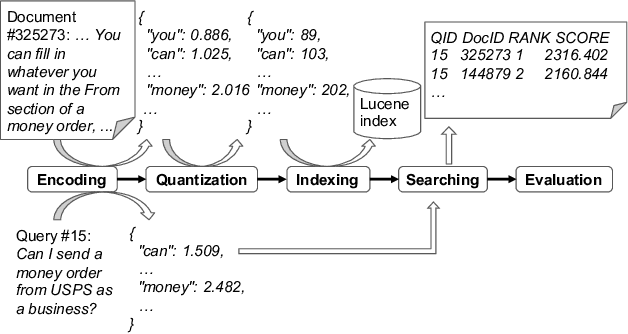
Traditionally, sparse retrieval systems relied on lexical representations to retrieve documents, such as BM25, dominated information retrieval tasks. With the onset of pre-trained transformer models such as BERT, neural sparse retrieval has led to a new paradigm within retrieval. Despite the success, there has been limited software supporting different sparse retrievers running in a unified, common environment. This hinders practitioners from fairly comparing different sparse models and obtaining realistic evaluation results. Another missing piece is, that a majority of prior work evaluates sparse retrieval models on in-domain retrieval, i.e. on a single dataset: MS MARCO. However, a key requirement in practical retrieval systems requires models that can generalize well to unseen out-of-domain, i.e. zero-shot retrieval tasks. In this work, we provide SPRINT, a unified Python toolkit based on Pyserini and Lucene, supporting a common interface for evaluating neural sparse retrieval. The toolkit currently includes five built-in models: uniCOIL, DeepImpact, SPARTA, TILDEv2 and SPLADEv2. Users can also easily add customized models by defining their term weighting method. Using our toolkit, we establish strong and reproducible zero-shot sparse retrieval baselines across the well-acknowledged benchmark, BEIR. Our results demonstrate that SPLADEv2 achieves the best average score of 0.470 nDCG@10 on BEIR amongst all neural sparse retrievers. In this work, we further uncover the reasons behind its performance gain. We show that SPLADEv2 produces sparse representations with a majority of tokens outside of the original query and document which is often crucial for its performance gains, i.e. a limitation among its other sparse counterparts. We provide our SPRINT toolkit, models, and data used in our experiments publicly here at https://github.com/thakur-nandan/sprint.

Resources for Brewing BEIR: Reproducible Reference Models and an Official Leaderboard
Jun 13, 2023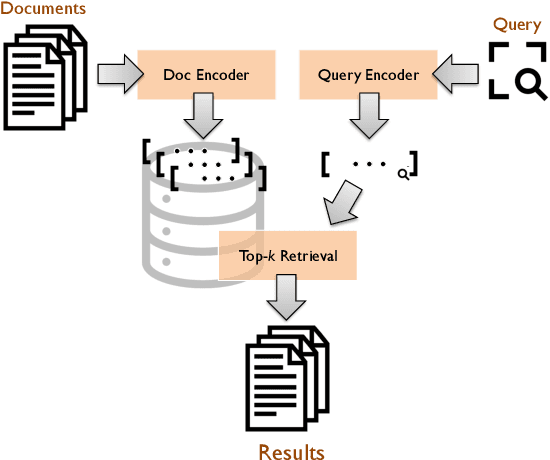
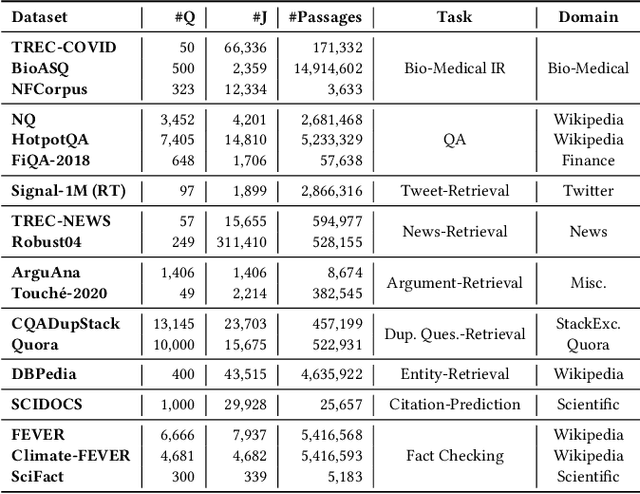
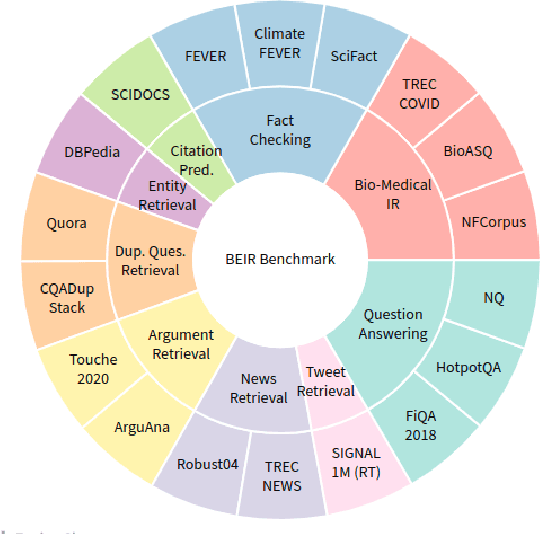
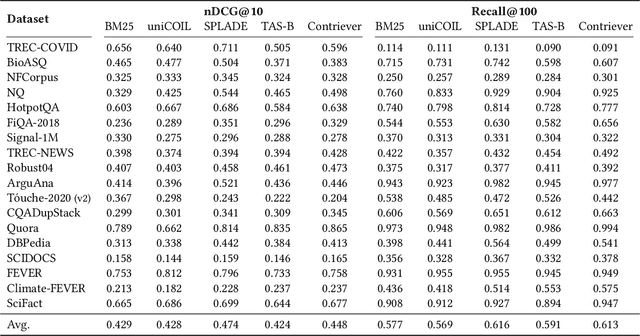
BEIR is a benchmark dataset for zero-shot evaluation of information retrieval models across 18 different domain/task combinations. In recent years, we have witnessed the growing popularity of a representation learning approach to building retrieval models, typically using pretrained transformers in a supervised setting. This naturally begs the question: How effective are these models when presented with queries and documents that differ from the training data? Examples include searching in different domains (e.g., medical or legal text) and with different types of queries (e.g., keywords vs. well-formed questions). While BEIR was designed to answer these questions, our work addresses two shortcomings that prevent the benchmark from achieving its full potential: First, the sophistication of modern neural methods and the complexity of current software infrastructure create barriers to entry for newcomers. To this end, we provide reproducible reference implementations that cover the two main classes of approaches: learned dense and sparse models. Second, there does not exist a single authoritative nexus for reporting the effectiveness of different models on BEIR, which has led to difficulty in comparing different methods. To remedy this, we present an official self-service BEIR leaderboard that provides fair and consistent comparisons of retrieval models. By addressing both shortcomings, our work facilitates future explorations in a range of interesting research questions that BEIR enables.
GAIA Search: Hugging Face and Pyserini Interoperability for NLP Training Data Exploration
Jun 02, 2023Noticing the urgent need to provide tools for fast and user-friendly qualitative analysis of large-scale textual corpora of the modern NLP, we propose to turn to the mature and well-tested methods from the domain of Information Retrieval (IR) - a research field with a long history of tackling TB-scale document collections. We discuss how Pyserini - a widely used toolkit for reproducible IR research can be integrated with the Hugging Face ecosystem of open-source AI libraries and artifacts. We leverage the existing functionalities of both platforms while proposing novel features further facilitating their integration. Our goal is to give NLP researchers tools that will allow them to develop retrieval-based instrumentation for their data analytics needs with ease and agility. We include a Jupyter Notebook-based walk through the core interoperability features, available on GitHub at https://github.com/huggingface/gaia. We then demonstrate how the ideas we present can be operationalized to create a powerful tool for qualitative data analysis in NLP. We present GAIA Search - a search engine built following previously laid out principles, giving access to four popular large-scale text collections. GAIA serves a dual purpose of illustrating the potential of methodologies we discuss but also as a standalone qualitative analysis tool that can be leveraged by NLP researchers aiming to understand datasets prior to using them in training. GAIA is hosted live on Hugging Face Spaces - https://huggingface.co/spaces/spacerini/gaia.
How Does Generative Retrieval Scale to Millions of Passages?
May 19, 2023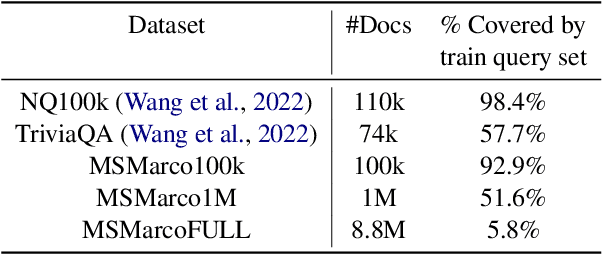
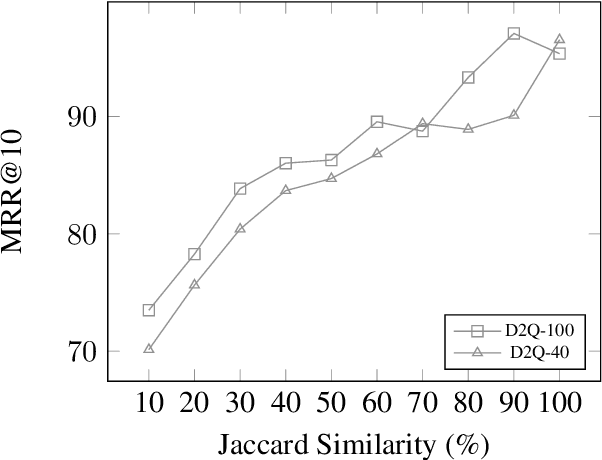

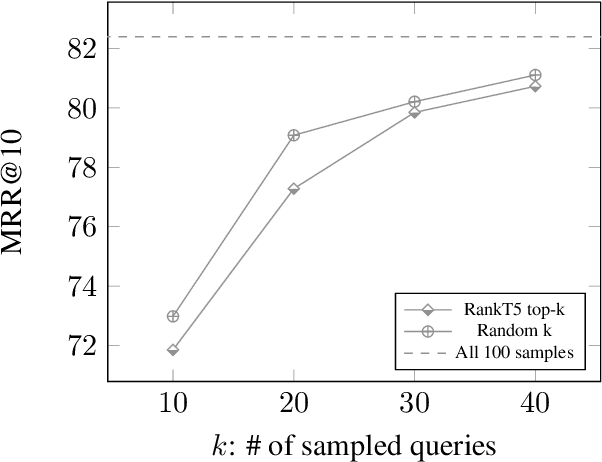
Popularized by the Differentiable Search Index, the emerging paradigm of generative retrieval re-frames the classic information retrieval problem into a sequence-to-sequence modeling task, forgoing external indices and encoding an entire document corpus within a single Transformer. Although many different approaches have been proposed to improve the effectiveness of generative retrieval, they have only been evaluated on document corpora on the order of 100k in size. We conduct the first empirical study of generative retrieval techniques across various corpus scales, ultimately scaling up to the entire MS MARCO passage ranking task with a corpus of 8.8M passages and evaluating model sizes up to 11B parameters. We uncover several findings about scaling generative retrieval to millions of passages; notably, the central importance of using synthetic queries as document representations during indexing, the ineffectiveness of existing proposed architecture modifications when accounting for compute cost, and the limits of naively scaling model parameters with respect to retrieval performance. While we find that generative retrieval is competitive with state-of-the-art dual encoders on small corpora, scaling to millions of passages remains an important and unsolved challenge. We believe these findings will be valuable for the community to clarify the current state of generative retrieval, highlight the unique challenges, and inspire new research directions.
$SmartProbe$: A Virtual Moderator for Market Research Surveys
May 14, 2023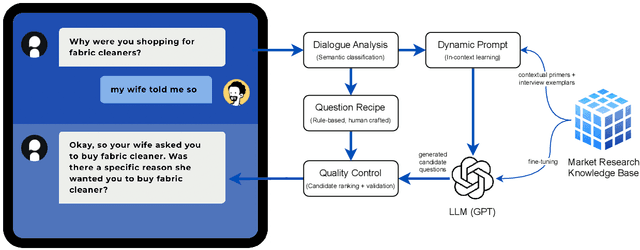
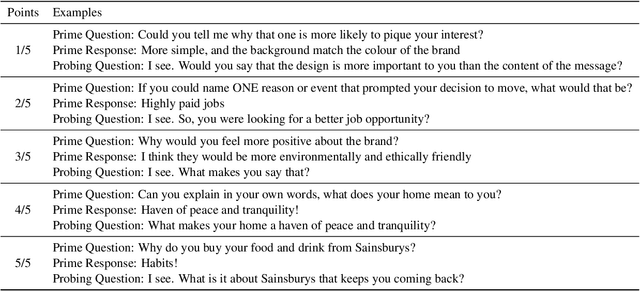
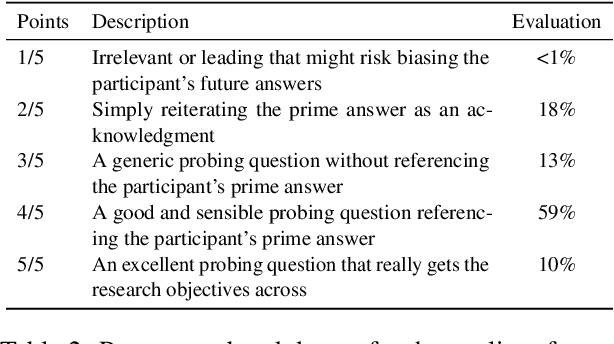
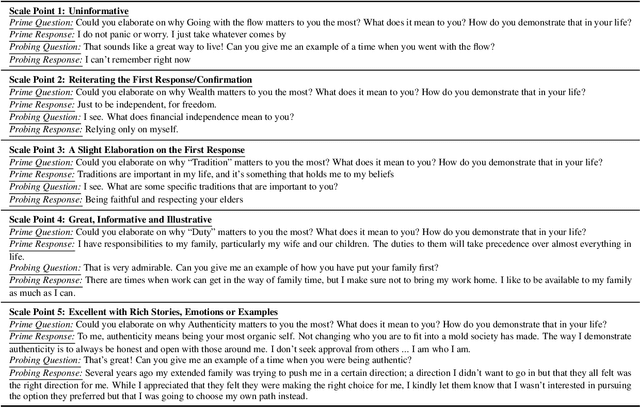
Market research surveys are a powerful methodology for understanding consumer perspectives at scale, but are limited by depth of understanding and insights. A virtual moderator can introduce elements of qualitative research into surveys, developing a rapport with survey participants and dynamically asking probing questions, ultimately to elicit more useful information for market researchers. In this work, we introduce ${\tt SmartProbe}$, an API which leverages the adaptive capabilities of large language models (LLMs), and incorporates domain knowledge from market research, in order to generate effective probing questions in any market research survey. We outline the modular processing flow of $\tt SmartProbe$, and evaluate the quality and effectiveness of its generated probing questions. We believe our efforts will inspire industry practitioners to build real-world applications based on the latest advances in LLMs. Our demo is publicly available at https://nexxt.in/smartprobe-demo
Evaluating Embedding APIs for Information Retrieval
May 10, 2023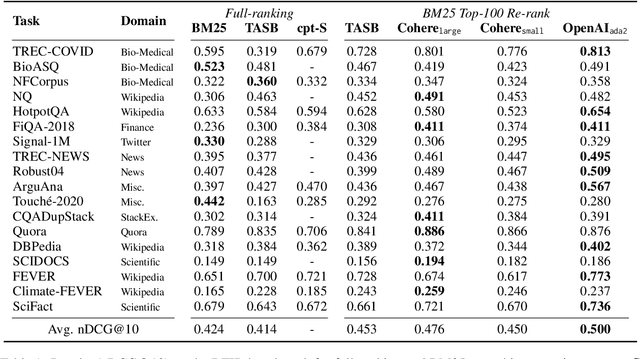

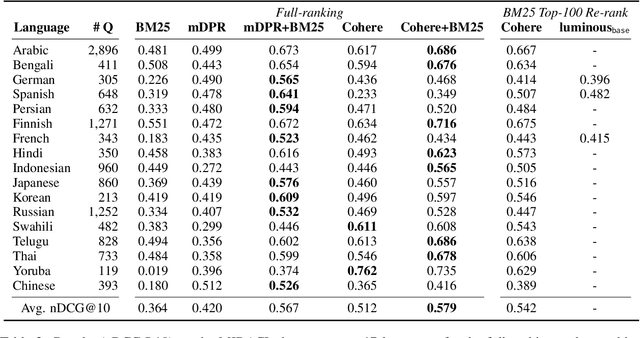
The ever-increasing size of language models curtails their widespread access to the community, thereby galvanizing many companies and startups into offering access to large language models through APIs. One particular API, suitable for dense retrieval, is the semantic embedding API that builds vector representations of a given text. With a growing number of APIs at our disposal, in this paper, our goal is to analyze semantic embedding APIs in realistic retrieval scenarios in order to assist practitioners and researchers in finding suitable services according to their needs. Specifically, we wish to investigate the capabilities of existing APIs on domain generalization and multilingual retrieval. For this purpose, we evaluate the embedding APIs on two standard benchmarks, BEIR, and MIRACL. We find that re-ranking BM25 results using the APIs is a budget-friendly approach and is most effective on English, in contrast to the standard practice, i.e., employing them as first-stage retrievers. For non-English retrieval, re-ranking still improves the results, but a hybrid model with BM25 works best albeit at a higher cost. We hope our work lays the groundwork for thoroughly evaluating APIs that are critical in search and more broadly, in information retrieval.
Zero-Shot Listwise Document Reranking with a Large Language Model
May 03, 2023Supervised ranking methods based on bi-encoder or cross-encoder architectures have shown success in multi-stage text ranking tasks, but they require large amounts of relevance judgments as training data. In this work, we propose Listwise Reranker with a Large Language Model (LRL), which achieves strong reranking effectiveness without using any task-specific training data. Different from the existing pointwise ranking methods, where documents are scored independently and ranked according to the scores, LRL directly generates a reordered list of document identifiers given the candidate documents. Experiments on three TREC web search datasets demonstrate that LRL not only outperforms zero-shot pointwise methods when reranking first-stage retrieval results, but can also act as a final-stage reranker to improve the top-ranked results of a pointwise method for improved efficiency. Additionally, we apply our approach to subsets of MIRACL, a recent multilingual retrieval dataset, with results showing its potential to generalize across different languages.
Anserini Gets Dense Retrieval: Integration of Lucene's HNSW Indexes
Apr 24, 2023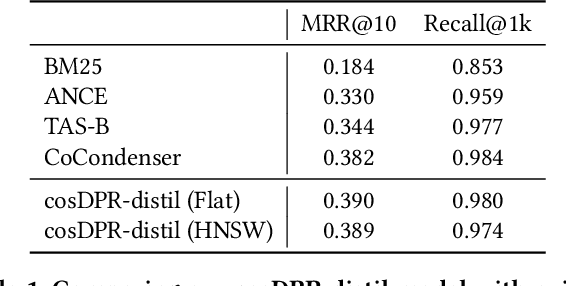
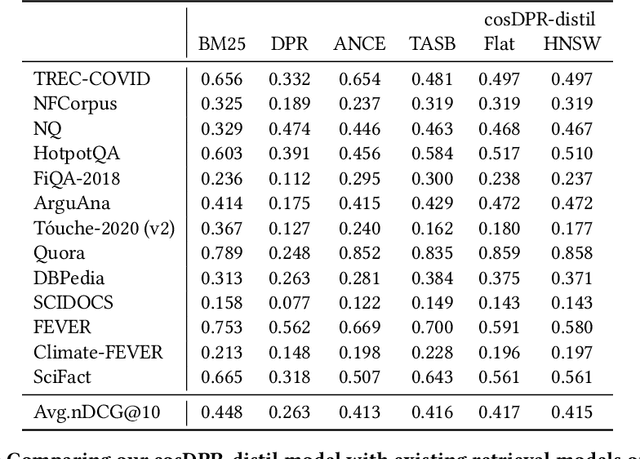
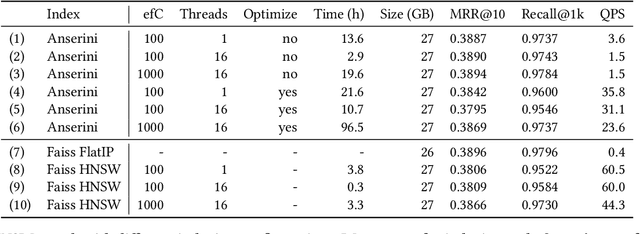
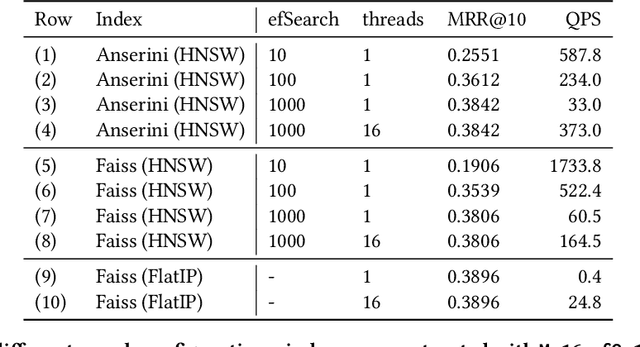
Anserini is a Lucene-based toolkit for reproducible information retrieval research in Java that has been gaining traction in the community. It provides retrieval capabilities for both "traditional" bag-of-words retrieval models such as BM25 as well as retrieval using learned sparse representations such as SPLADE. With Pyserini, which provides a Python interface to Anserini, users gain access to both sparse and dense retrieval models, as Pyserini implements bindings to the Faiss vector search library alongside Lucene inverted indexes in a uniform, consistent interface. Nevertheless, hybrid fusion techniques that integrate sparse and dense retrieval models need to stitch together results from two completely different "software stacks", which creates unnecessary complexities and inefficiencies. However, the introduction of HNSW indexes for dense vector search in Lucene promises the integration of both dense and sparse retrieval within a single software framework. We explore exactly this integration in the context of Anserini. Experiments on the MS MARCO passage and BEIR datasets show that our Anserini HNSW integration supports (reasonably) effective and (reasonably) efficient approximate nearest neighbor search for dense retrieval models, using only Lucene.
AToMiC: An Image/Text Retrieval Test Collection to Support Multimedia Content Creation
Apr 04, 2023


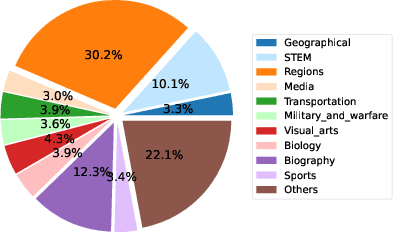
This paper presents the AToMiC (Authoring Tools for Multimedia Content) dataset, designed to advance research in image/text cross-modal retrieval. While vision-language pretrained transformers have led to significant improvements in retrieval effectiveness, existing research has relied on image-caption datasets that feature only simplistic image-text relationships and underspecified user models of retrieval tasks. To address the gap between these oversimplified settings and real-world applications for multimedia content creation, we introduce a new approach for building retrieval test collections. We leverage hierarchical structures and diverse domains of texts, styles, and types of images, as well as large-scale image-document associations embedded in Wikipedia. We formulate two tasks based on a realistic user model and validate our dataset through retrieval experiments using baseline models. AToMiC offers a testbed for scalable, diverse, and reproducible multimedia retrieval research. Finally, the dataset provides the basis for a dedicated track at the 2023 Text Retrieval Conference (TREC), and is publicly available at https://github.com/TREC-AToMiC/AToMiC.
Simple Yet Effective Neural Ranking and Reranking Baselines for Cross-Lingual Information Retrieval
Apr 03, 2023The advent of multilingual language models has generated a resurgence of interest in cross-lingual information retrieval (CLIR), which is the task of searching documents in one language with queries from another. However, the rapid pace of progress has led to a confusing panoply of methods and reproducibility has lagged behind the state of the art. In this context, our work makes two important contributions: First, we provide a conceptual framework for organizing different approaches to cross-lingual retrieval using multi-stage architectures for mono-lingual retrieval as a scaffold. Second, we implement simple yet effective reproducible baselines in the Anserini and Pyserini IR toolkits for test collections from the TREC 2022 NeuCLIR Track, in Persian, Russian, and Chinese. Our efforts are built on a collaboration of the two teams that submitted the most effective runs to the TREC evaluation. These contributions provide a firm foundation for future advances.