 Add to Chrome
 Add to Firefox
 Add to Edge
RGLD: Randomized Global-Local Density Estimation for Tabular Anomaly Detection
Jun 27, 2026
Unsupervised tabular anomaly detection requires methods that are accurate, robust across heterogeneous datasets, and computationally efficient. Classical statistical detectors are often efficient, but they usually rely on a fixed data view and a single notion of abnormality. Deep anomaly detectors can learn more flexible scoring functions, but they are substantially slower and difficult to tune in unsupervised settings due to the lack of a reliable supervisory signal. We propose RGLD, a randomized global-local density estimator for efficient unsupervised tabular anomaly detection. RGLD combines a global random-feature density branch, which identifies samples in broadly low-density regions, with a local neighbor branch, which detects samples that are weakly supported by nearby observations. Both branches operate over feature-bagged randomized views, allowing RGLD to expose anomaly evidence that may be hidden in any single representation. We conduct experiments on 47 tabular datasets against 23 statistical and deep anomaly detection baselines under fully unsupervised setting. RGLD achieves the strongest dataset-level AUROC performance, ranking 1st in dataset wins, and ranks 2nd in AUPRC wins. RGLD is also faster than all evaluated deep detectors, achieving 50x-580x speedups, and remains competitive with statistical methods in runtime, yielding a favorable accuracy-efficiency tradeoff.

Multi-Agent Memory from a Computer Architecture Perspective: Visions and Challenges Ahead
Mar 09, 2026As LLM agents evolve into collaborative multi-agent systems, their memory requirements grow rapidly in complexity. This position paper frames multi-agent memory as a computer architecture problem. We distinguish shared and distributed memory paradigms, propose a three-layer memory hierarchy (I/O, cache, and memory), and identify two critical protocol gaps: cache sharing across agents and structured memory access control. We argue that the most pressing open challenge is multi-agent memory consistency. Our architectural framing provides a foundation for building reliable, scalable multi-agent systems.
Support Vector Machines on Noisy Intermediate Scale Quantum Computers
Sep 26, 2019

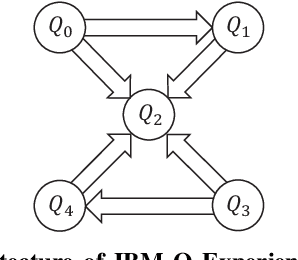

Support vector machine algorithms are considered essential for the implementation of automation in a radio access network. Specifically, they are critical in the prediction of the quality of user experience for video streaming based on device and network-level metrics. Quantum SVM is the quantum analogue of the classical SVM algorithm, which utilizes the properties of quantum computers to speed up the algorithm exponentially. In this work, we derive an optimized preprocessing unit for a quantum SVM that allows classifying any two-dimensional datasets that are linearly separable. We further provide a result readout method of the kernel matrix generation circuit to avoid quantum tomography that, in turn, reduces the quantum circuit depth. We also derive a quantum SVM system based on an optimized HHL quantum circuit with reduced circuit depth.