 Add to Chrome
 Add to Firefox
 Add to Edge
Vector Symbolic Policy Gradient
Aug 19, 2026
We answer this question with Vector-Symbolic Policy Gradient (VSPG), a discrete-action actor that represents each action by a unit-norm hypervector and scores it by similarity to the encoded state. Under the standard softmax policy-gradient surrogate, we prove that its update is exactly advantage-weighted hypervector bundling followed by normalization, and therefore supports standard advantage estimators. We further show that each trained action hypervector is a fixed-size compressed kernel memory, storing an advantage-weighted kernel expansion over visited states and transferring evidence according to the encoder-induced similarity. This provides a concrete mechanism that can support sample-efficient learning without increasing inference-time memory. Finally, for bipolar action memories, we prove that greedy action selection is stable under random bit flips, with failure probability decaying exponentially in the hypervector dimension. VSPG thus connects VSA action memories, log-linear policy gradients, and kernel policy search while providing a quantitative robustness guarantee.

RGLD: Randomized Global-Local Density Estimation for Tabular Anomaly Detection
Jun 27, 2026Unsupervised tabular anomaly detection requires methods that are accurate, robust across heterogeneous datasets, and computationally efficient. Classical statistical detectors are often efficient, but they usually rely on a fixed data view and a single notion of abnormality. Deep anomaly detectors can learn more flexible scoring functions, but they are substantially slower and difficult to tune in unsupervised settings due to the lack of a reliable supervisory signal. We propose RGLD, a randomized global-local density estimator for efficient unsupervised tabular anomaly detection. RGLD combines a global random-feature density branch, which identifies samples in broadly low-density regions, with a local neighbor branch, which detects samples that are weakly supported by nearby observations. Both branches operate over feature-bagged randomized views, allowing RGLD to expose anomaly evidence that may be hidden in any single representation. We conduct experiments on 47 tabular datasets against 23 statistical and deep anomaly detection baselines under fully unsupervised setting. RGLD achieves the strongest dataset-level AUROC performance, ranking 1st in dataset wins, and ranks 2nd in AUPRC wins. RGLD is also faster than all evaluated deep detectors, achieving 50x-580x speedups, and remains competitive with statistical methods in runtime, yielding a favorable accuracy-efficiency tradeoff.
$n$-Musketeers: Reinforcement Learning Shapes Collaboration Among Language Models
Feb 09, 2026Recent progress in reinforcement learning with verifiable rewards (RLVR) shows that small, specialized language models (SLMs) can exhibit structured reasoning without relying on large monolithic LLMs. We introduce soft hidden-state collaboration, where multiple heterogeneous frozen SLM experts are integrated through their internal representations via a trainable attention interface. Experiments on Reasoning Gym and GSM8K show that this latent integration is competitive with strong single-model RLVR baselines. Ablations further reveal a dual mechanism of expert utilization: for simpler arithmetic domains, performance gains can largely be explained by static expert preferences, whereas more challenging settings induce increasingly concentrated and structured expert attention over training, indicating emergent specialization in how the router connects to relevant experts. Overall, hidden-state collaboration provides a compact mechanism for leveraging frozen experts, while offering an observational window into expert utilization patterns and their evolution under RLVR.
LogHD: Robust Compression of Hyperdimensional Classifiers via Logarithmic Class-Axis Reduction
Nov 06, 2025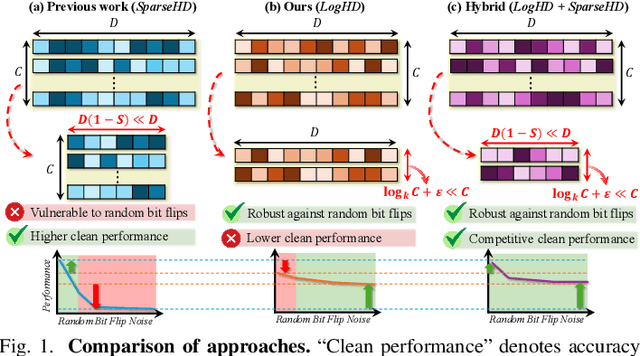
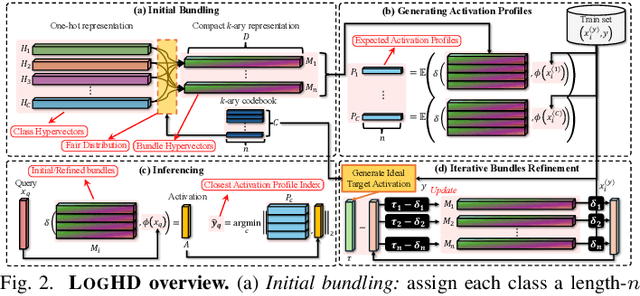
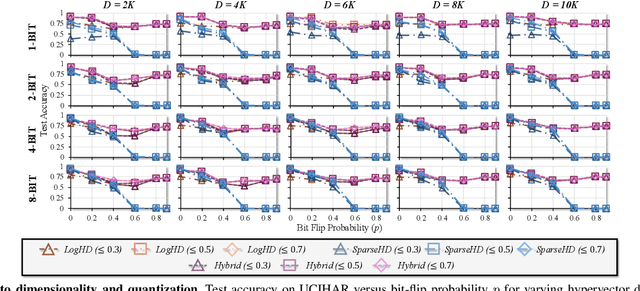
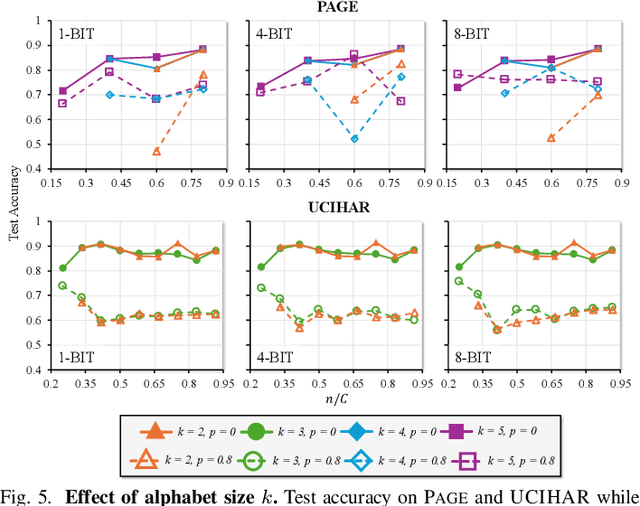
Hyperdimensional computing (HDC) suits memory, energy, and reliability-constrained systems, yet the standard "one prototype per class" design requires $O(CD)$ memory (with $C$ classes and dimensionality $D$). Prior compaction reduces $D$ (feature axis), improving storage/compute but weakening robustness. We introduce LogHD, a logarithmic class-axis reduction that replaces the $C$ per-class prototypes with $n\!\approx\!\lceil\log_k C\rceil$ bundle hypervectors (alphabet size $k$) and decodes in an $n$-dimensional activation space, cutting memory to $O(D\log_k C)$ while preserving $D$. LogHD uses a capacity-aware codebook and profile-based decoding, and composes with feature-axis sparsification. Across datasets and injected bit flips, LogHD attains competitive accuracy with smaller models and higher resilience at matched memory. Under equal memory, it sustains target accuracy at roughly $2.5$-$3.0\times$ higher bit-flip rates than feature-axis compression; an ASIC instantiation delivers $498\times$ energy efficiency and $62.6\times$ speedup over an AMD Ryzen 9 9950X and $24.3\times$/$6.58\times$ over an NVIDIA RTX 4090, and is $4.06\times$ more energy-efficient and $2.19\times$ faster than a feature-axis HDC ASIC baseline.
HEAL: Brain-inspired Hyperdimensional Efficient Active Learning
Feb 17, 2024
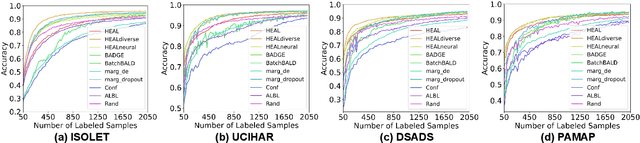
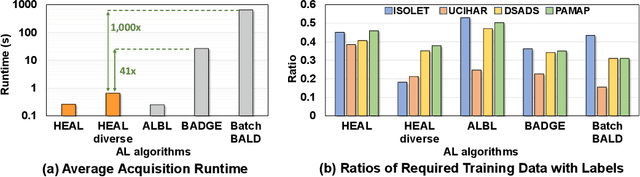
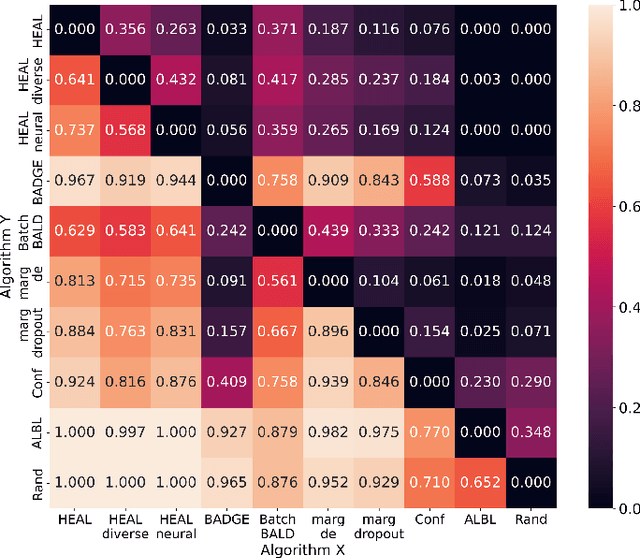
Drawing inspiration from the outstanding learning capability of our human brains, Hyperdimensional Computing (HDC) emerges as a novel computing paradigm, and it leverages high-dimensional vector presentation and operations for brain-like lightweight Machine Learning (ML). Practical deployments of HDC have significantly enhanced the learning efficiency compared to current deep ML methods on a broad spectrum of applications. However, boosting the data efficiency of HDC classifiers in supervised learning remains an open question. In this paper, we introduce Hyperdimensional Efficient Active Learning (HEAL), a novel Active Learning (AL) framework tailored for HDC classification. HEAL proactively annotates unlabeled data points via uncertainty and diversity-guided acquisition, leading to a more efficient dataset annotation and lowering labor costs. Unlike conventional AL methods that only support classifiers built upon deep neural networks (DNN), HEAL operates without the need for gradient or probabilistic computations. This allows it to be effortlessly integrated with any existing HDC classifier architecture. The key design of HEAL is a novel approach for uncertainty estimation in HDC classifiers through a lightweight HDC ensemble with prior hypervectors. Additionally, by exploiting hypervectors as prototypes (i.e., compact representations), we develop an extra metric for HEAL to select diverse samples within each batch for annotation. Our evaluation shows that HEAL surpasses a diverse set of baselines in AL quality and achieves notably faster acquisition than many BNN-powered or diversity-guided AL methods, recording 11 times to 40,000 times speedup in acquisition runtime per batch.
On the Benefits of Leveraging Structural Information in Planning Over the Learned Model
Mar 15, 2023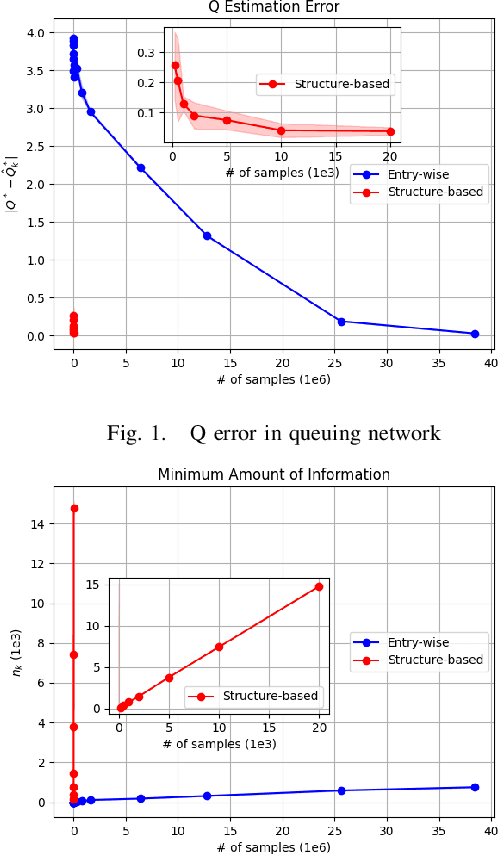
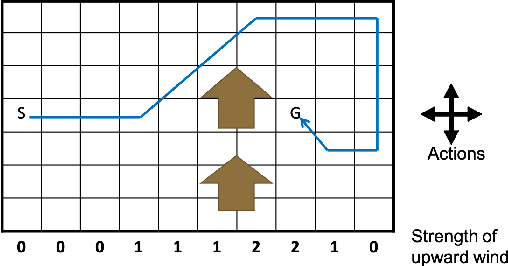
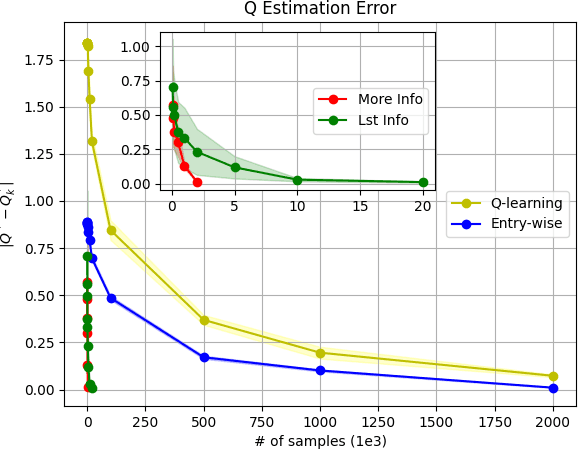
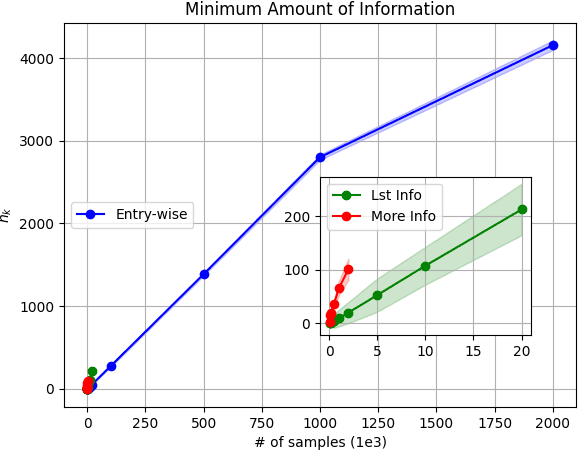
Model-based Reinforcement Learning (RL) integrates learning and planning and has received increasing attention in recent years. However, learning the model can incur a significant cost (in terms of sample complexity), due to the need to obtain a sufficient number of samples for each state-action pair. In this paper, we investigate the benefits of leveraging structural information about the system in terms of reducing sample complexity. Specifically, we consider the setting where the transition probability matrix is a known function of a number of structural parameters, whose values are initially unknown. We then consider the problem of estimating those parameters based on the interactions with the environment. We characterize the difference between the Q estimates and the optimal Q value as a function of the number of samples. Our analysis shows that there can be a significant saving in sample complexity by leveraging structural information about the model. We illustrate the findings by considering several problems including controlling a queuing system with heterogeneous servers, and seeking an optimal path in a stochastic windy gridworld.
Automatic Tuning of Tensorflow's CPU Backend using Gradient-Free Optimization Algorithms
Sep 13, 2021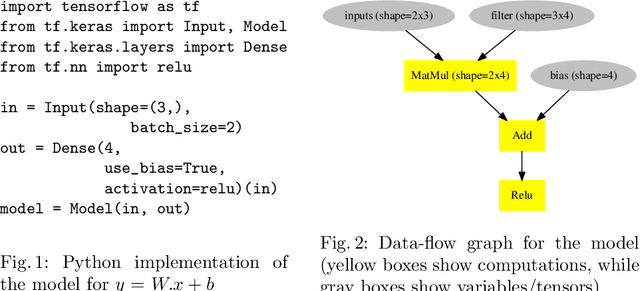
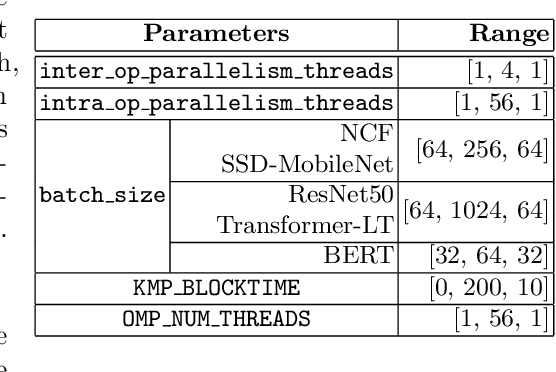
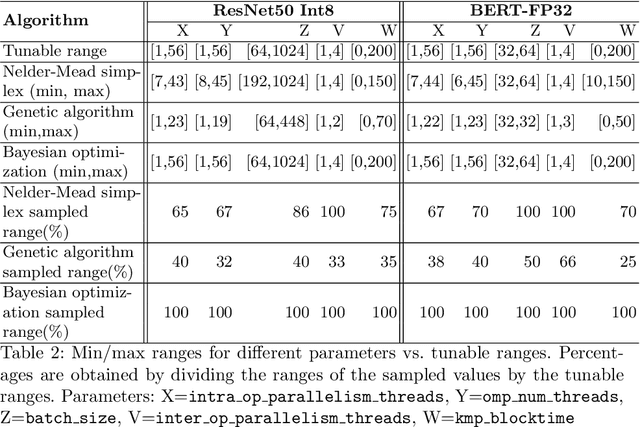
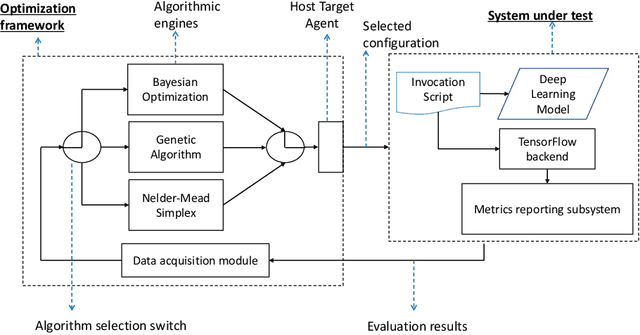
Modern deep learning (DL) applications are built using DL libraries and frameworks such as TensorFlow and PyTorch. These frameworks have complex parameters and tuning them to obtain good training and inference performance is challenging for typical users, such as DL developers and data scientists. Manual tuning requires deep knowledge of the user-controllable parameters of DL frameworks as well as the underlying hardware. It is a slow and tedious process, and it typically delivers sub-optimal solutions. In this paper, we treat the problem of tuning parameters of DL frameworks to improve training and inference performance as a black-box optimization problem. We then investigate applicability and effectiveness of Bayesian optimization (BO), genetic algorithm (GA), and Nelder-Mead simplex (NMS) to tune the parameters of TensorFlow's CPU backend. While prior work has already investigated the use of Nelder-Mead simplex for a similar problem, it does not provide insights into the applicability of other more popular algorithms. Towards that end, we provide a systematic comparative analysis of all three algorithms in tuning TensorFlow's CPU backend on a variety of DL models. Our findings reveal that Bayesian optimization performs the best on the majority of models. There are, however, cases where it does not deliver the best results.