 Add to Chrome
 Add to Firefox
 Add to Edge
Scientific Data Skills: Enabling Agent-Ready Scientific Data Services at Scale
Aug 20, 2026
Scientific data are increasingly used by AI agents, yet existing dataset representations provide limited support for autonomous discovery, interpretation, and invocation. This limitation stems from the fragmentation of scientific data across heterogeneous repositories and from dataset representations designed primarily for human use. To address this limitation, we introduce the Scientific Data Skill (SciDSK), an agent-ready representation that packages dataset-specific knowledge and operational guidance as a reusable agent skill. A SciDSK integrates dataset descriptions, scientific context, file organization, usage procedures, quality checks, and provenance information while retaining the underlying data in its original repository. We define a structured SciDSK specification and develop a systematic construction pipeline that grounds each SciDSK in authoritative dataset records and associated supporting materials. We further establish the Scientific Data Skill Bank, a unified platform that publishes SciDSK resources across six scientific disciplines and supports package access, persistent identification, and traceability to source datasets. We evaluate SciDSK through a retrieval benchmark for dataset discovery and controlled cases for dataset interpretation. The results show that SciDSK improves agent-driven dataset discovery and provides more precise and actionable support for dataset interpretation. These findings support the value of organizing dataset-specific knowledge in an agent-ready representation.

Deep Learning-Based Estimation of Ground Reaction Forces in Parkinsonian Gait Using an Optimized Set of IMU Data
Aug 03, 2026Accurate gait analysis in Parkinson's disease (PD) typically relies on laboratory-based systems to capture biomechanical data, such as ground reaction forces (GRFs). Estimating GRFs using inertial measurement units (IMUs) provides a feasible alternative. However, this approach remains challenging in pathological gait like PD due to its high variability and complexity. Moreover, existing monitoring approaches often require multiple body-mounted sensors, which limit practicality and reduce patient compliance. To date, no study has investigated the application of deep learning approaches to address this challenge. This study proposes, for the first time, a deep learning framework to estimate bilateral vertical GRFs (vGRFs) in PD using an optimized set of wearable IMUs. A hybrid CNN-BiLSTM model was trained separately on data from 61 PD patients and 65 healthy controls (HC) using 13 IMUs. The model achieved high intra-subject accuracy ($R^2$ = 0.98) and strong inter-subject generalization ($R^2$ = 0.93 for HC, $R^2$ = 0.91 for PD). Sensor configuration was found to significantly influence estimation accuracy, with optimal sensor placement varying between PD patients and HC. For PD patients, estimation accuracy dropped markedly when reducing to a single IMU. The optimal configuration for PD used four IMUs. We identified a minimal setup with only two IMUs still enabled robust estimation. This compact setup offers a practical and scalable solution. Overall, the proposed approach supports the development of wearable vGRF-based gait analysis systems for Parkinsonian gait and potentially other pathological conditions, enabling accessible clinical assessments, remote monitoring, and personalized rehabilitation.
* 13 pages, 5 figures, 6 tables. Published in IEEE Transactions on Neural Systems and Rehabilitation Engineering
Metasurfaces Enable Active-Like Passive Radar
Dec 09, 2025Passive radars (PRs) provide a low-cost and energy-efficient approach to object detection by reusing existing wireless transmissions instead of emitting dedicated probing signals. Yet, conventional passive systems require prior knowledge of non-cooperative source waveforms, are vulnerable to strong interference, and rely on Doppler signatures, limiting their ability to detect subtle or slow-moving targets. Here, we introduce a metasurface-enabled PR (MEPR) concept that integrates a space-time-coding programmable metasurface to imprint distinct spatiotemporal tags onto ambient wireless wavefields. This mechanism transforms a PR into an active-like sensing platform without the need for source control, enabling interference suppression, signal enhancement, and accurate target localization and tracking in cluttered environments. A proof-of-concept implementation operating at 5.48 GHz confirms real-time imaging and tracking of unmanned aerial vehicles under interference-rich conditions, with performance comparable to active radar systems. These results establish MEPR as a solid foundation for scalable, adaptive, and energy-efficient next-generation integrated sensing and communication systems.
Informed Mixing -- Improving Open Set Recognition via Attribution-based Augmentation
May 19, 2025Open set recognition (OSR) is devised to address the problem of detecting novel classes during model inference. Even in recent vision models, this remains an open issue which is receiving increasing attention. Thereby, a crucial challenge is to learn features that are relevant for unseen categories from given data, for which these features might not be discriminative. To facilitate this process and "optimize to learn" more diverse features, we propose GradMix, a data augmentation method that dynamically leverages gradient-based attribution maps of the model during training to mask out already learned concepts. Thus GradMix encourages the model to learn a more complete set of representative features from the same data source. Extensive experiments on open set recognition, close set classification, and out-of-distribution detection reveal that our method can often outperform the state-of-the-art. GradMix can further increase model robustness to corruptions as well as downstream classification performance for self-supervised learning, indicating its benefit for model generalization.
Know Yourself Better: Diverse Discriminative Feature Learning Improves Open Set Recognition
Apr 16, 2024Open set recognition (OSR) is a critical aspect of machine learning, addressing the challenge of detecting novel classes during inference. Within the realm of deep learning, neural classifiers trained on a closed set of data typically struggle to identify novel classes, leading to erroneous predictions. To address this issue, various heuristic methods have been proposed, allowing models to express uncertainty by stating "I don't know." However, a gap in the literature remains, as there has been limited exploration of the underlying mechanisms of these methods. In this paper, we conduct an analysis of open set recognition methods, focusing on the aspect of feature diversity. Our research reveals a significant correlation between learning diverse discriminative features and enhancing OSR performance. Building on this insight, we propose a novel OSR approach that leverages the advantages of feature diversity. The efficacy of our method is substantiated through rigorous evaluation on a standard OSR testbench, demonstrating a substantial improvement over state-of-the-art methods.
OpenIncrement: A Unified Framework for Open Set Recognition and Deep Class-Incremental Learning
Oct 05, 2023


In most works on deep incremental learning research, it is assumed that novel samples are pre-identified for neural network retraining. However, practical deep classifiers often misidentify these samples, leading to erroneous predictions. Such misclassifications can degrade model performance. Techniques like open set recognition offer a means to detect these novel samples, representing a significant area in the machine learning domain. In this paper, we introduce a deep class-incremental learning framework integrated with open set recognition. Our approach refines class-incrementally learned features to adapt them for distance-based open set recognition. Experimental results validate that our method outperforms state-of-the-art incremental learning techniques and exhibits superior performance in open set recognition compared to baseline methods.
Automated Antenna Testing Using Encoder-Decoder-based Anomaly Detection
Nov 27, 2021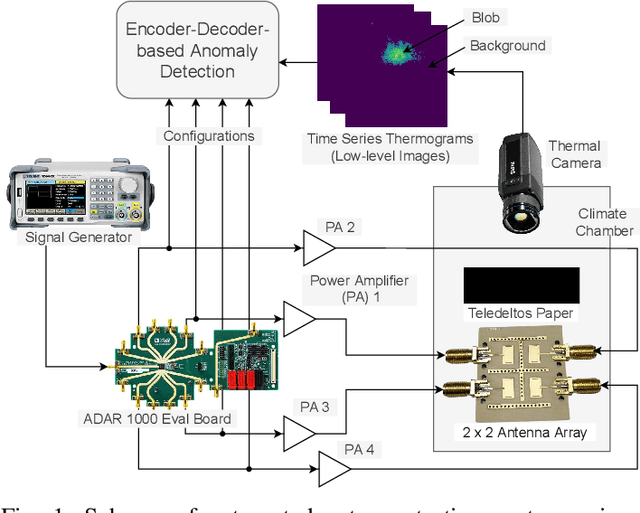
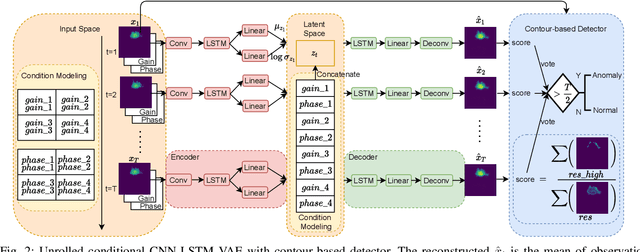
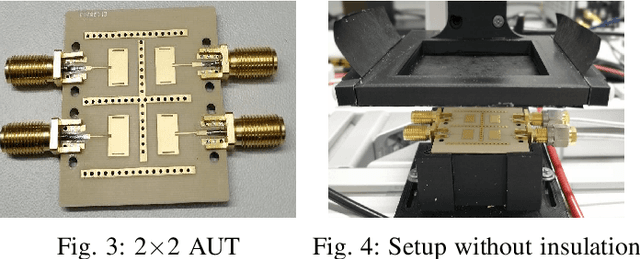
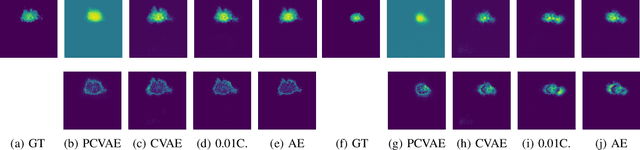
We propose a new method for testing antenna arrays that records the radiating electromagnetic (EM) field using an absorbing material and evaluating the resulting thermal image series through an AI using a conditional encoder-decoder model. Given the power and phase of the signals fed into each array element, we are able to reconstruct normal sequences through our trained model and compare it to the real sequences observed by a thermal camera. These thermograms only contain low-level patterns such as blobs of various shapes. A contour-based anomaly detector can then map the reconstruction error matrix to an anomaly score to identify faulty antenna arrays and increase the classification F-measure (F-M) by up to 46%. We show our approach on the time series thermograms collected by our antenna testing system. Conventionally, a variational autoencoder (VAE) learning observation noise may yield better results than a VAE with a constant noise assumption. However, we demonstrate that this is not the case for anomaly detection on such low-level patterns for two reasons. First, the baseline metric reconstruction probability, which incorporates the learned observation noise, fails to differentiate anomalous patterns. Second, the area under the receiver operating characteristic (ROC) curve of a VAE with a lower observation noise assumption achieves 11.83% higher than that of a VAE with learned noise.
PF-Net: Point Fractal Network for 3D Point Cloud Completion
Mar 01, 2020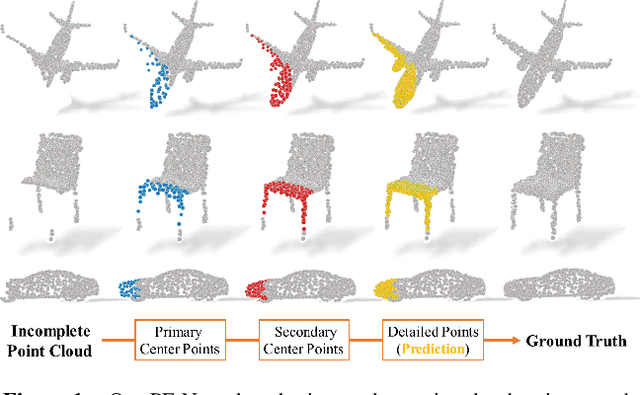
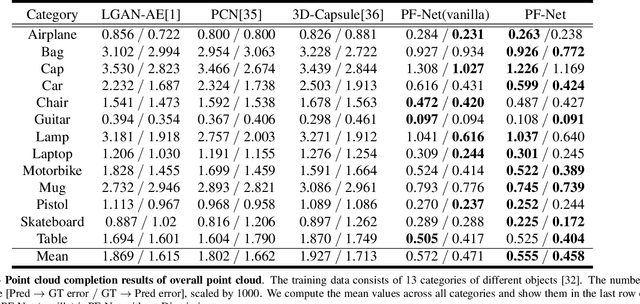
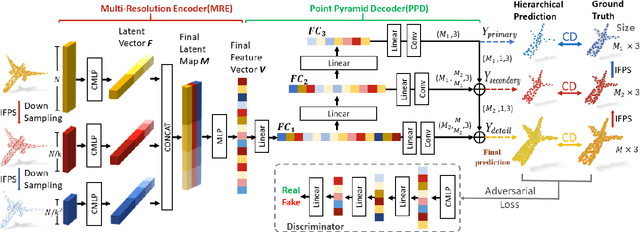
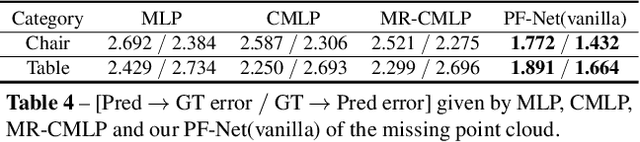
In this paper, we propose a Point Fractal Network (PF-Net), a novel learning-based approach for precise and high-fidelity point cloud completion. Unlike existing point cloud completion networks, which generate the overall shape of the point cloud from the incomplete point cloud and always change existing points and encounter noise and geometrical loss, PF-Net preserves the spatial arrangements of the incomplete point cloud and can figure out the detailed geometrical structure of the missing region(s) in the prediction. To succeed at this task, PF-Net estimates the missing point cloud hierarchically by utilizing a feature-points-based multi-scale generating network. Further, we add up multi-stage completion loss and adversarial loss to generate more realistic missing region(s). The adversarial loss can better tackle multiple modes in the prediction. Our experiments demonstrate the effectiveness of our method for several challenging point cloud completion tasks.