 Add to Chrome
 Add to Firefox
 Add to Edge
CLO: Efficient LLM Inference System with CPU-Light KVCache Offloading via Algorithm-System Co-Design
Nov 18, 2025
The growth of million-token LLMs exposes the scalability limits of inference systems, where the KVCache dominates memory usage and data transfer overhead. Recent offloading systems migrate the KVCache to CPU memory and incorporate top-k attention to reduce the volume of data transferred from the CPU, while further applying system-level optimizations such as on-GPU caching and prefetching to lower transfer overhead. However, they overlook the CPU bottleneck in three aspects: (1) substantial overhead of fine-grained dynamic cache management performed on the CPU side, (2) significant transfer overhead from poor PCIe bandwidth utilization caused by heavy gathering operations at the CPU side, and (3) GPU runtime bubbles introduced by coarse-grained CPU-centric synchronization. To address these challenges, we propose CLO, a CPU-light KVCache offloading system via algorithm-system co-design. CLO features: (1) a coarse-grained head-wise approximate on-GPU caching strategy with negligible cache management cost, (2) seamless combination of data prefetching and on-GPU persistent caching for lower transfer overhead, (3) a zero-copy transfer engine to fully exploit PCIe bandwidth, and a GPU-centric synchronization method to eliminate GPU stalls. Evaluation on two widely-used LLMs demonstrates that CLO achieves comparable accuracy to state-of-the-art systems, while substantially minimizing CPU overhead, fully utilizing PCIe bandwidth, thus improving decoding throughput by 9.3%-66.6%. Our results highlight that algorithm-system co-design is essential for memory-constrained LLM inference on modern GPU platforms. We open source CLO at https://github.com/CommediaJW/CLO.

Efficient Long-Context LLM Inference via KV Cache Clustering
Jun 13, 2025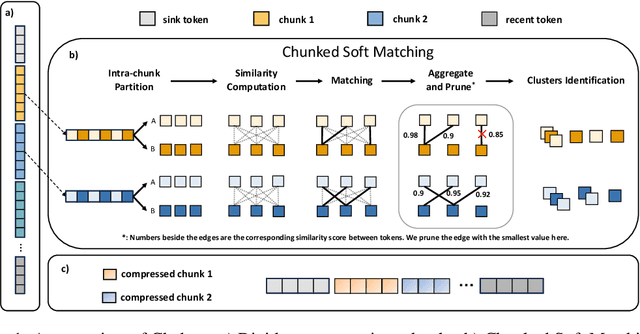
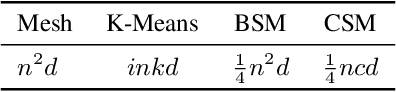
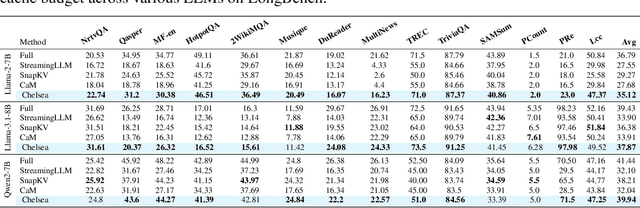
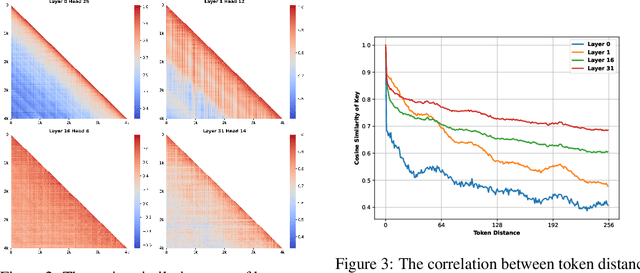
Large language models (LLMs) with extended context windows have become increasingly prevalent for tackling complex tasks. However, the substantial Key-Value (KV) cache required for long-context LLMs poses significant deployment challenges. Existing approaches either discard potentially critical information needed for future generations or offer limited efficiency gains due to high computational overhead. In this paper, we introduce Chelsea, a simple yet effective framework for online KV cache clustering. Our approach is based on the observation that key states exhibit high similarity along the sequence dimension. To enable efficient clustering, we divide the sequence into chunks and propose Chunked Soft Matching, which employs an alternating partition strategy within each chunk and identifies clusters based on similarity. Chelsea then merges the KV cache within each cluster into a single centroid. Additionally, we provide a theoretical analysis of the computational complexity and the optimality of the intra-chunk partitioning strategy. Extensive experiments across various models and long-context benchmarks demonstrate that Chelsea achieves up to 80% reduction in KV cache memory usage while maintaining comparable model performance. Moreover, with minimal computational overhead, Chelsea accelerates the decoding stage of inference by up to 3.19$\times$ and reduces end-to-end latency by up to 2.72$\times$.
Intelligent Bear Prevention System Based on Computer Vision: An Approach to Reduce Human-Bear Conflicts in the Tibetan Plateau Area, China
Mar 29, 2025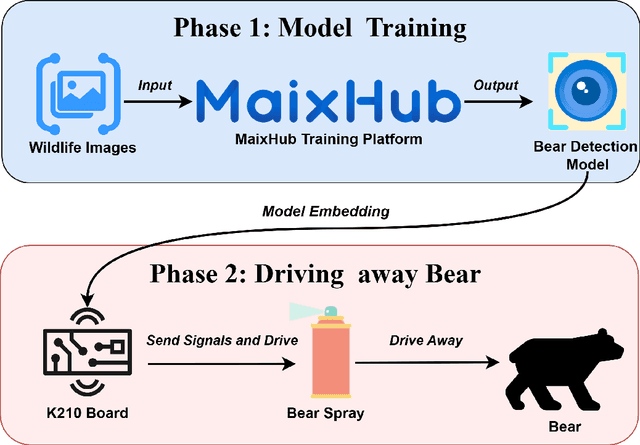
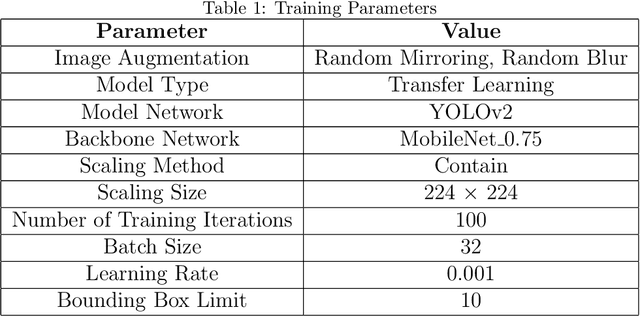
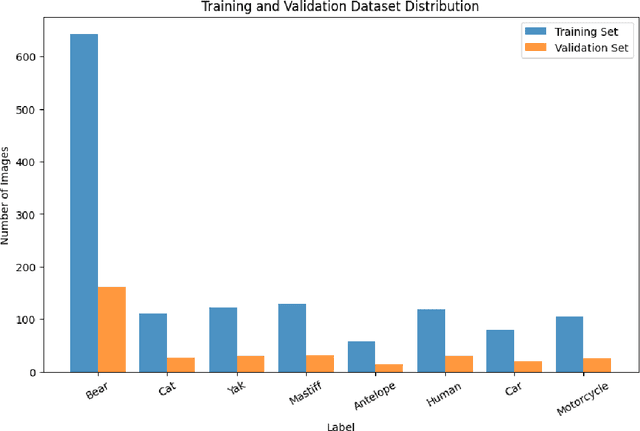
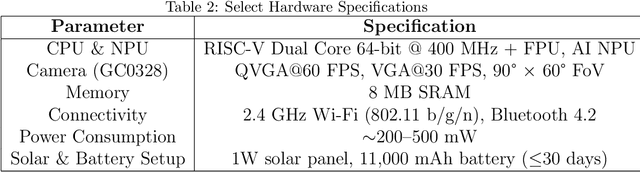
Conflicts between humans and bears on the Tibetan Plateau present substantial threats to local communities and hinder wildlife preservation initiatives. This research introduces a novel strategy that incorporates computer vision alongside Internet of Things (IoT) technologies to alleviate these issues. Tailored specifically for the harsh environment of the Tibetan Plateau, the approach utilizes the K210 development board paired with the YOLO object detection framework along with a tailored bear-deterrent mechanism, offering minimal energy usage and real-time efficiency in bear identification and deterrence. The model's performance was evaluated experimentally, achieving a mean Average Precision (mAP) of 91.4%, demonstrating excellent precision and dependability. By integrating energy-efficient components, the proposed system effectively surpasses the challenges of remote and off-grid environments, ensuring uninterrupted operation in secluded locations. This study provides a viable, eco-friendly, and expandable solution to mitigate human-bear conflicts, thereby improving human safety and promoting bear conservation in isolated areas like Yushu, China.