 Add to Chrome
 Add to Firefox
 Add to Edge
Quantum-Inspired Evolutionary Neighborhood Search for Arrival-Departure Track Utilization Adjustment under Short-Term Disturbances
Jul 27, 2026
Short-term disturbances at major passenger railway stations alter train arrival and departure times as well as the release sequence of station resources. Effective recovery therefore requires coordinated adjustment of arrival-departure track allocation, station resource occupation, and train retiming. This study represents the station resources involved in train arrival, track occupancy, and departure operations as zone-level resource-occupation intervals. An arrival-departure track allocation adjustment model is formulated. Resource compatibility is imposed as the feasibility condition, while train delays and resource reassignment costs are jointly considered. A quantum-inspired evolutionary algorithm combined with neighborhood search (QEA-NS) is proposed to solve the model. Perturbation instances are constructed using GTFS timetable data from Frankfurt Hauptbahnhof, Germany. QEA-NS is compared with CP-SAT under the same candidate resource set and feasibility criteria. Both methods generate solutions satisfying the modeled resource compatibility constraints. QEA-NS yields a total delay of 388 min, compared with 519 min for CP-SAT, representing a reduction of 25.2\%. The mean delay of delayed trains decreases from 4.99 to 3.73 min, although QEA-NS requires a longer solution time. Across 10 random perturbation instances, QEA-NS achieves lower total delay in every case. Its mean total delay and standard deviation are 390.5 min and 35.945 min, respectively, compared with 673.8 min and 105.739 min for CP-SAT. The results indicate that, under the adopted resource representation and constraints, QEA-NS improves the delay performance of recovery plans. Its computational efficiency, however, requires further improvement.

SagnacAssisted Enhanced OTDR for Distributed Acoustic Sensing: A Standardized Benchmark and Engineering Evaluation Framework
Jun 04, 2026Phase-sensitive optical time-domain reflectometry ($φ$-OTDR) is widely used in large-scale distributed acoustic sensing (DAS) because it provides distributed spatiotemporal monitoring over long sensing distances. Its field performance can still deteriorate because of polarization-induced fading (PIF), local signal degradation, and strong environmental interference. This study develops a Sagnac-assisted enhanced $φ$-OTDR sensing architecture and a standardized benchmark framework for engineering-oriented DAS event recognition. The Sagnac interferometer provides a continuous phase response that supplements fading-prone observations in the $φ$-OTDR channel, and heterogeneous signal alignment is achieved using a cross-correlation procedure implemented on an FPGA platform. The benchmark protocol compares conventional feature-engineering methods, probabilistic shallow classifiers, single-branch deep models, and dual-branch fusion models under consistent data partitioning, preprocessing, and metric definitions. Experiments on a 10-km sensing fiber with six representative acoustic event classes show that the dual-branch fusion model provides the most favorable trade-off among the evaluated methods, reaching 89.79\% accuracy, 89.83\% macro-F1, and a nuisance alarm rate of 5.00\% on the balanced test set. The results also show that channel grouping strongly affects dual-branch evaluation, indicating that deployment-oriented conclusions should be based on accuracy, macro-F1, nuisance alarm rate, false negative rate, and latency rather than accuracy alone. This work provides a physically motivated enhancement strategy for $φ$-OTDR-based DAS and a reproducible benchmark protocol for future fusion-oriented sensing research. The implementation and scripts for reproducing the DAS event-recognition experiments are publicly available at https://github.com/wawa-abc/das.
Coordinated optimization of departure sequencing and section-track allocation in railway short-term concentrated departure scenarios based on qubo and hybrid quantum algorithms
Jun 04, 2026This study examines the coordinated optimization of departure sequencing and section-track allocation in railway short-term concentrated departure scenarios. A quadratic unconstrained binary optimization (QUBO) model is formulated to represent departure-position assignment and section-track selection within a unified binary framework. Because the quality of a dispatching scheme depends on time-dependent operational interactions that cannot be fully captured by a static combinatorial model, a simulation-based evaluation layer is introduced to assess section occupation, intermediate-station waiting, platform-capacity pressure, running-time fluctuations, and delay propagation. Within this layered framework, conventional heuristics, quantum-inspired algorithms, and hybrid algorithms are compared on the same decision structure. The results show that the QUBO model can generate feasible candidate schemes after decoding, while the simulation layer clearly differentiates the operational performance of the competing algorithms under both normal and disturbed conditions. In the tested scenarios, QPSO-QAOA performs best under normal conditions, and the quantum-enhanced methods reduce comprehensive cost by 4.28\%--26.26\% and total delay by 4.37\%--24.25\% on average under dynamic conditions relative to their conventional counterparts. These findings suggest that the integration of QUBO-based modeling and simulation-based evaluation provides a useful methodological framework for railway short-term concentrated departure scheduling, although validation with real operational data remains necessary.
Rethinking Self-Training Based Cross-Subject Domain Adaptation for SSVEP Classification
Jan 29, 2026Steady-state visually evoked potentials (SSVEP)-based brain-computer interfaces (BCIs) are widely used due to their high signal-to-noise ratio and user-friendliness. Accurate decoding of SSVEP signals is crucial for interpreting user intentions in BCI applications. However, signal variability across subjects and the costly user-specific annotation limit recognition performance. Therefore, we propose a novel cross-subject domain adaptation method built upon the self-training paradigm. Specifically, a Filter-Bank Euclidean Alignment (FBEA) strategy is designed to exploit frequency information from SSVEP filter banks. Then, we propose a Cross-Subject Self-Training (CSST) framework consisting of two stages: Pre-Training with Adversarial Learning (PTAL), which aligns the source and target distributions, and Dual-Ensemble Self-Training (DEST), which refines pseudo-label quality. Moreover, we introduce a Time-Frequency Augmented Contrastive Learning (TFA-CL) module to enhance feature discriminability across multiple augmented views. Extensive experiments on the Benchmark and BETA datasets demonstrate that our approach achieves state-of-the-art performance across varying signal lengths, highlighting its superiority.
CLO: Efficient LLM Inference System with CPU-Light KVCache Offloading via Algorithm-System Co-Design
Nov 18, 2025The growth of million-token LLMs exposes the scalability limits of inference systems, where the KVCache dominates memory usage and data transfer overhead. Recent offloading systems migrate the KVCache to CPU memory and incorporate top-k attention to reduce the volume of data transferred from the CPU, while further applying system-level optimizations such as on-GPU caching and prefetching to lower transfer overhead. However, they overlook the CPU bottleneck in three aspects: (1) substantial overhead of fine-grained dynamic cache management performed on the CPU side, (2) significant transfer overhead from poor PCIe bandwidth utilization caused by heavy gathering operations at the CPU side, and (3) GPU runtime bubbles introduced by coarse-grained CPU-centric synchronization. To address these challenges, we propose CLO, a CPU-light KVCache offloading system via algorithm-system co-design. CLO features: (1) a coarse-grained head-wise approximate on-GPU caching strategy with negligible cache management cost, (2) seamless combination of data prefetching and on-GPU persistent caching for lower transfer overhead, (3) a zero-copy transfer engine to fully exploit PCIe bandwidth, and a GPU-centric synchronization method to eliminate GPU stalls. Evaluation on two widely-used LLMs demonstrates that CLO achieves comparable accuracy to state-of-the-art systems, while substantially minimizing CPU overhead, fully utilizing PCIe bandwidth, thus improving decoding throughput by 9.3%-66.6%. Our results highlight that algorithm-system co-design is essential for memory-constrained LLM inference on modern GPU platforms. We open source CLO at https://github.com/CommediaJW/CLO.
People Talking and AI Listening: How Stigmatizing Language in EHR Notes Affect AI Performance
May 17, 2023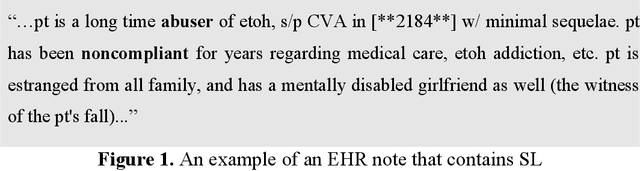
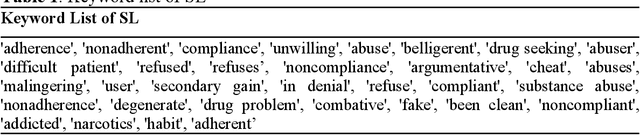
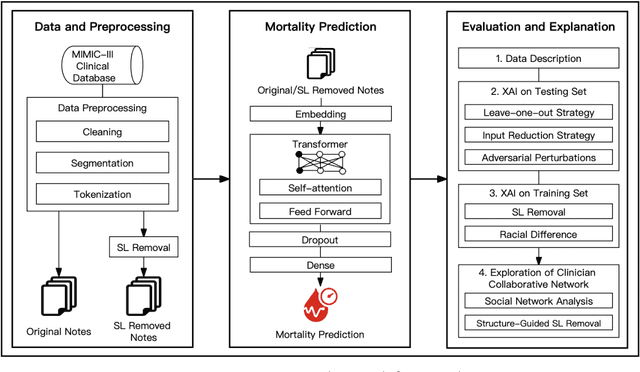
Electronic health records (EHRs) serve as an essential data source for the envisioned artificial intelligence (AI)-driven transformation in healthcare. However, clinician biases reflected in EHR notes can lead to AI models inheriting and amplifying these biases, perpetuating health disparities. This study investigates the impact of stigmatizing language (SL) in EHR notes on mortality prediction using a Transformer-based deep learning model and explainable AI (XAI) techniques. Our findings demonstrate that SL written by clinicians adversely affects AI performance, particularly so for black patients, highlighting SL as a source of racial disparity in AI model development. To explore an operationally efficient way to mitigate SL's impact, we investigate patterns in the generation of SL through a clinicians' collaborative network, identifying central clinicians as having a stronger impact on racial disparity in the AI model. We find that removing SL written by central clinicians is a more efficient bias reduction strategy than eliminating all SL in the entire corpus of data. This study provides actionable insights for responsible AI development and contributes to understanding clinician behavior and EHR note writing in healthcare.
Sharp Threshold for Multivariate Multi-Response Linear Regression via Block Regularized Lasso
Jul 30, 2013


In this paper, we investigate a multivariate multi-response (MVMR) linear regression problem, which contains multiple linear regression models with differently distributed design matrices, and different regression and output vectors. The goal is to recover the support union of all regression vectors using $l_1/l_2$-regularized Lasso. We characterize sufficient and necessary conditions on sample complexity \emph{as a sharp threshold} to guarantee successful recovery of the support union. Namely, if the sample size is above the threshold, then $l_1/l_2$-regularized Lasso correctly recovers the support union; and if the sample size is below the threshold, $l_1/l_2$-regularized Lasso fails to recover the support union. In particular, the threshold precisely captures the impact of the sparsity of regression vectors and the statistical properties of the design matrices on sample complexity. Therefore, the threshold function also captures the advantages of joint support union recovery using multi-task Lasso over individual support recovery using single-task Lasso.