 Add to Chrome
 Add to Firefox
 Add to Edge
Internal Data Repetition Destroys Language Models
Jun 23, 2026
Language models are running out of high-quality training data, and even aggressively deduplicated corpora retain some amount of repetition. Earlier controlled studies predated Chinchilla-style scaling laws and could only measure the cost of repetition indirectly. We revisit repetition in the Chinchilla era, using a fitted no-repetition scaling law to report Compute-Equivalent Gain and Compute-Equivalent Loss. We show that under this modernized paradigm, repetition damage is systematic in three ways. First, holding compute allocated to repeated data constant, eval loss peaks at an intermediate repeat count $\Rep$; repeating a moderately sized subset a moderate number of times damages performance more than repeating a large subset a few times or a small subset many times. Second, the location of this peak is well-fit by a power law in model size; this scaling law reveals that the most damaging number of repeated data grows more quickly than compute. Finally, when repeated documents consume 10\% of the FLOPs budget in a controlled exact-document repetition setting, the compute-equivalent loss can be large: on FineWeb-Edu-Dedup, the most damaging repeat count for a Qwen3-style 344M-parameter model at $\OT=1$ matches the loss of a no-repetition run using 67% of the FLOPs. We demonstrate that these phenomena are not language-model-specific, and can be analytically understood in a simple statistical model: a misspecified linear regression with verbatim duplicates reproduces the same qualitative loss peak, quantifying how such peaks can arise from a statistical tradeoff between memorization and generalization. Our findings add precision to the study of duplication in language models, allowing practitioners to quantify the wasted compute incurred by the presence and repeat structure of duplicates in pretraining corpora.

Voxtral
Jul 17, 2025We present Voxtral Mini and Voxtral Small, two multimodal audio chat models. Voxtral is trained to comprehend both spoken audio and text documents, achieving state-of-the-art performance across a diverse range of audio benchmarks, while preserving strong text capabilities. Voxtral Small outperforms a number of closed-source models, while being small enough to run locally. A 32K context window enables the model to handle audio files up to 40 minutes in duration and long multi-turn conversations. We also contribute three benchmarks for evaluating speech understanding models on knowledge and trivia. Both Voxtral models are released under Apache 2.0 license.
Pixtral 12B
Oct 09, 2024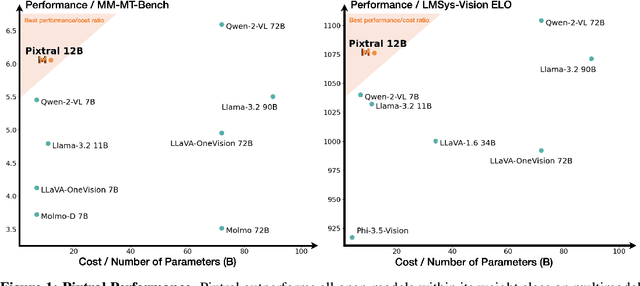
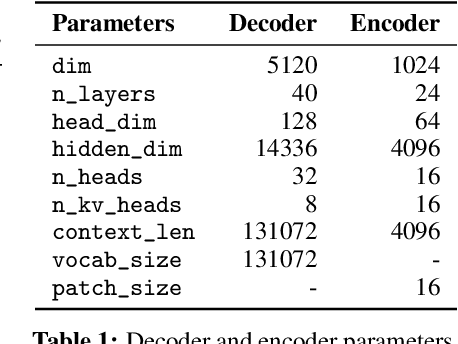
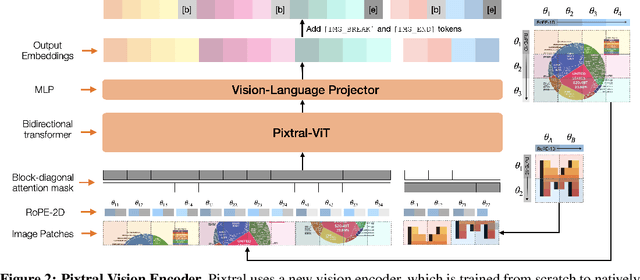
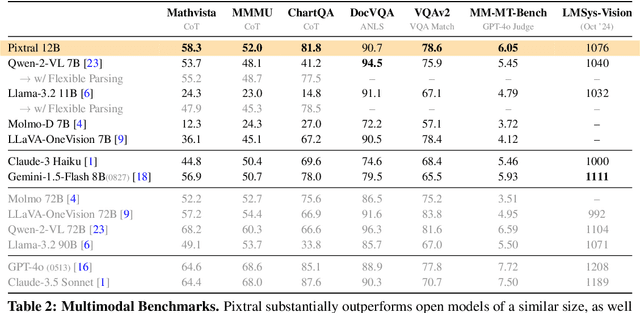
We introduce Pixtral-12B, a 12--billion-parameter multimodal language model. Pixtral-12B is trained to understand both natural images and documents, achieving leading performance on various multimodal benchmarks, surpassing a number of larger models. Unlike many open-source models, Pixtral is also a cutting-edge text model for its size, and does not compromise on natural language performance to excel in multimodal tasks. Pixtral uses a new vision encoder trained from scratch, which allows it to ingest images at their natural resolution and aspect ratio. This gives users flexibility on the number of tokens used to process an image. Pixtral is also able to process any number of images in its long context window of 128K tokens. Pixtral 12B substanially outperforms other open models of similar sizes (Llama-3.2 11B \& Qwen-2-VL 7B). It also outperforms much larger open models like Llama-3.2 90B while being 7x smaller. We further contribute an open-source benchmark, MM-MT-Bench, for evaluating vision-language models in practical scenarios, and provide detailed analysis and code for standardized evaluation protocols for multimodal LLMs. Pixtral-12B is released under Apache 2.0 license.