 Add to Chrome
 Add to Firefox
 Add to Edge
To 2:4 Sparsity and Beyond: Neuron-level Activation Function to Accelerate LLM Pre-Training
Feb 05, 2026
Trainings of Large Language Models are generally bottlenecked by matrix multiplications. In the Transformer architecture, a large portion of these operations happens in the Feed Forward Network (FFN), and this portion increases for larger models, up to 50% of the total pretraining floating point operations. We show that we can leverage hardware-accelerated sparsity to accelerate all matrix multiplications in the FFN, with 2:4 sparsity for weights and v:n:m (Venom) sparsity for activations. Our recipe relies on sparse training steps to accelerate a large part of the pretraining, associated with regular dense training steps towards the end. Overall, models trained with this approach exhibit the same performance on our quality benchmarks, and can speed up training end-to-end by 1.4 to 1.7x. This approach is applicable to all NVIDIA GPUs starting with the A100 generation, and is orthogonal to common optimization techniques, such as, quantization, and can also be applied to mixture-of-experts model architectures.

Accelerating Transformer Inference and Training with 2:4 Activation Sparsity
Mar 20, 2025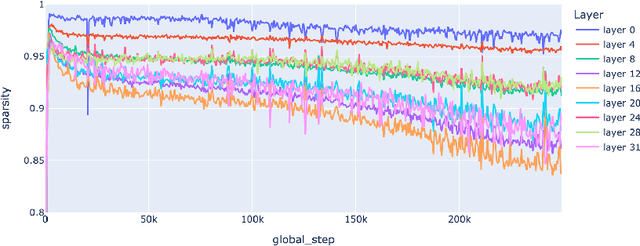
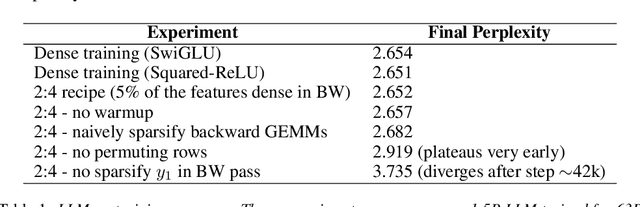
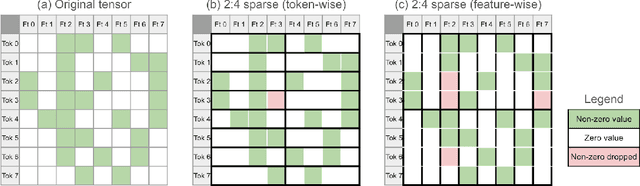
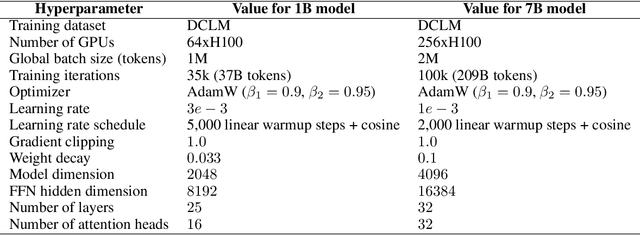
In this paper, we demonstrate how to leverage 2:4 sparsity, a popular hardware-accelerated GPU sparsity pattern, to activations to accelerate large language model training and inference. Crucially we exploit the intrinsic sparsity found in Squared-ReLU activations to provide this acceleration with no accuracy loss. Our approach achieves up to 1.3x faster Feed Forward Network (FFNs) in both the forwards and backwards pass. This work highlights the potential for sparsity to play a key role in accelerating large language model training and inference.
Mars Image Content Classification: Three Years of NASA Deployment and Recent Advances
Feb 09, 2021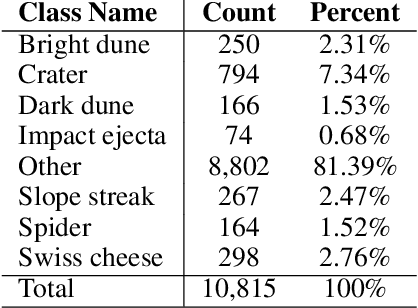
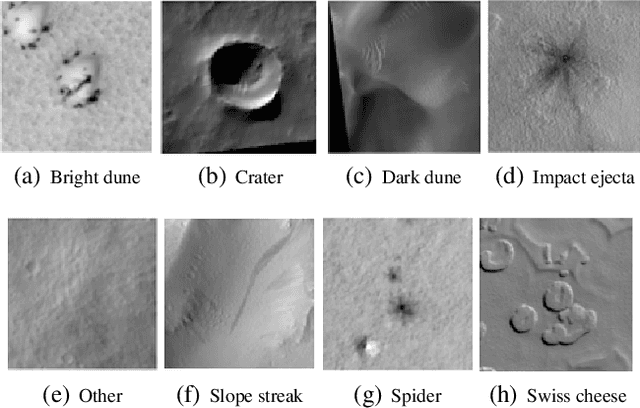
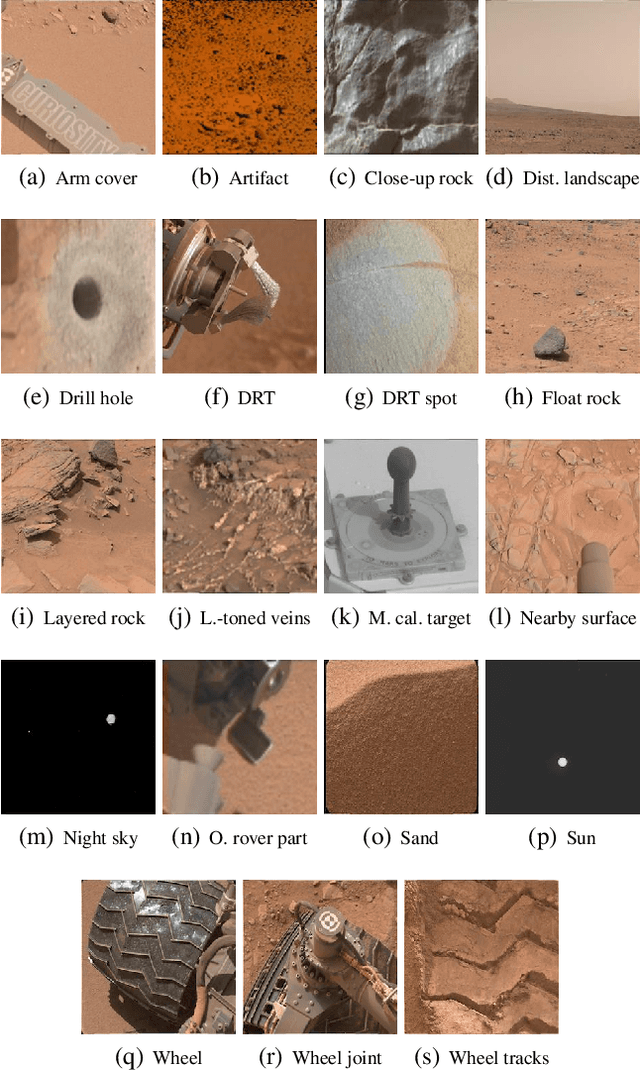
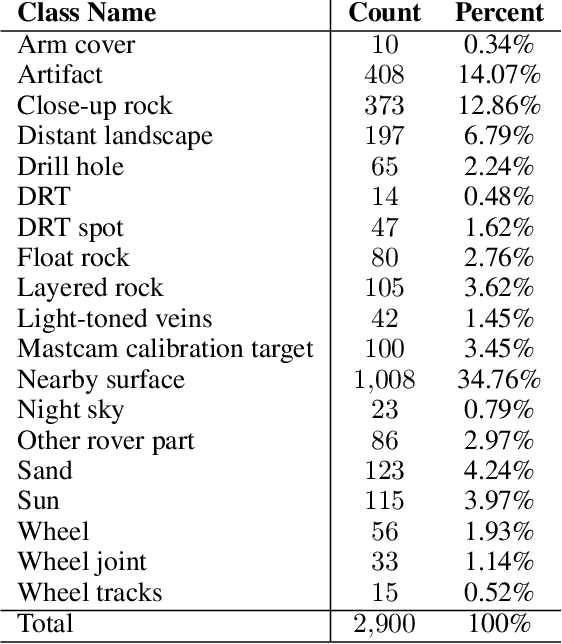
The NASA Planetary Data System hosts millions of images acquired from the planet Mars. To help users quickly find images of interest, we have developed and deployed content-based classification and search capabilities for Mars orbital and surface images. The deployed systems are publicly accessible using the PDS Image Atlas. We describe the process of training, evaluating, calibrating, and deploying updates to two CNN classifiers for images collected by Mars missions. We also report on three years of deployment including usage statistics, lessons learned, and plans for the future.