 Add to Chrome
 Add to Firefox
 Add to Edge
Extraction and Analysis of Multimodal Concepts in Vision Language Models through Sparse Autoencoders
Jun 19, 2026
Vision Language Models (VLMs) have demonstrated impressive performance in tasks requiring joint understanding of images and text, such as image captioning and Visual Question Answering (VQA), but our understanding of their internal processes remains limited. Recently, Sparse Autoencoders (SAEs) have emerged as a promising tool to support the interpretation of concepts encoded in VLMs. However, most SAE-based approaches focus only on textual or visual concepts separately, ignoring multimodal concepts. This limitation hinders a comprehensive understanding of VLMs, since concepts that integrate both modalities can be misclassified. Moreover, previous visual approaches often produce low-quality visual concept descriptions that are vague or incomplete, limiting their usefulness for understanding model reasoning. We propose a framework based on SAEs to extract and analyze visual, textual, and multimodal concepts from VLMs. For each neuron, we propose a candidate human-interpretable concept and compute the alignment between the concept and the dataset samples using cosine similarity scores. Experiments on a VQA dataset (LLaVA-NeXT) demonstrate that our framework improves visual concept quality by up to 45\% compared to existing SAE-based methods, while maintaining high textual concept quality and enabling systematic identification of multimodal concepts. This work contributes new insights into the conceptual space of VLMs, providing a structured approach to distinguish between visual, textual, and multimodal concepts. The code is available at https://github.com/PHDLanza/Multidata_SAE

Learning to Hear Hesitation: Continual Learning for Disfluency-Aware ASR
Jun 12, 2026Despite advances in large-scale Automatic Speech Recognition (ASR), disfluent speech remains challenging, as state-of-the-art systems are often optimized to omit disfluencies, leading to information loss and hallucinations. Prior work has focused on verbatim transcription and the integration of disfluency markers, but adapting models on limited datasets can lead to catastrophic forgetting of general-domain knowledge. We address this gap by leveraging continual learning (CL) with explicit disfluency tokens. We first introduce these tokens into a pretrained ASR model to establish stable token mechanisms, and then continue training on additional datasets with varying disfluency distributions. Through a detailed analysis of model dynamics during training, we identify a trade-off between marker learning and ASR performance, and a consistent cross-attention head mechanism shared across CL methods.
Bias Leaves a Gradient Trail: Label-Free Bias Identification via Gradient Probes on Concept Decompositions
May 27, 2026Vision classifiers can exploit spurious correlations, achieving high in-distribution accuracy yet failing under distribution shift. Existing approaches to bias mitigation and analysis often depend on curated datasets, spurious-attribute or group labels, or retraining, which may be infeasible once a model is deployed or the relevant bias is unknown. We present a bias-label-free, post-hoc method for identifying spurious concepts in frozen vision models, relying only on standard class labels from a held-out audit dataset. For each target class, we collect patches from inputs predicted as that class and apply non-negative matrix factorization to intermediate activations to obtain a bank of interpretable concept vectors. Candidate concepts are then ranked with a bias estimator derived from their interaction with backpropagated gradients on misclassified examples: bias concepts tend to get activated when correcting false negatives and suppressed when correcting false positives. On Colored MNIST and Waterbirds the method recovers concepts aligned with the known spurious cue, and on CelebA it surfaces decision-relevant directions that only partially coincide with the annotated gender attribute; suppressing the top-ranked concepts at inference time improves worst-group accuracy by up to 17.9 percentage points on Waterbirds and 10.4 on CelebA without any retraining or parameter updates. Our method identifies decision-relevant spurious directions that need not coincide with annotated ones, providing both an interpretable auditing tool and an actionable debiasing handle for frozen vision models. Code is available at https://github.com/vitryt/label-free-bias-identification.
The Expert Strikes Back: Interpreting Mixture-of-Experts Language Models at Expert Level
Apr 02, 2026Mixture-of-Experts (MoE) architectures have become the dominant choice for scaling Large Language Models (LLMs), activating only a subset of parameters per token. While MoE architectures are primarily adopted for computational efficiency, it remains an open question whether their sparsity makes them inherently easier to interpret than dense feed-forward networks (FFNs). We compare MoE experts and dense FFNs using $k$-sparse probing and find that expert neurons are consistently less polysemantic, with the gap widening as routing becomes sparser. This suggests that sparsity pressures both individual neurons and entire experts toward monosemanticity. Leveraging this finding, we zoom out from the neuron to the expert level as a more effective unit of analysis. We validate this approach by automatically interpreting hundreds of experts. This analysis allows us to resolve the debate on specialization: experts are neither broad domain specialists (e.g., biology) nor simple token-level processors. Instead, they function as fine-grained task experts, specializing in linguistic operations or semantic tasks (e.g., closing brackets in LaTeX). Our findings suggest that MoEs are inherently interpretable at the expert level, providing a clearer path toward large-scale model interpretability. Code is available at: https://github.com/jerryy33/MoE_analysis
Explaining, Verifying, and Aligning Semantic Hierarchies in Vision-Language Model Embeddings
Mar 26, 2026Vision-language model (VLM) encoders such as CLIP enable strong retrieval and zero-shot classification in a shared image-text embedding space, yet the semantic organization of this space is rarely inspected. We present a post-hoc framework to explain, verify, and align the semantic hierarchies induced by a VLM over a given set of child classes. First, we extract a binary hierarchy by agglomerative clustering of class centroids and name internal nodes by dictionary-based matching to a concept bank. Second, we quantify plausibility by comparing the extracted tree against human ontologies using efficient tree- and edge-level consistency measures, and we evaluate utility via explainable hierarchical tree-traversal inference with uncertainty-aware early stopping (UAES). Third, we propose an ontology-guided post-hoc alignment method that learns a lightweight embedding-space transformation, using UMAP to generate target neighborhoods from a desired hierarchy. Across 13 pretrained VLMs and 4 image datasets, our method finds systematic modality differences: image encoders are more discriminative, while text encoders induce hierarchies that better match human taxonomies. Overall, the results reveal a persistent trade-off between zero-shot accuracy and ontological plausibility and suggest practical routes to improve semantic alignment in shared embedding spaces.
Mental Modeling of Reinforcement Learning Agents by Language Models
Jun 26, 2024
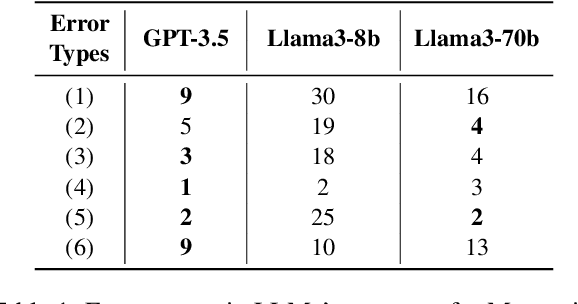
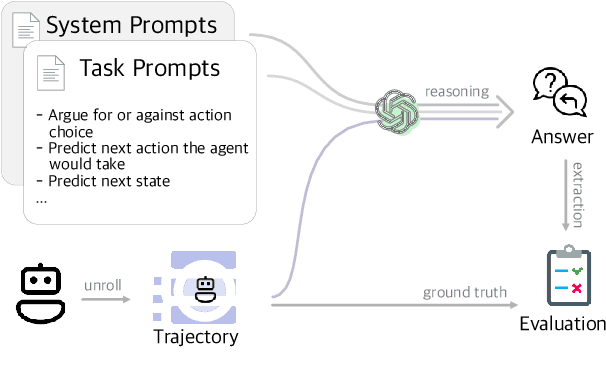

Can emergent language models faithfully model the intelligence of decision-making agents? Though modern language models exhibit already some reasoning ability, and theoretically can potentially express any probable distribution over tokens, it remains underexplored how the world knowledge these pretrained models have memorized can be utilized to comprehend an agent's behaviour in the physical world. This study empirically examines, for the first time, how well large language models (LLMs) can build a mental model of agents, termed agent mental modelling, by reasoning about an agent's behaviour and its effect on states from agent interaction history. This research may unveil the potential of leveraging LLMs for elucidating RL agent behaviour, addressing a key challenge in eXplainable reinforcement learning (XRL). To this end, we propose specific evaluation metrics and test them on selected RL task datasets of varying complexity, reporting findings on agent mental model establishment. Our results disclose that LLMs are not yet capable of fully mental modelling agents through inference alone without further innovations. This work thus provides new insights into the capabilities and limitations of modern LLMs.
Details Make a Difference: Object State-Sensitive Neurorobotic Task Planning
Jun 14, 2024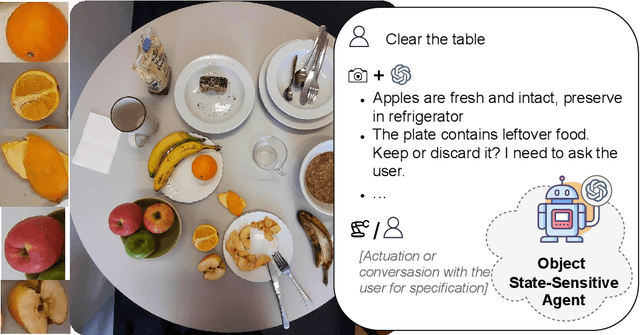
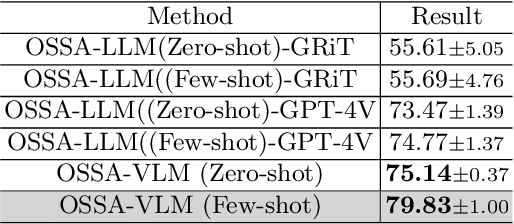
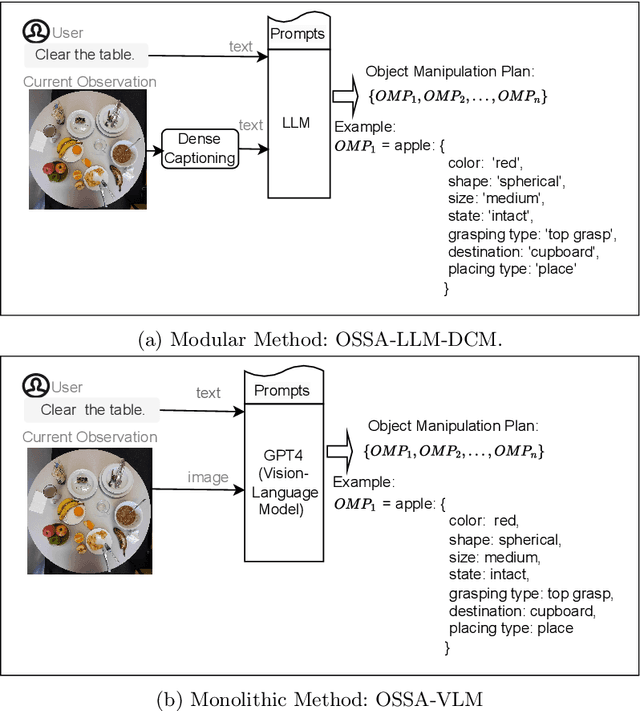
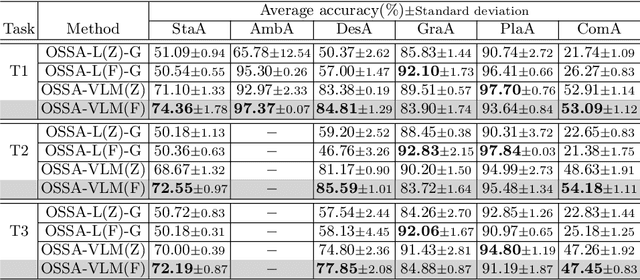
The state of an object reflects its current status or condition and is important for a robot's task planning and manipulation. However, detecting an object's state and generating a state-sensitive plan for robots is challenging. Recently, pre-trained Large Language Models (LLMs) and Vision-Language Models (VLMs) have shown impressive capabilities in generating plans. However, to the best of our knowledge, there is hardly any investigation on whether LLMs or VLMs can also generate object state-sensitive plans. To study this, we introduce an Object State-Sensitive Agent (OSSA), a task-planning agent empowered by pre-trained neural networks. We propose two methods for OSSA: (i) a modular model consisting of a pre-trained vision processing module (dense captioning model, DCM) and a natural language processing model (LLM), and (ii) a monolithic model consisting only of a VLM. To quantitatively evaluate the performances of the two methods, we use tabletop scenarios where the task is to clear the table. We contribute a multimodal benchmark dataset that takes object states into consideration. Our results show that both methods can be used for object state-sensitive tasks, but the monolithic approach outperforms the modular approach. The code for OSSA is available at \url{https://github.com/Xiao-wen-Sun/OSSA}
Causal State Distillation for Explainable Reinforcement Learning
Dec 30, 2023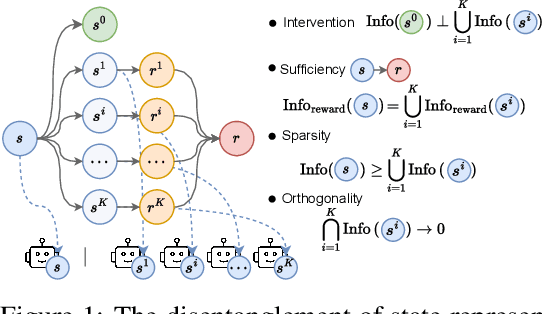
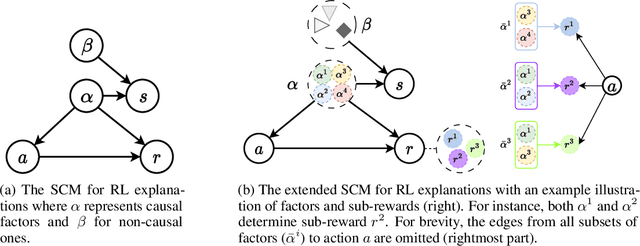

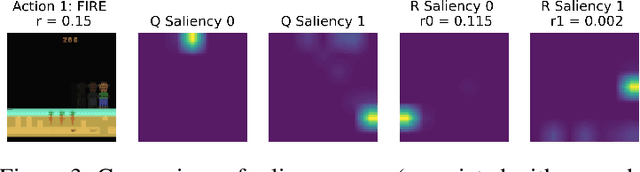
Reinforcement learning (RL) is a powerful technique for training intelligent agents, but understanding why these agents make specific decisions can be quite challenging. This lack of transparency in RL models has been a long-standing problem, making it difficult for users to grasp the reasons behind an agent's behaviour. Various approaches have been explored to address this problem, with one promising avenue being reward decomposition (RD). RD is appealing as it sidesteps some of the concerns associated with other methods that attempt to rationalize an agent's behaviour in a post-hoc manner. RD works by exposing various facets of the rewards that contribute to the agent's objectives during training. However, RD alone has limitations as it primarily offers insights based on sub-rewards and does not delve into the intricate cause-and-effect relationships that occur within an RL agent's neural model. In this paper, we present an extension of RD that goes beyond sub-rewards to provide more informative explanations. Our approach is centred on a causal learning framework that leverages information-theoretic measures for explanation objectives that encourage three crucial properties of causal factors: \emph{causal sufficiency}, \emph{sparseness}, and \emph{orthogonality}. These properties help us distill the cause-and-effect relationships between the agent's states and actions or rewards, allowing for a deeper understanding of its decision-making processes. Our framework is designed to generate local explanations and can be applied to a wide range of RL tasks with multiple reward channels. Through a series of experiments, we demonstrate that our approach offers more meaningful and insightful explanations for the agent's action selections.
Read Between the Layers: Leveraging Intra-Layer Representations for Rehearsal-Free Continual Learning with Pre-Trained Models
Dec 13, 2023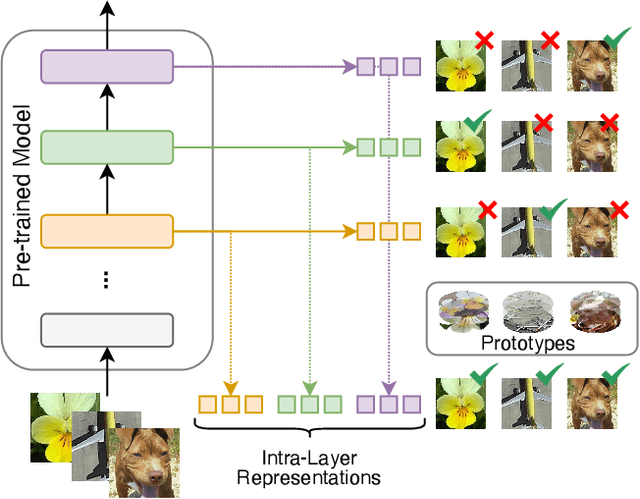
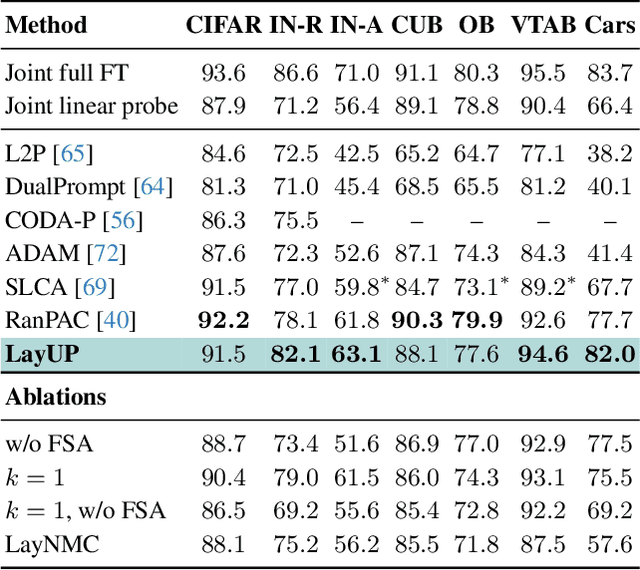
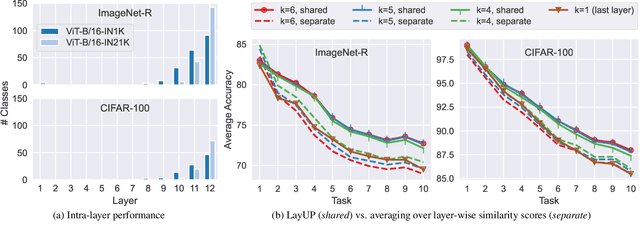

We address the Continual Learning (CL) problem, where a model has to learn a sequence of tasks from non-stationary distributions while preserving prior knowledge as it encounters new experiences. With the advancement of foundation models, CL research has shifted focus from the initial learning-from-scratch paradigm to the use of generic features from large-scale pre-training. However, existing approaches to CL with pre-trained models only focus on separating the class-specific features from the final representation layer and neglect the power of intermediate representations that capture low- and mid-level features naturally more invariant to domain shifts. In this work, we propose LayUP, a new class-prototype-based approach to continual learning that leverages second-order feature statistics from multiple intermediate layers of a pre-trained network. Our method is conceptually simple, does not require any replay buffer, and works out of the box with any foundation model. LayUP improves over the state-of-the-art on four of the seven class-incremental learning settings at a considerably reduced memory and computational footprint compared with the next best baseline. Our results demonstrate that fully exhausting the representational capacities of pre-trained models in CL goes far beyond their final embeddings.
Visually Grounded Continual Language Learning with Selective Specialization
Oct 24, 2023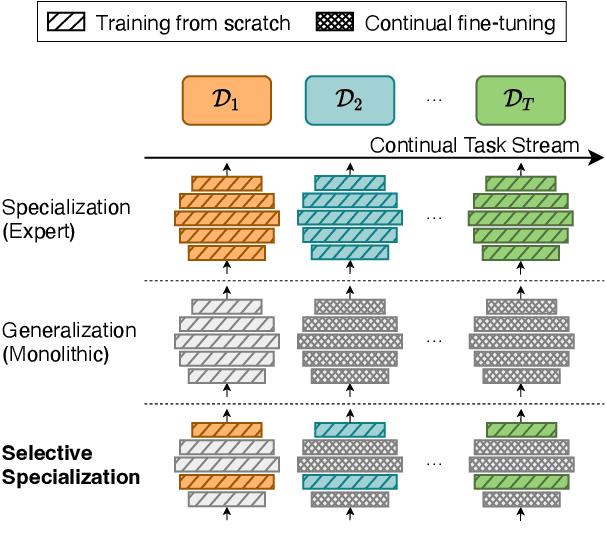
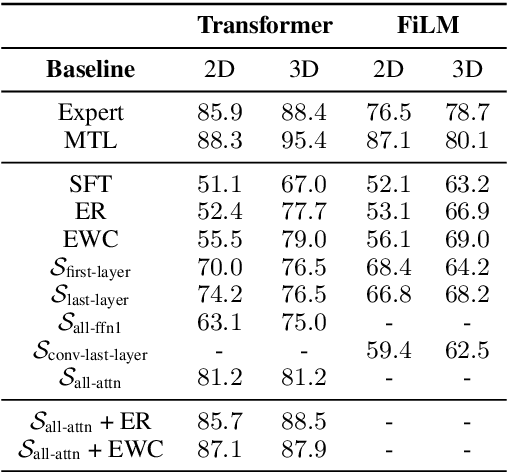
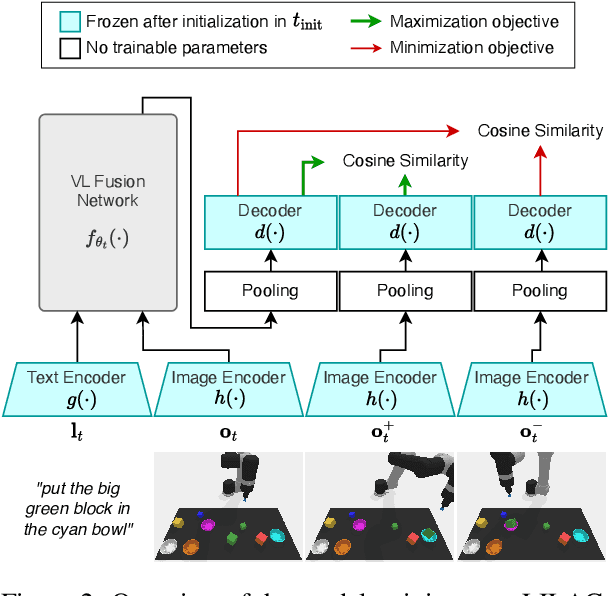

A desirable trait of an artificial agent acting in the visual world is to continually learn a sequence of language-informed tasks while striking a balance between sufficiently specializing in each task and building a generalized knowledge for transfer. Selective specialization, i.e., a careful selection of model components to specialize in each task, is a strategy to provide control over this trade-off. However, the design of selection strategies requires insights on the role of each model component in learning rather specialized or generalizable representations, which poses a gap in current research. Thus, our aim with this work is to provide an extensive analysis of selection strategies for visually grounded continual language learning. Due to the lack of suitable benchmarks for this purpose, we introduce two novel diagnostic datasets that provide enough control and flexibility for a thorough model analysis. We assess various heuristics for module specialization strategies as well as quantifiable measures for two different types of model architectures. Finally, we design conceptually simple approaches based on our analysis that outperform common continual learning baselines. Our results demonstrate the need for further efforts towards better aligning continual learning algorithms with the learning behaviors of individual model parts.