 Add to Chrome
 Add to Firefox
 Add to Edge
Qwen-Image-2.0 Technical Report
May 11, 2026
We present Qwen-Image-2.0, an omni-capable image generation foundation model that unifies high-fidelity generation and precise image editing within a single framework. Despite recent progress, existing models still struggle with ultra-long text rendering, multilingual typography, high-resolution photorealism, robust instruction following, and efficient deployment, especially in text-rich and compositionally complex scenarios. Qwen-Image-2.0 addresses these challenges by coupling Qwen3-VL as the condition encoder with a Multimodal Diffusion Transformer for joint condition-target modeling, supported by large-scale data curation and a customized multi-stage training pipeline. This enables strong multimodal understanding while preserving flexible generation and editing capabilities. The model supports instructions of up to 1K tokens for generating text-rich content such as slides, posters, infographics, and comics, while significantly improving multilingual text fidelity and typography. It also enhances photorealistic generation with richer details, more realistic textures, and coherent lighting, and follows complex prompts more reliably across diverse styles. Extensive human evaluations show that Qwen-Image-2.0 substantially outperforms previous Qwen-Image models in both generation and editing, marking a step toward more general, reliable, and practical image generation foundation models.

NNN: Next-Generation Neural Networks for Marketing Mix Modeling
Apr 09, 2025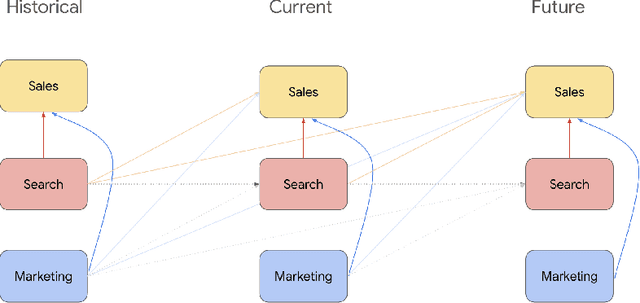
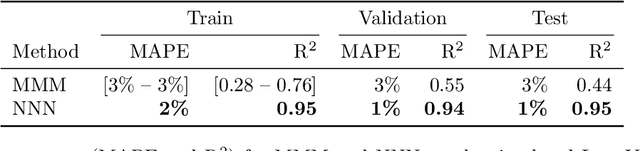
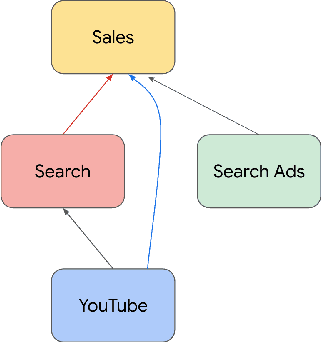
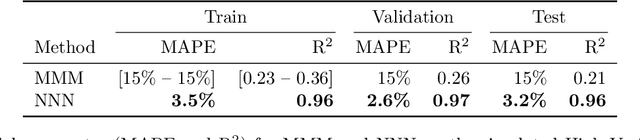
We present NNN, a Transformer-based neural network approach to Marketing Mix Modeling (MMM) designed to address key limitations of traditional methods. Unlike conventional MMMs which rely on scalar inputs and parametric decay functions, NNN uses rich embeddings to capture both quantitative and qualitative aspects of marketing and organic channels (e.g., search queries, ad creatives). This, combined with its attention mechanism, enables NNN to model complex interactions, capture long-term effects, and potentially improve sales attribution accuracy. We show that L1 regularization permits the use of such expressive models in typical data-constrained settings. Evaluating NNN on simulated and real-world data demonstrates its efficacy, particularly through considerable improvement in predictive power. Beyond attribution, NNN provides valuable, complementary insights through model probing, such as evaluating keyword or creative effectiveness, enhancing model interpretability.