 Add to Chrome
 Add to Firefox
 Add to Edge
Rate-Splitting--Inspired Uplink Near-Field ISAC
Jun 05, 2026
Integrated sensing and communication (ISAC) enables sensing and communication (S&C) functionalities to share spectrum, hardware, and signal-processing resources, but the resulting inter-functionality interference creates a fundamental receiver-design challenge, particularly in uplink operation. This paper develops a rate-splitting (RS)-inspired framework for uplink near-field ISAC. The framework generalizes the sensing-centric (S-C) and communication-centric (C-C) endpoint orders of non-orthogonal multiple access (NOMA)-inspired ISAC by splitting the communication message across the sensing operation. Closed-form expressions are derived for the communication-rate (CR) and sensing-rate (SR), accounting for residual sensing interference from target-response estimation uncertainty. The achievable CR-SR rate region is characterized under sensing-matched illumination, where the proposed single-frame RS-inspired boundary contains the NOMA-inspired time-sharing region. Unlike the classical Gaussian uplink multiple access channel, where RS recovers the time-sharing dominant face, the split factor in uplink ISAC also reshapes the sensing-stage interference, allowing the RS-inspired boundary to match or strictly enlarge the S&C tradeoff. High-SNR analysis shows that, for non-aligned S&C channels, residual sensing interference changes the rate offsets but not the leading S&C slopes, whereas in the fully-aligned case it becomes slope-limiting. Using an aperture-aware near-field channel model, large-array limits are derived, showing that achievable rates remain finite as the array grows. Numerical results validate the analysis and demonstrate the benefits of the RS-inspired scheme, the impact of residual sensing interference, and the bounded large-array behaviour induced by physically consistent near-field modelling.

Rate-Splitting--Inspired Bistatic OFDM-ISAC
May 20, 2026Achieving effective uplink bistatic ISAC over an OFDM waveform gives rise to challenging interference structures. These are mostly due to unequal direct- and echo-path contributions and Doppler-induced ICI, rendering orthogonal resource separation and fixed SIC strategies inadequate. To address this problem, we propose a RS-inspired framework where the transmitter splits each communication message into a robust and a supplementary stream, which are jointly superposed over a sensing signal. Furthermore, we present the design of a staged sensing-communication receiver. Based on this framework, we derive tractable per-subcarrier SINR expressions and establish the relation between sensing accuracy and communication reliability based on the Fisher information. Building on these, we formulate a joint power-allocation problem for SE maximization under sensing-performance and power constraints. The resulting non-convex formulation is solved using convex surrogates and fractional programming. Numerical results demonstrate that, compared to NOMA-inspired baselines, the proposed framework provides more effective IFI management and improved robustness to Doppler-induced ICI.
Cooperative Multi-Static Target Localization for ISAC in Cluttered Industrial IoT Networks
May 07, 2026In this paper, we propose a novel integrated sensing and communications (ISAC) framework for collaborative multi-static target localization in dense Industrial Internet-of-Things (IIoT) environments in the presence of environmental clutter. We first develop a lightweight temporal clutter-suppression learning method to mitigate persistent reflections. Building on this, we propose an iterative localization algorithm that integrates two key components introduced in this work: a sampling-based field-of-view-aware initialization (SFI) scheme and an empirical position error bound (PEB) scheme, which together adaptively identify the most informative subset of sensing nodes. A reliability-aware weighted least-squares estimator is then employed to fuse range and angle-of-arrival measurements from the selected sensing receivers for target localization. Numerical results demonstrate rapid convergence of the proposed method, reducing the localization RMSE by nearly two orders of magnitude within six sensing iterations to about 45 cm, while significantly outperforming all considered benchmarks under the same sensing-resource budget.
Tunable Gaussian Pulse for Delay-Doppler ISAC
Dec 16, 2025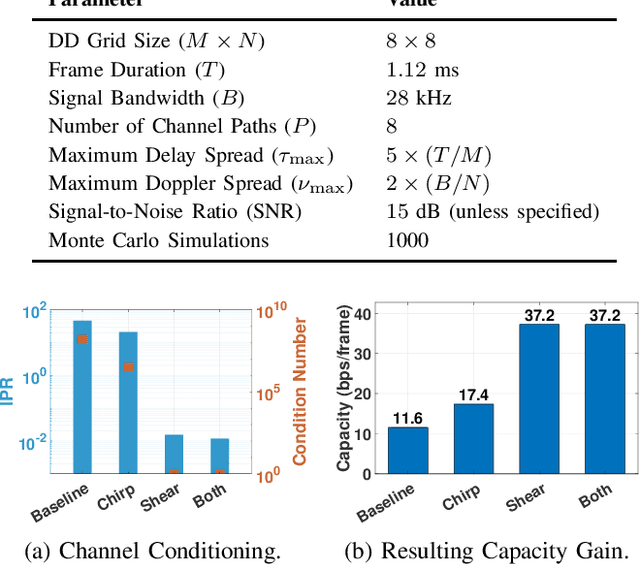
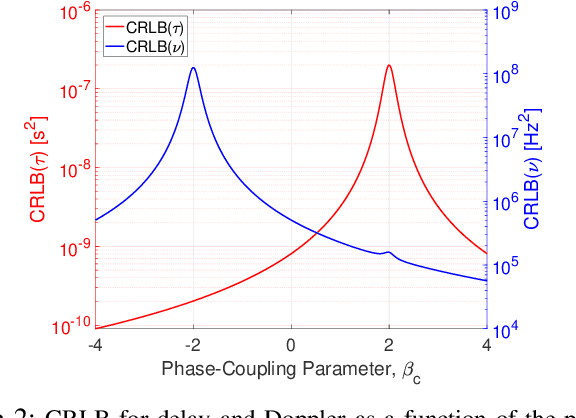
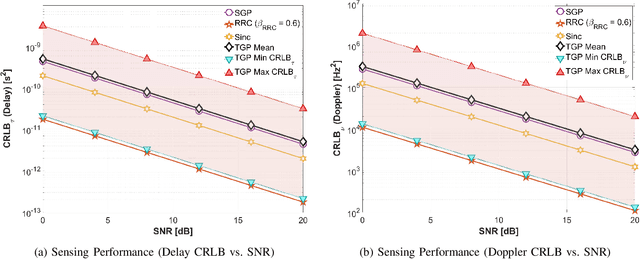
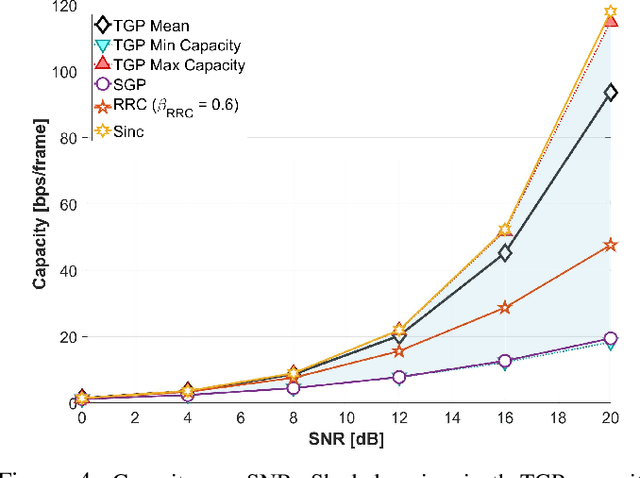
Integrated sensing and communication (ISAC) for next-generation networks targets robust operation under high mobility and high Doppler spread, leading to severe inter-carrier interference (ICI) in systems based on orthogonal frequency-division multiplexing (OFDM) waveforms. Delay--Doppler (DD)-domain ISAC offers a more robust foundation under high mobility, but it requires a suitable DD-domain pulse-shaping filter. The prevailing DD pulse designs are either communication-centric or static, which limits adaptation to non-stationary channels and diverse application demands. To address this limitation, this paper introduces the tunable Gaussian pulse (TGP), a DD-native, analytically tunable pulse shape parameterized by its aspect ratio \( γ\), chirp rate \( α_c \), and phase coupling \( β_c \). On the sensing side, we derive closed-form Cramér--Rao lower bounds (CRLBs) that map \( (γ,α_c,β_c) \) to fundamental delay and Doppler precision. On the communications side, we show that \( α_c \) and \( β_c \) reshape off-diagonal covariance, and thus inter-symbol interference (ISI), without changing received power, isolating capacity effects to interference structure rather than power loss. A comprehensive trade-off analysis demonstrates that the TGP spans a flexible operational region from the high capacity of the Sinc pulse to the high precision of the root raised cosine (RRC) pulse. Notably, TGP attains near-RRC sensing precision while retaining over \( 90\% \) of Sinc's maximum capacity, achieving a balanced operating region that is not attainable by conventional static pulse designs.
Policy Gradient Algorithms for Age-of-Information Cost Minimization
Dec 12, 2025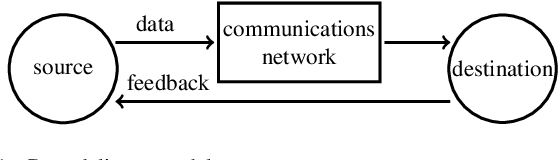
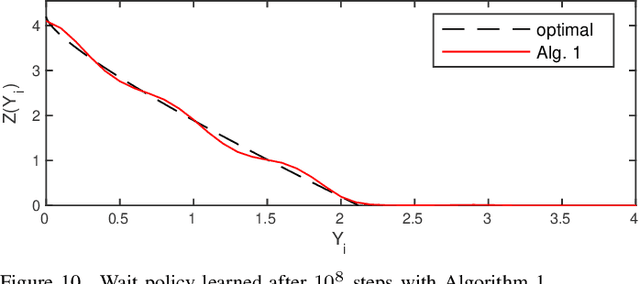
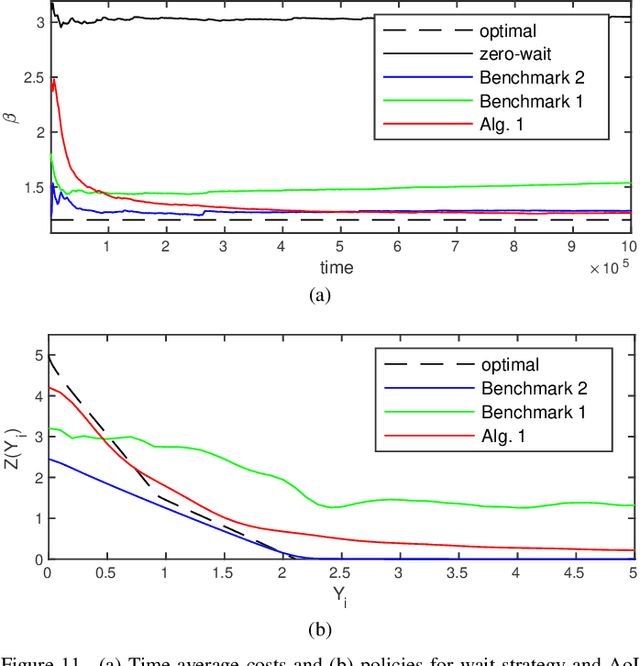
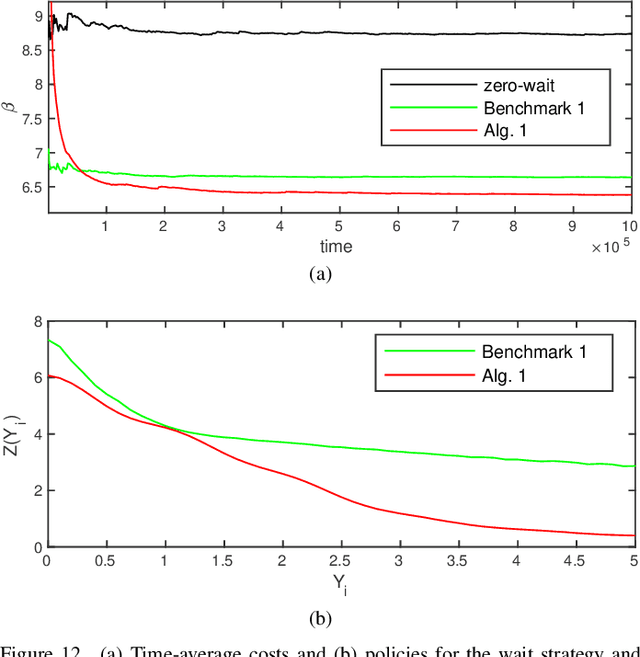
Recent developments in cyber-physical systems have increased the importance of maximizing the freshness of the information about the physical environment. However, optimizing the access policies of Internet of Things devices to maximize the data freshness, measured as a function of the Age-of-Information (AoI) metric, is a challenging task. This work introduces two algorithms to optimize the information update process in cyber-physical systems operating under the generate-at-will model, by finding an online policy without knowing the characteristics of the transmission delay or the age cost function. The optimization seeks to minimize the time-average cost, which integrates the AoI at the receiver and the data transmission cost, making the approach suitable for a broad range of scenarios. Both algorithms employ policy gradient methods within the framework of model-free reinforcement learning (RL) and are specifically designed to handle continuous state and action spaces. Each algorithm minimizes the cost using a distinct strategy for deciding when to send an information update. Moreover, we demonstrate that it is feasible to apply the two strategies simultaneously, leading to an additional reduction in cost. The results demonstrate that the proposed algorithms exhibit good convergence properties and achieve a time-average cost within 3% of the optimal value, when the latter is computable. A comparison with other state-of-the-art methods shows that the proposed algorithms outperform them in one or more of the following aspects: being applicable to a broader range of scenarios, achieving a lower time-average cost, and requiring a computational cost at least one order of magnitude lower.
Toward ISAC-empowered subnetworks: Cooperative localization and iterative node selection
Nov 15, 2025This paper tackles the sensing-communication trade-off in integrated sensing and communication (ISAC)-empowered subnetworks for mono-static target localization. We propose a low-complexity iterative node selection algorithm that exploits the spatial diversity of subnetwork deployments and dynamically refines the set of sensing subnetworks to maximize localization accuracy under tight resource constraints. Simulation results show that our method achieves sub-7 cm accuracy in additive white Gaussian noise (AWGN) channels within only three iterations, yielding over 97% improvement compared to the best-performing benchmark under the same sensing budget. We further demonstrate that increasing spatial diversity through additional antennas and subnetworks enhances sensing robustness, especially in fading channels. Finally, we quantify the sensing-communication trade-off, showing that reducing sensing iterations and the number of sensing subnetworks improves throughput at the cost of reduced localization precision.
Reinforcement Learning-Based Policy Optimisation For Heterogeneous Radio Access
Jun 18, 2025Flexible and efficient wireless resource sharing across heterogeneous services is a key objective for future wireless networks. In this context, we investigate the performance of a system where latency-constrained internet-of-things (IoT) devices coexist with a broadband user. The base station adopts a grant-free access framework to manage resource allocation, either through orthogonal radio access network (RAN) slicing or by allowing shared access between services. For the IoT users, we propose a reinforcement learning (RL) approach based on double Q-Learning (QL) to optimise their repetition-based transmission strategy, allowing them to adapt to varying levels of interference and meet a predefined latency target. We evaluate the system's performance in terms of the cumulative distribution function of IoT users' latency, as well as the broadband user's throughput and energy efficiency (EE). Our results show that the proposed RL-based access policies significantly enhance the latency performance of IoT users in both RAN Slicing and RAN Sharing scenarios, while preserving desirable broadband throughput and EE. Furthermore, the proposed policies enable RAN Sharing to be energy-efficient at low IoT traffic levels, and RAN Slicing to be favourable under high IoT traffic.
Scalable Data Transmission Framework for Earth Observation Satellites with Channel Adaptation
Dec 16, 2024The immense volume of data generated by Earth observation (EO) satellites presents significant challenges in transmitting it to Earth over rate-limited satellite-to-ground communication links. This paper presents an efficient downlink framework for multi-spectral satellite images, leveraging adaptive transmission techniques based on pixel importance and link capacity. By integrating semantic communication principles, the framework prioritizes critical information, such as changed multi-spectral pixels, to optimize data transmission. The process involves preprocessing, assessing pixel importance to encode only significant changes, and dynamically adjusting transmissions to match channel conditions. Experimental results on the real dataset and simulated link demonstrate that the proposed approach ensures high-quality data delivery while significantly reducing number of transmitted data, making it highly suitable for satellite-based EO applications.
Coexistence of Radar and Communication with Rate-Splitting Wireless Access
Nov 20, 2024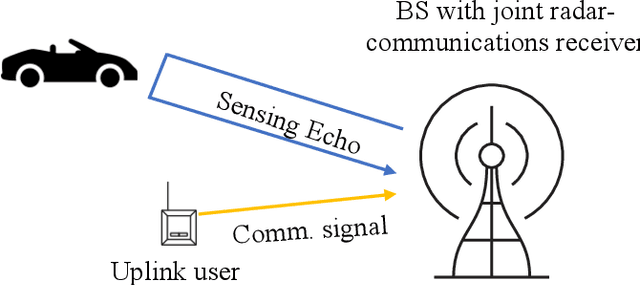

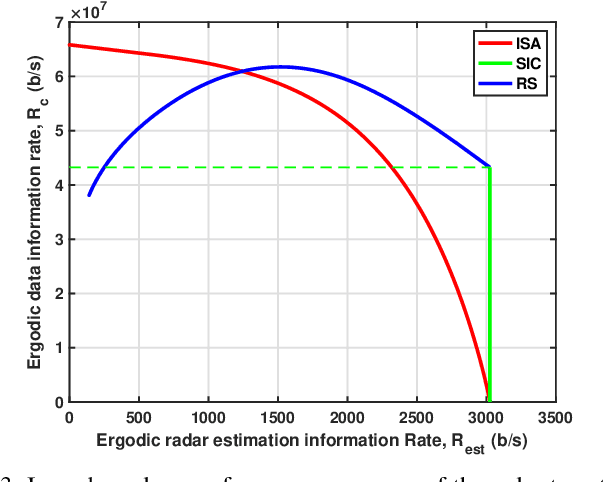
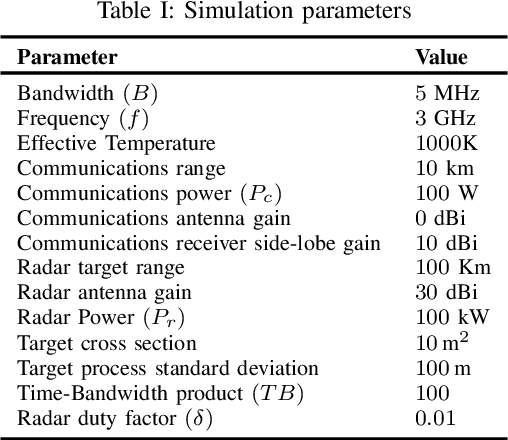
This work investigates the coexistence of sensing and communication functionalities in a base station (BS) serving a communication user in the uplink and simultaneously detecting a radar target with the same frequency resources. To address inter-functionality interference, we employ rate-splitting (RS) at the communication user and successive interference cancellation (SIC) at the joint radar-communication receiver at the BS. This approach is motivated by RS's proven effectiveness in mitigating inter-user interference among communication users. Building on the proposed system model based on RS, we derive inner bounds on performance in terms of ergodic data information rate for communication and ergodic radar estimation information rate for sensing. Additionally, we present a closed-form solution for the optimal power split in RS that maximizes the communication user's performance. The bounds achieved with RS are compared to conventional methods, including spectral isolation and full spectral sharing with SIC. We demonstrate that RS offers a superior performance trade-off between sensing and communication functionalities compared to traditional approaches. Pertinently, while the original concept of RS deals only with digital signals, this work brings forward RS as a general method for including non-orthogonal access for sensing signals. As a consequence, the work done in this paper provides a systematic and parametrized way to effectuate non-orthogonal sensing and communication waveforms.
Coexistence of Real-Time Source Reconstruction and Broadband Services Over Wireless Networks
Nov 20, 2024Achieving a flexible and efficient sharing of wireless resources among a wide range of novel applications and services is one of the major goals of the sixth-generation of mobile systems (6G). Accordingly, this work investigates the performance of a real-time system that coexists with a broadband service in a frame-based wireless channel. Specifically, we consider real-time remote tracking of an information source, where a device monitors its evolution and sends updates to a base station (BS), which is responsible for real-time source reconstruction and, potentially, remote actuation. To achieve this, the BS employs a grant-free access mechanism to serve the monitoring device together with a broadband user, which share the available wireless resources through orthogonal or non-orthogonal multiple access schemes. We analyse the performance of the system with time-averaged reconstruction error, time-averaged cost of actuation error, and update-delivery cost as performance metrics. Furthermore, we analyse the performance of the broadband user in terms of throughput and energy efficiency. Our results show that an orthogonal resource sharing between the users is beneficial in most cases where the broadband user requires maximum throughput. However, sharing the resources in a non-orthogonal manner leads to a far greater energy efficiency.