 Add to Chrome
 Add to Firefox
 Add to Edge
AdaBoosting Text Prompts for Vision-Language Models
Jul 01, 2026
The classification accuracy of pretrained Vision-Language Models (VLMs) relies on the quality of the text prompts. Handcrafted templates and Large Language Model (LLM)-generated descriptions not only make predictions more interpretable, but also enable reuse of the same prompts across heterogeneous VLMs. Recent works construct task-adapted text prompts with a small number of labeled images. However, existing few-shot text prompting methods do not explicitly focus on misclassified examples during prompt construction, leading to only marginal improvements even as more shots become available. To fully exploit few-shot supervision, we propose Text Prompt Boosting (TPB), an AdaBoost-inspired framework that treats each text-prompt-based classifier as a weak learner and sequentially aggregates them into a strong ensemble by explicitly targeting hard, misclassified examples. Extensive experiments show that TPB preserves task-intrinsic, model-agnostic cues in text space, enabling robust cross-model transfer. Across eleven classification benchmarks, TPB improves accuracy on the source model and preserves shot-driven gains when transferred to larger, more capable VLMs, where existing methods struggle to sustain such improvements.

Federated Variational Preference Alignment with Gumbel-Softmax Prior for Personalized User Preferences
May 29, 2026Federated Learning (FL) offers a privacy-preserving pathway for aligning Large Language Models (LLMs); however, existing frameworks typically enforce a monolithic reward model, inevitably averaging out inherently conflicting user preferences (e.g., helpfulness vs. harmlessness). While Variational Preference Learning (VPL) offers a pathway to personalization, adapting it to decentralized settings presents a fundamental challenge: posterior collapse driven by severe local data scarcity and heterogeneity. In this paper, we propose Federated Variational Preference Alignment with Gumbel-Softmax Prior (FedVPA-GP), a framework designed to disentangle diverse preferences without compromising privacy. To stabilize variational inference, we introduce a Federated Mixture Prior that enables clients to leverage the aggregate population distribution as a dynamic prior. Furthermore, we incorporate an Orthogonal Loss that explicitly enforces the separation of preference prototypes in the latent space. Experiments on the HH-RLHF dataset demonstrate that FedVPA-GP significantly outperforms monolithic baselines, successfully disentangling conflicting user intents and enabling dynamic preference switching.
ChimeraLoRA: Multi-Head LoRA-Guided Synthetic Datasets
Feb 23, 2026Beyond general recognition tasks, specialized domains including privacy-constrained medical applications and fine-grained settings often encounter data scarcity, especially for tail classes. To obtain less biased and more reliable models under such scarcity, practitioners leverage diffusion models to supplement underrepresented regions of real data. Specifically, recent studies fine-tune pretrained diffusion models with LoRA on few-shot real sets to synthesize additional images. While an image-wise LoRA trained on a single image captures fine-grained details yet offers limited diversity, a class-wise LoRA trained over all shots produces diverse images as it encodes class priors yet tends to overlook fine details. To combine both benefits, we separate the adapter into a class-shared LoRA~$A$ for class priors and per-image LoRAs~$\mathcal{B}$ for image-specific characteristics. To expose coherent class semantics in the shared LoRA~$A$, we propose a semantic boosting by preserving class bounding boxes during training. For generation, we compose $A$ with a mixture of $\mathcal{B}$ using coefficients drawn from a Dirichlet distribution. Across diverse datasets, our synthesized images are both diverse and detail-rich while closely aligning with the few-shot real distribution, yielding robust gains in downstream classification accuracy.
Making Models Unmergeable via Scaling-Sensitive Loss Landscape
Jan 29, 2026The rise of model hubs has made it easier to access reusable model components, making model merging a practical tool for combining capabilities. Yet, this modularity also creates a \emph{governance gap}: downstream users can recompose released weights into unauthorized mixtures that bypass safety alignment or licensing terms. Because existing defenses are largely post-hoc and architecture-specific, they provide inconsistent protection across diverse architectures and release formats in practice. To close this gap, we propose \textsc{Trap}$^{2}$, an architecture-agnostic protection framework that encodes protection into the update during fine-tuning, regardless of whether they are released as adapters or full models. Instead of relying on architecture-dependent approaches, \textsc{Trap}$^{2}$ uses weight re-scaling as a simple proxy for the merging process. It keeps released weights effective in standalone use, but degrades them under re-scaling that often arises in merging, undermining unauthorized merging.
Janus Metasurface Breaking Polarization Symmetry: Surface-Modulated Electromagnetic Wave Radiation with Coexistent Linear and Circular Polarization
Dec 17, 2025

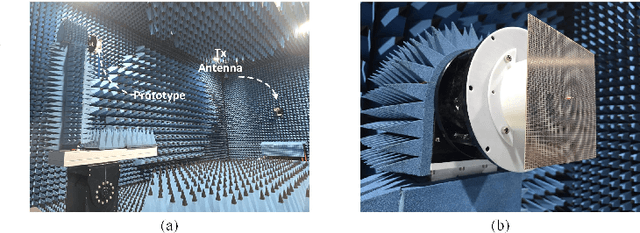
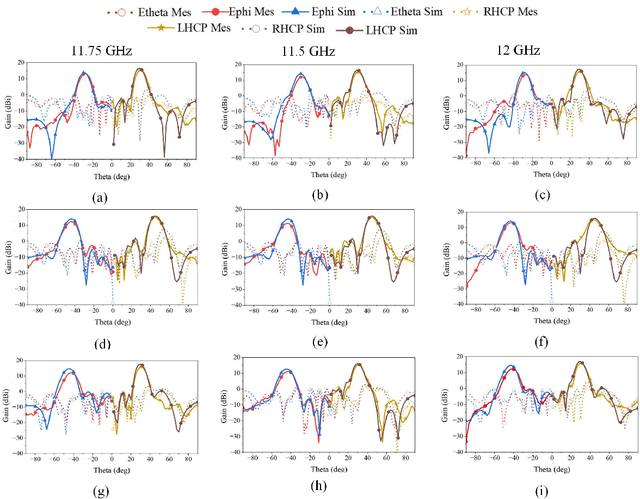
In this work, a Janus metasurface based tensor impedance holographic antenna (JHA) is proposed that simultaneously radiates linearly polarized (LP) and circularly polarized (CP) beams from a single aperture excited by a single feed. The proposed design introduces modified tensor impedance equations to significantly reduce cross-polarization at higher radiation angles. It demonstrates broadband operation bandwidth of 0.5 GHz while maintaining high circular polarization purity. The design methodology is verified using aperture field integration theory, ensuring that the impedance distribution produces the desired far-field radiation patterns. Prototypes of three variations of the holographic antenna are fabricated, validating its performance. The radiation characteristics of the proposed antenna make it an attractive choice for advanced broadband communication applications.
Enhancing Cost Efficiency in Active Learning with Candidate Set Query
Feb 10, 2025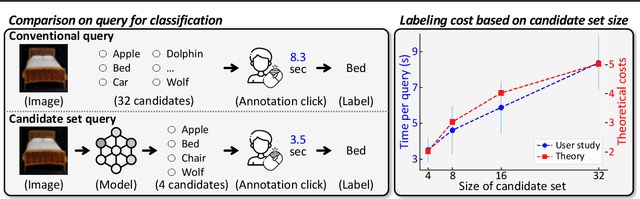

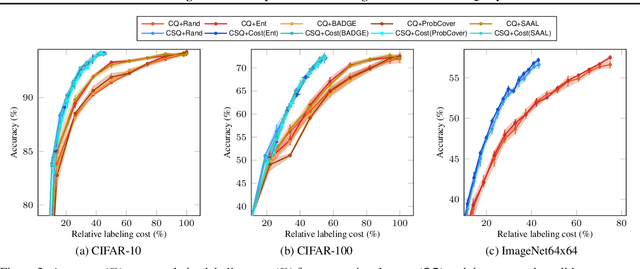
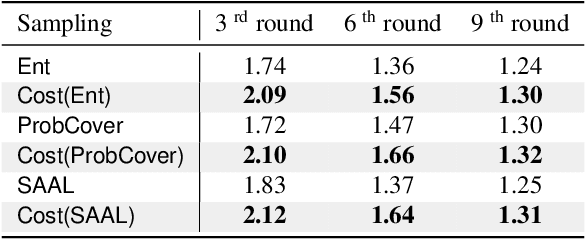
This paper introduces a cost-efficient active learning (AL) framework for classification, featuring a novel query design called candidate set query. Unlike traditional AL queries requiring the oracle to examine all possible classes, our method narrows down the set of candidate classes likely to include the ground-truth class, significantly reducing the search space and labeling cost. Moreover, we leverage conformal prediction to dynamically generate small yet reliable candidate sets, adapting to model enhancement over successive AL rounds. To this end, we introduce an acquisition function designed to prioritize data points that offer high information gain at lower cost. Empirical evaluations on CIFAR-10, CIFAR-100, and ImageNet64x64 demonstrate the effectiveness and scalability of our framework. Notably, it reduces labeling cost by 42% on ImageNet64x64.
Context-Aware Input Orchestration for Video Inpainting
Nov 25, 2024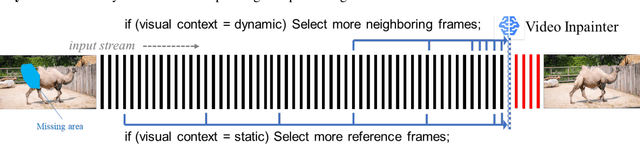
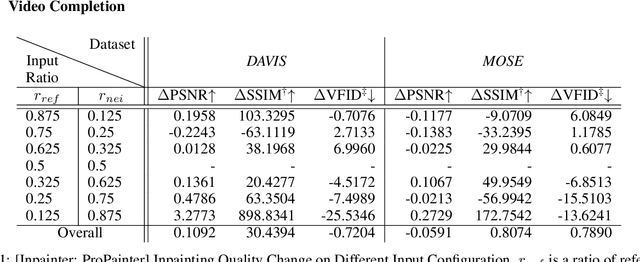
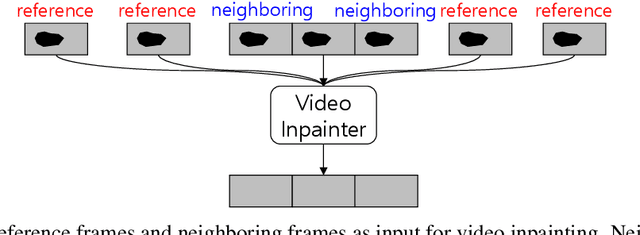
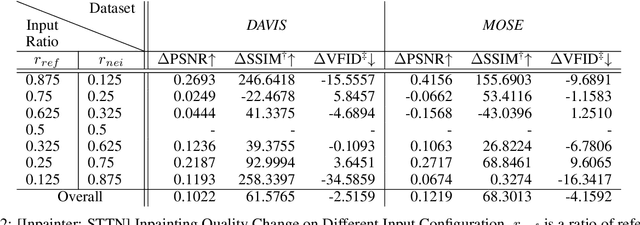
Traditional neural network-driven inpainting methods struggle to deliver high-quality results within the constraints of mobile device processing power and memory. Our research introduces an innovative approach to optimize memory usage by altering the composition of input data. Typically, video inpainting relies on a predetermined set of input frames, such as neighboring and reference frames, often limited to five-frame sets. Our focus is to examine how varying the proportion of these input frames impacts the quality of the inpainted video. By dynamically adjusting the input frame composition based on optical flow and changes of the mask, we have observed an improvement in various contents including rapid visual context changes.
Active Prompt Learning with Vision-Language Model Priors
Nov 23, 2024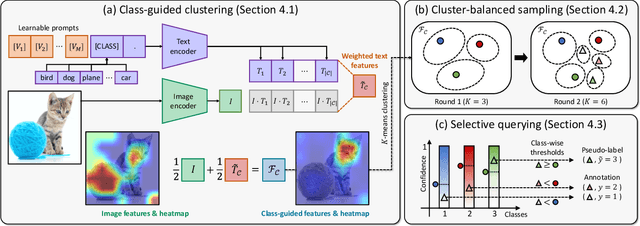
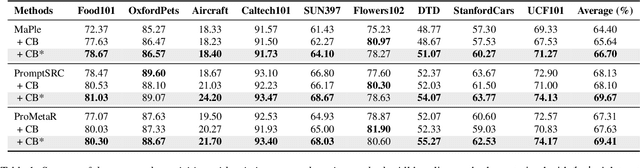
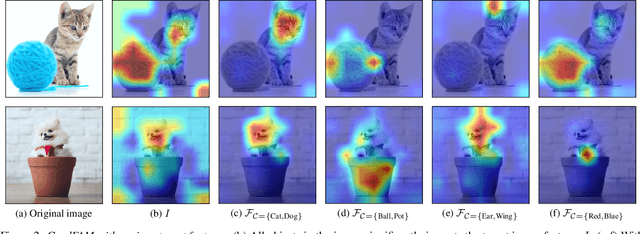
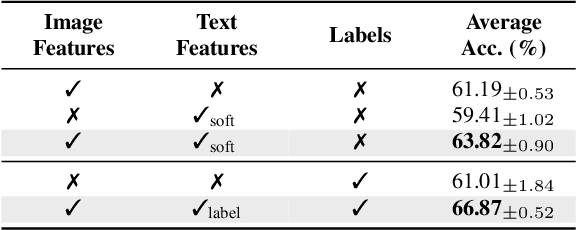
Vision-language models (VLMs) have demonstrated remarkable zero-shot performance across various classification tasks. Nonetheless, their reliance on hand-crafted text prompts for each task hinders efficient adaptation to new tasks. While prompt learning offers a promising solution, most studies focus on maximizing the utilization of given few-shot labeled datasets, often overlooking the potential of careful data selection strategies, which enable higher accuracy with fewer labeled data. This motivates us to study a budget-efficient active prompt learning framework. Specifically, we introduce a class-guided clustering that leverages the pre-trained image and text encoders of VLMs, thereby enabling our cluster-balanced acquisition function from the initial round of active learning. Furthermore, considering the substantial class-wise variance in confidence exhibited by VLMs, we propose a budget-saving selective querying based on adaptive class-wise thresholds. Extensive experiments in active learning scenarios across nine datasets demonstrate that our method outperforms existing baselines.
ZNorm: Z-Score Gradient Normalization for Accelerating Neural Network Training
Aug 02, 2024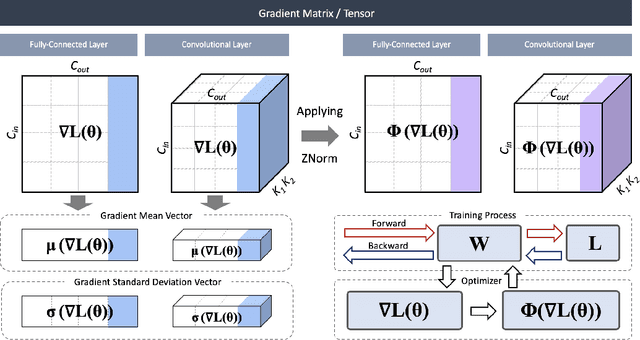
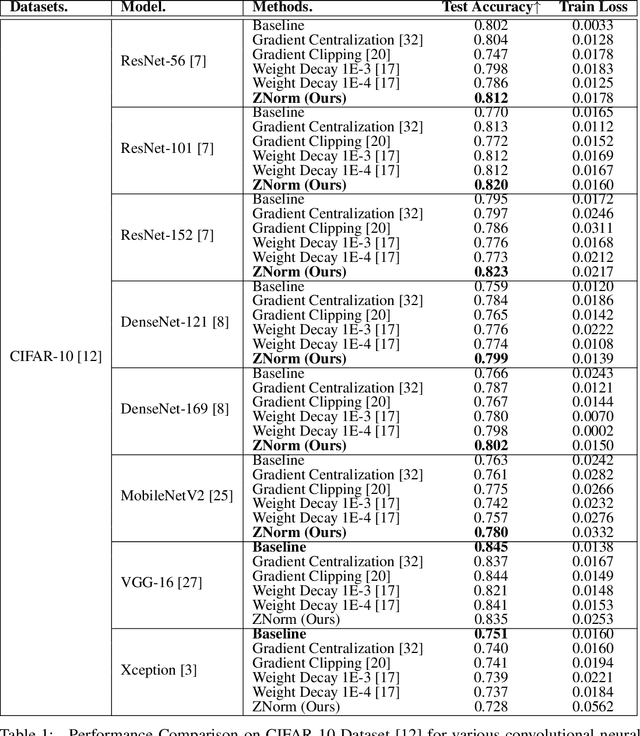
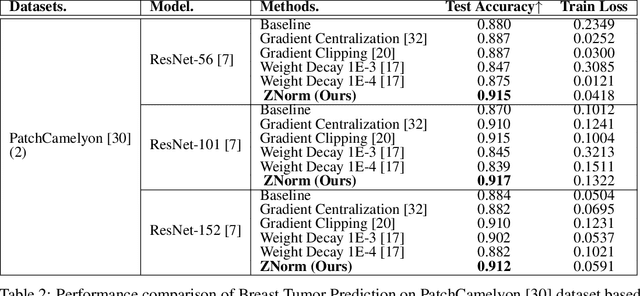
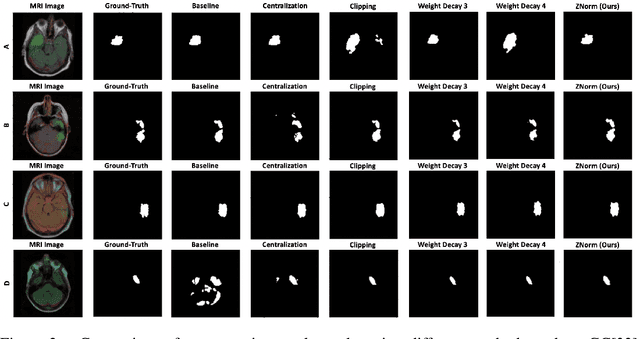
The rapid advancements in deep learning necessitate efficient training methods for deep neural networks (DNNs). As models grow in complexity, vanishing and exploding gradients impede convergence and performance. We propose Z-Score Normalization for Gradient Descent (ZNorm), an innovative technique that adjusts only the gradients to enhance training efficiency and improve model performance. ZNorm normalizes the overall gradients, providing consistent gradient scaling across layers, thereby reducing the risks of vanishing and exploding gradients. Our extensive experiments on CIFAR-10 and medical datasets demonstrate that ZNorm not only accelerates convergence but also enhances performance metrics. ZNorm consistently outperforms existing methods, achieving superior results using the same computational settings. In medical imaging applications, ZNorm improves tumor prediction and segmentation performances, underscoring its practical utility. These findings highlight ZNorm's potential as a robust and versatile tool for improving the efficiency and effectiveness of deep neural network training across a wide range of architectures and applications.
Active Label Correction for Semantic Segmentation with Foundation Models
Mar 16, 2024


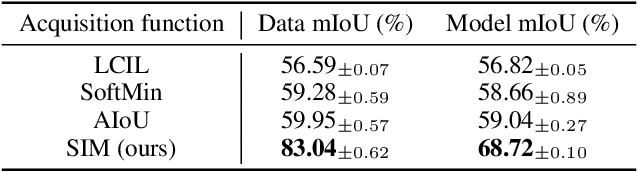
Training and validating models for semantic segmentation require datasets with pixel-wise annotations, which are notoriously labor-intensive. Although useful priors such as foundation models or crowdsourced datasets are available, they are error-prone. We hence propose an effective framework of active label correction (ALC) based on a design of correction query to rectify pseudo labels of pixels, which in turn is more annotator-friendly than the standard one inquiring to classify a pixel directly according to our theoretical analysis and user study. Specifically, leveraging foundation models providing useful zero-shot predictions on pseudo labels and superpixels, our method comprises two key techniques: (i) an annotator-friendly design of correction query with the pseudo labels, and (ii) an acquisition function looking ahead label expansions based on the superpixels. Experimental results on PASCAL, Cityscapes, and Kvasir-SEG datasets demonstrate the effectiveness of our ALC framework, outperforming prior methods for active semantic segmentation and label correction. Notably, utilizing our method, we obtained a revised dataset of PASCAL by rectifying errors in 2.6 million pixels in PASCAL dataset.