 Add to Chrome
 Add to Firefox
 Add to Edge
AdaBoosting Text Prompts for Vision-Language Models
Jul 01, 2026
The classification accuracy of pretrained Vision-Language Models (VLMs) relies on the quality of the text prompts. Handcrafted templates and Large Language Model (LLM)-generated descriptions not only make predictions more interpretable, but also enable reuse of the same prompts across heterogeneous VLMs. Recent works construct task-adapted text prompts with a small number of labeled images. However, existing few-shot text prompting methods do not explicitly focus on misclassified examples during prompt construction, leading to only marginal improvements even as more shots become available. To fully exploit few-shot supervision, we propose Text Prompt Boosting (TPB), an AdaBoost-inspired framework that treats each text-prompt-based classifier as a weak learner and sequentially aggregates them into a strong ensemble by explicitly targeting hard, misclassified examples. Extensive experiments show that TPB preserves task-intrinsic, model-agnostic cues in text space, enabling robust cross-model transfer. Across eleven classification benchmarks, TPB improves accuracy on the source model and preserves shot-driven gains when transferred to larger, more capable VLMs, where existing methods struggle to sustain such improvements.

Active Prompt Learning with Vision-Language Model Priors
Nov 23, 2024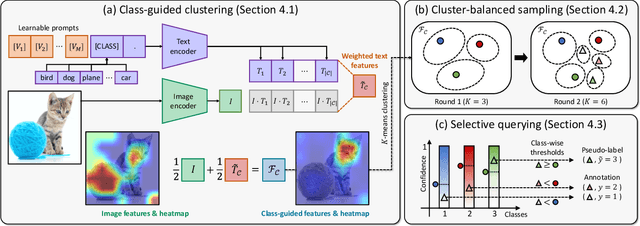
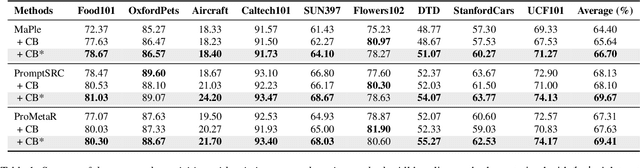
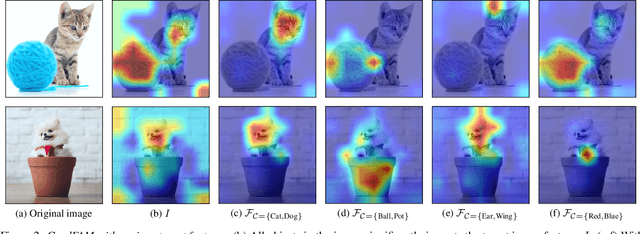
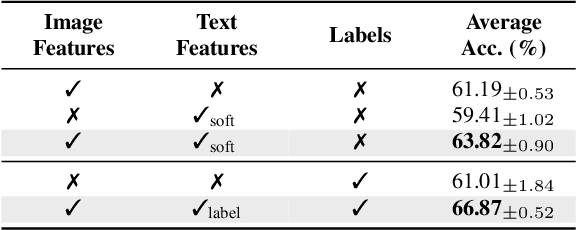
Vision-language models (VLMs) have demonstrated remarkable zero-shot performance across various classification tasks. Nonetheless, their reliance on hand-crafted text prompts for each task hinders efficient adaptation to new tasks. While prompt learning offers a promising solution, most studies focus on maximizing the utilization of given few-shot labeled datasets, often overlooking the potential of careful data selection strategies, which enable higher accuracy with fewer labeled data. This motivates us to study a budget-efficient active prompt learning framework. Specifically, we introduce a class-guided clustering that leverages the pre-trained image and text encoders of VLMs, thereby enabling our cluster-balanced acquisition function from the initial round of active learning. Furthermore, considering the substantial class-wise variance in confidence exhibited by VLMs, we propose a budget-saving selective querying based on adaptive class-wise thresholds. Extensive experiments in active learning scenarios across nine datasets demonstrate that our method outperforms existing baselines.