 Add to Chrome
 Add to Firefox
 Add to Edge
NTIRE 2026 3D Restoration and Reconstruction in Real-world Adverse Conditions: RealX3D Challenge Results
Apr 05, 2026
This paper presents a comprehensive review of the NTIRE 2026 3D Restoration and Reconstruction (3DRR) Challenge, detailing the proposed methods and results. The challenge seeks to identify robust reconstruction pipelines that are robust under real-world adverse conditions, specifically extreme low-light and smoke-degraded environments, as captured by our RealX3D benchmark. A total of 279 participants registered for the competition, of whom 33 teams submitted valid results. We thoroughly evaluate the submitted approaches against state-of-the-art baselines, revealing significant progress in 3D reconstruction under adverse conditions. Our analysis highlights shared design principles among top-performing methods and provides insights into effective strategies for handling 3D scene degradation.

Tips and Tricks for Webly-Supervised Fine-Grained Recognition: Learning from the WebFG 2020 Challenge
Dec 29, 2020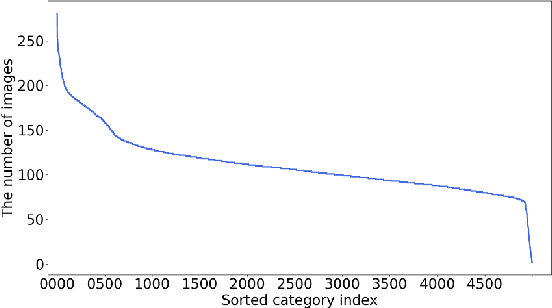
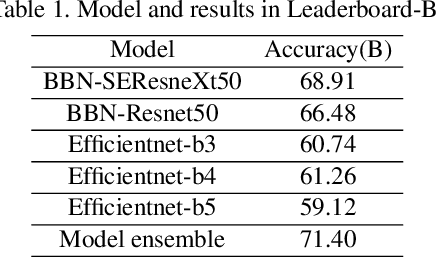
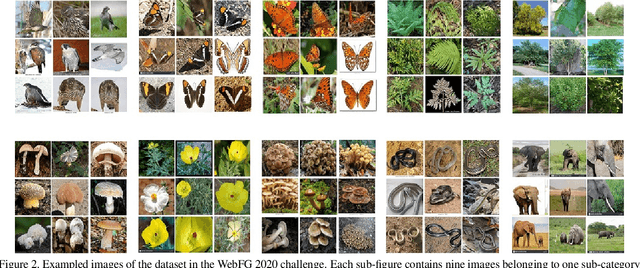
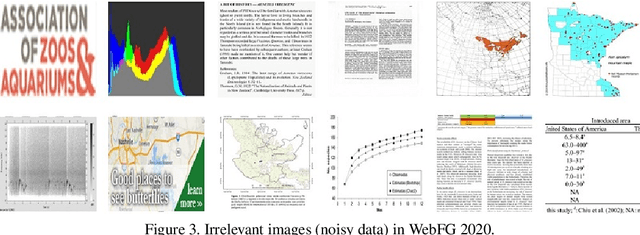
WebFG 2020 is an international challenge hosted by Nanjing University of Science and Technology, University of Edinburgh, Nanjing University, The University of Adelaide, Waseda University, etc. This challenge mainly pays attention to the webly-supervised fine-grained recognition problem. In the literature, existing deep learning methods highly rely on large-scale and high-quality labeled training data, which poses a limitation to their practicability and scalability in real world applications. In particular, for fine-grained recognition, a visual task that requires professional knowledge for labeling, the cost of acquiring labeled training data is quite high. It causes extreme difficulties to obtain a large amount of high-quality training data. Therefore, utilizing free web data to train fine-grained recognition models has attracted increasing attentions from researchers in the fine-grained community. This challenge expects participants to develop webly-supervised fine-grained recognition methods, which leverages web images in training fine-grained recognition models to ease the extreme dependence of deep learning methods on large-scale manually labeled datasets and to enhance their practicability and scalability. In this technical report, we have pulled together the top WebFG 2020 solutions of total 54 competing teams, and discuss what methods worked best across the set of winning teams, and what surprisingly did not help.