 Add to Chrome
 Add to Firefox
 Add to Edge
Non-Log-Concave and Nonsmooth Sampling via Langevin Monte Carlo Algorithms
May 25, 2023
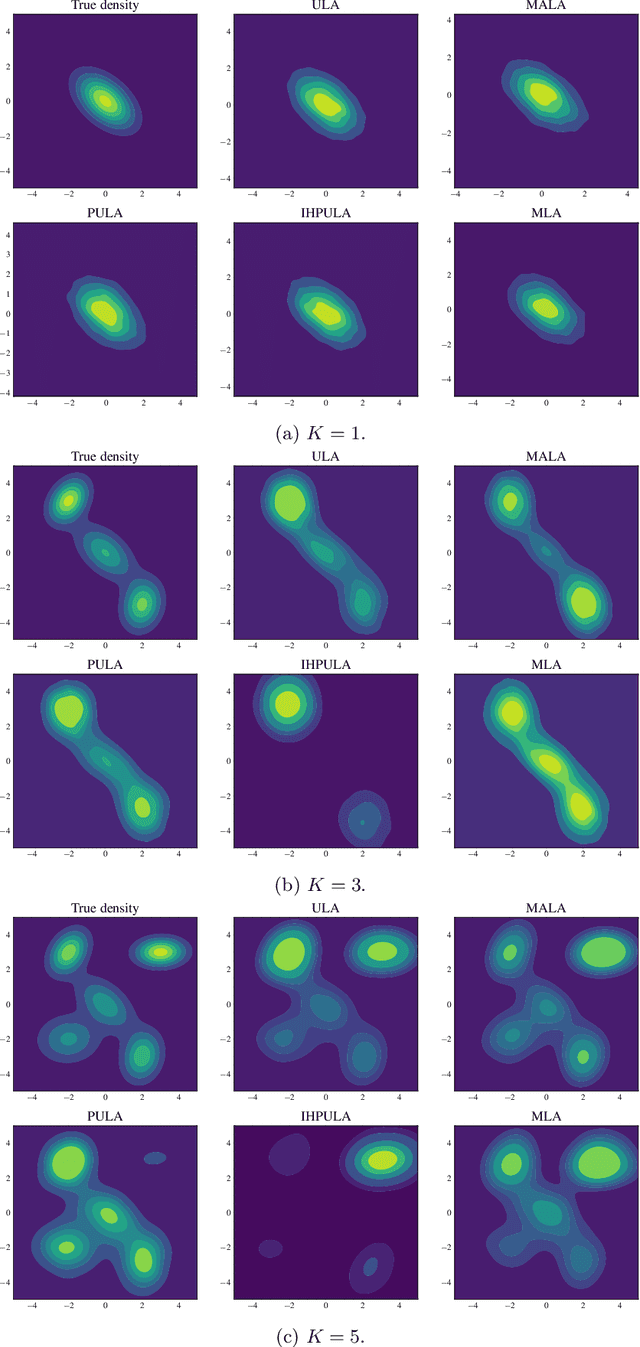
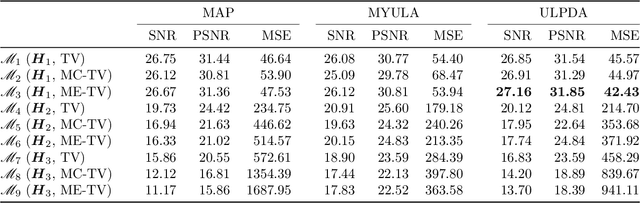
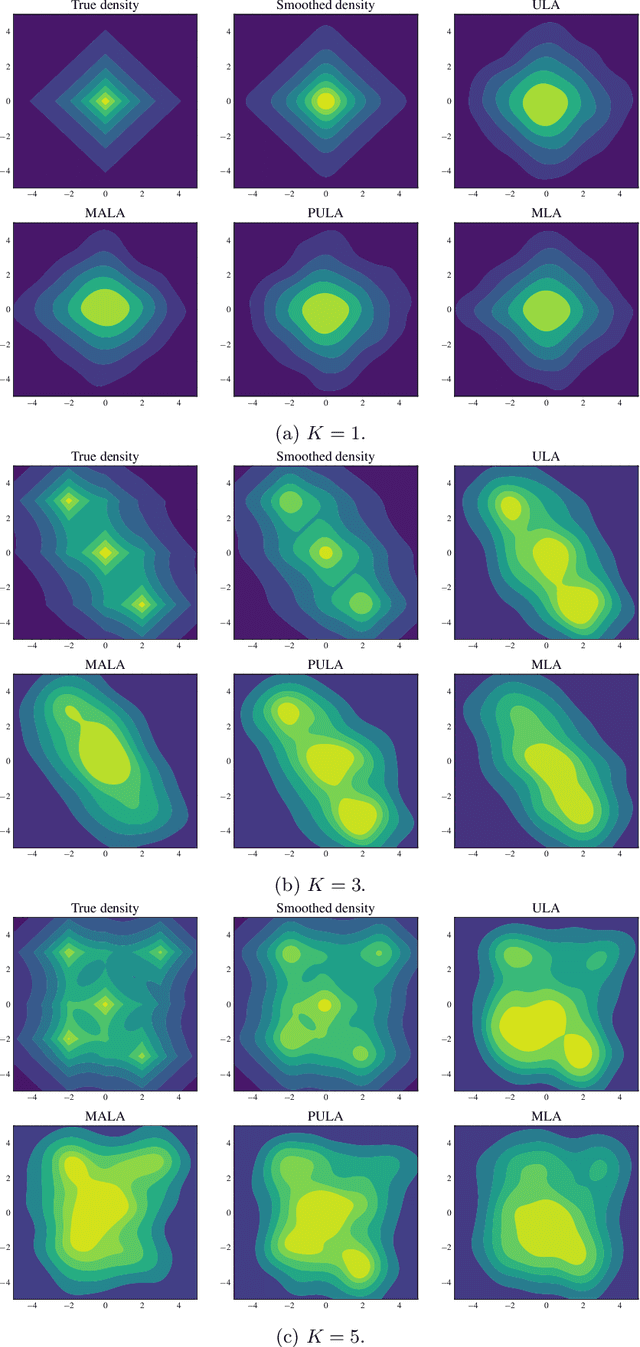
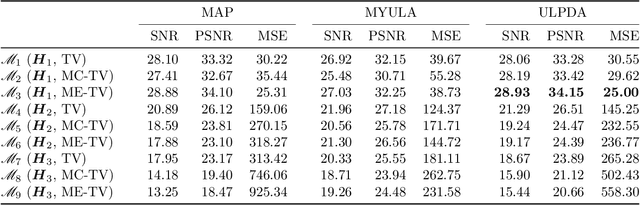
We study the problem of approximate sampling from non-log-concave distributions, e.g., Gaussian mixtures, which is often challenging even in low dimensions due to their multimodality. We focus on performing this task via Markov chain Monte Carlo (MCMC) methods derived from discretizations of the overdamped Langevin diffusions, which are commonly known as Langevin Monte Carlo algorithms. Furthermore, we are also interested in two nonsmooth cases for which a large class of proximal MCMC methods have been developed: (i) a nonsmooth prior is considered with a Gaussian mixture likelihood; (ii) a Laplacian mixture distribution. Such nonsmooth and non-log-concave sampling tasks arise from a wide range of applications to Bayesian inference and imaging inverse problems such as image deconvolution. We perform numerical simulations to compare the performance of most commonly used Langevin Monte Carlo algorithms.

COSST: Multi-organ Segmentation with Partially Labeled Datasets Using Comprehensive Supervisions and Self-training
Apr 28, 2023Deep learning models have demonstrated remarkable success in multi-organ segmentation but typically require large-scale datasets with all organs of interest annotated. However, medical image datasets are often low in sample size and only partially labeled, i.e., only a subset of organs are annotated. Therefore, it is crucial to investigate how to learn a unified model on the available partially labeled datasets to leverage their synergistic potential. In this paper, we empirically and systematically study the partial-label segmentation with in-depth analyses on the existing approaches and identify three distinct types of supervision signals, including two signals derived from ground truth and one from pseudo label. We propose a novel training framework termed COSST, which effectively and efficiently integrates comprehensive supervision signals with self-training. Concretely, we first train an initial unified model using two ground truth-based signals and then iteratively incorporate the pseudo label signal to the initial model using self-training. To mitigate performance degradation caused by unreliable pseudo labels, we assess the reliability of pseudo labels via outlier detection in latent space and exclude the most unreliable pseudo labels from each self-training iteration. Extensive experiments are conducted on six CT datasets for three partial-label segmentation tasks. Experimental results show that our proposed COSST achieves significant improvement over the baseline method, i.e., individual networks trained on each partially labeled dataset. Compared to the state-of-the-art partial-label segmentation methods, COSST demonstrates consistent superior performance on various segmentation tasks and with different training data size.
Boosting Few-Shot Text Classification via Distribution Estimation
Mar 26, 2023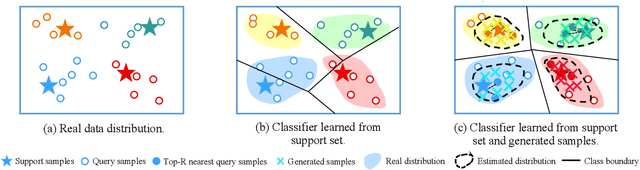
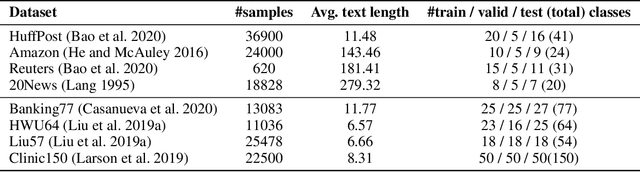
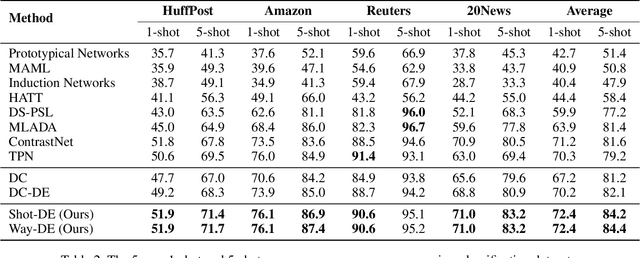
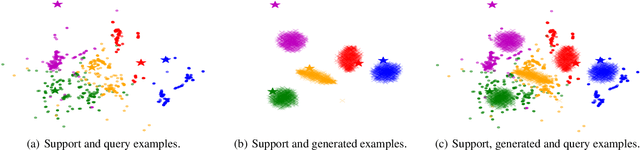
Distribution estimation has been demonstrated as one of the most effective approaches in dealing with few-shot image classification, as the low-level patterns and underlying representations can be easily transferred across different tasks in computer vision domain. However, directly applying this approach to few-shot text classification is challenging, since leveraging the statistics of known classes with sufficient samples to calibrate the distributions of novel classes may cause negative effects due to serious category difference in text domain. To alleviate this issue, we propose two simple yet effective strategies to estimate the distributions of the novel classes by utilizing unlabeled query samples, thus avoiding the potential negative transfer issue. Specifically, we first assume a class or sample follows the Gaussian distribution, and use the original support set and the nearest few query samples to estimate the corresponding mean and covariance. Then, we augment the labeled samples by sampling from the estimated distribution, which can provide sufficient supervision for training the classification model. Extensive experiments on eight few-shot text classification datasets show that the proposed method outperforms state-of-the-art baselines significantly.
SSL^2: Self-Supervised Learning meets Semi-Supervised Learning: Multiple Sclerosis Segmentation in 7T-MRI from large-scale 3T-MRI
Mar 09, 2023Automated segmentation of multiple sclerosis (MS) lesions from MRI scans is important to quantify disease progression. In recent years, convolutional neural networks (CNNs) have shown top performance for this task when a large amount of labeled data is available. However, the accuracy of CNNs suffers when dealing with few and/or sparsely labeled datasets. A potential solution is to leverage the information available in large public datasets in conjunction with a target dataset which only has limited labeled data. In this paper, we propose a training framework, SSL2 (self-supervised-semi-supervised), for multi-modality MS lesion segmentation with limited supervision. We adopt self-supervised learning to leverage the knowledge from large public 3T datasets to tackle the limitations of a small 7T target dataset. To leverage the information from unlabeled 7T data, we also evaluate state-of-the-art semi-supervised methods for other limited annotation settings, such as small labeled training size and sparse annotations. We use the shifted-window (Swin) transformer1 as our backbone network. The effectiveness of self-supervised and semi-supervised training strategies is evaluated in our in-house 7T MRI dataset. The results indicate that each strategy improves lesion segmentation for both limited training data size and for sparse labeling scenarios. The combined overall framework further improves the performance substantially compared to either of its components alone. Our proposed framework thus provides a promising solution for future data/label-hungry 7T MS studies.
Learning Human-Compatible Representations for Case-Based Decision Support
Mar 06, 2023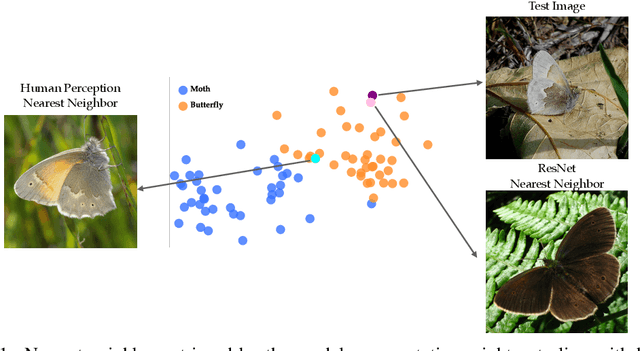
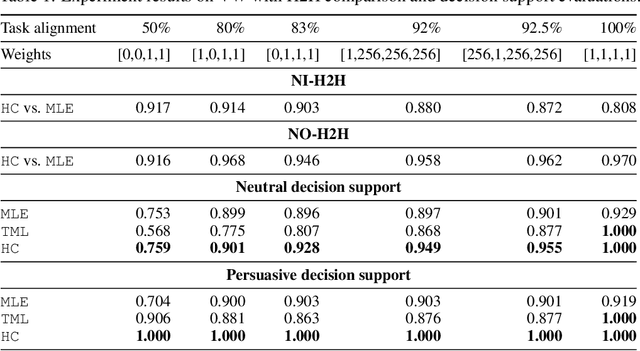


Algorithmic case-based decision support provides examples to help human make sense of predicted labels and aid human in decision-making tasks. Despite the promising performance of supervised learning, representations learned by supervised models may not align well with human intuitions: what models consider as similar examples can be perceived as distinct by humans. As a result, they have limited effectiveness in case-based decision support. In this work, we incorporate ideas from metric learning with supervised learning to examine the importance of alignment for effective decision support. In addition to instance-level labels, we use human-provided triplet judgments to learn human-compatible decision-focused representations. Using both synthetic data and human subject experiments in multiple classification tasks, we demonstrate that such representation is better aligned with human perception than representation solely optimized for classification. Human-compatible representations identify nearest neighbors that are perceived as more similar by humans and allow humans to make more accurate predictions, leading to substantial improvements in human decision accuracies (17.8% in butterfly vs. moth classification and 13.2% in pneumonia classification).
Real-Time Image Demoireing on Mobile Devices
Feb 04, 2023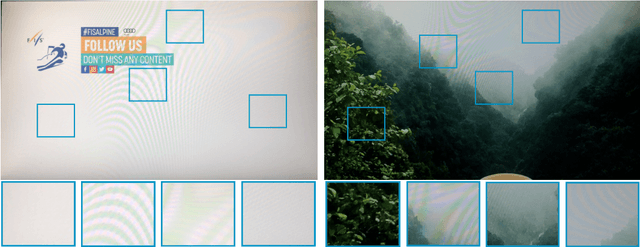
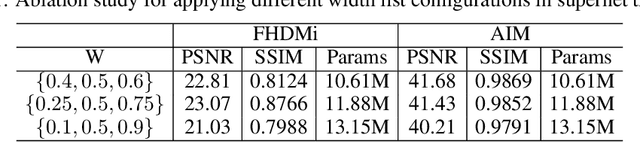
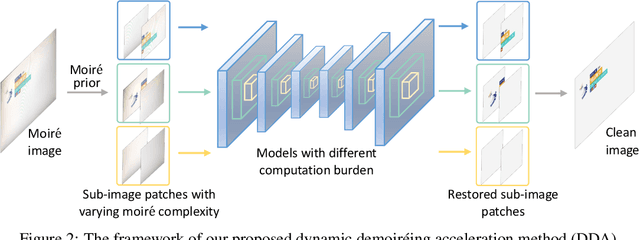
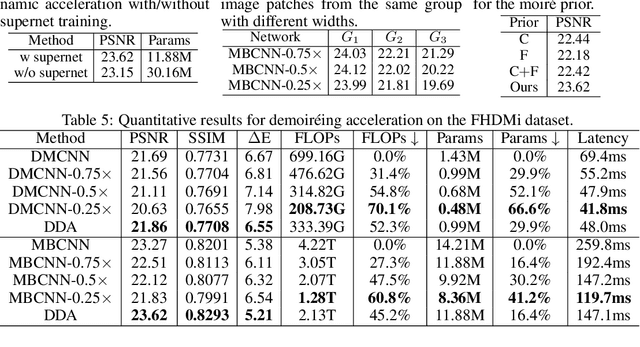
Moire patterns appear frequently when taking photos of digital screens, drastically degrading the image quality. Despite the advance of CNNs in image demoireing, existing networks are with heavy design, causing redundant computation burden for mobile devices. In this paper, we launch the first study on accelerating demoireing networks and propose a dynamic demoireing acceleration method (DDA) towards a real-time deployment on mobile devices. Our stimulus stems from a simple-yet-universal fact that moire patterns often unbalancedly distribute across an image. Consequently, excessive computation is wasted upon non-moire areas. Therefore, we reallocate computation costs in proportion to the complexity of image patches. In order to achieve this aim, we measure the complexity of an image patch by designing a novel moire prior that considers both colorfulness and frequency information of moire patterns. Then, we restore image patches with higher-complexity using larger networks and the ones with lower-complexity are assigned with smaller networks to relieve the computation burden. At last, we train all networks in a parameter-shared supernet paradigm to avoid additional parameter burden. Extensive experiments on several benchmarks demonstrate the efficacy of our proposed DDA. In addition, the acceleration evaluated on the VIVO X80 Pro smartphone equipped with a chip of Snapdragon 8 Gen 1 shows that our method can drastically reduce the inference time, leading to a real-time image demoireing on mobile devices. Source codes and models are released at https://github.com/zyxxmu/DDA
HS-GCN: Hamming Spatial Graph Convolutional Networks for Recommendation
Jan 13, 2023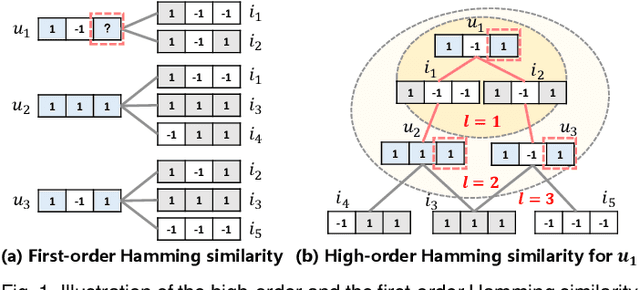
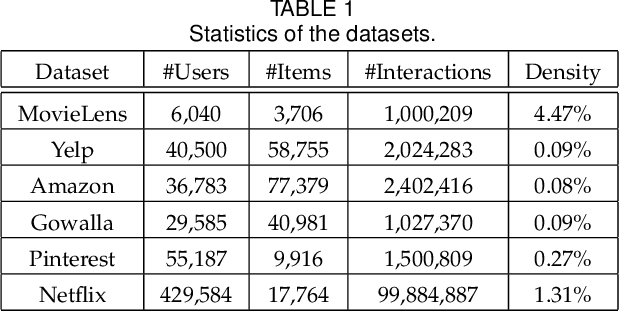
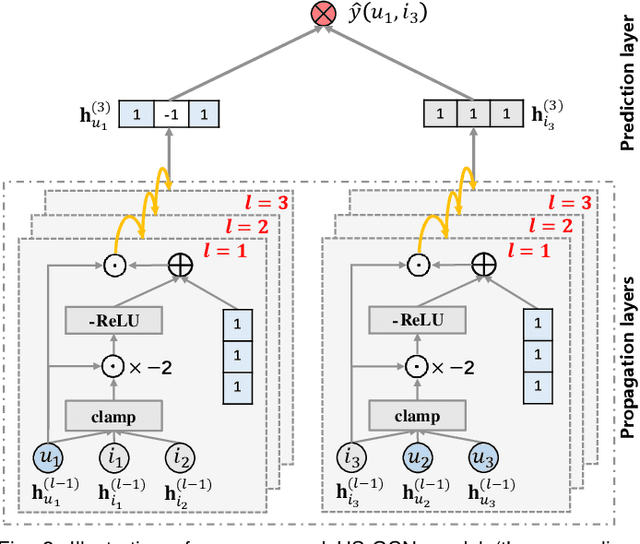
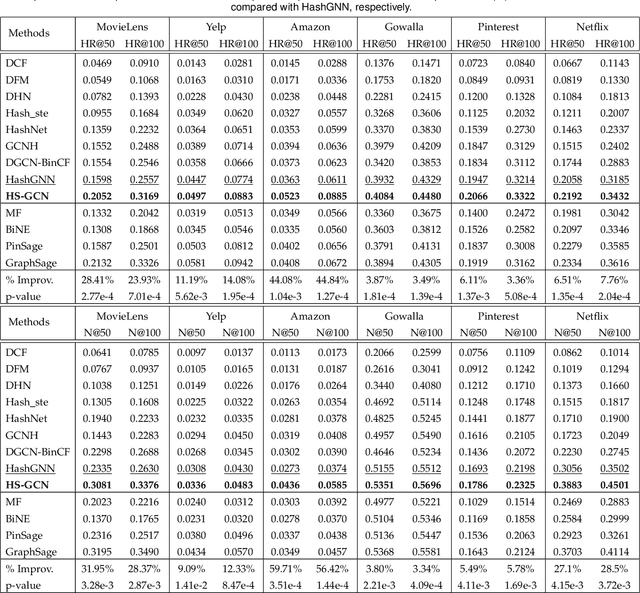
An efficient solution to the large-scale recommender system is to represent users and items as binary hash codes in the Hamming space. Towards this end, existing methods tend to code users by modeling their Hamming similarities with the items they historically interact with, which are termed as the first-order similarities in this work. Despite their efficiency, these methods suffer from the suboptimal representative capacity, since they forgo the correlation established by connecting multiple first-order similarities, i.e., the relation among the indirect instances, which could be defined as the high-order similarity. To tackle this drawback, we propose to model both the first- and the high-order similarities in the Hamming space through the user-item bipartite graph. Therefore, we develop a novel learning to hash framework, namely Hamming Spatial Graph Convolutional Networks (HS-GCN), which explicitly models the Hamming similarity and embeds it into the codes of users and items. Extensive experiments on three public benchmark datasets demonstrate that our proposed model significantly outperforms several state-of-the-art hashing models, and obtains performance comparable with the real-valued recommendation models.
Biomedical image analysis competitions: The state of current participation practice
Dec 16, 2022The number of international benchmarking competitions is steadily increasing in various fields of machine learning (ML) research and practice. So far, however, little is known about the common practice as well as bottlenecks faced by the community in tackling the research questions posed. To shed light on the status quo of algorithm development in the specific field of biomedical imaging analysis, we designed an international survey that was issued to all participants of challenges conducted in conjunction with the IEEE ISBI 2021 and MICCAI 2021 conferences (80 competitions in total). The survey covered participants' expertise and working environments, their chosen strategies, as well as algorithm characteristics. A median of 72% challenge participants took part in the survey. According to our results, knowledge exchange was the primary incentive (70%) for participation, while the reception of prize money played only a minor role (16%). While a median of 80 working hours was spent on method development, a large portion of participants stated that they did not have enough time for method development (32%). 25% perceived the infrastructure to be a bottleneck. Overall, 94% of all solutions were deep learning-based. Of these, 84% were based on standard architectures. 43% of the respondents reported that the data samples (e.g., images) were too large to be processed at once. This was most commonly addressed by patch-based training (69%), downsampling (37%), and solving 3D analysis tasks as a series of 2D tasks. K-fold cross-validation on the training set was performed by only 37% of the participants and only 50% of the participants performed ensembling based on multiple identical models (61%) or heterogeneous models (39%). 48% of the respondents applied postprocessing steps.
Interdisciplinary Discovery of Nanomaterials Based on Convolutional Neural Networks
Dec 06, 2022
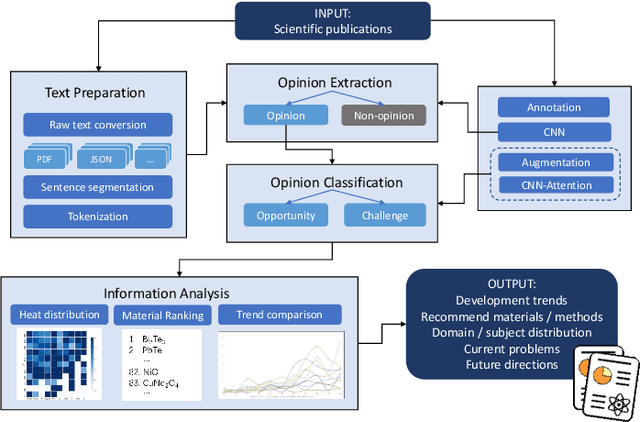
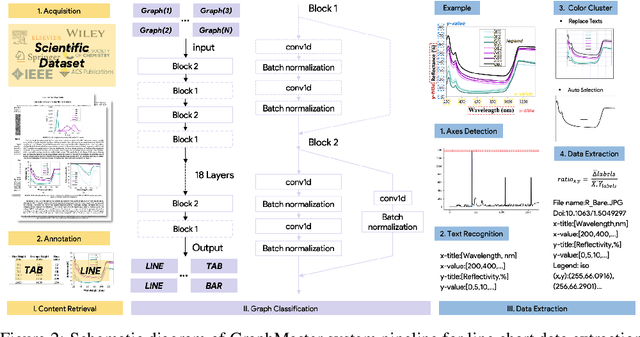
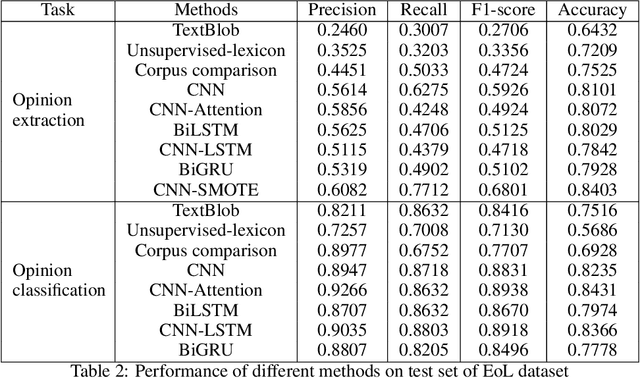
The material science literature contains up-to-date and comprehensive scientific knowledge of materials. However, their content is unstructured and diverse, resulting in a significant gap in providing sufficient information for material design and synthesis. To this end, we used natural language processing (NLP) and computer vision (CV) techniques based on convolutional neural networks (CNN) to discover valuable experimental-based information about nanomaterials and synthesis methods in energy-material-related publications. Our first system, TextMaster, extracts opinions from texts and classifies them into challenges and opportunities, achieving 94% and 92% accuracy, respectively. Our second system, GraphMaster, realizes data extraction of tables and figures from publications with 98.3\% classification accuracy and 4.3% data extraction mean square error. Our results show that these systems could assess the suitability of materials for a certain application by evaluation of synthesis insights and case analysis with detailed references. This work offers a fresh perspective on mining knowledge from scientific literature, providing a wide swatch to accelerate nanomaterial research through CNN.
Predicting Drug Repurposing Candidates and Their Mechanisms from A Biomedical Knowledge Graph
Nov 30, 2022Computational drug repurposing is a cost- and time-efficient method to identify new indications of approved or experimental drugs/compounds. It is especially critical for emerging and/or orphan diseases due to its cheaper investment and shorter research cycle compared with traditional wet-lab drug discovery approaches. However, the underlying mechanisms of action between repurposed drugs and their target diseases remain largely unknown, which is still an unsolved issue in existing repurposing methods. As such, computational drug repurposing has not been widely adopted in clinical settings. In this work, based on a massive biomedical knowledge graph, we propose a computational drug repurposing framework that not only predicts the treatment probabilities between drugs and diseases but also predicts the path-based, testable mechanisms of action (MOAs) as their biomedical explanations. Specifically, we utilize the GraphSAGE model in an unsupervised manner to integrate each entity's neighborhood information and employ a Random Forest model to predict the treatment probabilities between pairs of drugs and diseases. Moreover, we train an adversarial actor-critic reinforcement learning model to predict the potential MOA for explaining drug purposing. To encourage the model to find biologically reasonable paths, we utilize the curated molecular interactions of drugs and a PubMed-publication-based concept distance to extract potential drug MOA paths from the knowledge graph as "demonstration paths" to guide the model during the process of path-finding. Comprehensive experiments and case studies show that the proposed framework outperforms state-of-the-art baselines in both predictive performance of drug repurposing and explanatory performance of recapitulating human-curated DrugMechDB-based paths.