 Add to Chrome
 Add to Firefox
 Add to Edge
SLMJury: Can Small Language Models Judge as Well as Large Ones?
Jun 05, 2026
Large language models (LLMs) are widely used as judges for evaluating model outputs, but their high cost, latency, and opacity limit scalability. We introduce SLMJury, a framework for evaluating small language models (SLMs) as judges across two paradigms: closed-ended binary correctness and open-ended quality scoring. We benchmark 16 SLM judges (0.6B-14B parameters) from four model families across ten benchmarks: eight closed-ended tasks spanning mathematical, scientific, and general reasoning (N=64,824 judgments per configuration), plus SummEval and MT-Bench for summarization and conversational scoring. We formalize judging as a budget-conditioned function and study five dimensions. Four findings emerge. (1) The overthinking effect is domain-dependent: for most judges quick 10-token verdicts match or beat extended reasoning on mathematical judging (by 2-7% where they help), while reasoning wins on general tasks by up to 23%. (2) Domain generalization separates model families, with math-to-general accuracy gaps ranging from under 10% to nearly 40%. (3) Closed-ended and open-ended judging draw on different capabilities: the best binary judge (Phi-4) drops to rank 9 on MT-Bench, while reasoning-trained models invert this ordering. (4) Under the Reflect-Critique-Refine (RCR) debate protocol, multi-agent debate degrades accuracy across all tested configurations, whereas the top judges resist six adversarial personas with <=0.55% variance. Reliable automated evaluation does not require large proprietary models, yet no single SLM dominates. The leaderboard is available at https://anishh15.github.io/SLMJury/, and our framework code and pip package are publicly available at https://github.com/anishh15/SLMJury and https://pypi.org/project/slmjury/.

An Industrial-Scale Sequential Recommender for LinkedIn Feed Ranking
Feb 12, 2026LinkedIn Feed enables professionals worldwide to discover relevant content, build connections, and share knowledge at scale. We present Feed Sequential Recommender (Feed-SR), a transformer-based sequential ranking model for LinkedIn Feed that replaces a DCNv2-based ranker and meets strict production constraints. We detail the modeling choices, training techniques, and serving optimizations that enable deployment at LinkedIn scale. Feed-SR is currently the primary member experience on LinkedIn's Feed and shows significant improvements in member engagement (+2.10% time spent) in online A/B tests compared to the existing production model. We also describe our deployment experience with alternative sequential and LLM-based ranking architectures and why Feed-SR provided the best combination of online metrics and production efficiency.
EffGen: Enabling Small Language Models as Capable Autonomous Agents
Jan 31, 2026Most existing language model agentic systems today are built and optimized for large language models (e.g., GPT, Claude, Gemini) via API calls. While powerful, this approach faces several limitations including high token costs and privacy concerns for sensitive applications. We introduce effGen, an open-source agentic framework optimized for small language models (SLMs) that enables effective, efficient, and secure local deployment (pip install effgen). effGen makes four major contributions: (1) Enhanced tool-calling with prompt optimization that compresses contexts by 70-80% while preserving task semantics, (2) Intelligent task decomposition that breaks complex queries into parallel or sequential subtasks based on dependencies, (3) Complexity-based routing using five factors to make smart pre-execution decisions, and (4) Unified memory system combining short-term, long-term, and vector-based storage. Additionally, effGen unifies multiple agent protocols (MCP, A2A, ACP) for cross-protocol communication. Results on 13 benchmarks show effGen outperforms LangChain, AutoGen, and Smolagents with higher success rates, faster execution, and lower memory. Our results reveal that prompt optimization and complexity routing have complementary scaling behavior: optimization benefits SLMs more (11.2% gain at 1.5B vs 2.4% at 32B), while routing benefits large models more (3.6% at 1.5B vs 7.9% at 32B), providing consistent gains across all scales when combined. effGen (https://effgen.org/) is released under the MIT License, ensuring broad accessibility for research and commercial use. Our framework code is publicly available at https://github.com/ctrl-gaurav/effGen.
SoundBreak: A Systematic Study of Audio-Only Adversarial Attacks on Trimodal Models
Jan 20, 2026Multimodal foundation models that integrate audio, vision, and language achieve strong performance on reasoning and generation tasks, yet their robustness to adversarial manipulation remains poorly understood. We study a realistic and underexplored threat model: untargeted, audio-only adversarial attacks on trimodal audio-video-language models. We analyze six complementary attack objectives that target different stages of multimodal processing, including audio encoder representations, cross-modal attention, hidden states, and output likelihoods. Across three state-of-the-art models and multiple benchmarks, we show that audio-only perturbations can induce severe multimodal failures, achieving up to 96% attack success rate. We further show that attacks can be successful at low perceptual distortions (LPIPS <= 0.08, SI-SNR >= 0) and benefit more from extended optimization than increased data scale. Transferability across models and encoders remains limited, while speech recognition systems such as Whisper primarily respond to perturbation magnitude, achieving >97% attack success under severe distortion. These results expose a previously overlooked single-modality attack surface in multimodal systems and motivate defenses that enforce cross-modal consistency.
Hindsight is 20/20: Building Agent Memory that Retains, Recalls, and Reflects
Dec 14, 2025Agent memory has been touted as a dimension of growth for LLM-based applications, enabling agents that can accumulate experience, adapt across sessions, and move beyond single-shot question answering. The current generation of agent memory systems treats memory as an external layer that extracts salient snippets from conversations, stores them in vector or graph-based stores, and retrieves top-k items into the prompt of an otherwise stateless model. While these systems improve personalization and context carry-over, they still blur the line between evidence and inference, struggle to organize information over long horizons, and offer limited support for agents that must explain their reasoning. We present Hindsight, a memory architecture that treats agent memory as a structured, first-class substrate for reasoning by organizing it into four logical networks that distinguish world facts, agent experiences, synthesized entity summaries, and evolving beliefs. This framework supports three core operations -- retain, recall, and reflect -- that govern how information is added, accessed, and updated. Under this abstraction, a temporal, entity aware memory layer incrementally turns conversational streams into a structured, queryable memory bank, while a reflection layer reasons over this bank to produce answers and to update information in a traceable way. On key long-horizon conversational memory benchmarks like LongMemEval and LoCoMo, Hindsight with an open-source 20B model lifts overall accuracy from 39% to 83.6% over a full-context baseline with the same backbone and outperforms full context GPT-4o. Scaling the backbone further pushes Hindsight to 91.4% on LongMemEval and up to 89.61% on LoCoMo (vs. 75.78% for the strongest prior open system), consistently outperforming existing memory architectures on multi-session and open-domain questions.
DEBATE, TRAIN, EVOLVE: Self Evolution of Language Model Reasoning
May 21, 2025Large language models (LLMs) have improved significantly in their reasoning through extensive training on massive datasets. However, relying solely on additional data for improvement is becoming increasingly impractical, highlighting the need for models to autonomously enhance their reasoning without external supervision. In this paper, we propose Debate, Train, Evolve (DTE), a novel ground truth-free training framework that uses multi-agent debate traces to evolve a single language model. We also introduce a new prompting strategy Reflect-Critique-Refine, to improve debate quality by explicitly instructing agents to critique and refine their reasoning. Extensive evaluations on five reasoning benchmarks with six open-weight models show that our DTE framework achieve substantial improvements, with an average accuracy gain of 8.92% on the challenging GSM-PLUS dataset. Furthermore, we observe strong cross-domain generalization, with an average accuracy gain of 5.8% on all other benchmarks, suggesting that our method captures general reasoning capabilities.
Towards Reasoning Ability of Small Language Models
Feb 17, 2025Reasoning has long been viewed as an emergent property of large language models (LLMs), appearing at or above a certain scale ($\sim$100B parameters). However, recent studies challenge this assumption, showing that small language models (SLMs) can also achieve competitive reasoning performance. SLMs are increasingly favored for their efficiency and deployability. However, there is a lack of systematic study on the reasoning abilities of diverse SLMs, including those trained from scratch or derived from LLMs through quantization, pruning, and distillation. This raises a critical question: Can SLMs achieve reasoning abilities comparable to LLMs? In this work, we systematically survey, benchmark, and analyze 72 SLMs from six model families across 14 reasoning benchmarks. For reliable evaluation, we examine four evaluation methods and compare four LLM judges against human evaluations on 800 data points. We repeat all experiments three times to ensure a robust performance assessment. Additionally, we analyze the impact of different prompting strategies in small models. Beyond accuracy, we also evaluate model robustness under adversarial conditions and intermediate reasoning steps. Our findings challenge the assumption that scaling is the only way to achieve strong reasoning. Instead, we foresee a future where SLMs with strong reasoning capabilities can be developed through structured training or post-training compression. They can serve as efficient alternatives to LLMs for reasoning-intensive tasks.
From Features to Transformers: Redefining Ranking for Scalable Impact
Feb 05, 2025We present LiGR, a large-scale ranking framework developed at LinkedIn that brings state-of-the-art transformer-based modeling architectures into production. We introduce a modified transformer architecture that incorporates learned normalization and simultaneous set-wise attention to user history and ranked items. This architecture enables several breakthrough achievements, including: (1) the deprecation of most manually designed feature engineering, outperforming the prior state-of-the-art system using only few features (compared to hundreds in the baseline), (2) validation of the scaling law for ranking systems, showing improved performance with larger models, more training data, and longer context sequences, and (3) simultaneous joint scoring of items in a set-wise manner, leading to automated improvements in diversity. To enable efficient serving of large ranking models, we describe techniques to scale inference effectively using single-pass processing of user history and set-wise attention. We also summarize key insights from various ablation studies and A/B tests, highlighting the most impactful technical approaches.
LiMAML: Personalization of Deep Recommender Models via Meta Learning
Feb 23, 2024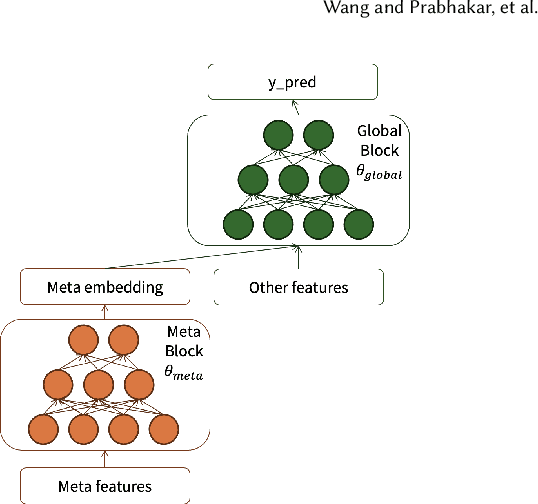
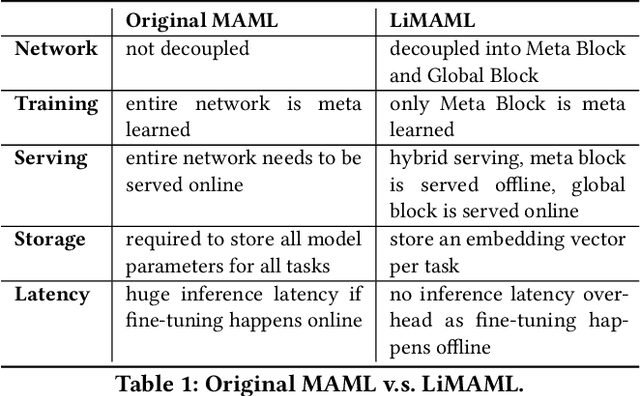
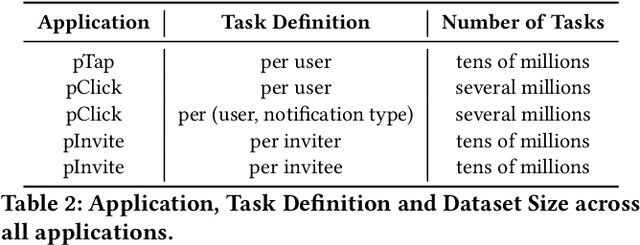

In the realm of recommender systems, the ubiquitous adoption of deep neural networks has emerged as a dominant paradigm for modeling diverse business objectives. As user bases continue to expand, the necessity of personalization and frequent model updates have assumed paramount significance to ensure the delivery of relevant and refreshed experiences to a diverse array of members. In this work, we introduce an innovative meta-learning solution tailored to the personalization of models for individual members and other entities, coupled with the frequent updates based on the latest user interaction signals. Specifically, we leverage the Model-Agnostic Meta Learning (MAML) algorithm to adapt per-task sub-networks using recent user interaction data. Given the near infeasibility of productionizing original MAML-based models in online recommendation systems, we propose an efficient strategy to operationalize meta-learned sub-networks in production, which involves transforming them into fixed-sized vectors, termed meta embeddings, thereby enabling the seamless deployment of models with hundreds of billions of parameters for online serving. Through extensive experimentation on production data drawn from various applications at LinkedIn, we demonstrate that the proposed solution consistently outperforms the baseline models of those applications, including strong baselines such as using wide-and-deep ID based personalization approach. Our approach has enabled the deployment of a range of highly personalized AI models across diverse LinkedIn applications, leading to substantial improvements in business metrics as well as refreshed experience for our members.
Multi-view Sparse Laplacian Eigenmaps for nonlinear Spectral Feature Selection
Jul 29, 2023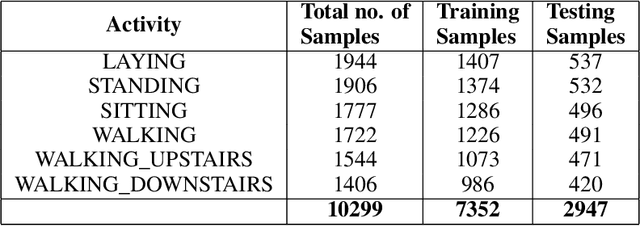
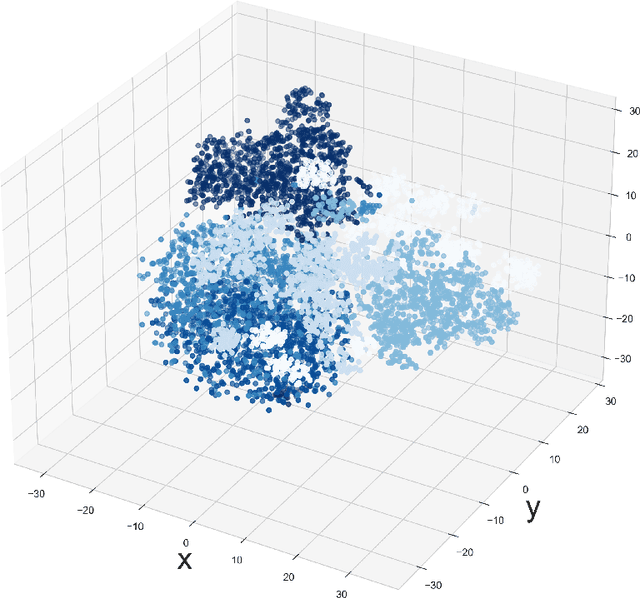

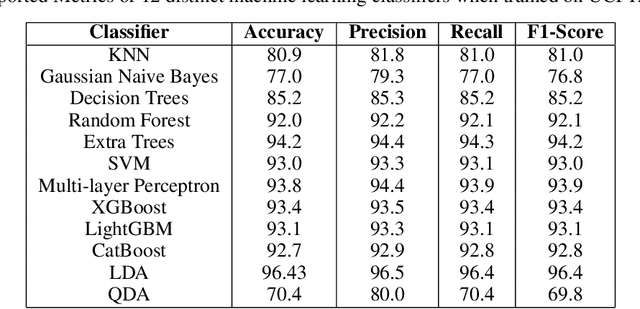
The complexity of high-dimensional datasets presents significant challenges for machine learning models, including overfitting, computational complexity, and difficulties in interpreting results. To address these challenges, it is essential to identify an informative subset of features that captures the essential structure of the data. In this study, the authors propose Multi-view Sparse Laplacian Eigenmaps (MSLE) for feature selection, which effectively combines multiple views of the data, enforces sparsity constraints, and employs a scalable optimization algorithm to identify a subset of features that capture the fundamental data structure. MSLE is a graph-based approach that leverages multiple views of the data to construct a more robust and informative representation of high-dimensional data. The method applies sparse eigendecomposition to reduce the dimensionality of the data, yielding a reduced feature set. The optimization problem is solved using an iterative algorithm alternating between updating the sparse coefficients and the Laplacian graph matrix. The sparse coefficients are updated using a soft-thresholding operator, while the graph Laplacian matrix is updated using the normalized graph Laplacian. To evaluate the performance of the MSLE technique, the authors conducted experiments on the UCI-HAR dataset, which comprises 561 features, and reduced the feature space by 10 to 90%. Our results demonstrate that even after reducing the feature space by 90%, the Support Vector Machine (SVM) maintains an error rate of 2.72%. Moreover, the authors observe that the SVM exhibits an accuracy of 96.69% with an 80% reduction in the overall feature space.