 Add to Chrome
 Add to Firefox
 Add to Edge
Improving LLM-based Global Optimization with Search Space Partitioning
May 27, 2025
Large Language Models (LLMs) have recently emerged as effective surrogate models and candidate generators within global optimization frameworks for expensive blackbox functions. Despite promising results, LLM-based methods often struggle in high-dimensional search spaces or when lacking domain-specific priors, leading to sparse or uninformative suggestions. To overcome these limitations, we propose HOLLM, a novel global optimization algorithm that enhances LLM-driven sampling by partitioning the search space into promising subregions. Each subregion acts as a ``meta-arm'' selected via a bandit-inspired scoring mechanism that effectively balances exploration and exploitation. Within each selected subregion, an LLM then proposes high-quality candidate points, without any explicit domain knowledge. Empirical evaluation on standard optimization benchmarks shows that HOLLM consistently matches or surpasses leading Bayesian optimization and trust-region methods, while substantially outperforming global LLM-based sampling strategies.

Frozen Layers: Memory-efficient Many-fidelity Hyperparameter Optimization
Apr 14, 2025As model sizes grow, finding efficient and cost-effective hyperparameter optimization (HPO) methods becomes increasingly crucial for deep learning pipelines. While multi-fidelity HPO (MF-HPO) trades off computational resources required for DL training with lower fidelity estimations, existing fidelity sources often fail under lower compute and memory constraints. We propose a novel fidelity source: the number of layers that are trained or frozen during training. For deep networks, this approach offers significant compute and memory savings while preserving rank correlations between hyperparameters at low fidelities compared to full model training. We demonstrate this in our empirical evaluation across ResNets and Transformers and additionally analyze the utility of frozen layers as a fidelity in using GPU resources as a fidelity in HPO, and for a combined MF-HPO with other fidelity sources. This contribution opens new applications for MF-HPO with hardware resources as a fidelity and creates opportunities for improved algorithms navigating joint fidelity spaces.
A Llama walks into the 'Bar': Efficient Supervised Fine-Tuning for Legal Reasoning in the Multi-state Bar Exam
Apr 07, 2025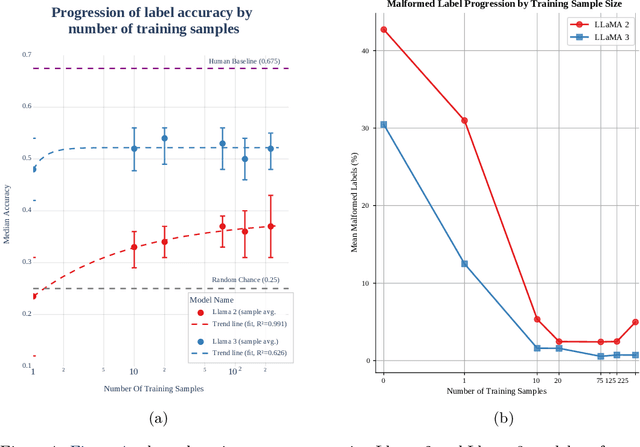
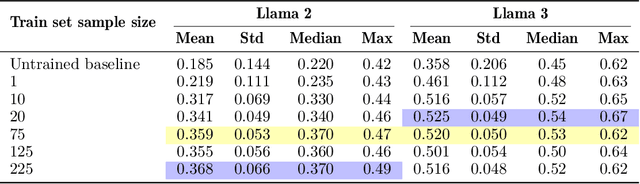
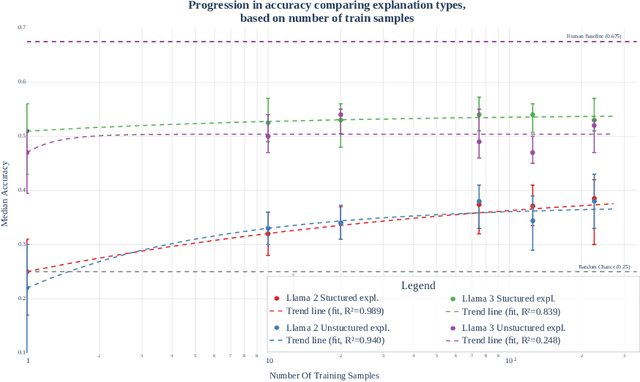
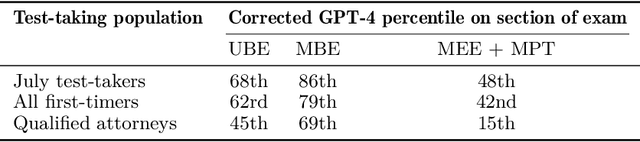
Legal reasoning tasks present unique challenges for large language models (LLMs) due to the complexity of domain-specific knowledge and reasoning processes. This paper investigates how effectively smaller language models (Llama 2 7B and Llama 3 8B) can be fine-tuned with a limited dataset of 1,514 Multi-state Bar Examination (MBE) questions to improve legal question answering accuracy. We evaluate these models on the 2022 MBE questions licensed from JD Advising, the same dataset used in the 'GPT-4 passes the Bar exam' study. Our methodology involves collecting approximately 200 questions per legal domain across 7 domains. We distill the dataset using Llama 3 (70B) to transform explanations into a structured IRAC (Issue, Rule, Application, Conclusion) format as a guided reasoning process to see if it results in better performance over the non-distilled dataset. We compare the non-fine-tuned models against their supervised fine-tuned (SFT) counterparts, trained for different sample sizes per domain, to study the effect on accuracy and prompt adherence. We also analyse option selection biases and their mitigation following SFT. In addition, we consolidate the performance across multiple variables: prompt type (few-shot vs zero-shot), answer ordering (chosen-option first vs generated-explanation first), response format (Numbered list vs Markdown vs JSON), and different decoding temperatures. Our findings show that domain-specific SFT helps some model configurations achieve close to human baseline performance, despite limited computational resources and a relatively small dataset. We release both the gathered SFT dataset and the family of Supervised Fine-tuned (SFT) adapters optimised for MBE performance. This establishes a practical lower bound on resources needed towards achieving effective legal question answering in smaller LLMs.
Unreflected Use of Tabular Data Repositories Can Undermine Research Quality
Mar 12, 2025Data repositories have accumulated a large number of tabular datasets from various domains. Machine Learning researchers are actively using these datasets to evaluate novel approaches. Consequently, data repositories have an important standing in tabular data research. They not only host datasets but also provide information on how to use them in supervised learning tasks. In this paper, we argue that, despite great achievements in usability, the unreflected usage of datasets from data repositories may have led to reduced research quality and scientific rigor. We present examples from prominent recent studies that illustrate the problematic use of datasets from OpenML, a large data repository for tabular data. Our illustrations help users of data repositories avoid falling into the traps of (1) using suboptimal model selection strategies, (2) overlooking strong baselines, and (3) inappropriate preprocessing. In response, we discuss possible solutions for how data repositories can prevent the inappropriate use of datasets and become the cornerstones for improved overall quality of empirical research studies.
EquiTabPFN: A Target-Permutation Equivariant Prior Fitted Networks
Feb 10, 2025Recent foundational models for tabular data, such as TabPFN, have demonstrated remarkable effectiveness in adapting to new tasks through in-context learning. However, these models overlook a crucial equivariance property: the arbitrary ordering of target dimensions should not influence model predictions. In this study, we identify this oversight as a source of incompressible error, termed the equivariance gap, which introduces instability in predictions. To mitigate these issues, we propose a novel model designed to preserve equivariance across output dimensions. Our experimental results indicate that our proposed model not only addresses these pitfalls effectively but also achieves competitive benchmark performance.
Transformers Boost the Performance of Decision Trees on Tabular Data across Sample Sizes
Feb 06, 2025Large language models (LLMs) perform remarkably well on tabular datasets in zero- and few-shot settings, since they can extract meaning from natural language column headers that describe features and labels. Similarly, TabPFN, a recent non-LLM transformer pretrained on numerous tables for in-context learning, has demonstrated excellent performance for dataset sizes up to a thousand samples. In contrast, gradient-boosted decision trees (GBDTs) are typically trained from scratch on each dataset without benefiting from pretraining data and must learn the relationships between columns from their entries alone since they lack natural language understanding. LLMs and TabPFN excel on small tabular datasets where a strong prior is essential, yet they are not competitive with GBDTs on medium or large datasets, since their context lengths are limited. In this paper, we propose a simple and lightweight approach for fusing large language models and TabPFN with gradient-boosted decision trees, which allows scalable GBDTs to benefit from the natural language capabilities and pretraining of transformers. We name our fusion methods LLM-Boost and PFN-Boost, respectively. While matching or surpassing the performance of the transformer at sufficiently small dataset sizes and GBDTs at sufficiently large sizes, LLM-Boost and PFN-Boost outperform both standalone components on a wide range of dataset sizes in between. We demonstrate state-of-the-art performance against numerous baselines and ensembling algorithms. We find that PFN-Boost achieves the best average performance among all methods we test for all but very small dataset sizes. We release our code at http://github.com/MayukaJ/LLM-Boost .
Gompertz Linear Units: Leveraging Asymmetry for Enhanced Learning Dynamics
Feb 05, 2025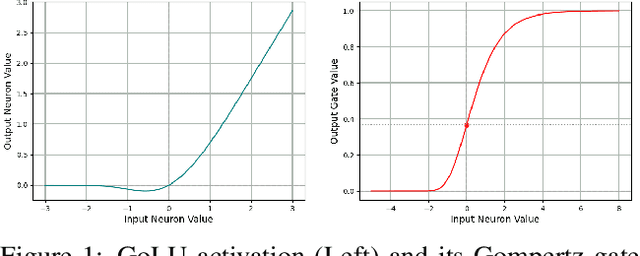

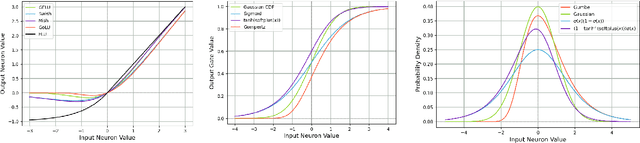
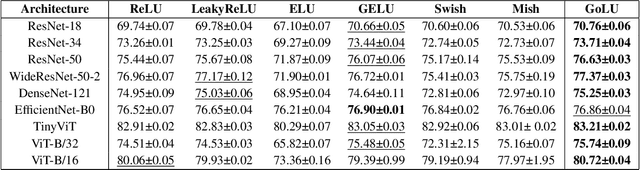
Activation functions are fundamental elements of deep learning architectures as they significantly influence training dynamics. ReLU, while widely used, is prone to the dying neuron problem, which has been mitigated by variants such as LeakyReLU, PReLU, and ELU that better handle negative neuron outputs. Recently, self-gated activations like GELU and Swish have emerged as state-of-the-art alternatives, leveraging their smoothness to ensure stable gradient flow and prevent neuron inactivity. In this work, we introduce the Gompertz Linear Unit (GoLU), a novel self-gated activation function defined as $\mathrm{GoLU}(x) = x \, \mathrm{Gompertz}(x)$, where $\mathrm{Gompertz}(x) = e^{-e^{-x}}$. The GoLU activation leverages the asymmetry in the Gompertz function to reduce variance in the latent space more effectively compared to GELU and Swish, while preserving robust gradient flow. Extensive experiments across diverse tasks, including Image Classification, Language Modeling, Semantic Segmentation, Object Detection, Instance Segmentation, and Diffusion, highlight GoLU's superior performance relative to state-of-the-art activation functions, establishing GoLU as a robust alternative to existing activation functions.
The Tabular Foundation Model TabPFN Outperforms Specialized Time Series Forecasting Models Based on Simple Features
Jan 06, 2025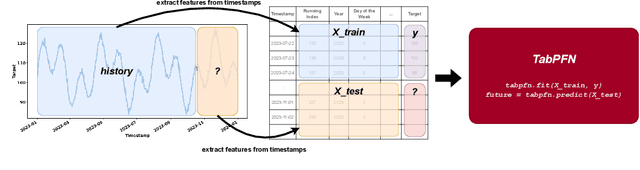
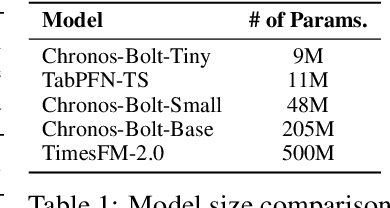
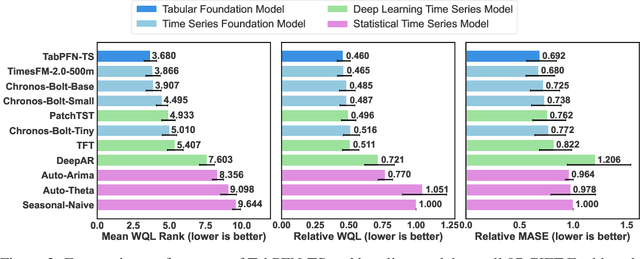
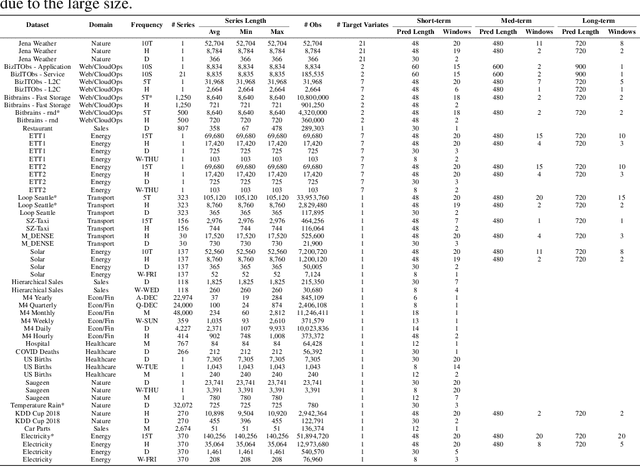
Foundation models have become popular in forecasting due to their ability to make accurate predictions, even with minimal fine-tuning on specific datasets. In this paper, we demonstrate how the newly released regression variant of TabPFN, a general tabular foundation model, can be applied to time series forecasting. We propose a straightforward approach, TabPFN-TS, which pairs TabPFN with simple feature engineering to achieve strong forecasting performance. Despite its simplicity and with only 11M parameters, TabPFN-TS outperforms Chronos-Mini, a model of similar size, and matches or even slightly outperforms Chronos-Large, which has 65-fold more parameters. A key strength of our method lies in its reliance solely on artificial data during pre-training, avoiding the need for large training datasets and eliminating the risk of benchmark contamination.
Unlocking State-Tracking in Linear RNNs Through Negative Eigenvalues
Nov 19, 2024


Linear Recurrent Neural Networks (LRNNs) such as Mamba, RWKV, GLA, mLSTM, and DeltaNet have emerged as efficient alternatives to Transformers in large language modeling, offering linear scaling with sequence length and improved training efficiency. However, LRNNs struggle to perform state-tracking which may impair performance in tasks such as code evaluation or tracking a chess game. Even parity, the simplest state-tracking task, which non-linear RNNs like LSTM handle effectively, cannot be solved by current LRNNs. Recently, Sarrof et al. (2024) demonstrated that the failure of LRNNs like Mamba to solve parity stems from restricting the value range of their diagonal state-transition matrices to $[0, 1]$ and that incorporating negative values can resolve this issue. We extend this result to non-diagonal LRNNs, which have recently shown promise in models such as DeltaNet. We prove that finite precision LRNNs with state-transition matrices having only positive eigenvalues cannot solve parity, while complex eigenvalues are needed to count modulo $3$. Notably, we also prove that LRNNs can learn any regular language when their state-transition matrices are products of identity minus vector outer product matrices, each with eigenvalues in the range $[-1, 1]$. Our empirical results confirm that extending the eigenvalue range of models like Mamba and DeltaNet to include negative values not only enables them to solve parity but consistently improves their performance on state-tracking tasks. Furthermore, pre-training LRNNs with an extended eigenvalue range for language modeling achieves comparable performance and stability while showing promise on code and math data. Our work enhances the expressivity of modern LRNNs, broadening their applicability without changing the cost of training or inference.
Drift-Resilient TabPFN: In-Context Learning Temporal Distribution Shifts on Tabular Data
Nov 15, 2024



While most ML models expect independent and identically distributed data, this assumption is often violated in real-world scenarios due to distribution shifts, resulting in the degradation of machine learning model performance. Until now, no tabular method has consistently outperformed classical supervised learning, which ignores these shifts. To address temporal distribution shifts, we present Drift-Resilient TabPFN, a fresh approach based on In-Context Learning with a Prior-Data Fitted Network that learns the learning algorithm itself: it accepts the entire training dataset as input and makes predictions on the test set in a single forward pass. Specifically, it learns to approximate Bayesian inference on synthetic datasets drawn from a prior that specifies the model's inductive bias. This prior is based on structural causal models (SCM), which gradually shift over time. To model shifts of these causal models, we use a secondary SCM, that specifies changes in the primary model parameters. The resulting Drift-Resilient TabPFN can be applied to unseen data, runs in seconds on small to moderately sized datasets and needs no hyperparameter tuning. Comprehensive evaluations across 18 synthetic and real-world datasets demonstrate large performance improvements over a wide range of baselines, such as XGB, CatBoost, TabPFN, and applicable methods featured in the Wild-Time benchmark. Compared to the strongest baselines, it improves accuracy from 0.688 to 0.744 and ROC AUC from 0.786 to 0.832 while maintaining stronger calibration. This approach could serve as significant groundwork for further research on out-of-distribution prediction.