 Add to Chrome
 Add to Firefox
 Add to Edge
How Do Practitioners Build SE Agents? Insights from a Mixed-Methods Study
Jul 12, 2026
The rise of Software Engineering (SE) agents, i.e., LLM-based agents that can understand large codebases and carry out engineering tasks with limited human intervention, has been marked by rapid advances and adoption, but little is known about how developers build these systems in practice: existing studies mine repositories or examine deployment, but few investigate how SE agents are constructed. Through semi-structured interviews with 20 practitioners from 12 organizations and an online survey of 80 practitioners, this paper is the first to study how SE processes are changing in the development of SE agents and what challenges developers face. We find that as implementation becomes cheaper, bottlenecks shift rather than disappear: long-standing non-coding work such as requirements, coordination, review, and deployment becomes more visible, while reviewing and evaluating agent output becomes new and central. We characterize a seven-stage workflow and a shift toward evaluation-driven development, in which evaluation steers iteration and specifications become versioned artifacts read by both humans and agents. We further identify six challenges that teams face, together with the practices they adopt to address them, including unreliable evaluation signals, comprehension debt as code outpaces understanding, and behavioral changes introduced by provider-side model updates.

Failure as a Process: An Anatomy of CLI Coding Agent Trajectories
Jul 10, 2026Large language model (LLM) coding agents are increasingly deployed to autonomously perform software engineering tasks in terminal-based environments, making their reliability a growing concern. Existing empirical studies investigate why coding agents fail, yet they largely treat failure as a final outcome rather than a temporal process, providing limited insight into how failures emerge, evolve, and become unrecoverable. We present the first large-scale empirical study of CLI coding-agent failure trajectories, introducing a process-oriented framework that analyzes failure through its onset, evolution, and recovery across execution trajectories. We first collect 3,843 execution trajectories generated by seven frontier models across three coding-agent scaffolds (OpenHands, MiniSWE, and Terminus2) on Terminal-Bench, then carefully filter them to obtain 1,794 complete and valid trajectories for manual annotation (over 63,000 execution steps), from which we derive 14 findings spanning failure occurrence, root causes, recovery, and cross-system consistency. Our findings show that coding-agent failures are predominantly driven by epistemic errors, typically begin within the first few execution steps, and often remain hidden until recovery is no longer possible, suggesting that improving coding-agent reliability requires earlier validation and intervention rather than relying solely on final-outcome evaluation.
TerminalWorld: Benchmarking Agents on Real-World Terminal Tasks
May 21, 2026We introduce TerminalWorld, a scalable data engine that automatically reverse-engineers high-fidelity evaluation tasks from "in-the-wild" terminal recordings. Processing 80,870 terminal recordings, the engine yields a full benchmark of 1,530 validated tasks, spanning 18 real-world categories, ranging from short everyday operations to workflows exceeding 50 steps, and covering 1,280 unique commands. From these, we curate a Verified subset of 200 representative, manually reviewed tasks. Comprehensive benchmarking on TerminalWorld-Verified across eight frontier models and six agents reveals that current systems still struggle with authentic terminal workflows, achieving a maximum pass rate of only 62.5%. Moreover, TerminalWorld captures real-world terminal capabilities distinct from existing expert-curated benchmarks (e.g., Terminal-Bench), with only a weak correlation to their scores (Pearson r=0.20). The automated engine makes TerminalWorld authentic and scalable by construction, enabling it to evaluate agents in real-world terminal environments as developer practices evolve. Data and code are available at https://github.com/EuniAI/TerminalWorld.
SkillMOO: Multi-Objective Optimization of Agent Skills for Software Engineering
Apr 10, 2026Agent skills provide modular, task-specific guidance for LLM- based coding agents, but manually tuning skill bundles to balance success rate, cost, and runtime is expensive and fragile. We present SkillMOO, a multi-objective optimization framework that automatically evolves skill bundles using LLM-proposed edits and NSGA-II survivor selection: a solver agent evaluates candidate skill bundles on coding tasks and an optimizer agent proposes bundle edits based on failure analysis. On three SkillsBench software engineering tasks, SkillMOO improves pass rate by up to 131% while reducing cost up to 32% relative to the best baseline per task at low optimization overhead. Pattern analysis reveals pruning and substitution as primary drivers of improvement, suggesting effective bundles favor minimal, focused content over accumulated instructions.
Generative AI for Testing of Autonomous Driving Systems: A Survey
Aug 27, 2025Autonomous driving systems (ADS) have been an active area of research, with the potential to deliver significant benefits to society. However, before large-scale deployment on public roads, extensive testing is necessary to validate their functionality and safety under diverse driving conditions. Therefore, different testing approaches are required, and achieving effective and efficient testing of ADS remains an open challenge. Recently, generative AI has emerged as a powerful tool across many domains, and it is increasingly being applied to ADS testing due to its ability to interpret context, reason about complex tasks, and generate diverse outputs. To gain a deeper understanding of its role in ADS testing, we systematically analyzed 91 relevant studies and synthesized their findings into six major application categories, primarily centered on scenario-based testing of ADS. We also reviewed their effectiveness and compiled a wide range of datasets, simulators, ADS, metrics, and benchmarks used for evaluation, while identifying 27 limitations. This survey provides an overview and practical insights into the use of generative AI for testing ADS, highlights existing challenges, and outlines directions for future research in this rapidly evolving field.
When Prompts Go Wrong: Evaluating Code Model Robustness to Ambiguous, Contradictory, and Incomplete Task Descriptions
Jul 27, 2025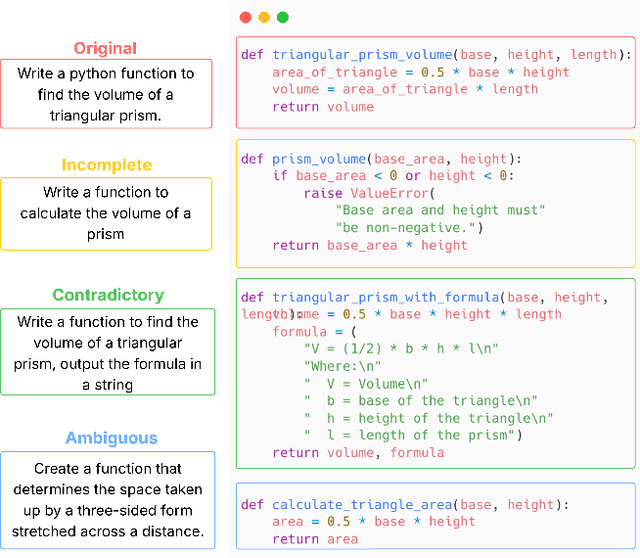
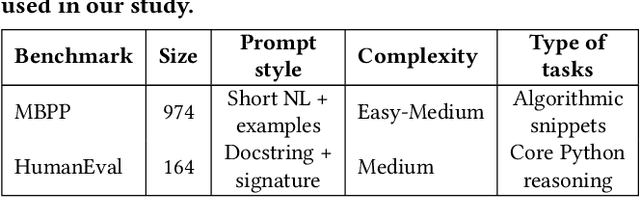
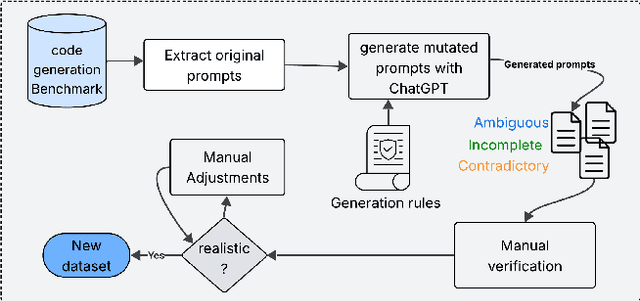
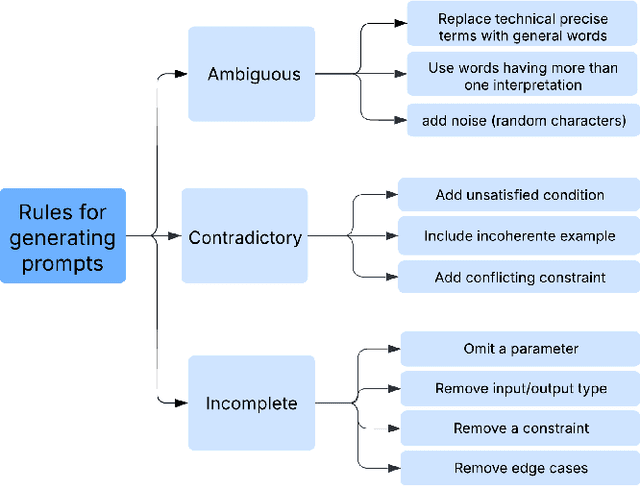
Large Language Models (LLMs) have demonstrated impressive performance in code generation tasks under idealized conditions, where task descriptions are clear and precise. However, in practice, task descriptions frequently exhibit ambiguity, incompleteness, or internal contradictions. In this paper, we present the first empirical study examining the robustness of state-of-the-art code generation models when faced with such unclear task descriptions. We extend the HumanEval and MBPP benchmarks by systematically introducing realistic task descriptions flaws through guided mutation strategies, producing a dataset that mirrors the messiness of informal developer instructions. We evaluate multiple LLMs of varying sizes and architectures, analyzing their functional correctness and failure modes across task descriptions categories. Our findings reveal that even minor imperfections in task description phrasing can cause significant performance degradation, with contradictory task descriptions resulting in numerous logical errors. Moreover, while larger models tend to be more resilient than smaller variants, they are not immune to the challenges posed by unclear requirements. We further analyze semantic error patterns and identify correlations between description clarity, model behavior, and error types. Our results underscore the critical need for developing LLMs that are not only powerful but also robust to the imperfections inherent in natural user tasks, highlighting important considerations for improving model training strategies, designing more realistic evaluation benchmarks, and ensuring reliable deployment in practical software development environments.
How Do Generative Models Draw a Software Engineer? A Case Study on Stable Diffusion Bias
Jan 15, 2025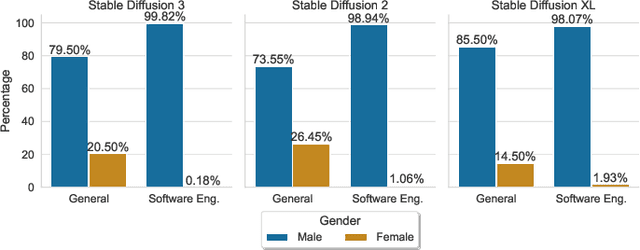
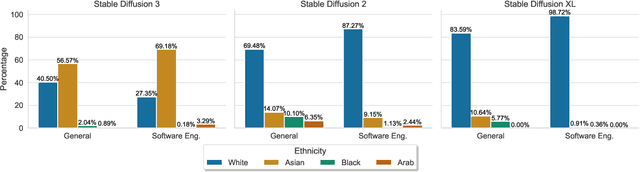
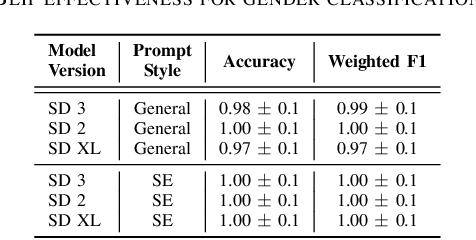
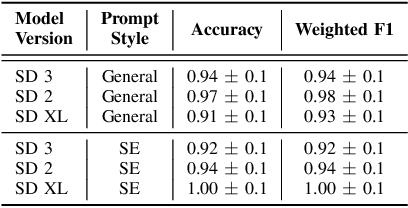
Generative models are nowadays widely used to generate graphical content used for multiple purposes, e.g. web, art, advertisement. However, it has been shown that the images generated by these models could reinforce societal biases already existing in specific contexts. In this paper, we focus on understanding if this is the case when one generates images related to various software engineering tasks. In fact, the Software Engineering (SE) community is not immune from gender and ethnicity disparities, which could be amplified by the use of these models. Hence, if used without consciousness, artificially generated images could reinforce these biases in the SE domain. Specifically, we perform an extensive empirical evaluation of the gender and ethnicity bias exposed by three versions of the Stable Diffusion (SD) model (a very popular open-source text-to-image model) - SD 2, SD XL, and SD 3 - towards SE tasks. We obtain 6,720 images by feeding each model with two sets of prompts describing different software-related tasks: one set includes the Software Engineer keyword, and one set does not include any specification of the person performing the task. Next, we evaluate the gender and ethnicity disparities in the generated images. Results show how all models are significantly biased towards male figures when representing software engineers. On the contrary, while SD 2 and SD XL are strongly biased towards White figures, SD 3 is slightly more biased towards Asian figures. Nevertheless, all models significantly under-represent Black and Arab figures, regardless of the prompt style used. The results of our analysis highlight severe concerns about adopting those models to generate content for SE tasks and open the field for future research on bias mitigation in this context.
On the Compression of Language Models for Code: An Empirical Study on CodeBERT
Dec 18, 2024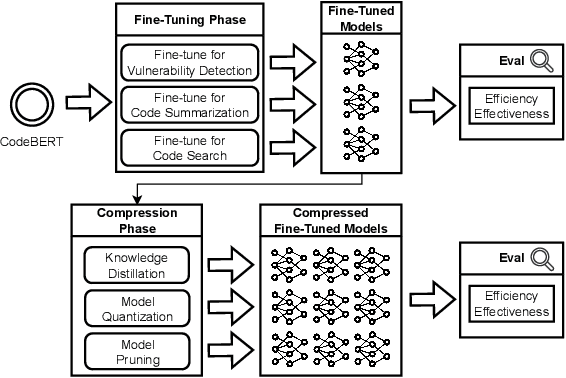
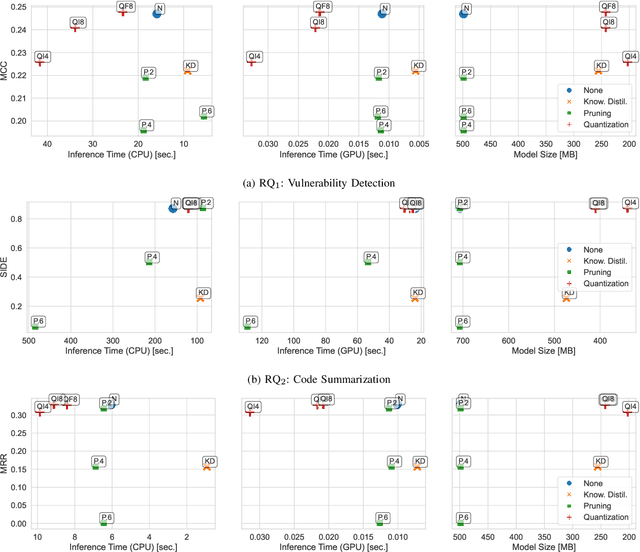
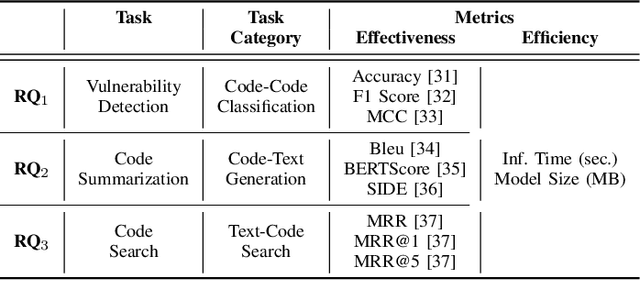
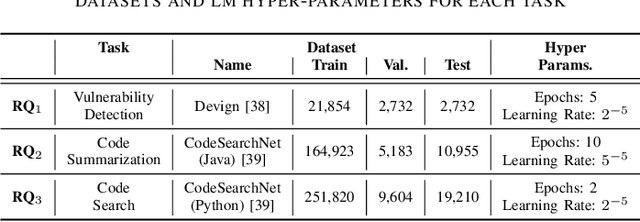
Language models have proven successful across a wide range of software engineering tasks, but their significant computational costs often hinder their practical adoption. To address this challenge, researchers have begun applying various compression strategies to improve the efficiency of language models for code. These strategies aim to optimize inference latency and memory usage, though often at the cost of reduced model effectiveness. However, there is still a significant gap in understanding how these strategies influence the efficiency and effectiveness of language models for code. Here, we empirically investigate the impact of three well-known compression strategies -- knowledge distillation, quantization, and pruning -- across three different classes of software engineering tasks: vulnerability detection, code summarization, and code search. Our findings reveal that the impact of these strategies varies greatly depending on the task and the specific compression method employed. Practitioners and researchers can use these insights to make informed decisions when selecting the most appropriate compression strategy, balancing both efficiency and effectiveness based on their specific needs.
Diversity Drives Fairness: Ensemble of Higher Order Mutants for Intersectional Fairness of Machine Learning Software
Dec 11, 2024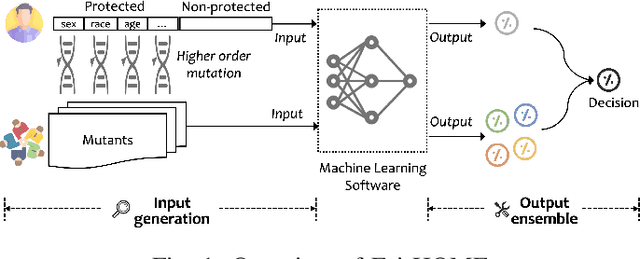
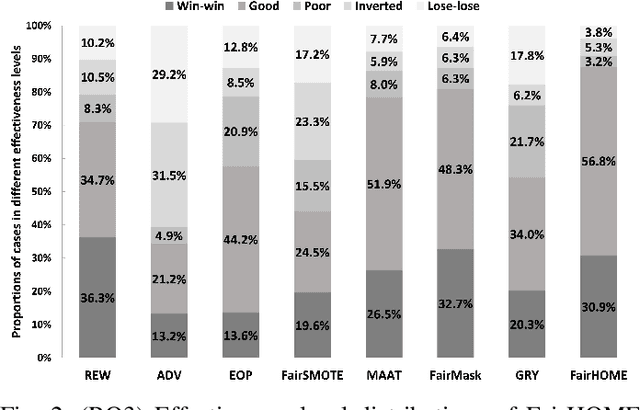

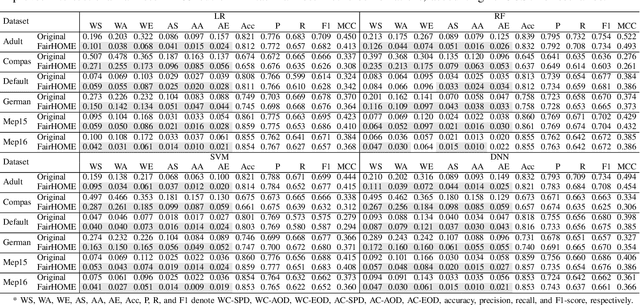
Intersectional fairness is a critical requirement for Machine Learning (ML) software, demanding fairness across subgroups defined by multiple protected attributes. This paper introduces FairHOME, a novel ensemble approach using higher order mutation of inputs to enhance intersectional fairness of ML software during the inference phase. Inspired by social science theories highlighting the benefits of diversity, FairHOME generates mutants representing diverse subgroups for each input instance, thus broadening the array of perspectives to foster a fairer decision-making process. Unlike conventional ensemble methods that combine predictions made by different models, FairHOME combines predictions for the original input and its mutants, all generated by the same ML model, to reach a final decision. Notably, FairHOME is even applicable to deployed ML software as it bypasses the need for training new models. We extensively evaluate FairHOME against seven state-of-the-art fairness improvement methods across 24 decision-making tasks using widely adopted metrics. FairHOME consistently outperforms existing methods across all metrics considered. On average, it enhances intersectional fairness by 47.5%, surpassing the currently best-performing method by 9.6 percentage points.
Exploring LLM-Driven Explanations for Quantum Algorithms
Sep 26, 2024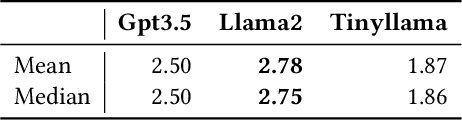
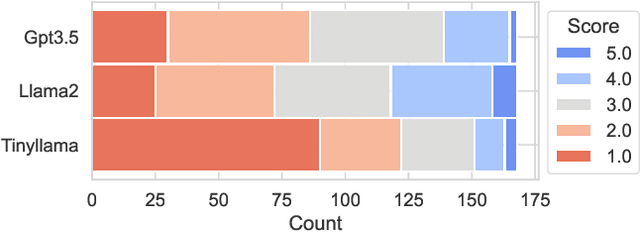
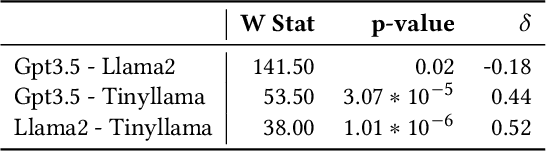
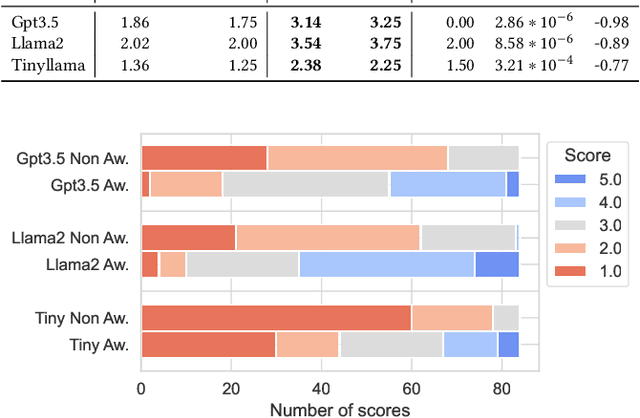
Background: Quantum computing is a rapidly growing new programming paradigm that brings significant changes to the design and implementation of algorithms. Understanding quantum algorithms requires knowledge of physics and mathematics, which can be challenging for software developers. Aims: In this work, we provide a first analysis of how LLMs can support developers' understanding of quantum code. Method: We empirically analyse and compare the quality of explanations provided by three widely adopted LLMs (Gpt3.5, Llama2, and Tinyllama) using two different human-written prompt styles for seven state-of-the-art quantum algorithms. We also analyse how consistent LLM explanations are over multiple rounds and how LLMs can improve existing descriptions of quantum algorithms. Results: Llama2 provides the highest quality explanations from scratch, while Gpt3.5 emerged as the LLM best suited to improve existing explanations. In addition, we show that adding a small amount of context to the prompt significantly improves the quality of explanations. Finally, we observe how explanations are qualitatively and syntactically consistent over multiple rounds. Conclusions: This work highlights promising results, and opens challenges for future research in the field of LLMs for quantum code explanation. Future work includes refining the methods through prompt optimisation and parsing of quantum code explanations, as well as carrying out a systematic assessment of the quality of explanations.