 Add to Chrome
 Add to Firefox
 Add to Edge
t-STEP: An interpretable model for Total Electron Content predictions and irregularities estimations
Jun 28, 2026
Earth system infrastructures relying on satellite-based technologies, such as Global Positioning System (GPS) communications, are affected by ionospheric Total Electron Content (TEC) gradients. Modeling these gradients under physical constraints remains challenging due to their dynamic and transient nature. While existing machine learning (ML) models can predict hourly TEC variations, it remains unclear whether their temporal resolution is sufficient to preserve small-scale TEC irregularities within predicted signals. To address this gap, we introduce an interpretable ML-based model, t-STEP, designed to predict TEC at a 30-second resolution and estimate irregularity signatures from the modeled signals. This high cadence enables the derivation of Rate of TEC changes (ROT) and the ROT Index (ROTI) as diagnostic indicators of ionospheric variability. The model is developed using GPS observations from solar cycle 24 at a station located at 5.49°S, 47.49°W. A multi-metric evaluation framework, including dynamic time warping, is used for robustness assessment, while SHAP (SHapley Additive exPlanations) provides insight into feature contributions. The 30-second TEC predictions achieve 91% accuracy with a mean absolute error (MAE) of 4.38 TECU during high solar activity (2015). Compared with the International Reference Ionosphere (IRI-2020), the hourly model improves accuracy by 35%, reduces absolute errors by 57%, and increases prediction skill by 54%. More importantly, the 30-second model captures TEC irregularity dynamics and morphologies during geomagnetic storms of different intensities, outperforming an attention-based Long Short-Term Memory model under the same experimental conditions. This study demonstrates the potential of a single TEC prediction framework for scalable irregularity monitoring without requiring separate models for individual transient events.
* 40 pages, 15 figures. Note that the article has been published in the Earth Science Informatics Journal

Privacy Vulnerabilities of Attention Layers in Tabular Foundation Models and Protection of High-Risk Queries
Jun 24, 2026Tabular foundation models are commonly assumed to present limited privacy concerns as they are often pre-trained on large collections of synthetic data. However, these models leverage in-context learning, where sensitive records may be provided directly at inference time as labelled context examples. In this paper, we demonstrate that predictions generated via the attention mechanism leak sufficient information to enable effective Membership Inference Attacks (MIAs). To highlight this vulnerability, we propose AMIA (Attention-based Membership Inference Attack), a shadow-model-free attack that exploits the concentration of transformer attention patterns. Our results show that attention mechanisms reveal strong membership signals, which exceed classical confidence-based attacks, achieving an average gain of 7.7\%, specially in low false-positive regimes. To mitigate this risk, we introduce an inference-time defence inspired by $k$-anonymity principles. This approach reduces the uniqueness of context-key representations without introducing random noise or retraining the model. By targeting only high-risk queries identified through AMIA scores, the defence substantially reduces membership leakage of this attack by an average of 50\% and 25\% against confidence-based attacks, while preserving predictive utility with only 3.9\% performance degradation. Beyond showing that context examples are vulnerable, we further demonstrate that fine-tuning introduces an additional source of privacy risk. In particular, samples whose prediction confidence increases after fine-tuning become more susceptible to MIAs, indicating that fine-tuning can amplify memorisation and expose sensitive training information through confidence shifts.
Measuring Cross-Modal Synergy: A Benchmark for VLM Explainability
May 21, 2026Vision-Language Models (VLMs) map complex visual inputs to semantic spaces, but interpreting the cross-modal reasoning of VLMs currently relies on post-hoc explainers evaluated via unimodal perturbation metrics. We expose a limitation in this paradigm: because multimodal datasets contain language priors and modality biases, VLMs frequently exhibit cross-modal redundancy, allowing them to answer visual queries using text alone. Consequently, unimodal metrics penalize faithful explainers, triggering an evaluation collapse where visual and textual rankings fundamentally contradict each other. %(Kendall's $τ= -0.06$). To resolve this, we introduce Synergistic Faithfulness ($\mathcal{F}_{syn}$), a scalable metric rooted in the Shapley Interaction Index that strictly isolates the joint Harsanyi dividend between modalities, serving as a highly accurate surrogate ($ρ= 0.92$) while achieving a $24\times$ computational speedup. Evaluating 8 distinct XAI methods across 3 VLM architectures and 3 benchmark datasets, reveals that explainers proposed for VLMs heavily over-index on visual salience and significantly underperform adapted attention-based methods in capturing true cross-modal synergy. By decoupling visual plausibility from cross-modal faithfulness, this work provides a rigorous evaluation framework required to safely audit VLM reasoning in high-stakes deployments.
Learning Generalizable Multimodal Representations for Software Vulnerability Detection
Apr 28, 2026Source code and its accompanying comments are complementary yet naturally aligned modalities-code encodes structural logic while comments capture developer intent. However, existing vulnerability detection methods mostly rely on single-modality code representations, overlooking the complementary semantic information embedded in comments and thus limiting their generalization across complex code structures and logical relationships. To address this, we propose MultiVul, a multimodal contrastive framework that aligns code and comment representations through dual similarity learning and consistency regularization, augmented with diverse code-text pairs to improve robustness. Experiments on widely adopted DiverseVul and Devign datasets across four large language models (LLMs) (i.e., DeepSeek-Coder-6.7B, Qwen2.5-Coder-7B, StarCoder2-7B, and CodeLlama-7B) show that MultiVul achieves up to 27.07% F1 improvement over prompting-based methods and 13.37% over code-only Fine-Tuning, while maintaining comparable inference efficiency.
Defective Task Descriptions in LLM-Based Code Generation: Detection and Analysis
Apr 27, 2026Large language models are widely used for code generation, yet they rely on an implicit assumption that the task descriptions are sufficiently detailed and well-formed. However, in practice, users may provide defective descriptions, which can have a strong effect on code correctness. To address this issue, we develop SpecValidator, a lightweight classifier based on a small model that has been parameter-efficiently finetuned, to automatically detect task description defects. We evaluate SpecValidator on three types of defects, Lexical Vagueness, Under-Specification and Syntax-Formatting on 3 benchmarks with task descriptions of varying structure and complexity. Our results show that SpecValidator achieves defect detection of F1 = 0.804 and MCC = 0.745, significantly outperforming GPT-5-mini (F1 = 0.469 and MCC = 0.281) and Claude Sonnet 4 (F1 = 0.518 and MCC = 0.359). Perhaps more importantly, our analysis indicates that SpecValidator can generalize to unseen issues and detect unknown Under-Specification defects in the original (real) descriptions of the benchmarks used. Our results also show that the robustness of LLMs in task description defects depends primarily on the type of defect and the characteristics of the task description, rather than the capacity of the model, with Under-Specification defects being the most severe. We further found that benchmarks with richer contextual grounding, such as LiveCodeBench, exhibit substantially greater resilience, highlighting the importance of structured task descriptions for reliable LLM-based code generation.
Physics Informed Reinforcement Learning with Gibbs Priors for Topology Control in Power Grids
Apr 02, 2026Topology control for power grid operation is a challenging sequential decision making problem because the action space grows combinatorially with the size of the grid and action evaluation through simulation is computationally expensive. We propose a physics-informed Reinforcement Learning framework that combines semi-Markov control with a Gibbs prior, that encodes the system's physics, over the action space. The decision is only taken when the grid enters a hazardous regime, while a graph neural network surrogate predicts the post action overload risk of feasible topology actions. These predictions are used to construct a physics-informed Gibbs prior that both selects a small state-dependent candidate set and reweights policy logits before action selection. In this way, our method reduces exploration difficulty and online simulation cost while preserving the flexibility of a learned policy. We evaluate the approach in three realistic benchmark environments of increasing difficulty. Across all settings, the proposed method achieves a strong balance between control quality and computational efficiency: it matches oracle-level performance while being approximately $6\times$ faster on the first benchmark, reaches $94.6\%$ of oracle reward with roughly $200\times$ lower decision time on the second one, and on the most challenging benchmark improves over a PPO baseline by up to $255\%$ in reward and $284\%$ in survived steps while remaining about $2.5\times$ faster than a strong specialized engineering baseline. These results show that our method provides an effective mechanism for topology control in power grids.
Can Large Language Models Reason and Optimize Under Constraints?
Mar 24, 2026Large Language Models (LLMs) have demonstrated great capabilities across diverse natural language tasks; yet their ability to solve abstraction and optimization problems with constraints remains scarcely explored. In this paper, we investigate whether LLMs can reason and optimize under the physical and operational constraints of Optimal Power Flow (OPF) problem. We introduce a challenging evaluation setup that requires a set of fundamental skills such as reasoning, structured input handling, arithmetic, and constrained optimization. Our evaluation reveals that SoTA LLMs fail in most of the tasks, and that reasoning LLMs still fail in the most complex settings. Our findings highlight critical gaps in LLMs' ability to handle structured reasoning under constraints, and this work provides a rigorous testing environment for developing more capable LLM assistants that can tackle real-world power grid optimization problems.
SoK: Challenges in Tabular Membership Inference Attacks
Jan 22, 2026Membership Inference Attacks (MIAs) are currently a dominant approach for evaluating privacy in machine learning applications. Despite their significance in identifying records belonging to the training dataset, several concerns remain unexplored, particularly with regard to tabular data. In this paper, first, we provide an extensive review and analysis of MIAs considering two main learning paradigms: centralized and federated learning. We extend and refine the taxonomy for both. Second, we demonstrate the efficacy of MIAs in tabular data using several attack strategies, also including defenses. Furthermore, in a federated learning scenario, we consider the threat posed by an outsider adversary, which is often neglected. Third, we demonstrate the high vulnerability of single-outs (records with a unique signature) to MIAs. Lastly, we explore how MIAs transfer across model architectures. Our results point towards a general poor performance of these attacks in tabular data which contrasts with previous state-of-the-art. Notably, even attacks with limited attack performance can still successfully expose a large portion of single-outs. Moreover, our findings suggest that using different surrogate models makes MIAs more effective.
When Prompts Go Wrong: Evaluating Code Model Robustness to Ambiguous, Contradictory, and Incomplete Task Descriptions
Jul 27, 2025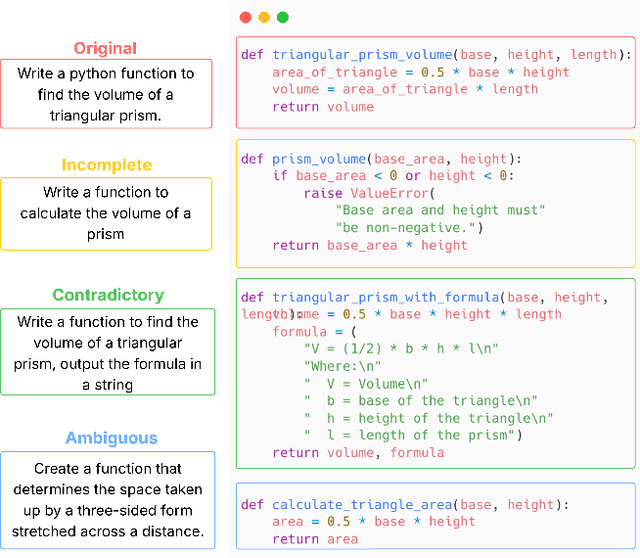
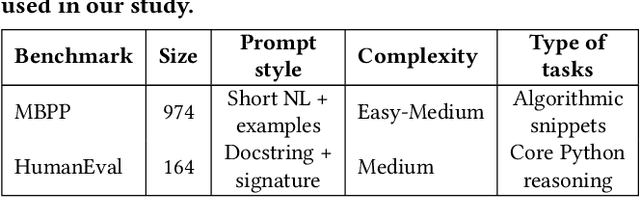
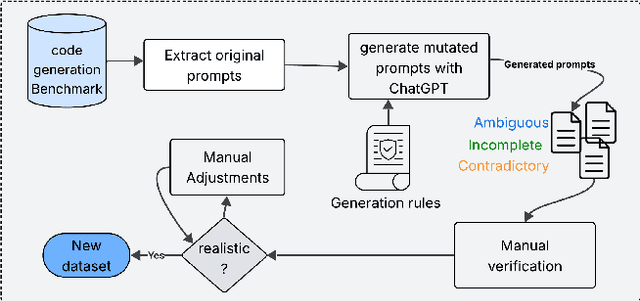
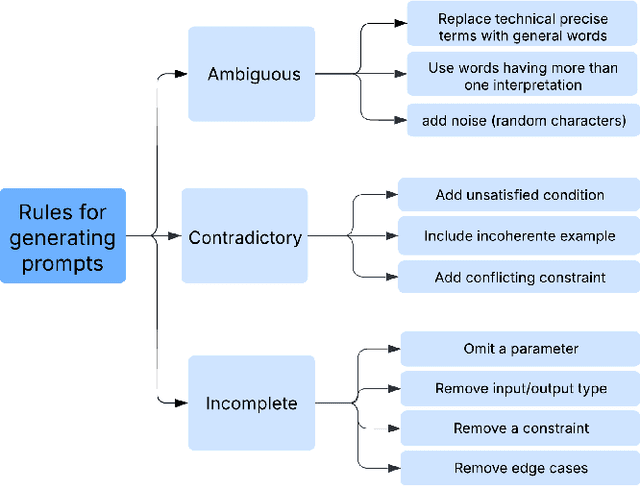
Large Language Models (LLMs) have demonstrated impressive performance in code generation tasks under idealized conditions, where task descriptions are clear and precise. However, in practice, task descriptions frequently exhibit ambiguity, incompleteness, or internal contradictions. In this paper, we present the first empirical study examining the robustness of state-of-the-art code generation models when faced with such unclear task descriptions. We extend the HumanEval and MBPP benchmarks by systematically introducing realistic task descriptions flaws through guided mutation strategies, producing a dataset that mirrors the messiness of informal developer instructions. We evaluate multiple LLMs of varying sizes and architectures, analyzing their functional correctness and failure modes across task descriptions categories. Our findings reveal that even minor imperfections in task description phrasing can cause significant performance degradation, with contradictory task descriptions resulting in numerous logical errors. Moreover, while larger models tend to be more resilient than smaller variants, they are not immune to the challenges posed by unclear requirements. We further analyze semantic error patterns and identify correlations between description clarity, model behavior, and error types. Our results underscore the critical need for developing LLMs that are not only powerful but also robust to the imperfections inherent in natural user tasks, highlighting important considerations for improving model training strategies, designing more realistic evaluation benchmarks, and ensuring reliable deployment in practical software development environments.
Insights on Adversarial Attacks for Tabular Machine Learning via a Systematic Literature Review
Jun 18, 2025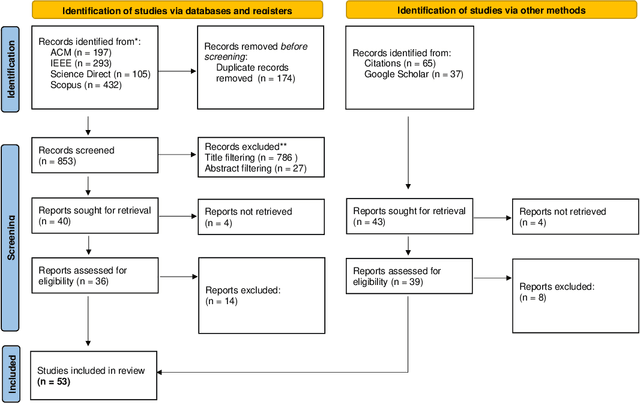
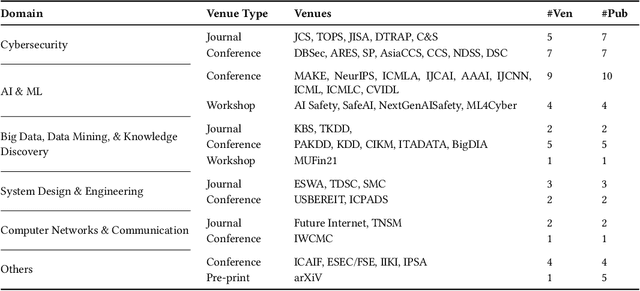
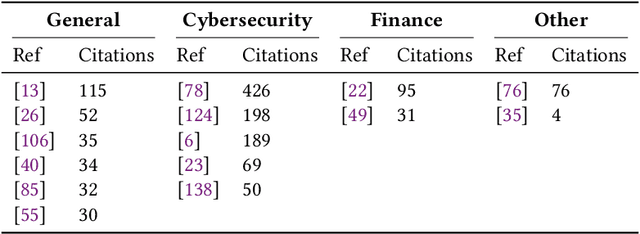
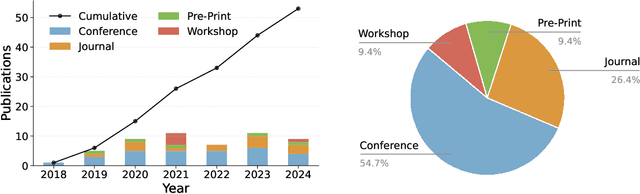
Adversarial attacks in machine learning have been extensively reviewed in areas like computer vision and NLP, but research on tabular data remains scattered. This paper provides the first systematic literature review focused on adversarial attacks targeting tabular machine learning models. We highlight key trends, categorize attack strategies and analyze how they address practical considerations for real-world applicability. Additionally, we outline current challenges and open research questions. By offering a clear and structured overview, this review aims to guide future efforts in understanding and addressing adversarial vulnerabilities in tabular machine learning.