 Add to Chrome
 Add to Firefox
 Add to Edge
Variational Autoencoder Domain Adaptation for Cross-System Generalization in ML-Based SOP Monitoring
Apr 20, 2026
Machine learning (ML) models trained to detect physical-layer threats on one optical fiber system often fail catastrophically when applied to a different system, due to variations in operating wavelength, fiber properties, and network architecture. To overcome this, we propose a Domain Adaptation (DA) framework based on a Variational Autoencoder (VAE) that learns a shared representation capturing event signatures common to both systems while suppressing system-specific differences. The shared encoder is first trained on the combined data from two distinct optical systems: a 21 km O-band dark-fiber testbed (System 1) and a 63.4 km C-band live metro ring (System 2). The encoder is then frozen, and a classifier is trained using labels from an individual system. The proposed approach achieves 95.3% and 73.5% cross-system accuracy when moving from System 1 to System 2 and vice versa, respectively. This corresponds to gains of 83.4% and 51% over a fully supervised Deep Neural Network (DNN) baseline trained on a single system, while preserving intra-system performance.

Advancing Post Hoc Case Based Explanation with Feature Highlighting
Nov 06, 2023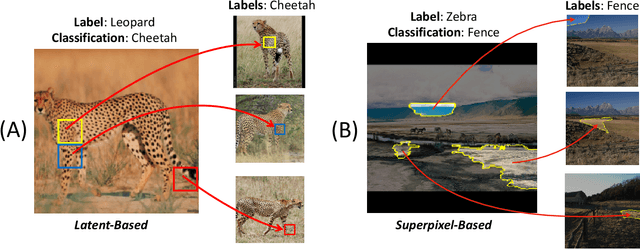
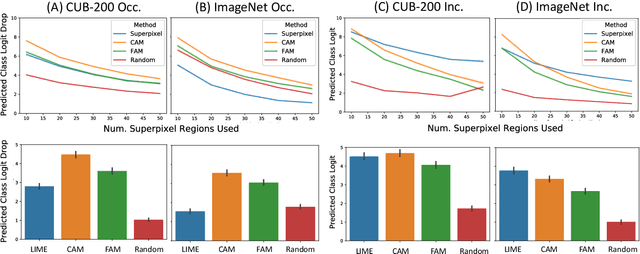
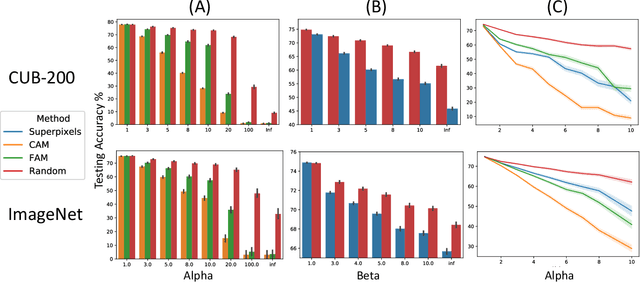
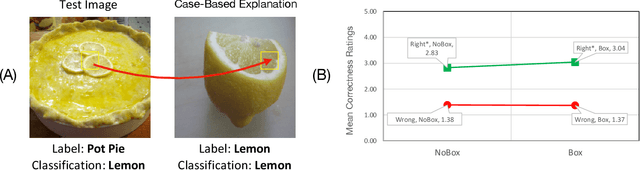
Explainable AI (XAI) has been proposed as a valuable tool to assist in downstream tasks involving human and AI collaboration. Perhaps the most psychologically valid XAI techniques are case based approaches which display 'whole' exemplars to explain the predictions of black box AI systems. However, for such post hoc XAI methods dealing with images, there has been no attempt to improve their scope by using multiple clear feature 'parts' of the images to explain the predictions while linking back to relevant cases in the training data, thus allowing for more comprehensive explanations that are faithful to the underlying model. Here, we address this gap by proposing two general algorithms (latent and super pixel based) which can isolate multiple clear feature parts in a test image, and then connect them to the explanatory cases found in the training data, before testing their effectiveness in a carefully designed user study. Results demonstrate that the proposed approach appropriately calibrates a users feelings of 'correctness' for ambiguous classifications in real world data on the ImageNet dataset, an effect which does not happen when just showing the explanation without feature highlighting.
Human-Guided Complexity-Controlled Abstractions
Oct 27, 2023


Neural networks often learn task-specific latent representations that fail to generalize to novel settings or tasks. Conversely, humans learn discrete representations (i.e., concepts or words) at a variety of abstraction levels (e.g., "bird" vs. "sparrow") and deploy the appropriate abstraction based on task. Inspired by this, we train neural models to generate a spectrum of discrete representations, and control the complexity of the representations (roughly, how many bits are allocated for encoding inputs) by tuning the entropy of the distribution over representations. In finetuning experiments, using only a small number of labeled examples for a new task, we show that (1) tuning the representation to a task-appropriate complexity level supports the highest finetuning performance, and (2) in a human-participant study, users were able to identify the appropriate complexity level for a downstream task using visualizations of discrete representations. Our results indicate a promising direction for rapid model finetuning by leveraging human insight.
Handling Climate Change Using Counterfactuals: Using Counterfactuals in Data Augmentation to Predict Crop Growth in an Uncertain Climate Future
Apr 08, 2021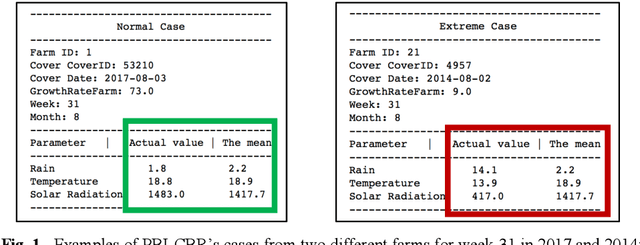

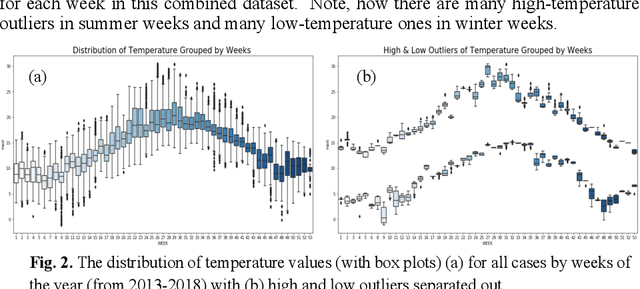
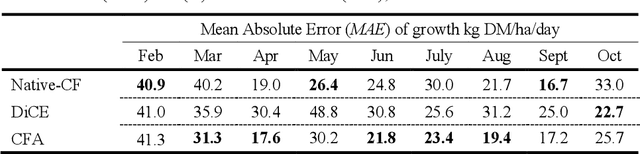
Climate change poses a major challenge to humanity, especially in its impact on agriculture, a challenge that a responsible AI should meet. In this paper, we examine a CBR system (PBI-CBR) designed to aid sustainable dairy farming by supporting grassland management, through accurate crop growth prediction. As climate changes, PBI-CBRs historical cases become less useful in predicting future grass growth. Hence, we extend PBI-CBR using data augmentation, to specifically handle disruptive climate events, using a counterfactual method (from XAI). Study 1 shows that historical, extreme climate-events (climate outlier cases) tend to be used by PBI-CBR to predict grass growth during climate disrupted periods. Study 2 shows that synthetic outliers, generated as counterfactuals on a outlier-boundary, improve the predictive accuracy of PBICBR, during the drought of 2018. This study also shows that an instance-based counterfactual method does better than a benchmark, constraint-guided method.