 Add to Chrome
 Add to Firefox
 Add to Edge
Variational Autoencoder Domain Adaptation for Cross-System Generalization in ML-Based SOP Monitoring
Apr 20, 2026
Machine learning (ML) models trained to detect physical-layer threats on one optical fiber system often fail catastrophically when applied to a different system, due to variations in operating wavelength, fiber properties, and network architecture. To overcome this, we propose a Domain Adaptation (DA) framework based on a Variational Autoencoder (VAE) that learns a shared representation capturing event signatures common to both systems while suppressing system-specific differences. The shared encoder is first trained on the combined data from two distinct optical systems: a 21 km O-band dark-fiber testbed (System 1) and a 63.4 km C-band live metro ring (System 2). The encoder is then frozen, and a classifier is trained using labels from an individual system. The proposed approach achieves 95.3% and 73.5% cross-system accuracy when moving from System 1 to System 2 and vice versa, respectively. This corresponds to gains of 83.4% and 51% over a fully supervised Deep Neural Network (DNN) baseline trained on a single system, while preserving intra-system performance.

Hybrid Model for Anomaly Detection on Call Detail Records by Time Series Forecasting
Jun 07, 2020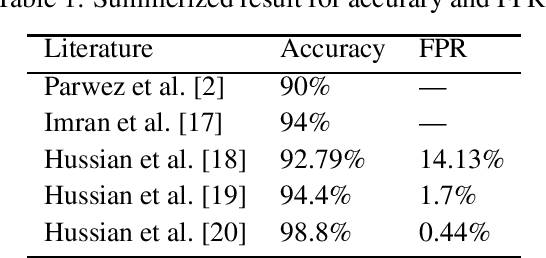
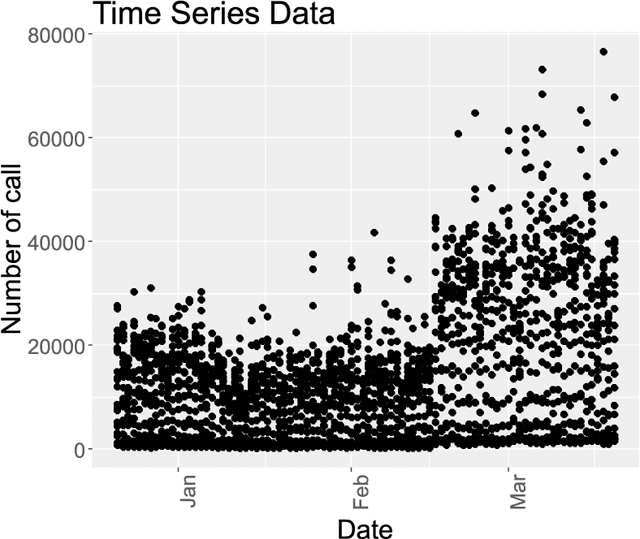
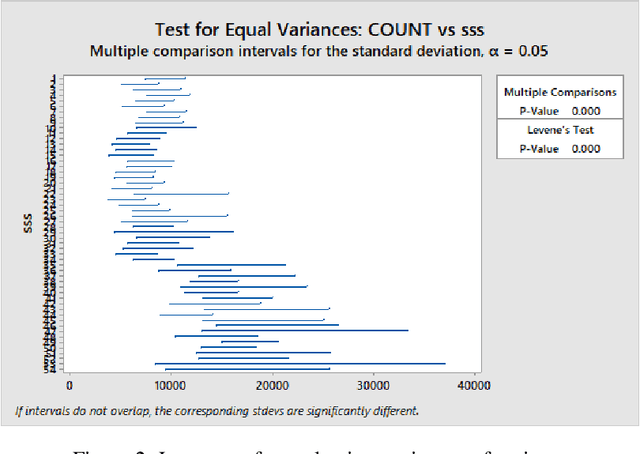
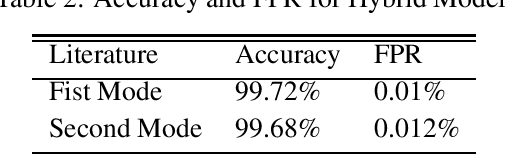
Mobile network operators store an enormous amount of information like log files that describe various events and users' activities. Analysis of these logs might be used in many critical applications such as detecting cyber-attacks, finding behavioral patterns of users, security incident response, network forensics, etc. In a cellular network Call Detail Records (CDR) is one type of such logs containing metadata of calls and usually includes valuable information about contact such as the phone numbers of originating and receiving subscribers, call duration, the area of activity, type of call (SMS or voice call) and a timestamp. With anomaly detection, it is possible to determine abnormal reduction or increment of network traffic in an area or for a particular person. This paper's primary goal is to study subscribers' behavior in a cellular network, mainly predicting the number of calls in a region and detecting anomalies in the network traffic. In this paper, a new hybrid method is proposed based on various anomaly detection methods such as GARCH, K-means, and Neural Network to determine the anomalous data. Moreover, we have discussed the possible causes of such anomalies.