 Add to Chrome
 Add to Firefox
 Add to Edge
Test-Time Training for Modality Order Consistency in Vision-Language Models
Jul 22, 2026
We find that vision-language models are sensitive to a specific semantically irrelevant change: the order in which the image and question are presented. Across three models and three benchmarks, image first prompting consistently outperforms question-first prompting, revealing a repeatable modality order failure. We use this gap to design an order-consistent test-time training method. Our method substantially closes the modality-order gap across all evaluated settings. Surprisingly, it also yields consistent improvements in the stronger image-first branch over the baseline, hence bootstrapping both orderings toward mutual consistency. Activation patching localizes the ordering failure to a narrow mid-network region where representations diverge sharply between prompt orders. We find that the test-time training method repairs this misalignment across layers. Together, our results identify modality-order sensitivity as a circuit-level failure in VLMs and demonstrate that simple, asymmetric test-time adaptation can effectively mitigate it and even improve performance over the baseline.

Speculative Refinement: A Hybrid Autoregressive Diffusion Decoding Strategy and Its Behavior Across Benchmarks
Jun 25, 2026How should we evaluate generation systems that combine autoregressive (AR) and diffusion decoding? We study this question through Speculative Refinement (SpecRef), a training-free hybrid method that warm-starts a masked diffusion language model from an AR draft using entropy-guided selective masking. Evaluating SpecRef across six benchmarks (HumanEval, MBPP, GSM8K, BBH, ARC-Challenge, HellaSwag) with three distinct evaluation protocols (execution-based pass@1, exact-match, log-likelihood scoring), we surface several findings relevant beyond our specific system: (1) code benchmarks conflate structural discovery with logical correctness: providing a syntactic scaffold lifts accuracy from near zero to over 20% without changing the model, indicating that much of the baseline failure is structural; (2) a refinement tension phenomenon where multi-stage correction degrades already-correct tokens, exposing benchmark saturation ceilings invisible to single-model evaluation; (3) log-likelihood and generative evaluation produce different model rankings for the same model pair, suggesting they measure different capabilities; (4) standard Python post-processing silently breaks code evaluation for non-AR generators. These observations apply to any multi-stage or non-autoregressive generation pipeline and point toward more diagnostic evaluation practices.
Sharpen Your Flow: Sharpness-Aware Sampling for Flow Matching
May 12, 2026Flow matching models generate samples by numerically integrating a learned velocity field, with each integration step requiring a neural network evaluation. Fast generation therefore requires using a small fixed evaluation budget effectively: the key question is not only how to integrate the flow, but where the sampler should spend its steps. We propose SharpEuler, a training-free sampler that profiles a pretrained model offline by estimating where the learned velocity field changes most rapidly along calibration trajectories. This finite-difference estimate defines a solver-aware sharpness profile, which is smoothed and converted by a quantile transform into a timestep grid for any desired inference budget. At test time, sampling remains ordinary Euler integration with the same number of model evaluations as a uniform schedule. We justify SharpEuler using three principles: a numerical principle identifying trajectory acceleration as the leading source of Euler discretization error, a variational principle deriving sharpness-based power-law timestep densities, and a statistical guarantee showing that the finite-sample calibrated sampler is stable at the terminal distribution level. Our experiments show that SharpEuler improves sample quality at fixed budgets, reducing inter-mode leakage and increasing mode coverage.
Quantifying Epistemic Uncertainty in Diffusion Models
Feb 09, 2026To ensure high quality outputs, it is important to quantify the epistemic uncertainty of diffusion models. Existing methods are often unreliable because they mix epistemic and aleatoric uncertainty. We introduce a method based on Fisher information that explicitly isolates epistemic variance, producing more reliable plausibility scores for generated data. To make this approach scalable, we propose FLARE (Fisher-Laplace Randomized Estimator), which approximates the Fisher information using a uniformly random subset of model parameters. Empirically, FLARE improves uncertainty estimation in synthetic time-series generation tasks, achieving more accurate and reliable filtering than other methods. Theoretically, we bound the convergence rate of our randomized approximation and provide analytic and empirical evidence that last-layer Laplace approximations are insufficient for this task.
Optical Coherence Tomography Angiography-OCTA dataset for the study of Diabetic Retinopathy
Sep 06, 2024This study presents a dataset consisting of 268 retinal images from 179 individuals, including 133 left-eye and 135 right-eye images, collected from Natasha Eye Care and Research Institute in Pune, Maharashtra, India. The images were captured using a nonmydriatic Optical Coherence Tomography Angiography (OCTA) device, specifically the Optovue Avanti Edition machine as per the protocol mentioned in this paper. Two ophthalmologists then annotated the images. This dataset can be used by researchers and doctors to develop automated diagnostic tools for early detection of diabetic retinopathy (DR).
Lumbar Spine Tumor Segmentation and Localization in T2 MRI Images Using AI
May 07, 2024


In medical imaging, segmentation and localization of spinal tumors in three-dimensional (3D) space pose significant computational challenges, primarily stemming from limited data availability. In response, this study introduces a novel data augmentation technique, aimed at automating spine tumor segmentation and localization through AI approaches. Leveraging a fusion of fuzzy c-means clustering and Random Forest algorithms, the proposed method achieves successful spine tumor segmentation based on predefined masks initially delineated by domain experts in medical imaging. Subsequently, a Convolutional Neural Network (CNN) architecture is employed for tumor classification. Moreover, 3D vertebral segmentation and labeling techniques are used to help pinpoint the exact location of the tumors in the lumbar spine. Results indicate a remarkable performance, with 99% accuracy for tumor segmentation, 98% accuracy for tumor classification, and 99% accuracy for tumor localization achieved with the proposed approach. These metrics surpass the efficacy of existing state-of-the-art techniques, as evidenced by superior Dice Score, Class Accuracy, and Intersection over Union (IOU) on class accuracy metrics. This innovative methodology holds promise for enhancing the diagnostic capabilities in detecting and characterizing spinal tumors, thereby facilitating more effective clinical decision-making.
Machine learning for modeling the progression of Alzheimer disease dementia using clinical data: a systematic literature review
Aug 05, 2021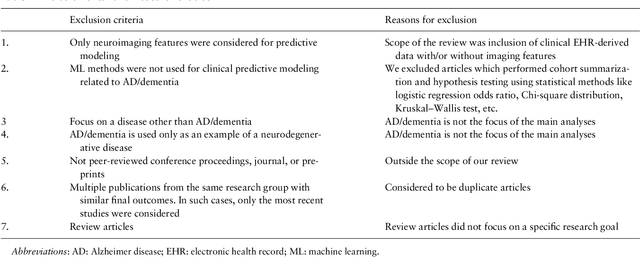
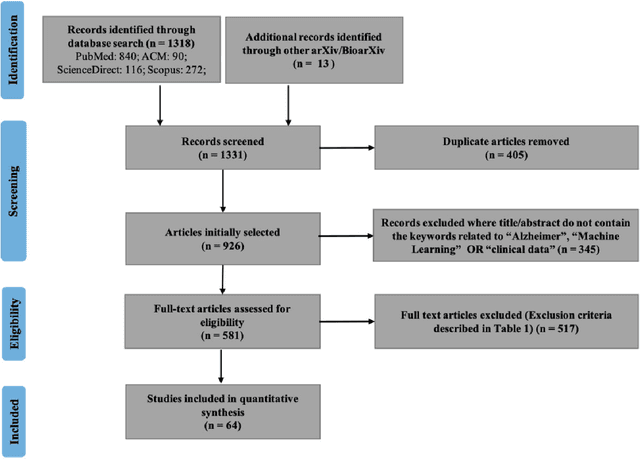
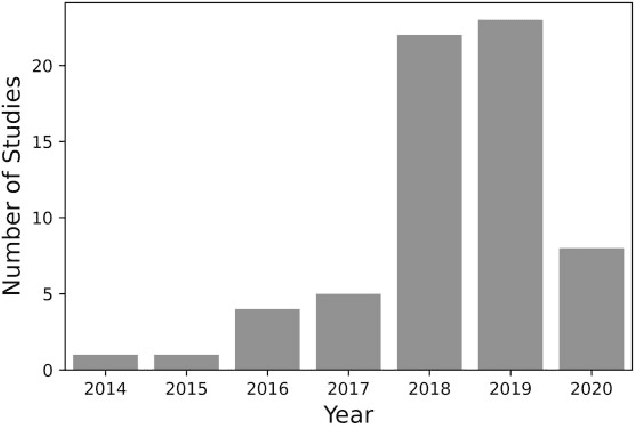
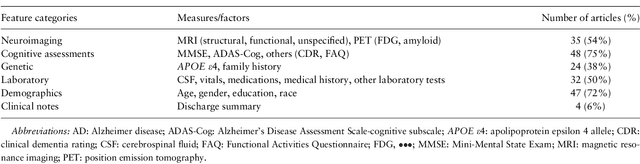
Objective Alzheimer disease (AD) is the most common cause of dementia, a syndrome characterized by cognitive impairment severe enough to interfere with activities of daily life. We aimed to conduct a systematic literature review (SLR) of studies that applied machine learning (ML) methods to clinical data derived from electronic health records in order to model risk for progression of AD dementia. Materials and Methods We searched for articles published between January 1, 2010, and May 31, 2020, in PubMed, Scopus, ScienceDirect, IEEE Explore Digital Library, Association for Computing Machinery Digital Library, and arXiv. We used predefined criteria to select relevant articles and summarized them according to key components of ML analysis such as data characteristics, computational algorithms, and research focus. Results There has been a considerable rise over the past 5 years in the number of research papers using ML-based analysis for AD dementia modeling. We reviewed 64 relevant articles in our SLR. The results suggest that majority of existing research has focused on predicting progression of AD dementia using publicly available datasets containing both neuroimaging and clinical data (neurobehavioral status exam scores, patient demographics, neuroimaging data, and laboratory test values). Discussion Identifying individuals at risk for progression of AD dementia could potentially help to personalize disease management to plan future care. Clinical data consisting of both structured data tables and clinical notes can be effectively used in ML-based approaches to model risk for AD dementia progression. Data sharing and reproducibility of results can enhance the impact, adaptation, and generalizability of this research.
* 10 pages, 4 figures, 3 tables