 Add to Chrome
 Add to Firefox
 Add to Edge
EventCoT: Event-centric Video Chain-of-thought for Reasoning Temporal Localization
Jul 06, 2026
Reasoning temporal localization (RTL) requires a model to generate an answer that itself contains the time interval supporting it, so high-level reasoning and precise temporal grounding must be produced jointly in a single response. To tackle this challenging task, we propose the first event-centric video chain-of-thought framework, dubbed EventCoT. EventCoT first performs event-centric tokenization of the input video to convert it into compact event tokens, enabling efficient identification of question-relevant events. It then reasons within the identified events to generate the answer, grounding the time interval via embedding matching that aligns placeholder tokens with visual embeddings. EventCoT achieves state-of-the-art results on ActivityNet-RTL for reasoning temporal localization while using substantially fewer visual tokens than previous work. To verify its general performance, we further evaluate EventCoT on the grounded video question answering benchmark ReXTime, where it attains strong zero-shot results.

ACID: Action Consistency via Inverse Dynamics for Planning with World Models
Jul 02, 2026Decision-time planning with action-conditioned world models has become a popular paradigm for embodied control. However, the standard planning cost judges a candidate solely by how close its predicted terminal state lies to the goal, leaving the realizability of the intermediate transitions unchecked -- a predicted trajectory can look convincing while the environment rollout drifts away from it. In this paper, we propose ACID, a decision-time planning framework that introduces cycle action consistency: the action inferred backward from a predicted transition by an inverse dynamics model should recover the one that was conditioned on. We fold this per-step residual into the planning cost via a scale-invariant adaptive weight. Across four action-conditioned world models and six tasks spanning rigid and deformable manipulation, articulated control, and visual navigation, ACID consistently improves planning and matches the baseline's accuracy with substantially less planning compute.
One-Step Generalization Ratio Guided Optimization for Domain Generalization
Jun 15, 2026Domain Generalization (DG) aims to train models that generalize to unseen target domains but often overfit to domain-specific features, known as undesired correlations. Gradient-based DG methods typically guide gradients in a dominant direction but often inadvertently reinforce spurious correlations. Recent work has employed dropout to regularize overconfident parameters, but has not explicitly adjusted gradient alignment or ensured balanced parameter updates. We propose GENIE (Generalization-ENhancing Iterative Equalizer), a novel optimizer that leverages the One-Step Generalization Ratio (OSGR) to quantify each parameter's contribution to loss reduction and assess gradient alignment. By dynamically equalizing OSGR via a preconditioning factor, GENIE prevents a small subset of parameters from dominating optimization, thereby promoting domain-invariant feature learning. Theoretically, GENIE balances convergence contribution and gradient alignment among parameters, achieving higher OSGR while retaining SGD's convergence rate. Empirically, it outperforms existing optimizers and enhances performance when integrated with various DG and single-DG methods.
Federated Learning for Feature Generalization with Convex Constraints
Jun 12, 2026Federated learning (FL) often struggles with generalization due to heterogeneous client data. Local models are prone to overfitting their local data distributions, and even transferable features can be distorted during aggregation. To address these challenges, we propose FedCONST, an approach that adaptively modulates update magnitudes based on the parameter strength of the global model. This prevents over-emphasizing well-learned parameters while reinforcing underdeveloped ones. Specifically, FedCONST employs linear convex constraints to ensure training stability and preserve locally learned generalization capabilities during aggregation. A Gradient Signal to Noise Ratio (GSNR) analysis further validates the effectiveness of FedCONST in enhancing feature transferability and robustness. As a result, FedCONST effectively aligns local and global objectives, mitigating overfitting and promoting stronger generalization across diverse FL environments, achieving state-of-the-art performance.
Personalized Federated Learning for Gradient Alignment
May 04, 2026Personalized federated learning (pFL) aims to adapt models to client specific data distributions, yet it often fails to reliably preserve personalized information. Local training is hindered by high variance gradients induced by limited and heterogeneous client data, while aggregation further distorts client specific optimization directions. To address these challenges, we propose pFLAlign, a gradient alignment framework to maintain client specific information during both local training and aggregation. pFLAlign consists of two complementary mechanisms: one adapts local gradient directions to reduce variance during client side optimization, and the other mitigates aggregation induced distortion by realigning the global model with each client's personalized direction. Theoretically, we derive pFLAlign from a PAC Bayesian analysis, which reveals how personalized gradient alignment preserves client specific information. Our experiments and ablation studies show that pFLAlign consistently improves personalization performance and training stability, achieving state of the art results.
Structured State-Space Regularization for Compact and Generation-Friendly Image Tokenization
Apr 13, 2026Image tokenizers are central to modern vision models as they often operate in latent spaces. An ideal latent space must be simultaneously compact and generation-friendly: it should capture image's essential content compactly while remaining easy to model with generative approaches. In this work, we introduce a novel regularizer to align latent spaces with these two objectives. The key idea is to guide tokenizers to mimic the hidden state dynamics of state-space models (SSMs), thereby transferring their critical property, frequency awareness, to latent features. Grounded in a theoretical analysis of SSMs, our regularizer enforces encoding of fine spatial structures and frequency-domain cues into compact latent features; leading to more effective use of representation capacity and improved generative modelability. Experiments demonstrate that our method improves generation quality in diffusion models while incurring only minimal loss in reconstruction fidelity.
MIMO Channel Prediction via Deep Learning-based Conformal Bayes Filter
Mar 05, 2026Channel prediction has emerged as an effective solution for acquiring accurate channel state information (CSI) in the presense of channel aging. Existing methods have inherent limitations, with conventional Kalman filter (KF)-based approach being vulnerable to model mismatch and deep learning (DL)-based approaches producing overconfident predictions. To address these issues, we propose a DL-based conformal Bayes filter (DCBF) that integrates DL-based prediction, conformal quantile regression (CQR), and Bayesian filtering. The proposed framework enables principled fusion of calibrated priors and observations, yielding reliable channel predictions with the calibrated uncertainty. Simulation results demonstrate that DCBF significantly improves DL-based prediction and outperforms the KF-based method.
Planning in 8 Tokens: A Compact Discrete Tokenizer for Latent World Model
Mar 05, 2026World models provide a powerful framework for simulating environment dynamics conditioned on actions or instructions, enabling downstream tasks such as action planning or policy learning. Recent approaches leverage world models as learned simulators, but its application to decision-time planning remains computationally prohibitive for real-time control. A key bottleneck lies in latent representations: conventional tokenizers encode each observation into hundreds of tokens, making planning both slow and resource-intensive. To address this, we propose CompACT, a discrete tokenizer that compresses each observation into as few as 8 tokens, drastically reducing computational cost while preserving essential information for planning. An action-conditioned world model that occupies CompACT tokenizer achieves competitive planning performance with orders-of-magnitude faster planning, offering a practical step toward real-world deployment of world models.
Automating High Energy Physics Data Analysis with LLM-Powered Agents
Dec 08, 2025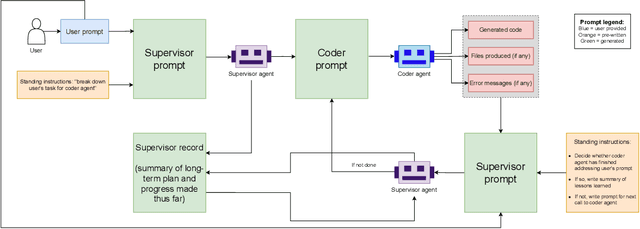
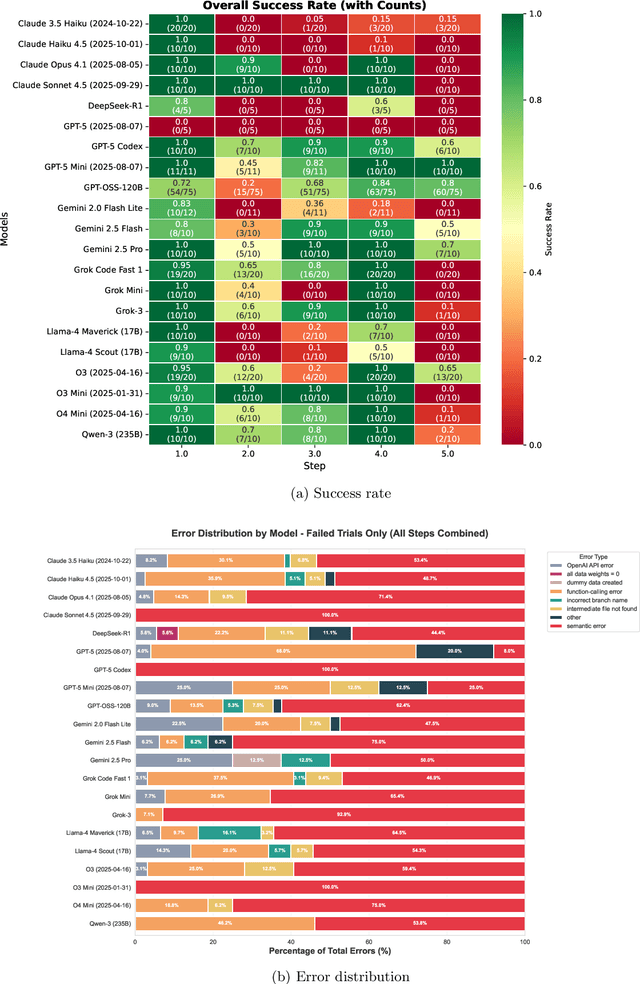
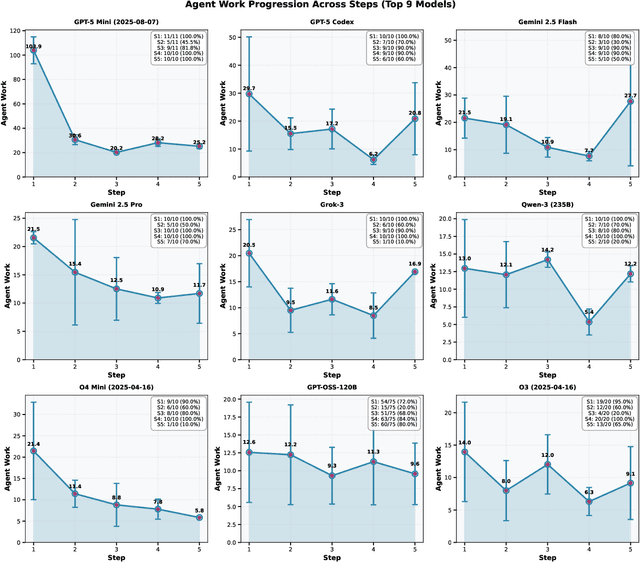
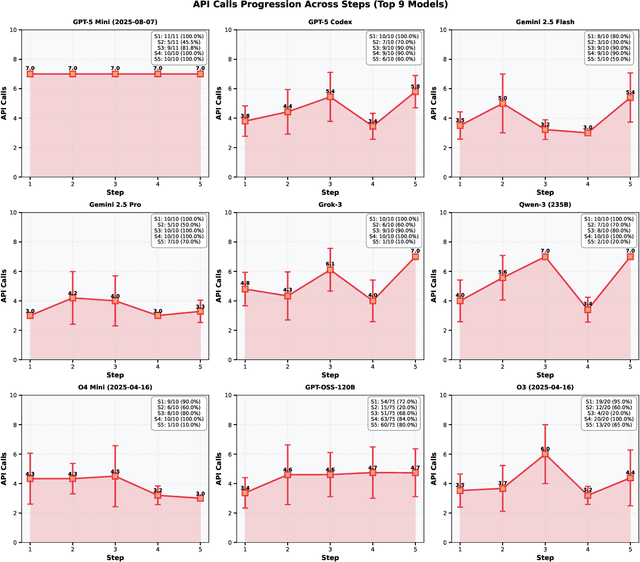
We present a proof-of-principle study demonstrating the use of large language model (LLM) agents to automate a representative high energy physics (HEP) analysis. Using the Higgs boson diphoton cross-section measurement as a case study with ATLAS Open Data, we design a hybrid system that combines an LLM-based supervisor-coder agent with the Snakemake workflow manager. In this architecture, the workflow manager enforces reproducibility and determinism, while the agent autonomously generates, executes, and iteratively corrects analysis code in response to user instructions. We define quantitative evaluation metrics including success rate, error distribution, costs per specific task, and average number of API calls, to assess agent performance across multi-stage workflows. To characterize variability across architectures, we benchmark a representative selection of state-of-the-art LLMs spanning the Gemini and GPT-5 series, the Claude family, and leading open-weight models. While the workflow manager ensures deterministic execution of all analysis steps, the final outputs still show stochastic variation. Although we set the temperature to zero, other sampling parameters (e.g., top-p, top-k) remained at their defaults, and some reasoning-oriented models internally adjust these settings. Consequently, the models do not produce fully deterministic results. This study establishes the first LLM-agent-driven automated data-analysis framework in HEP, enabling systematic benchmarking of model capabilities, stability, and limitations in real-world scientific computing environments. The baseline code used in this work is available at https://huggingface.co/HWresearch/LLM4HEP. This work was accepted as a poster at the Machine Learning and the Physical Sciences (ML4PS) workshop at NeurIPS 2025. The initial submission was made on August 30, 2025.
Democratizing Text-to-Image Masked Generative Models with Compact Text-Aware One-Dimensional Tokens
Jan 13, 2025



Image tokenizers form the foundation of modern text-to-image generative models but are notoriously difficult to train. Furthermore, most existing text-to-image models rely on large-scale, high-quality private datasets, making them challenging to replicate. In this work, we introduce Text-Aware Transformer-based 1-Dimensional Tokenizer (TA-TiTok), an efficient and powerful image tokenizer that can utilize either discrete or continuous 1-dimensional tokens. TA-TiTok uniquely integrates textual information during the tokenizer decoding stage (i.e., de-tokenization), accelerating convergence and enhancing performance. TA-TiTok also benefits from a simplified, yet effective, one-stage training process, eliminating the need for the complex two-stage distillation used in previous 1-dimensional tokenizers. This design allows for seamless scalability to large datasets. Building on this, we introduce a family of text-to-image Masked Generative Models (MaskGen), trained exclusively on open data while achieving comparable performance to models trained on private data. We aim to release both the efficient, strong TA-TiTok tokenizers and the open-data, open-weight MaskGen models to promote broader access and democratize the field of text-to-image masked generative models.