 Add to Chrome
 Add to Firefox
 Add to Edge
Automating High Energy Physics Data Analysis with LLM-Powered Agents
Dec 08, 2025
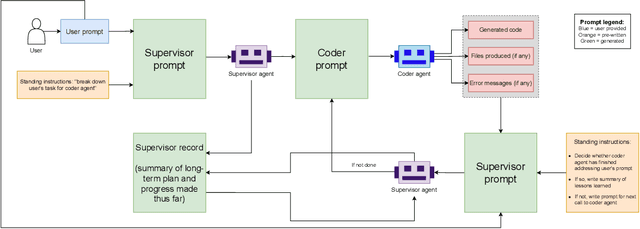
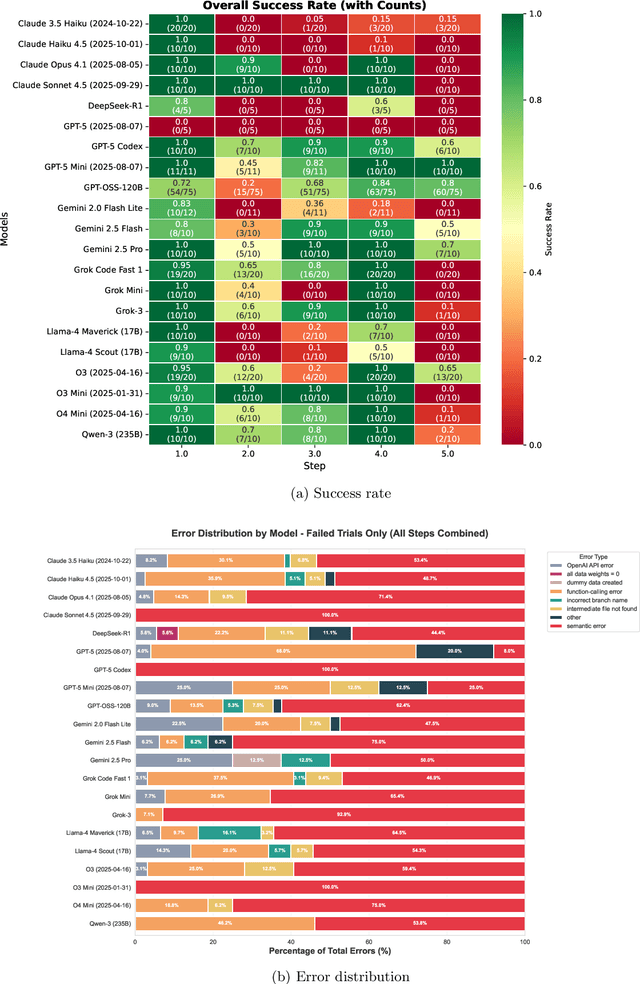
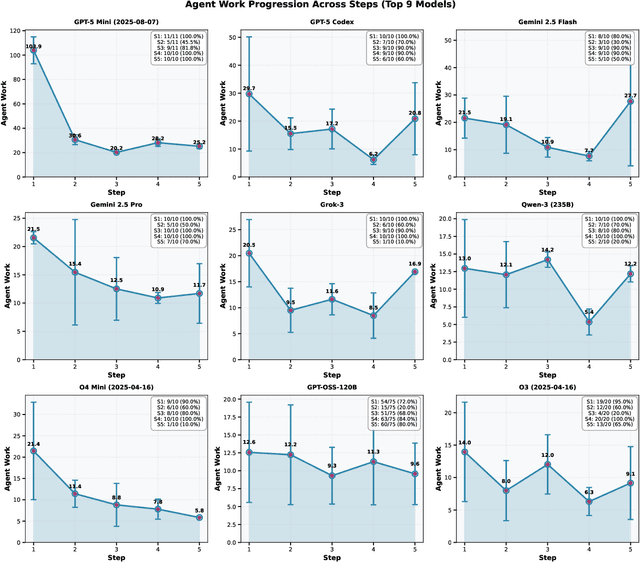
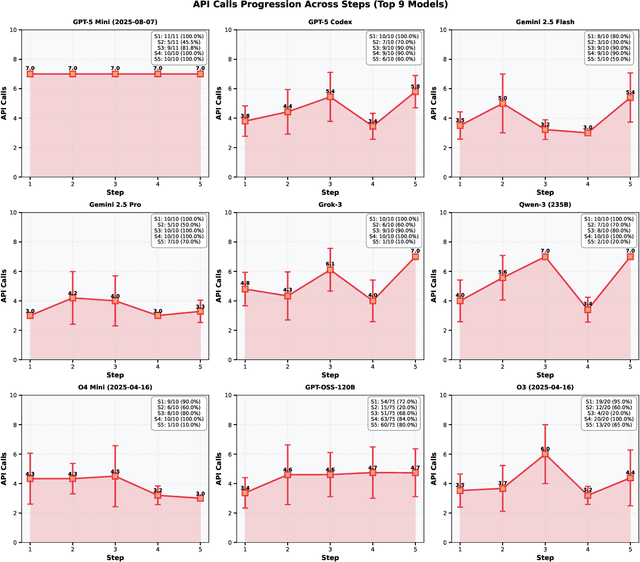
We present a proof-of-principle study demonstrating the use of large language model (LLM) agents to automate a representative high energy physics (HEP) analysis. Using the Higgs boson diphoton cross-section measurement as a case study with ATLAS Open Data, we design a hybrid system that combines an LLM-based supervisor-coder agent with the Snakemake workflow manager. In this architecture, the workflow manager enforces reproducibility and determinism, while the agent autonomously generates, executes, and iteratively corrects analysis code in response to user instructions. We define quantitative evaluation metrics including success rate, error distribution, costs per specific task, and average number of API calls, to assess agent performance across multi-stage workflows. To characterize variability across architectures, we benchmark a representative selection of state-of-the-art LLMs spanning the Gemini and GPT-5 series, the Claude family, and leading open-weight models. While the workflow manager ensures deterministic execution of all analysis steps, the final outputs still show stochastic variation. Although we set the temperature to zero, other sampling parameters (e.g., top-p, top-k) remained at their defaults, and some reasoning-oriented models internally adjust these settings. Consequently, the models do not produce fully deterministic results. This study establishes the first LLM-agent-driven automated data-analysis framework in HEP, enabling systematic benchmarking of model capabilities, stability, and limitations in real-world scientific computing environments. The baseline code used in this work is available at https://huggingface.co/HWresearch/LLM4HEP. This work was accepted as a poster at the Machine Learning and the Physical Sciences (ML4PS) workshop at NeurIPS 2025. The initial submission was made on August 30, 2025.

Pretrained Event Classification Model for High Energy Physics Analysis
Dec 14, 2024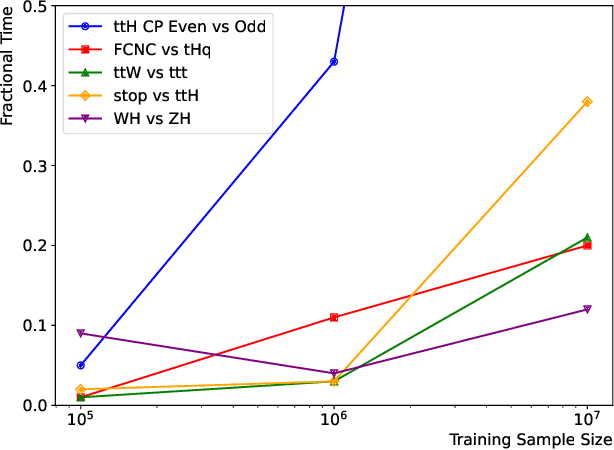
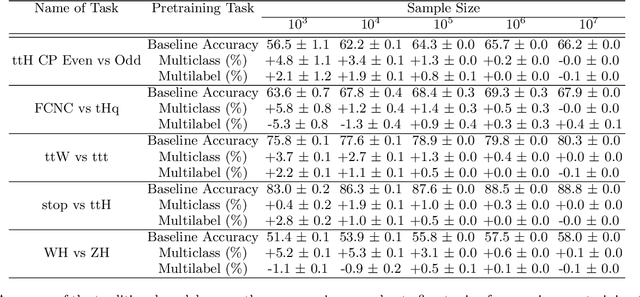
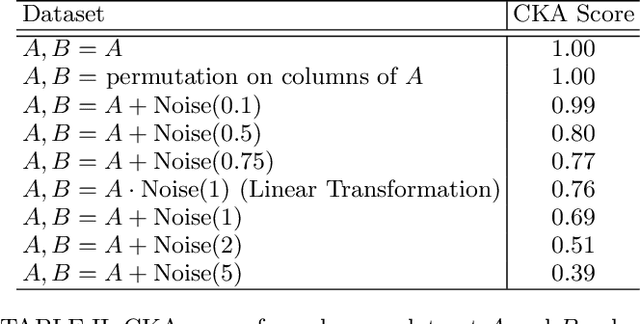
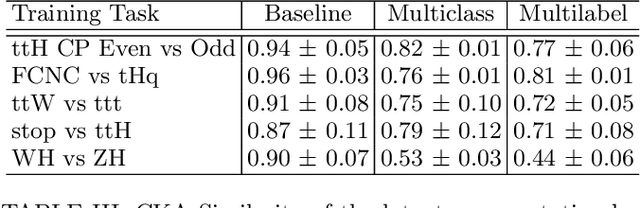
We introduce a foundation model for event classification in high-energy physics, built on a Graph Neural Network architecture and trained on 120 million simulated proton-proton collision events spanning 12 distinct physics processes. The model is pretrained to learn a general and robust representation of collision data using challenging multiclass and multilabel classification tasks. Its performance is evaluated across five event classification tasks, which include both physics processes used during pretraining and new processes not encountered during pretraining. Fine-tuning the pretrained model significantly improves classification performance, particularly in scenarios with limited training data, demonstrating gains in both accuracy and computational efficiency. To investigate the underlying mechanisms behind these performance improvements, we employ a representational similarity evaluation framework based on Centered Kernel Alignment. This analysis reveals notable differences in the learned representations of fine-tuned pretrained models compared to baseline models trained from scratch.