 Add to Chrome
 Add to Firefox
 Add to Edge
LGNNIC: Acceleration of Large-Scale GNN Training using SmartNICs
Aug 07, 2026
Graph Neural Networks (GNNs) are widely used across domains such as natural sciences, social network analysis, chip design, and recommendation systems. However, as graph sizes grow, storing and processing them entirely on a single-node CPU-GPU system becomes increasingly impractical. A promising approach is to distribute the graph across multiple remote memory nodes, though this introduces a major bottleneck: inter-node network congestion during training. To address this, we propose LGNNIC, a novel inter-node system architecture that leverages SmartNICs co-located with remote memory nodes-a configuration already available in modern systems-to reduce communication overhead in distributed GNN training. LGNNIC offloads key preprocessing tasks to SmartNICs, reducing the volume of data transferred to computational (training) nodes and alleviating network congestion. We introduce two complementary techniques executed on the SmartNICs during the preprocessing phase: Neighbor Sampling, which performs mini-batch sampling, and Quantization of the sampled batches. To evaluate LGNNIC under different communication infrastructures, we designed both an optimized low-overhead DMA-based synchronization mechanism and a high-overhead socket-based alternative used as a benchmark. We evaluate the core SmartNIC offloading mechanisms across standard GNN workloads and sampling hyperparameters using a proof-of-concept (PoC) system comprising one remote-memory node with an NVIDIA BlueField-2 SmartNIC and one compute node with an A100 GPU. Both Neighbor Sampling and Quantization on the remote node demonstrated substantial training speedups in most configurations. Neighbor Sampling achieved up to 62.4x and 17.5x speedups with Sockets and DOCA-DMA, respectively, primarily due to reduced data transaction time. Quantization provided additional speedups of up to 3.6x and 1.3x, respectively, by reducing data transfer.

Predict, Reuse, and Repair: Accelerating Dynamic Sparse Attention for Long-Context LLM Decoding
Jun 29, 2026Dynamic sparse attention (DSA) accelerates long-context LLM decoding by attending to only the top-K KV blocks relevant to each query, but it introduces a serialized selection-to-attention dependency that emerges as a new latency bottleneck. We present PRR, a speculate-reuse-repair runtime that exploits temporal locality in DSA selections to predict likely blocks, speculate the attention over them while selection is in flight, and incrementally repair missed blocks once the true selected set is known. PRR uses a lightweight EMA-based predictor, a profiling-guided speculation budget that keeps speculative work off the critical path, and a FlashAttention-based repair kernel that folds missed blocks into the partial attention state using online-softmax statistics. Across long-context benchmarks and representative DSA methods, PRR reduces per-token decoding latency by up to 40% while preserving downstream task accuracy. Github: https://github.com/Tianyu9748/Incremental_FlashAttention
AI+HW 2035: Shaping the Next Decade
Mar 05, 2026Artificial intelligence (AI) and hardware (HW) are advancing at unprecedented rates, yet their trajectories have become inseparably intertwined. The global research community lacks a cohesive, long-term vision to strategically coordinate the development of AI and HW. This fragmentation constrains progress toward holistic, sustainable, and adaptive AI systems capable of learning, reasoning, and operating efficiently across cloud, edge, and physical environments. The future of AI depends not only on scaling intelligence, but on scaling efficiency, achieving exponential gains in intelligence per joule, rather than unbounded compute consumption. Addressing this grand challenge requires rethinking the entire computing stack. This vision paper lays out a 10-year roadmap for AI+HW co-design and co-development, spanning algorithms, architectures, systems, and sustainability. We articulate key insights that redefine scaling around energy efficiency, system-level integration, and cross-layer optimization. We identify key challenges and opportunities, candidly assess potential obstacles and pitfalls, and propose integrated solutions grounded in algorithmic innovation, hardware advances, and software abstraction. Looking ahead, we define what success means in 10 years: achieving a 1000x improvement in efficiency for AI training and inference; enabling energy-aware, self-optimizing systems that seamlessly span cloud, edge, and physical AI; democratizing access to advanced AI infrastructure; and embedding human-centric principles into the design of intelligent systems. Finally, we outline concrete action items for academia, industry, government, and the broader community, calling for coordinated national initiatives, shared infrastructure, workforce development, cross-agency collaboration, and sustained public-private partnerships to ensure that AI+HW co-design becomes a unifying long-term mission.
Sustainable Carbon-Aware and Water-Efficient LLM Scheduling in Geo-Distributed Cloud Datacenters
May 29, 2025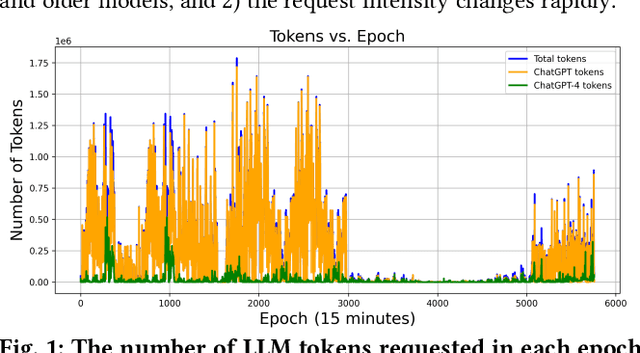
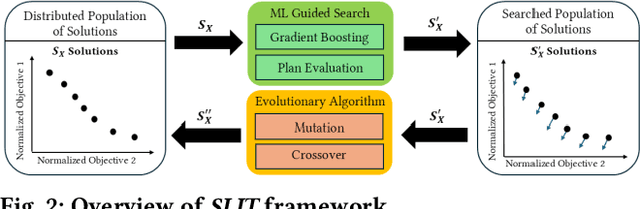
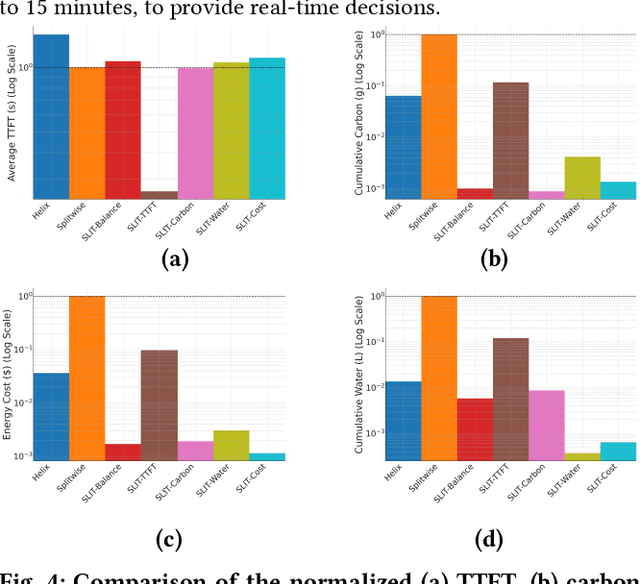
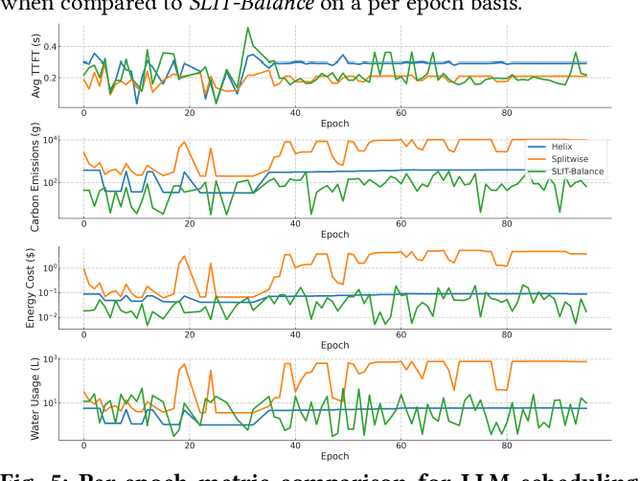
In recent years, Large Language Models (LLM) such as ChatGPT, CoPilot, and Gemini have been widely adopted in different areas. As the use of LLMs continues to grow, many efforts have focused on reducing the massive training overheads of these models. But it is the environmental impact of handling user requests to LLMs that is increasingly becoming a concern. Recent studies estimate that the costs of operating LLMs in their inference phase can exceed training costs by 25x per year. As LLMs are queried incessantly, the cumulative carbon footprint for the operational phase has been shown to far exceed the footprint during the training phase. Further, estimates indicate that 500 ml of fresh water is expended for every 20-50 requests to LLMs during inference. To address these important sustainability issues with LLMs, we propose a novel framework called SLIT to co-optimize LLM quality of service (time-to-first token), carbon emissions, water usage, and energy costs. The framework utilizes a machine learning (ML) based metaheuristic to enhance the sustainability of LLM hosting across geo-distributed cloud datacenters. Such a framework will become increasingly vital as LLMs proliferate.
A Framework for SLO, Carbon, and Wastewater-Aware Sustainable FaaS Cloud Platform Management
Oct 09, 2024


Function-as-a-Service (FaaS) is a growing cloud computing paradigm that is expected to reduce the user cost of service over traditional serverful approaches. However, the environmental impact of FaaS has not received much attention. We investigate FaaS scheduling and scaling from a sustainability perspective in this work. We find that the service-level objectives (SLOs) of FaaS and carbon emissions conflict with each other. We also find that SLO-focused FaaS scheduling can exacerbate water use in a datacenter. We propose a novel sustainability-focused FaaS scheduling and scaling framework to co-optimize SLO performance, carbon emissions, and wastewater generation.
MOSAIC: A Multi-Objective Optimization Framework for Sustainable Datacenter Management
Nov 14, 2023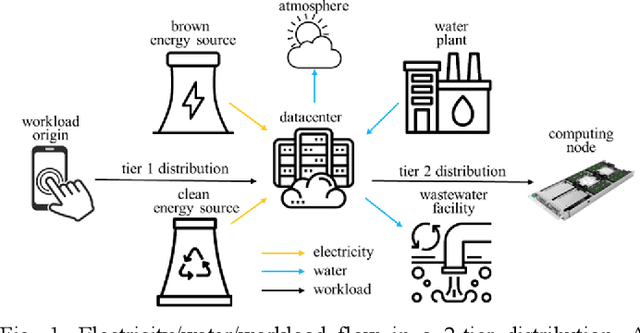
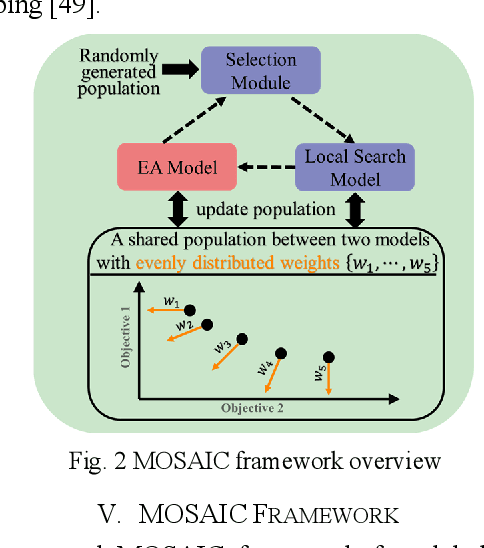
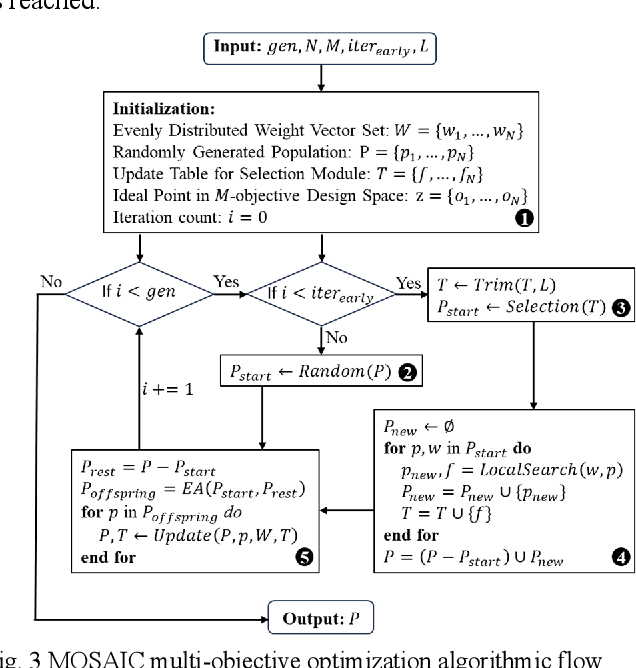
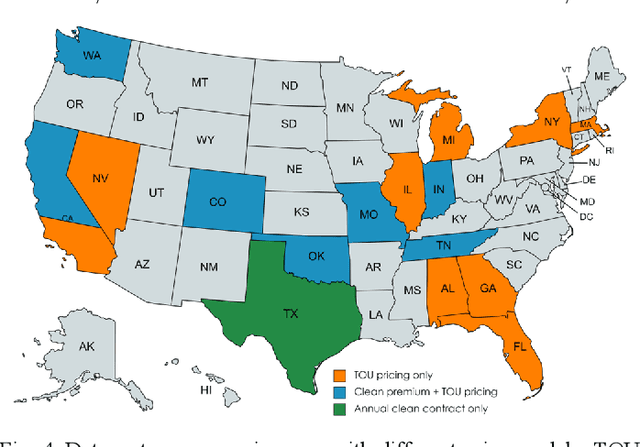
In recent years, cloud service providers have been building and hosting datacenters across multiple geographical locations to provide robust services. However, the geographical distribution of datacenters introduces growing pressure to both local and global environments, particularly when it comes to water usage and carbon emissions. Unfortunately, efforts to reduce the environmental impact of such datacenters often lead to an increase in the cost of datacenter operations. To co-optimize the energy cost, carbon emissions, and water footprint of datacenter operation from a global perspective, we propose a novel framework for multi-objective sustainable datacenter management (MOSAIC) that integrates adaptive local search with a collaborative decomposition-based evolutionary algorithm to intelligently manage geographical workload distribution and datacenter operations. Our framework sustainably allocates workloads to datacenters while taking into account multiple geography- and time-based factors including renewable energy sources, variable energy costs, power usage efficiency, carbon factors, and water intensity in energy. Our experimental results show that, compared to the best-known prior work frameworks, MOSAIC can achieve 27.45x speedup and 1.53x improvement in Pareto Hypervolume while reducing the carbon footprint by up to 1.33x, water footprint by up to 3.09x, and energy costs by up to 1.40x. In the simultaneous three-objective co-optimization scenario, MOSAIC achieves a cumulative improvement across all objectives (carbon, water, cost) of up to 4.61x compared to the state-of-the-arts.
SHIELD: Sustainable Hybrid Evolutionary Learning Framework for Carbon, Wastewater, and Energy-Aware Data Center Management
Aug 24, 2023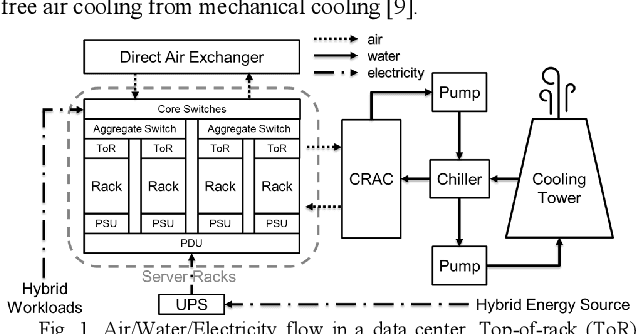
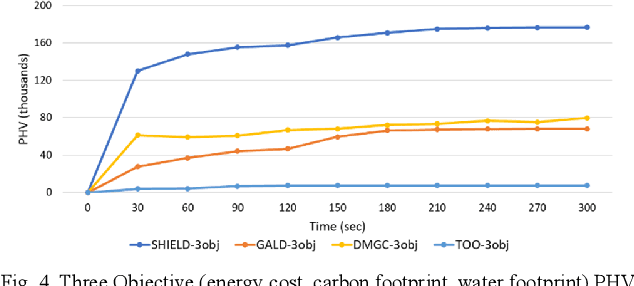
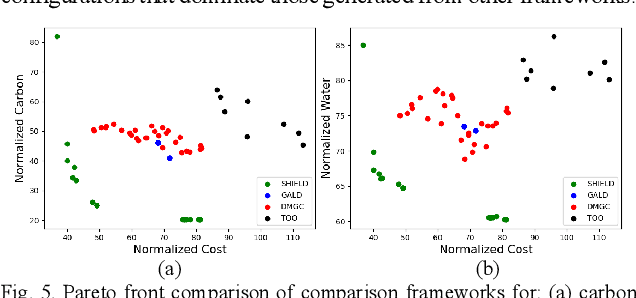
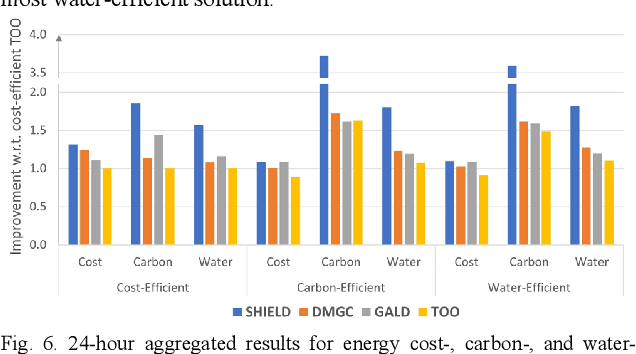
Today's cloud data centers are often distributed geographically to provide robust data services. But these geo-distributed data centers (GDDCs) have a significant associated environmental impact due to their increasing carbon emissions and water usage, which needs to be curtailed. Moreover, the energy costs of operating these data centers continue to rise. This paper proposes a novel framework to co-optimize carbon emissions, water footprint, and energy costs of GDDCs, using a hybrid workload management framework called SHIELD that integrates machine learning guided local search with a decomposition-based evolutionary algorithm. Our framework considers geographical factors and time-based differences in power generation/use, costs, and environmental impacts to intelligently manage workload distribution across GDDCs and data center operation. Experimental results show that SHIELD can realize 34.4x speedup and 2.1x improvement in Pareto Hypervolume while reducing the carbon footprint by up to 3.7x, water footprint by up to 1.8x, energy costs by up to 1.3x, and a cumulative improvement across all objectives (carbon, water, cost) of up to 4.8x compared to the state-of-the-art.