 Add to Chrome
 Add to Firefox
 Add to Edge
Adaptive Loops and Memory in Transformers: Think Harder or Know More?
Mar 11, 2026
Chain-of-thought (CoT) prompting enables reasoning in language models but requires explicit verbalization of intermediate steps. Looped transformers offer an alternative by iteratively refining representations within hidden states. This parameter efficiency comes at a cost, as looped models lack the storage capacity of deeper models which use unique weights per layer. In this work, we investigate transformer models that feature both adaptive per-layer looping, where each transformer block learns to iterate its hidden state via a learned halting mechanism, and gated memory banks, that provide additional learned storage. We find that looping primarily benefits mathematical reasoning, while memory banks help recover performance on commonsense tasks compared to parameter and FLOP matched models. Combining both mechanisms yields a model that outperforms an iso-FLOP baseline, with three times the number of layers, across math benchmarks. Analysis of model internals reveals layer specialization: early layers learn to loop minimally and access memory sparingly, while later layers do both more heavily.

Is continuous CoT better suited for multi-lingual reasoning?
Mar 09, 2026We investigate whether performing reasoning in a continuous latent space leads to more robust multilingual capabilities. We compare Continuous Chain-of-Thought (using the CODI framework) against standard supervised fine-tuning across five typologically diverse languages: English, Chinese, German, French, and Urdu. Our experiments on GSM8k and CommonsenseQA demonstrate that continuous reasoning significantly outperforms explicit reasoning on low-resource languages, particularly in zero-shot settings where the target language was not seen during training. Additionally, this approach achieves extreme efficiency, compressing reasoning traces by approximately $29\times$ to $50\times$. These findings indicate that continuous latent representations naturally exhibit greater language invariance, offering a scalable solution for cross-lingual reasoning.
Beyond Reinforcement Learning: Fast and Scalable Quantum Circuit Synthesis
Feb 16, 2026Quantum unitary synthesis addresses the problem of translating abstract quantum algorithms into sequences of hardware-executable quantum gates. Solving this task exactly is infeasible in general due to the exponential growth of the underlying combinatorial search space. Existing approaches suffer from misaligned optimization objectives, substantial training costs and limited generalization across different qubit counts. We mitigate these limitations by using supervised learning to approximate the minimum description length of residual unitaries and combining this estimate with stochastic beam search to identify near optimal gate sequences. Our method relies on a lightweight model with zero-shot generalization, substantially reducing training overhead compared to prior baselines. Across multiple benchmarks, we achieve faster wall-clock synthesis times while exceeding state-of-the-art methods in terms of success rate for complex circuits.
Foundation Inference Models for Ordinary Differential Equations
Feb 09, 2026Ordinary differential equations (ODEs) are central to scientific modelling, but inferring their vector fields from noisy trajectories remains challenging. Current approaches such as symbolic regression, Gaussian process (GP) regression, and Neural ODEs often require complex training pipelines and substantial machine learning expertise, or they depend strongly on system-specific prior knowledge. We propose FIM-ODE, a pretrained Foundation Inference Model that amortises low-dimensional ODE inference by predicting the vector field directly from noisy trajectory data in a single forward pass. We pretrain FIM-ODE on a prior distribution over ODEs with low-degree polynomial vector fields and represent the target field with neural operators. FIM-ODE achieves strong zero-shot performance, matching and often improving upon ODEFormer, a recent pretrained symbolic baseline, across a range of regimes despite using a simpler pretraining prior distribution. Pretraining also provides a strong initialisation for finetuning, enabling fast and stable adaptation that outperforms modern neural and GP baselines without requiring machine learning expertise.
Domain-Adaptation through Synthetic Data: Fine-Tuning Large Language Models for German Law
Jan 20, 2026Large language models (LLMs) often struggle in specialized domains such as legal reasoning due to limited expert knowledge, resulting in factually incorrect outputs or hallucinations. This paper presents an effective method for adapting advanced LLMs to German legal question answering through a novel synthetic data generation approach. In contrast to costly human-annotated resources or unreliable synthetic alternatives, our approach systematically produces high-quality, diverse, and legally accurate question-answer pairs directly from authoritative German statutes. Using rigorous automated filtering methods and parameter-efficient fine-tuning techniques, we demonstrate that LLMs adapted with our synthetic dataset significantly outperform their baseline counterparts on German legal question answering tasks. Our results highlight the feasibility of using carefully designed synthetic data as a robust alternative to manual annotation in high-stakes, knowledge-intensive domains.
History Rhymes: Macro-Contextual Retrieval for Robust Financial Forecasting
Nov 16, 2025Financial markets are inherently non-stationary: structural breaks and macroeconomic regime shifts often cause forecasting models to fail when deployed out of distribution (OOD). Conventional multimodal approaches that simply fuse numerical indicators and textual sentiment rarely adapt to such shifts. We introduce macro-contextual retrieval, a retrieval-augmented forecasting framework that grounds each prediction in historically analogous macroeconomic regimes. The method jointly embeds macro indicators (e.g., CPI, unemployment, yield spread, GDP growth) and financial news sentiment in a shared similarity space, enabling causal retrieval of precedent periods during inference without retraining. Trained on seventeen years of S&P 500 data (2007-2023) and evaluated OOD on AAPL (2024) and XOM (2024), the framework consistently narrows the CV to OOD performance gap. Macro-conditioned retrieval achieves the only positive out-of-sample trading outcomes (AAPL: PF=1.18, Sharpe=0.95; XOM: PF=1.16, Sharpe=0.61), while static numeric, text-only, and naive multimodal baselines collapse under regime shifts. Beyond metric gains, retrieved neighbors form interpretable evidence chains that correspond to recognizable macro contexts, such as inflationary or yield-curve inversion phases, supporting causal interpretability and transparency. By operationalizing the principle that "financial history may not repeat, but it often rhymes," this work demonstrates that macro-aware retrieval yields robust, explainable forecasts under distributional change. All datasets, models, and source code are publicly available.
Towards Fast Coarse-graining and Equation Discovery with Foundation Inference Models
Oct 14, 2025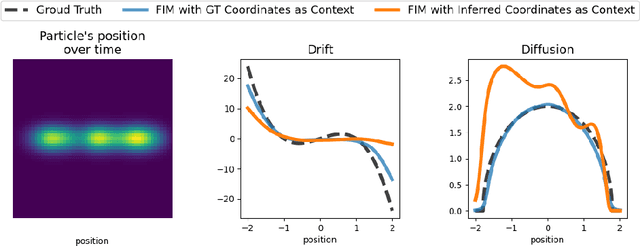
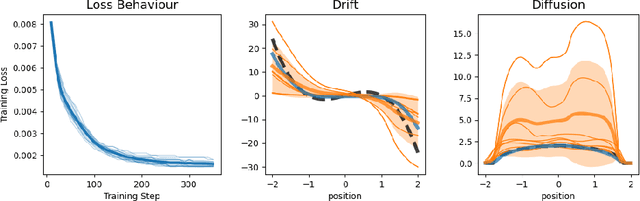
High-dimensional recordings of dynamical processes are often characterized by a much smaller set of effective variables, evolving on low-dimensional manifolds. Identifying these latent dynamics requires solving two intertwined problems: discovering appropriate coarse-grained variables and simultaneously fitting the governing equations. Most machine learning approaches tackle these tasks jointly by training autoencoders together with models that enforce dynamical consistency. We propose to decouple the two problems by leveraging the recently introduced Foundation Inference Models (FIMs). FIMs are pretrained models that estimate the infinitesimal generators of dynamical systems (e.g., the drift and diffusion of a stochastic differential equation) in zero-shot mode. By amortizing the inference of the dynamics through a FIM with frozen weights, and training only the encoder-decoder map, we define a simple, simulation-consistent loss that stabilizes representation learning. A proof of concept on a stochastic double-well system with semicircle diffusion, embedded into synthetic video data, illustrates the potential of this approach for fast and reusable coarse-graining pipelines.
Towards Foundation Inference Models that Learn ODEs In-Context
Oct 14, 2025Ordinary differential equations (ODEs) describe dynamical systems evolving deterministically in continuous time. Accurate data-driven modeling of systems as ODEs, a central problem across the natural sciences, remains challenging, especially if the data is sparse or noisy. We introduce FIM-ODE (Foundation Inference Model for ODEs), a pretrained neural model designed to estimate ODEs zero-shot (i.e., in context) from sparse and noisy observations. Trained on synthetic data, the model utilizes a flexible neural operator for robust ODE inference, even from corrupted data. We empirically verify that FIM-ODE provides accurate estimates, on par with a neural state-of-the-art method, and qualitatively compare the structure of their estimated vector fields.
On Foundation Models for Temporal Point Processes to Accelerate Scientific Discovery
Oct 14, 2025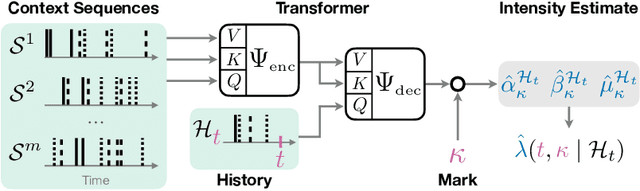
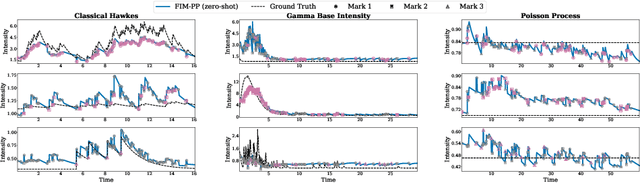
Many scientific fields, from medicine to seismology, rely on analyzing sequences of events over time to understand complex systems. Traditionally, machine learning models must be built and trained from scratch for each new dataset, which is a slow and costly process. We introduce a new approach: a single, powerful model that learns the underlying patterns of event data in context. We trained this "foundation model" on millions of simulated event sequences, teaching it a general-purpose understanding of how events can unfold. As a result, our model can analyze new scientific data instantly, without retraining, simply by looking at a few examples from the dataset. It can also be quickly fine-tuned for even higher accuracy. This approach makes sophisticated event analysis more accessible and accelerates the pace of scientific discovery.
Reasoning LLMs in the Medical Domain: A Literature Survey
Aug 26, 2025The emergence of advanced reasoning capabilities in Large Language Models (LLMs) marks a transformative development in healthcare applications. Beyond merely expanding functional capabilities, these reasoning mechanisms enhance decision transparency and explainability-critical requirements in medical contexts. This survey examines the transformation of medical LLMs from basic information retrieval tools to sophisticated clinical reasoning systems capable of supporting complex healthcare decisions. We provide a thorough analysis of the enabling technological foundations, with a particular focus on specialized prompting techniques like Chain-of-Thought and recent breakthroughs in Reinforcement Learning exemplified by DeepSeek-R1. Our investigation evaluates purpose-built medical frameworks while also examining emerging paradigms such as multi-agent collaborative systems and innovative prompting architectures. The survey critically assesses current evaluation methodologies for medical validation and addresses persistent challenges in field interpretation limitations, bias mitigation strategies, patient safety frameworks, and integration of multimodal clinical data. Through this survey, we seek to establish a roadmap for developing reliable LLMs that can serve as effective partners in clinical practice and medical research.