 Add to Chrome
 Add to Firefox
 Add to Edge
Edge Sparsification via Temporal Forman-Ricci Curvature for Dynamic Graph Learning
Aug 07, 2026
Temporal graph learning has become essential for analyzing real-world systems whose interactions continuously evolve over time, including financial transaction networks, communication systems, and online social platforms. However, learning from large-scale temporal graphs remains computationally challenging when networks are dense and rapidly changing. To address this limitation, we propose a network-curvature-inspired edge sparsification framework for dynamic graph learning. Our proposed method, TRicci, extends classical Forman-Ricci curvature to directed weighted temporal graphs by capturing structural support, temporal recency, and local interaction competition. Experiments on 9 transaction networks and 3 temporal graph benchmark datasets demonstrate that the proposed framework preserves predictive performance across multiple graph-level prediction tasks. The results show that TRicci sparsifies temporal graphs by approximately 80% while reducing end-to-end downstream training and inference time by an average of 55.94%, without substantial degradation in predictive performance. Our findings suggest that temporal curvature can serve as a principled basis for scalable temporal graph learning by preserving predictive temporal-structural information under substantial sparsification.

TopoFormer: Topology Meets Attention for Graph Learning
Jul 30, 2026We introduce Topoformer, a lightweight and scalable framework for graph representation learning that encodes topological structure into attention-friendly sequences. At the core of our method is Topo-Scan, a novel module that decomposes a graph into a short, ordered sequence of topological tokens by slicing over node or edge filtrations. These sequences capture multi-scale structural patterns, from local motifs to global organization, and are processed by a Transformer to produce expressive graph-level embeddings. Unlike traditional persistent homology pipelines, Topo-Scan is parallelizable, avoids costly diagram computations, and integrates seamlessly with standard deep learning architectures. We provide theoretical guarantees on the stability of our topological encodings and demonstrate state-of-the-art performance across graph classification and molecular property prediction benchmarks. Our results show that Topoformer matches or exceeds strong GNN and topology-based baselines while offering predictable and efficient compute. This work opens a new path for parallelizable and unifying approaches to graph representation learning that integrate topological inductive biases into attention frameworks.
* 26 pages, 5 figures
The Illusion of Equivalency: Statistical Characterization of Quantization Effects in LLMs
Jul 09, 2026Post-training quantization is widely used to deploy large language models in resource-constrained settings, yet its evaluation relies almost exclusively on accuracy and perplexity. We show that these metrics fail to capture behavioral changes induced by quantization. We introduce correctness agreement, a decision-level metric that measures overlap in correct predictions between a base model and its quantized variants, independent of absolute accuracy. Across multiple models and quantization schemes from 8-bit to 2-bit, we find that behavioral divergence emerges under moderate quantization even when task performance appears preserved. To explain this effect, we analyze quantization as a structural operator on attention weights and quantify layer-wise distortions using statistical and distributional measures. Our results reveal non-linear breakpoints at low bit-widths and show that query and key projections are consistently more sensitive than value and output projections. These findings expose an illusion of equivalence between base and quantized models and motivate behavioral evaluation beyond conventional performance metrics.
ATEX-CF: Attack-Informed Counterfactual Explanations for Graph Neural Networks
Feb 05, 2026Counterfactual explanations offer an intuitive way to interpret graph neural networks (GNNs) by identifying minimal changes that alter a model's prediction, thereby answering "what must differ for a different outcome?". In this work, we propose a novel framework, ATEX-CF that unifies adversarial attack techniques with counterfactual explanation generation-a connection made feasible by their shared goal of flipping a node's prediction, yet differing in perturbation strategy: adversarial attacks often rely on edge additions, while counterfactual methods typically use deletions. Unlike traditional approaches that treat explanation and attack separately, our method efficiently integrates both edge additions and deletions, grounded in theory, leveraging adversarial insights to explore impactful counterfactuals. In addition, by jointly optimizing fidelity, sparsity, and plausibility under a constrained perturbation budget, our method produces instance-level explanations that are both informative and realistic. Experiments on synthetic and real-world node classification benchmarks demonstrate that ATEX-CF generates faithful, concise, and plausible explanations, highlighting the effectiveness of integrating adversarial insights into counterfactual reasoning for GNNs.
Optimal Transport-Guided Adversarial Attacks on Graph Neural Network-Based Bot Detection
Jan 30, 2026The rise of bot accounts on social media poses significant risks to public discourse. To address this threat, modern bot detectors increasingly rely on Graph Neural Networks (GNNs). However, the effectiveness of these GNN-based detectors in real-world settings remains poorly understood. In practice, attackers continuously adapt their strategies as well as must operate under domain-specific and temporal constraints, which can fundamentally limit the applicability of existing attack methods. As a result, there is a critical need for robust GNN-based bot detection methods under realistic, constraint-aware attack scenarios. To address this gap, we introduce BOCLOAK to systematically evaluate the robustness of GNN-based social bot detection via both edge editing and node injection adversarial attacks under realistic constraints. BOCLOAK constructs a probability measure over spatio-temporal neighbor features and learns an optimal transport geometry that separates human and bot behaviors. It then decodes transport plans into sparse, plausible edge edits that evade detection while obeying real-world constraints. We evaluate BOCLOAK across three social bot datasets, five state-of-the-art bot detectors, three adversarial defenses, and compare it against four leading graph adversarial attack baselines. BOCLOAK achieves up to 80.13% higher attack success rates while using 99.80% less GPU memory under realistic real-world constraints. Most importantly, BOCLOAK shows that optimal transport provides a lightweight, principled framework for bridging the gap between adversarial attacks and real-world bot detection.
SoK: Prompt Hacking of Large Language Models
Oct 16, 2024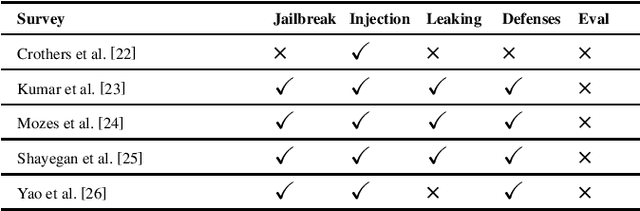



The safety and robustness of large language models (LLMs) based applications remain critical challenges in artificial intelligence. Among the key threats to these applications are prompt hacking attacks, which can significantly undermine the security and reliability of LLM-based systems. In this work, we offer a comprehensive and systematic overview of three distinct types of prompt hacking: jailbreaking, leaking, and injection, addressing the nuances that differentiate them despite their overlapping characteristics. To enhance the evaluation of LLM-based applications, we propose a novel framework that categorizes LLM responses into five distinct classes, moving beyond the traditional binary classification. This approach provides more granular insights into the AI's behavior, improving diagnostic precision and enabling more targeted enhancements to the system's safety and robustness.
ClassContrast: Bridging the Spatial and Contextual Gaps for Node Representations
Oct 03, 2024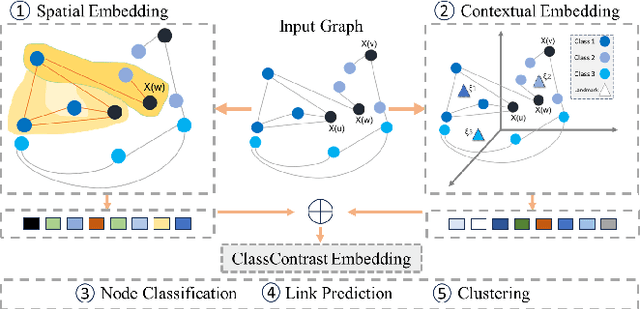
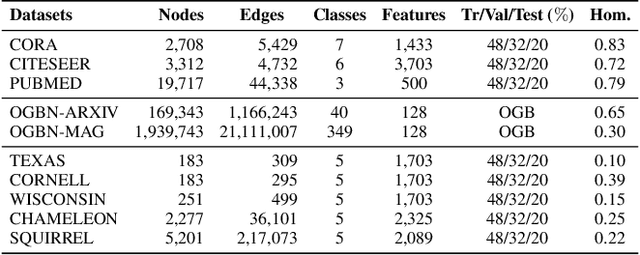
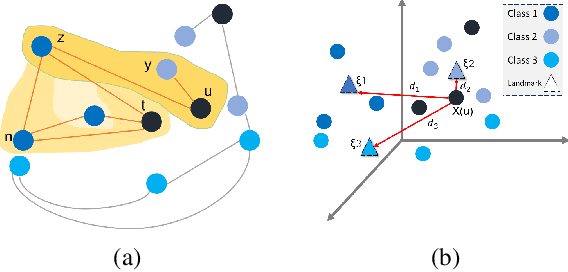
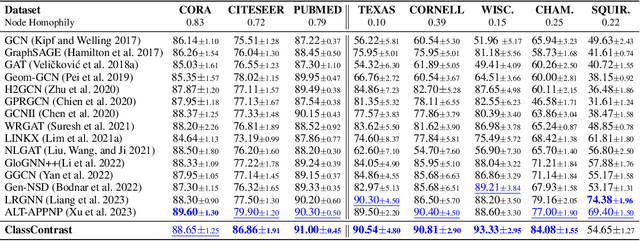
Graph Neural Networks (GNNs) have revolutionized the domain of graph representation learning by utilizing neighborhood aggregation schemes in many popular architectures, such as message passing graph neural networks (MPGNNs). This scheme involves iteratively calculating a node's representation vector by aggregating and transforming the representation vectors of its adjacent nodes. Despite their effectiveness, MPGNNs face significant issues, such as oversquashing, oversmoothing, and underreaching, which hamper their effectiveness. Additionally, the reliance of MPGNNs on the homophily assumption, where edges typically connect nodes with similar labels and features, limits their performance in heterophilic contexts, where connected nodes often have significant differences. This necessitates the development of models that can operate effectively in both homophilic and heterophilic settings. In this paper, we propose a novel approach, ClassContrast, grounded in Energy Landscape Theory from Chemical Physics, to overcome these limitations. ClassContrast combines spatial and contextual information, leveraging a physics-inspired energy landscape to model node embeddings that are both discriminative and robust across homophilic and heterophilic settings. Our approach introduces contrast-based homophily matrices to enhance the understanding of class interactions and tendencies. Through extensive experiments, we demonstrate that ClassContrast outperforms traditional GNNs in node classification and link prediction tasks, proving its effectiveness and versatility in diverse real-world scenarios.
TopER: Topological Embeddings in Graph Representation Learning
Oct 02, 2024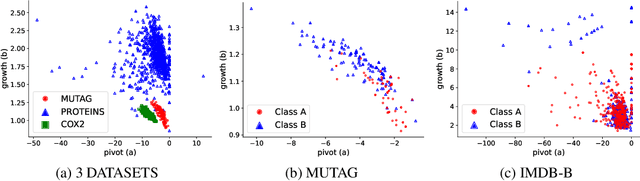
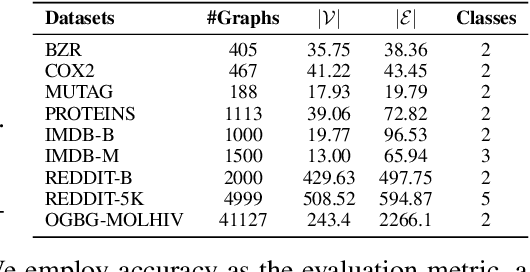
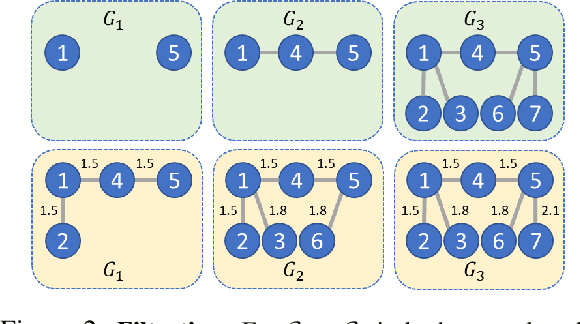
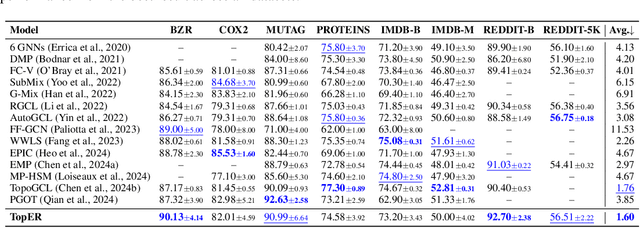
Graph embeddings play a critical role in graph representation learning, allowing machine learning models to explore and interpret graph-structured data. However, existing methods often rely on opaque, high-dimensional embeddings, limiting interpretability and practical visualization. In this work, we introduce Topological Evolution Rate (TopER), a novel, low-dimensional embedding approach grounded in topological data analysis. TopER simplifies a key topological approach, Persistent Homology, by calculating the evolution rate of graph substructures, resulting in intuitive and interpretable visualizations of graph data. This approach not only enhances the exploration of graph datasets but also delivers competitive performance in graph clustering and classification tasks. Our TopER-based models achieve or surpass state-of-the-art results across molecular, biological, and social network datasets in tasks such as classification, clustering, and visualization.
Towards Neural Scaling Laws for Foundation Models on Temporal Graphs
Jun 14, 2024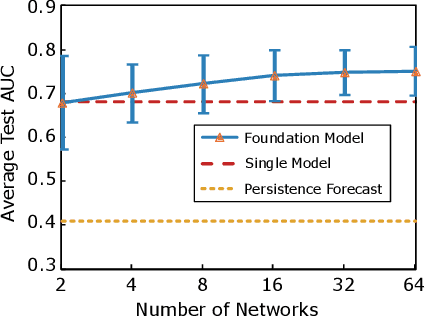

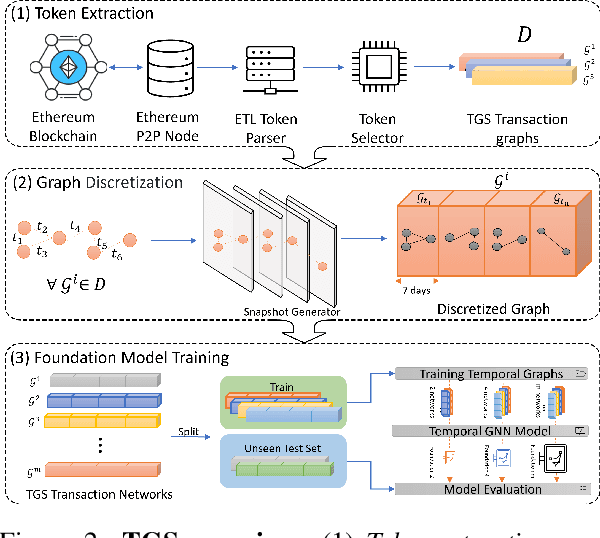

The field of temporal graph learning aims to learn from evolving network data to forecast future interactions. Given a collection of observed temporal graphs, is it possible to predict the evolution of an unseen network from the same domain? To answer this question, we first present the Temporal Graph Scaling (TGS) dataset, a large collection of temporal graphs consisting of eighty-four ERC20 token transaction networks collected from 2017 to 2023. Next, we evaluate the transferability of Temporal Graph Neural Networks (TGNNs) for the temporal graph property prediction task by pre-training on a collection of up to sixty-four token transaction networks and then evaluating the downstream performance on twenty unseen token networks. We find that the neural scaling law observed in NLP and Computer Vision also applies in temporal graph learning, where pre-training on greater number of networks leads to improved downstream performance. To the best of our knowledge, this is the first empirical demonstration of the transferability of temporal graphs learning. On downstream token networks, the largest pre-trained model outperforms single model TGNNs on thirteen unseen test networks. Therefore, we believe that this is a promising first step towards building foundation models for temporal graphs.
Machine Learning for Blockchain Data Analysis: Progress and Opportunities
Apr 28, 2024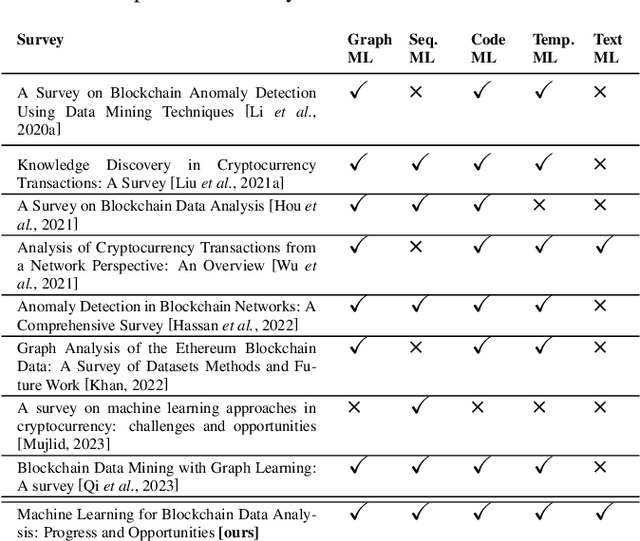
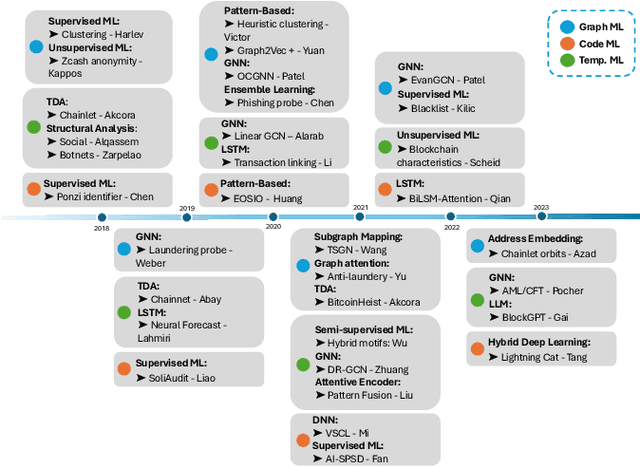
Blockchain technology has rapidly emerged to mainstream attention, while its publicly accessible, heterogeneous, massive-volume, and temporal data are reminiscent of the complex dynamics encountered during the last decade of big data. Unlike any prior data source, blockchain datasets encompass multiple layers of interactions across real-world entities, e.g., human users, autonomous programs, and smart contracts. Furthermore, blockchain's integration with cryptocurrencies has introduced financial aspects of unprecedented scale and complexity such as decentralized finance, stablecoins, non-fungible tokens, and central bank digital currencies. These unique characteristics present both opportunities and challenges for machine learning on blockchain data. On one hand, we examine the state-of-the-art solutions, applications, and future directions associated with leveraging machine learning for blockchain data analysis critical for the improvement of blockchain technology such as e-crime detection and trends prediction. On the other hand, we shed light on the pivotal role of blockchain by providing vast datasets and tools that can catalyze the growth of the evolving machine learning ecosystem. This paper serves as a comprehensive resource for researchers, practitioners, and policymakers, offering a roadmap for navigating this dynamic and transformative field.