 Add to Chrome
 Add to Firefox
 Add to Edge
ReLoop: Structured Modeling and Behavioral Verification for Reliable LLM-Based Optimization
Feb 17, 2026
Large language models (LLMs) can translate natural language into optimization code, but silent failures pose a critical risk: code that executes and returns solver-feasible solutions may encode semantically incorrect formulations, creating a feasibility-correctness gap of up to 90 percentage points on compositional problems. We introduce ReLoop, addressing silent failures from two complementary directions. Structured generation decomposes code production into a four-stage reasoning chain (understand, formalize, synthesize, verify) that mirrors expert modeling practice, with explicit variable-type reasoning and self-verification to prevent formulation errors at their source. Behavioral verification detects errors that survive generation by testing whether the formulation responds correctly to solver-based parameter perturbation, without requiring ground truth -- an external semantic signal that bypasses the self-consistency problem inherent in LLM-based code review. The two mechanisms are complementary: structured generation dominates on complex compositional problems, while behavioral verification becomes the largest single contributor on problems with localized formulation defects. Together with execution recovery via IIS-enhanced diagnostics, ReLoop raises correctness from 22.6% to 31.1% and execution from 72.1% to 100.0% on the strongest model, with consistent gains across five models spanning three paradigms (foundation, SFT, RL) and three benchmarks. We additionally release RetailOpt-190, 190 compositional retail optimization scenarios targeting the multi-constraint interactions where LLMs most frequently fail.

LLM for Large-Scale Optimization Model Auto-Formulation: A Lightweight Few-Shot Learning Approach
Jan 14, 2026Large-scale optimization is a key backbone of modern business decision-making. However, building these models is often labor-intensive and time-consuming. We address this by proposing LEAN-LLM-OPT, a LightwEight AgeNtic workflow construction framework for LLM-assisted large-scale OPTimization auto-formulation. LEAN-LLM-OPT takes as input a problem description together with associated datasets and orchestrates a team of LLM agents to produce an optimization formulation. Specifically, upon receiving a query, two upstream LLM agents dynamically construct a workflow that specifies, step-by-step, how optimization models for similar problems can be formulated. A downstream LLM agent then follows this workflow to generate the final output. Leveraging LLMs' text-processing capabilities and common modeling practices, the workflow decomposes the modeling task into a sequence of structured sub-tasks and offloads mechanical data-handling operations to auxiliary tools. This design alleviates the downstream agent's burden related to planning and data handling, allowing it to focus on the most challenging components that cannot be readily standardized. Extensive simulations show that LEAN-LLM-OPT, instantiated with GPT-4.1 and the open source gpt-oss-20B, achieves strong performance on large-scale optimization modeling tasks and is competitive with state-of-the-art approaches. In addition, in a Singapore Airlines choice-based revenue management use case, LEAN-LLM-OPT demonstrates practical value by achieving leading performance across a range of scenarios. Along the way, we introduce Large-Scale-OR and Air-NRM, the first comprehensive benchmarks for large-scale optimization auto-formulation. The code and data of this work is available at https://github.com/CoraLiang01/lean-llm-opt.
Enhancing binary classification: A new stacking method via leveraging computational geometry
Oct 30, 2024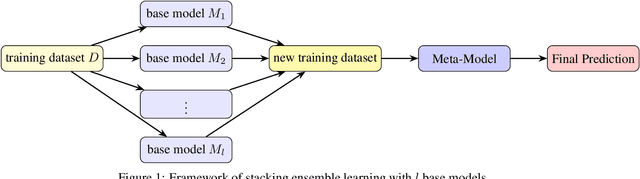
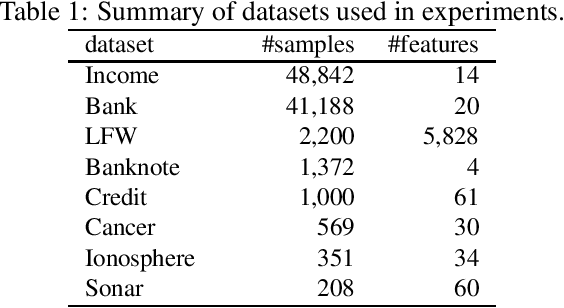
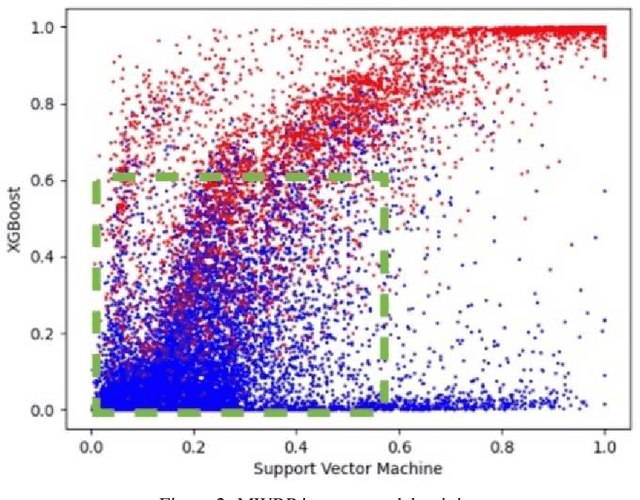
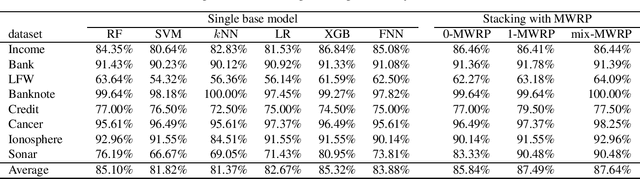
Stacking, a potent ensemble learning method, leverages a meta-model to harness the strengths of multiple base models, thereby enhancing prediction accuracy. Traditional stacking techniques typically utilize established learning models, such as logistic regression, as the meta-model. This paper introduces a novel approach that integrates computational geometry techniques, specifically solving the maximum weighted rectangle problem, to develop a new meta-model for binary classification. Our method is evaluated on multiple open datasets, with statistical analysis showing its stability and demonstrating improvements in accuracy compared to current state-of-the-art stacking methods with out-of-fold predictions. This new stacking method also boasts two significant advantages: enhanced interpretability and the elimination of hyperparameter tuning for the meta-model, thus increasing its practicality. These merits make our method highly applicable not only in stacking ensemble learning but also in various real-world applications, such as hospital health evaluation scoring and bank credit scoring systems, offering a fresh evaluation perspective.